
Custom cosmetic boxes have to protect fragile glass and still earn a place on a crowded beauty shelf. Choose rigid, tuck-end, or drawer styles, then add fitted inserts, clear windows, soft-touch lamination, and foil stamping that photographs well. Order any quantity with zero MOQ, free design support, and free shipping across the USA.

Cosmetic boxes with inserts keep every product secure, organized, and displayed with premium precision. Pioneer Custom Boxes engineers custom-fit inserts and luxury packaging that elevate presentation while preventing movement, breakage, or leakage during US shipping. Your cosmetic sets arrive looking flawless, whether sold online, in retail, or as curated gift kits.

Cosmetics boxes with window designs reveal the true product while preserving a refined, premium exterior. Pioneer Custom Boxes engineers precision-cut window structures that highlight shade accuracy, applicator detail, and overall product quality. These custom windowed boxes elevate shelf presence, strengthen buyer confidence, and enhance every unboxing experience across the USA.

Cosmetics drawer boxes create a premium unboxing experience with a smooth sliding reveal and engineered product protection. Pioneer Custom Boxes designs custom drawer-style packaging with reinforced sleeves, precision-fit trays, and luxury finishes tailored for beauty brands across the USA. These boxes elevate retail presence, secure delicate items, and present cosmetics with unmistakable sophistication.
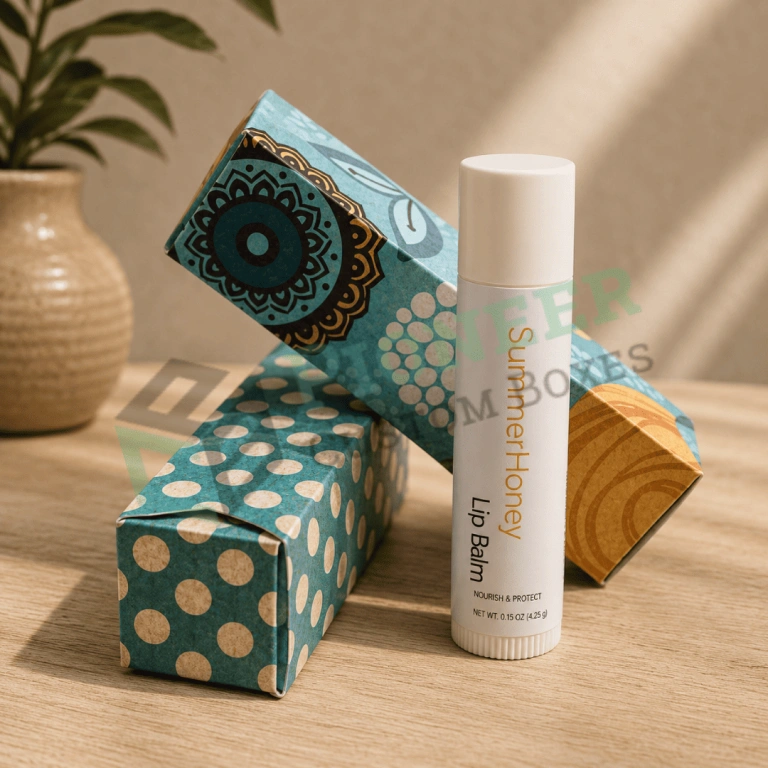
Custom chapstick packaging from Pioneer Custom Boxes helps lip care, skincare, cosmetic, wellness, pharmacy, and ecommerce brands package lip balm sticks, tubes, jars, tins, multipacks, sample packs, SPF lip balms, medicated lip care products, and retail lip balm sets with custom sizing, durable stock, printed panels, inserts, barcode zones, and free shipping across the USA.

Custom cream boxes from Pioneer Custom Boxes help skincare, cosmetic, clean beauty and personal care brands package glass jars, tubes, airless pumps and regimen sets without cracked scores or scuffed panels. Choose SBS, kraft or CRB board from 14pt to 24pt, collar and platform inserts, soft touch lamination, foil stamping, reserved ingredient panels, free design support, no MOQ and free USA shipping.

Custom eye shadow boxes protect delicate pigments while showcasing your palette with exceptional precision and style. Pioneer Custom Boxes engineers premium structures, inserts, and finishes that elevate visual impact and safeguard every pan during US retail and shipping. These bespoke boxes enhance unboxing, strengthen brand identity, and present your eye shadow collections with true professional quality.

Custom eyeliner boxes protect delicate applicators while delivering sharp, premium branding for US beauty shelves. Pioneer Custom Boxes engineers precise structures, luxury finishes, and tailored inserts that secure every eyeliner style, liquid, gel, pencil, or felt-tip. These custom boxes elevate presentation, strengthen product stability, and create a refined unboxing experience.

Custom hair extension boxes from Pioneer Custom Boxes help hair, wig, clip-in and salon supply brands package bundles without kinks or tangling. Choose long window boxes, hanging packs, rigid presentation boxes or tubes in SBS, kraft, E-flute or greyboard, with anti-static window film, weft cards, length stiffeners, soft touch, foil, free design support, no MOQ and free USA shipping.

Custom lip balm boxes manufactured by Pioneer Custom Boxes deliver precise fit, strong protection, and premium branding for tubes, tins, and multipack balms. These tailored cartons elevate presentation, reinforce ingredient messaging, and ensure every balm stays secure through retail display and nationwide US shipping.
Cosmetic brands across the USA need packaging that looks luxurious, protects fragile formulas, and earns trust instantly. Therefore, Pioneer Custom Boxes designs custom cosmetic boxes for makeup, skincare, haircare, and wellness lines that want a stronger retail presence and safer shipping across the United States.
Moreover, our US-focused cosmetic packaging blends structure, specs, and branding so your products compete confidently with big names.
Beauty shoppers in the USA decide quickly, so packaging must communicate quality, style, and relevance in seconds.
Therefore, our custom cosmetic boxes use a clean structure, balanced layout, and strong branding to stand out on shelves and screens.
Moreover, better presentation increases add-to-cart rates, improves perceived value, and supports higher pricing.
Cosmetic products often include glass bottles, fragile palettes, jars, tubes, and droppers that can break during US shipping.
Consequently, we design custom cosmetic packaging with appropriate board grades, snug product cavities, and secure closures to minimize movement.
Additionally, smart internal support helps reduce returns, leakage, and damage complaints.
US cosmetic buyers read ingredient lists, claims, and directions before they trust a brand. Therefore, our box layouts reserve clear spaces for INCI listings, usage instructions, warnings, batch details, and brand messages.
Moreover, organized panels keep packaging attractive while still satisfying regulatory and marketing needs.
What it is: High-quality paperboard used for most folding cartons.
Specs: Common ranges include 14pt, 16pt, 18pt, 20pt, and 24pt thickness options.
Why it matters: Cardstock provides crisp printing, good edge strength, and efficient storage for everyday cosmetic packaging. Furthermore, it works well for foundations, serums, lipsticks, mascaras, and brow products sold across the USA.
What it is: Thick, non-folding board wrapped with printed sheets for premium presentation.
Specs: Typical rigid board thickness ranges from 60pt up to 120pt, depending on weight and feel.
Why it matters: Rigid boxes deliver a heavy, luxurious hand-feel and protect glass bottles and high-value sets. Moreover, they suit prestige skincare, gift sets, and fragrance collections across US boutiques and department stores.
What it is: Natural brown or tinted stock with visible fiber texture.
Specs: Available in 14pt-24pt ranges and compatible with single-color or full-color printing.
Why it matters: Kraft packaging supports eco-conscious brand stories and clean beauty positioning. Additionally, it appeals strongly to US customers who prefer minimal and sustainable aesthetics.
What it is: Fluted board used for mailers, outers, and heavier kits.
Specs: Common cosmetic-friendly options include E-flute and B-flute, with customized wall thickness and burst strength.
Why it matters: Corrugated boxes protect subscription kits, PR mailers, and bulk shipments traveling across the USA. Furthermore, they pair well with inner cartons when brands ship multiple units together.
Every cosmetic product shape requires a different internal fit, especially for glass bottles and palettes.
Therefore, Pioneer Custom Boxes offers fully custom sizes for length, width, and depth instead of forcing fixed templates. Moreover, we can work from your product dimensions, 3D files, or physical samples.
For reference, many cosmetic cartons fall within these internal ranges:
Each finish signals a different price point. Small items: 1”-2.5” Length, 1”-2.5” Width, 3”-6” height Medium items: 2”-4” Length, 1.5 “-3” Width, 4”-8” height Kits and sets: 4”-10” Length, 2”-5” Width, 4”-10” height
These ranges adjust based on product, inserts, and desired presentation. Additionally, we help optimize size so boxes feel balanced in hand and on the shelf.
Description: Folding cartons with straight or reverse tuck closures at top and bottom.
Benefit: Assemble quickly, stack neatly, and work with most retail displays across the USA.
Best for: Lipsticks, brow pencils, mascaras, eyeliners, small serums, and ampoules.
Description: A fixed tray holds the product while a sleeve slides over for closure.
Benefit: Creates a smooth, premium reveal without overly complex engineering.
Best for: Serums, palettes, high-end single products, and giftable skincare units.
Description: Two-piece boxes where the lid lifts completely off the base.
Benefit: Signals luxury instantly and supports tissue, foam, or fabric-wrapped presentations.
Best for: Prestige skincare, collectible sets, and high-end fragrance packaging.
Description: Packaging that opens or folds into a counter or shelf display.
Benefit: Increases visibility and encourages impulse buying at US checkout counters.
Best for: Minis, sample kits, lip balms, trial tubes, and travel-size products.
Offset printing transfers ink from a metal plate to a rubber blanket, then onto the board. Plate setup takes time, yet the press afterwards runs thousands of sheets an hour. Unit cost therefore drops sharply above roughly one thousand cartons. Offset also holds fine detail with exceptional accuracy, which matters for ingredient lists set in small type and for delicate line work. Press operators adjust ink density across the run, so the last carton matches the first. Brands with strict color standards and national distribution belong here.
Digital printing skips plates completely. Your file goes straight to the press, so production starts within hours instead of days. Short runs cost far less as a result. Fifty cartons and five hundred cartons carry almost the same setup burden, which is close to none. Digital also supports variable data, letting each carton show a different shade name, batch code or regional label. New beauty brands testing a launch should start here, then move to offset once volume justifies plates.
We recommend honestly based on your quantity and artwork. If digital costs you less at your volume, we quote digital and say so.
CMYK builds every shade from cyan, magenta, yellow and black inks laid as microscopic dots. Your eye blends them into a continuous image. This system reproduces photography, gradients and complex illustration at low cost, so most full color cosmetic cartons print in CMYK. It struggles, however, with very bright oranges, deep navies and clean pastels, and those shades shift slightly between runs.
PMS uses premixed inks rather than blended dots. A Pantone number names an exact recipe, so the ink arrives already the right color. The shade then stays identical across every run and every year. Beauty brands built on one signature color depend on this. Each spot color occupies its own press unit, so Pantone costs more than CMYK. Many clients combine both, printing product photography in CMYK and the brand mark in a single Pantone ink.
RGB mixes red, green and blue light, so it belongs to screens rather than presses. Monitors emit color while printed board reflects it, and ink cannot reproduce everything light can create. We convert your artwork to CMYK or Pantone before production begins. Files supplied in RGB lose brightness during that conversion, especially in vivid greens and blues. Our prepress team converts, then flags any shade that shifts noticeably, so you approve the printed result rather than a screen preview.
Matte coating: Delivers a smooth, modern surface ideal for minimalist skincare lines. Gloss lamination: Increases brightness and contrast for vibrant cosmetic artwork. Soft-touch coating: Adds a velvety feel that reinforces luxury positioning. Foil stamping: Introduces metallic accents for logos, borders, or text highlights. Spot UV: Adds selective shine to specific design areas. Embossing and debossing: Creates raised or recessed elements for tactile branding.
These finishes help US cosmetic brands communicate price point, personality, and quality before a customer opens the box.
Fragrance bottles are fragile and premium, so they need packaging that protects glass while amplifying scent identity.
Therefore, we design custom perfume boxes with rigid structures, die-cut or foam inserts, and refined finishes suitable for US fragrance counters and online unboxings.
Moreover, thoughtful internal sizing prevents bottle movement and helps preserve perceived value.
Face creams, body creams, and treatment jars need boxes with room for ingredients, benefits, and skincare guidance.
Consequently, our custom cream boxes include clear panel space for claims, usage steps, and skin-type details while still hugging jars securely.
Additionally, brands can choose kraft, white, or colored stocks to align with clean beauty or clinical aesthetics.
Hair extensions require long, structured packaging that prevents tangling, bending, and moisture damage during storage and shipping.
Therefore, we build custom hair extension boxes with elongated profiles, hanger options, and inner supports that hold bundles neatly.
Furthermore, US salons, stylists, and online hair brands use these boxes to showcase length, texture, and color clearly.
We offer board grades from 14pt to 24pt for folding cartons, plus rigid board from 60pt to 120pt.
You can match wall strength to product weight and price point, moreover, corrugated options with E-flute or B-flute support heavier kits and shipping demands in the USA.
Inserts keep products centered, upright, and safe. Options include:
Die-cut board inserts. Foam or EVA inserts. Molded pulp inserts. Card bridges and separators.
These choices help protect droppers, jars, bottles, and palettes during US distribution.
Optional windows allow shoppers to preview product shade, texture, or design without opening the box. Additionally, brands can choose PVC, PET, or eco-clear alternatives depending on sustainability goals.
Interior printing adds surprise and reinforces brand personality. We can include color floods, patterns, usage icons, QR codes, or promotional messages inside the box. Moreover, this approach enhances unboxing experiences for US customers.
For eco-minded brands, we offer kraft materials, recycled fiber content, and soy or water-based inks. Additionally, right-sized packaging and optimized layouts reduce material usage and freight impact across the USA.
We provide flexible MOQs in the USA so startups can launch small runs while established brands scale confidently.
Moreover, our team suggests structures and finishes that remain cost-effective at different quantity levels.
Two quotes for the same carton can differ sharply, and the variable is almost always a specification detail rather than a markup. Here is what actually moves the number, in the order it matters.
Size leads, because board is priced by area. Trimming a quarter inch from each dimension cuts material use by several percent, and that saving repeats on every unit you ever order. Board weight follows. Moving from 16pt to 24pt raises cost noticeably, so specify heavier stock only where the product genuinely needs the support.
Finishing is third, and it is where beauty budgets usually go. Soft touch lamination, foil stamping and spot UV each add a pass through the plant. A single foil hit on the logo costs far less than foil across a full panel, yet customers read them almost identically. Spot color count comes next, since each Pantone ink occupies its own press unit.
Quantity sits fifth. Plate and setup costs spread across the run, so unit price falls sharply between one hundred and one thousand pieces. Structural extras finish the list, and we price windows, inserts, magnetic closures and ribbon pulls separately so you can see exactly what each one costs before deciding.
| Cost Driver | Impact | How to Reduce It |
|---|---|---|
| Carton dimensions | Highest | Measure the product precisely, remove excess clearance |
| Board weight | High | Match caliper to product weight rather than over-specifying |
| Finishing passes | High | Foil the logo rather than a full panel |
| Spot color count | Moderate | Imagery in CMYK, one Pantone for the brand mark |
| Order quantity | Moderate | Combine SKUs sharing a structure into one press run |
| Structural add-ons | Moderate | Keep windows and inserts only where they help the sale |
Lead time in the USA depends on box style, quantities, and finishing complexity. Typically, we outline standard production windows plus available rush solutions for time-sensitive launches.
Furthermore, precise scheduling helps you coordinate inventory, campaigns, and retailer deliveries.
We offer free shipping all over the USA on qualifying cosmetic packaging orders. Consequently, brands simplify logistics and can focus their budget on product development, marketing, and growth.
Ordering takes four steps, and our team handles the technical parts of each one.
First, send your product dimensions and quantity. If you have the product but no measurements, describe it and we will work the sizing out with you. Second, we return a free dieline and a written quote within one business day. That dieline maps every fold, glue tab, bleed area and panel on a single flat sheet, so your designer never has to guess where a crease will land.
Third, you approve a digital proof. We show the artwork in position on the structure, including how each finish will behave. Beauty brands should request a physical sample whenever soft touch or foil is involved, because those finishes photograph differently than they feel in the hand. Fourth, we produce and ship, and delivery across the United States costs nothing.
Reorders skip straight to production, since we keep your dieline, Pantone references and print files on record. Most repeat orders confirm in a single message.
Beauty packaging gets inspected closely by retail buyers and by customers holding it under bathroom lighting. Every order passes a documented check before it leaves our floor.
| Check | What We Verify | Why It Matters |
|---|---|---|
| Dimensional accuracy | Internal fit against the approved dieline | A tight carton buckles during filling |
| Color match | Pantone against a physical draw-down | Signature shades must hold across runs |
| Finish coverage | Soft touch and spot UV registration | Misaligned gloss is highly visible |
| Foil adhesion | Tape test on stamped areas | Lifting foil destroys premium positioning |
| Score and fold quality | Clean folds with no cracking | Cracked scores show white board edges |
| Ingredient panel legibility | Type size and contrast | Regulators and customers both need to read it |
| Barcode readability | Scan test on a flat matte area | Gloss lamination causes scan failures |
| Window film bond | Adhesion and clarity | Peeling film reads as cheap immediately |
If anything fails, we remake it rather than ship it.
Most buyers know the product but not the specification. This guide moves from what you sell to what you should order.
| If You Sell | Structure | Board | Finish That Suits It |
|---|---|---|---|
| Serums and dropper bottles | Straight tuck end carton | 16pt SBS | Soft touch with foil logo |
| Creams and jars | Reverse tuck or two-piece rigid | 18pt or rigid | Matte lamination, spot UV |
| Lipsticks and slim items | Slim tuck carton | 14pt to 16pt | Foil stamping |
| Palettes and compacts | Shoulder box or magnetic rigid | Rigid | Soft touch, debossed logo |
| Sample and travel sets | Multi-cavity insert box | 18pt with insert | Gloss or matte |
| Gift and holiday sets | Rigid lid and base | Rigid with wrap | Foil, ribbon pull |
| Refill pouches and minis | Small tuck or sleeve | 14pt | Simple matte |
| Salon and professional lines | Sturdy tuck with hang tab | 18pt | Matte, high-contrast type |
If your product sits between two rows, choose the sturdier structure. Returns caused by damaged packaging cost far more than the few cents per carton you save.
Beauty brands reorder for years, and a signature color that drifts between batches gets noticed immediately on a shelf of your own products.
We keep your dieline, board specification, Pantone references and print files on record permanently. Reorders run against that stored specification rather than being rebuilt, so batch twelve matches batch one. If regulations or ingredients change your panel copy, we version the file and show you exactly what differs from the previous run. Nothing changes silently between orders.
For brands running many SKUs, we can hold one structural template and vary only the printed artwork. That keeps your whole range visually consistent while letting individual products differ, and it usually lowers unit cost because the die is already cut.
Cosmetic packaging carries required information, and the space it needs should be reserved before any artwork is placed. Doing it afterwards is how brands end up reprinting.
A cosmetic carton typically needs room for the product identity, net quantity of contents, the ingredient declaration in descending order, and the name and place of business of the manufacturer or distributor. Each has a legibility threshold, so none can simply be shrunk to fit a design. Products making sun protection or drug claims carry further requirements again.
We reserve those zones on the dieline first, so your designer works around fixed areas rather than discovering a conflict at proof stage. We also keep foil, heavy texture and gloss lamination away from the barcode, because those finishes cause scan failures at the register.
To be clear about responsibility: we manufacture the packaging and build the space your labeling requires. Your regulatory advisor confirms the exact wording and which rules apply to your formulation. Send us that specification and we lay it out precisely, and we flag any design element that appears to encroach on a required panel before the press runs.
We manufacture in the United States and ship to all fifty states. Regional demand differs noticeably, and our recommendations shift with it.
Los Angeles, San Diego and the Bay Area send the highest volume of soft touch skincare cartons, driven by the indie beauty scene there. New York and New Jersey brands usually need fast turnarounds timed to retail resets and press windows. Miami and Orlando clients favor bold color and foil, which suits the market and the climate of their retail floors.
Meanwhile Dallas, Houston and Austin brands order growing volumes of clean beauty packaging on kraft and recycled stocks. Chicago and Minneapolis clients tend to run larger, more standardized programs across multiple SKUs. Seattle and Portland buyers ask about recycled content and documentation more than any other region.
Wherever your fulfillment sits, delivery costs nothing extra. We ship free across the continental United States to studios, warehouses, 3PL facilities and homes.
A skincare brand in Colorado came to us after two failed runs elsewhere. Their serum cartons arrived with a visible crease across the front panel, right through the product photograph.
The previous supplier had used a reverse tuck die on 14pt board. On that structure the bottom flap score sits on the front face, and their heavy glass bottle made the thin board buckle around it.
We changed two things. First we moved them to a straight tuck end structure, which puts both flaps at the back and leaves the front completely clean. Second we stepped the board to 16pt, which stopped the buckling. Soft touch lamination then hid the remaining micro texture entirely.
Their retail partner accepted the packaging without comment and complaints about damaged cartons stopped. Unit cost rose by about four cents, while the reprint they avoided would have cost thousands. Structural decisions rarely appear on a quote comparison, yet they decide whether packaging survives real handling.
Written by the Pioneer Custom Boxes Editorial Team · Published September 2026 · Last updated September 2026 · Reviewed by our packaging production team
Beauty buyers increasingly ask what the carton is made of, and vague claims invite challenge. We supply specifics you can stand behind.
Most SBS and kraft stock we run carries post consumer recycled fiber, and we can state the exact percentage for your order when you need it for reporting or a retailer questionnaire. Higher recycled content shows marginally more color variation between batches, which most clean beauty brands treat as a feature rather than a fault.
Plastic lamination is the usual culprit. Separating film from fiber is impractical at scale, so a laminated carton leaves the paper stream. Water based coatings protect the surface while keeping the box curbside recyclable, and we default to them wherever the finish allows. Foil and metallized board create the same problem in smaller areas, so we keep foil to logo-sized hits when recyclability is a stated goal.
We print with soy and vegetable based inks wherever the design permits. These release fewer volatile compounds than petroleum alternatives and de-ink more readily during recycling. Starch based adhesives replace synthetic glue on structures that allow it. Together those choices keep a finished carton inside a standard paper recycling stream.
We tell you exactly what your carton contains so your marketing team can describe it accurately. What we will not do is supply wording for an environmental claim, because those are regulated and the responsibility sits with you. Precise material facts protect you better than a broad claim ever will.
Every dieline we cut is custom, so treat these as starting points rather than a catalog. They cover the requests we receive most often.
| Product | Typical Size (L x W x D, inches) | Suggested Board | Common Finish |
|---|---|---|---|
| Lip balm and mascara | 1 x 1 x 3.5 | 14pt SBS | Matte with foil logo |
| Serum and dropper bottle | 1.5 x 1.5 x 4.5 | 16pt SBS | Soft touch |
| Cream jar, 50ml | 2.5 x 2.5 x 2.5 | 18pt SBS | Matte, spot UV |
| Foundation bottle | 1.75 x 1.75 x 5 | 16pt SBS | Soft touch, foil |
| Palette or compact | 5 x 4 x 0.75 | Rigid or 24pt | Soft touch, deboss |
| Perfume bottle, 50ml | 2.5 x 2.5 x 4 | Rigid with insert | Foil, ribbon pull |
| Travel or sample set | 6 x 4 x 2 | 18pt with insert | Matte |
| Sheet mask sachet carton | 5 x 0.75 x 7 | 16pt SBS | Gloss |
Measure the product rather than an existing box, then add roughly a sixteenth of an inch on each internal dimension so it loads without buckling the board. Our design team checks those figures free of charge before we cut anything.
Our in house design team supports every cosmetic order at no charge, and most beauty brands use it heavily.
Send your product dimensions and we return a free dieline within one business day. That dieline shows every fold, glue tab, bleed area and reserved panel on one flat sheet, so your designer places artwork knowing exactly where each crease falls. Arriving with only a logo is completely normal. Our designers build the full layout, position the ingredient declaration legibly, and place the barcode on a flat matte area so it scans first time.
We accept AI, PSD, PDF and high resolution TIFF files. Vector artwork prints sharpest, which matters most for logos and the small type in an ingredient list. Raster images should reach 300 DPI at final print size, because anything lower softens once we scale it. Our prepress team checks resolution, ink coverage, bleed and panel clearance on every file before the press runs.
Designing for finish matters too, and it is where inexperienced files usually fail. Soft touch coating slightly mutes color, so we lift saturation to compensate. Foil needs its own separate layer rather than a gold-colored fill. Spot UV needs a mask file marking exactly which areas stay glossy. We prepare all three for you if your designer has not worked in packaging before.
Three things cause almost every delay we see. Artwork supplied in RGB needs conversion and re-approval. Missing Pantone references force us to guess and then reprint a proof. Ingredient copy that arrives after design has to be squeezed into a finished layout. Sending all three up front usually saves several days.
A beautiful carton that lets the bottle move has failed at its main job. Insert choice depends on weight, fragility and how the customer opens it.
Glass droppers and perfume bottles need a recessed cavity so the neck never bears load when cartons stack. Foam and molded pulp hold that shape best. Palettes and compacts need a flat cradle that stops sliding without gripping so hard the customer struggles to lift it out. Lightweight items such as sheet masks often need nothing at all, and adding an insert there simply raises cost.
For ecommerce, remember that the presentation carton is rarely the shipping carton. A printed cosmetic box traveling alone in a mailer arrives with crushed corners far more often than brands expect. We usually recommend an outer shipper, so the box the customer opens is not the box the carrier handled.
Getting into a retailer is hard enough without packaging problems causing a rejection late in the process. Buyers check a consistent set of things, and none of them are about how pretty the box looks.
Buyers measure your carton against their shelf pitch and their planogram. A box an eighth of an inch too tall for the shelf simply will not be listed. Ask for the fixture dimensions before you finalize the dieline, because adjusting a die costs almost nothing while a rejected listing costs a season.
Scanners need a flat, matte area with adequate quiet space around the code. Gloss lamination, foil and curved surfaces all cause read failures, and a code that fails at the register gets your product pulled from the floor. We leave a deliberate matte window for the barcode on every retail carton.
Buyers increasingly check that the ingredient declaration and net contents are actually readable rather than technically present. Type set too small to read invites a compliance query later, and most retailers would rather avoid that risk entirely by declining the product.
Your retail carton is only half the submission. Buyers also want to know how many units ship in a case, whether the case survives their distribution center handling, and whether it opens cleanly for shelf stocking. We size the case around your carton so the count is efficient and nothing rattles.
The same errors recur across beauty brands, and each one is avoidable at the dieline stage rather than after a reprint.
Under-specifying caliper leads the list. A carton chosen for print quality alone bows around a glass jar during filling, and the operator then forces it, which cracks the score. Specify board against the loaded weight, not the empty box.
Ignoring ingredient panel space is second. Cosmetic labeling requires specific information at a legible size, and discovering that after artwork approval usually means starting again. We reserve those zones before any artwork is placed.
Placing a barcode over gloss lamination or foil causes scan failures at retail, and buyers escalate that faster than almost any other complaint. Keep codes on flat matte areas with proper quiet zones.
Over-finishing is a quieter waste. Soft touch plus foil plus spot UV plus embossing on one carton produces a busy result that reads as trying too hard, and it costs four press passes. One strong finish on a restrained design almost always looks more expensive.
Finally, approving artwork without a physical sample. Soft touch and foil photograph nothing like they feel, and a fold running through a product image is invisible on screen and obvious in the hand.
Beauty moves quickly, and the ability to test packaging before committing to volume is often worth more than a lower unit price.
Digital printing makes that practical. A run of two hundred cartons carries no plate cost, so you can put a concept in front of buyers, run a limited edition or test two designs against each other without a large commitment. Zero minimum order quantity means the quantity genuinely matches the test.
Sampling programs work the same way. Travel and sachet-size cartons in small runs let you support an influencer campaign or a subscription box collaboration without changing your main production plan.
When a concept proves itself, we move the same artwork onto offset for volume and match the color against the digital sample you approved. Nothing about the design has to change, and your unit cost drops as the quantity grows.
Send us the concept and the quantity you want to test, and we will quote both the trial run and the scaled version so you can see the whole path before you start.
Pioneer Custom Boxes produces custom cosmetic boxes that support brand elevation, product protection, and clear communication for US beauty businesses.
Whether you need everyday cartons, luxury rigid sets, custom perfume boxes, custom cream boxes, or custom hair extension boxes, we build packaging that fits your products and your market.
Additionally, you can contact us today to discuss MOQs in the USA, cost estimation in the USA, lead time in the USA, and free shipping all over the USA for your next cosmetic packaging project.