Custom Paperboard Boxes That Protect, Present & Elevate Your Brand
Custom paperboard boxes are one of the most commercially effective packaging solutions for modern B2B brands. They combine lightweight strength, premium print surfaces, structural flexibility, and cost-efficient production.
At Pioneer Custom Boxes, we manufacture fully customized paperboard packaging with zero minimum order quantity, free shipping across the USA, flexible lead times, and free professional design support.
Whether you are a startup testing a new SKU or an established retailer scaling nationwide distribution, our custom paperboard boxes deliver engineered durability, consistent branding, and controlled production costs.
Get a free quote now and start building packaging that performs in retail, e-commerce, and wholesale environments.
Why Custom Paperboard Boxes Are a Smart Commercial Investment
Retail and e-commerce brands require packaging that protects products while increasing perceived value. Custom paperboard boxes provide a rigid yet lightweight structure that supports high-resolution printing, premium coatings, and advanced finishing techniques without increasing freight weight.
Unlike generic stock boxes, fully customized cartons allow complete control over size, structure, artwork, and finishing.
This flexibility improves brand consistency across product lines and reduces long-term packaging inefficiencies.
Many growing brands also integrate paperboard formats into their custom subscription boxes programs to maintain consistent presentation across recurring shipments.
Structural Engineering & Folding Styles for Custom Paperboard Boxes
Every high-performing carton begins with structural analysis. We evaluate product weight, stacking conditions, warehouse storage time, and transit handling before finalizing dielines.
Reverse Tuck, Straight Tuck & Auto-Lock Options
We manufacture reverse tuck end (RTE), straight tuck end (STE), auto-lock bottom, crash-lock bottom, and tuck top boxes.
Auto-lock bases increase load-bearing strength for heavier retail items, while straight tuck ends improve packing speed in high-volume environments.
GSM Ranges & Caliper Selection for Custom Paperboard Boxes
Most custom paperboard boxes are produced in the 250-400 GSM range, depending on product weight and stacking pressure.
Calipers typically range from 14pt to 24pt. Higher calipers improve compression resistance during pallet stacking and long-distance shipping.
If additional transit protection is required, we may recommend pairing primary retail cartons with a printed corrugated box as an outer shipping layer.
Die-Cutting Precision & Crease Control
Accurate die-cutting ensures consistent fold lines and secure locking tabs. Proper crease depth prevents cracking along fold edges, particularly on coated or high-GSM boards. This precision guarantees smooth assembly across large production runs.
Food & Bakery Packaging Solutions
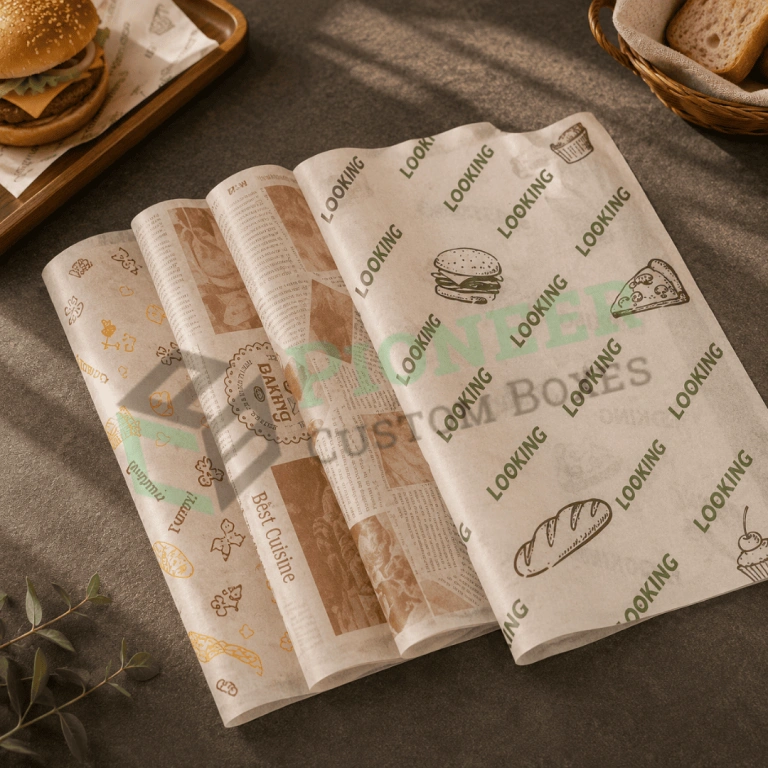
Paperboard remains a preferred option for lightweight food and bakery applications that require clean presentation and reliable structure. We engineer packaging that balances durability with brand visibility.
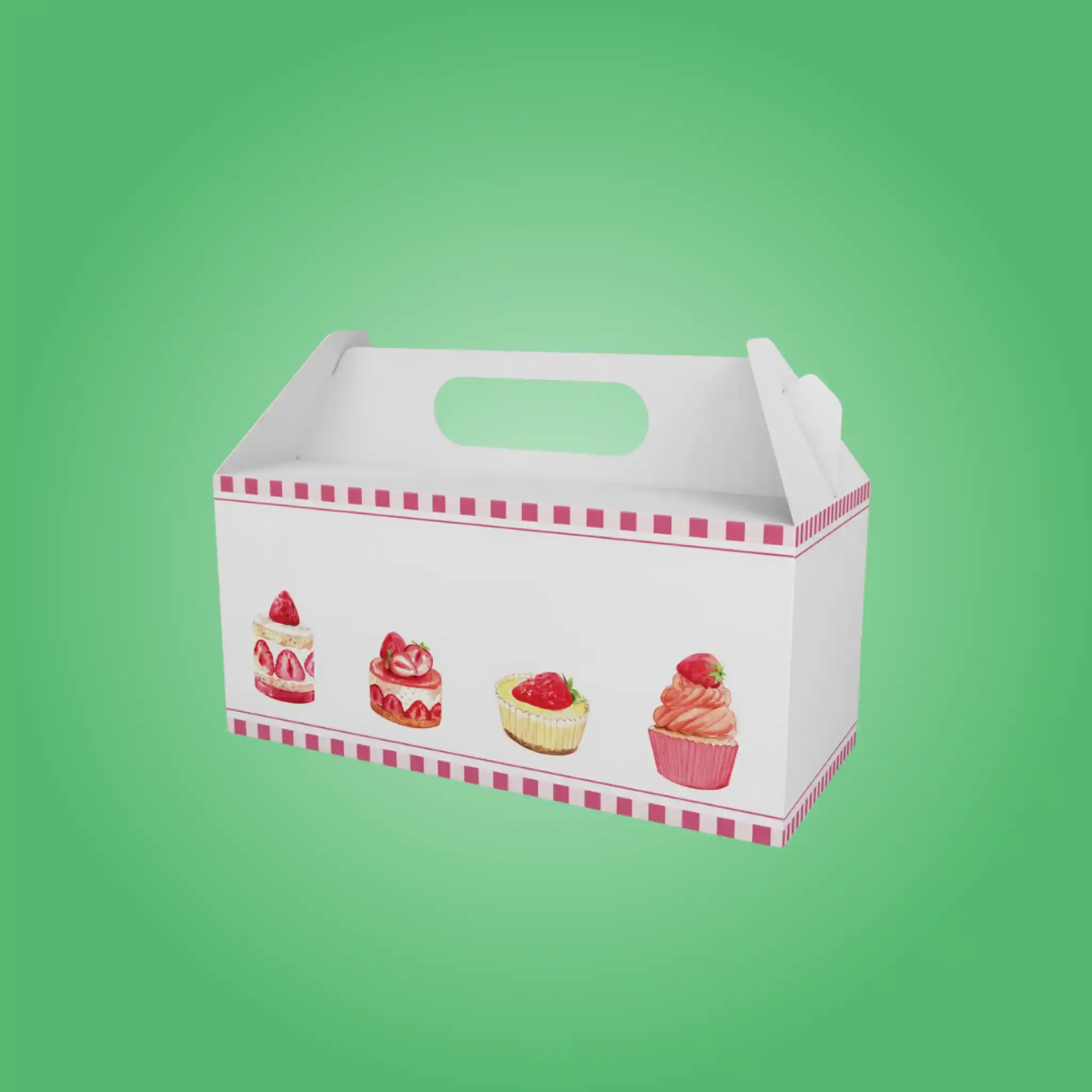
Our custom bakery paper boxes are designed for pastries, cupcakes, cookies, and specialty desserts. These cartons support vibrant branding while maintaining structural integrity during transport and display.
Material Grades & Performance Characteristics
Material selection directly impacts rigidity, finish compatibility, and print sharpness.
Solid Bleached Sulfate (SBS)
SBS offers a bright white surface that enhances CMYK vibrancy and fine graphic detail. It is commonly used for cosmetics, supplements, electronics, and premium retail packaging.
Natural Kraft Board
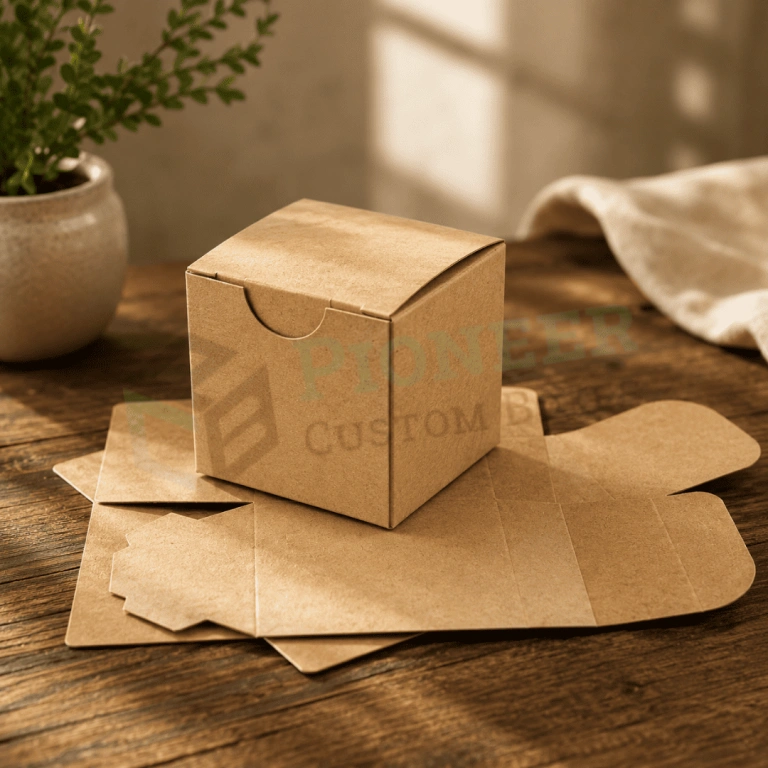
Natural kraft delivers an eco-conscious aesthetic favored by sustainable brands. It is frequently selected for gift kraft box concepts and organic product lines.
Food-Specific Board Options
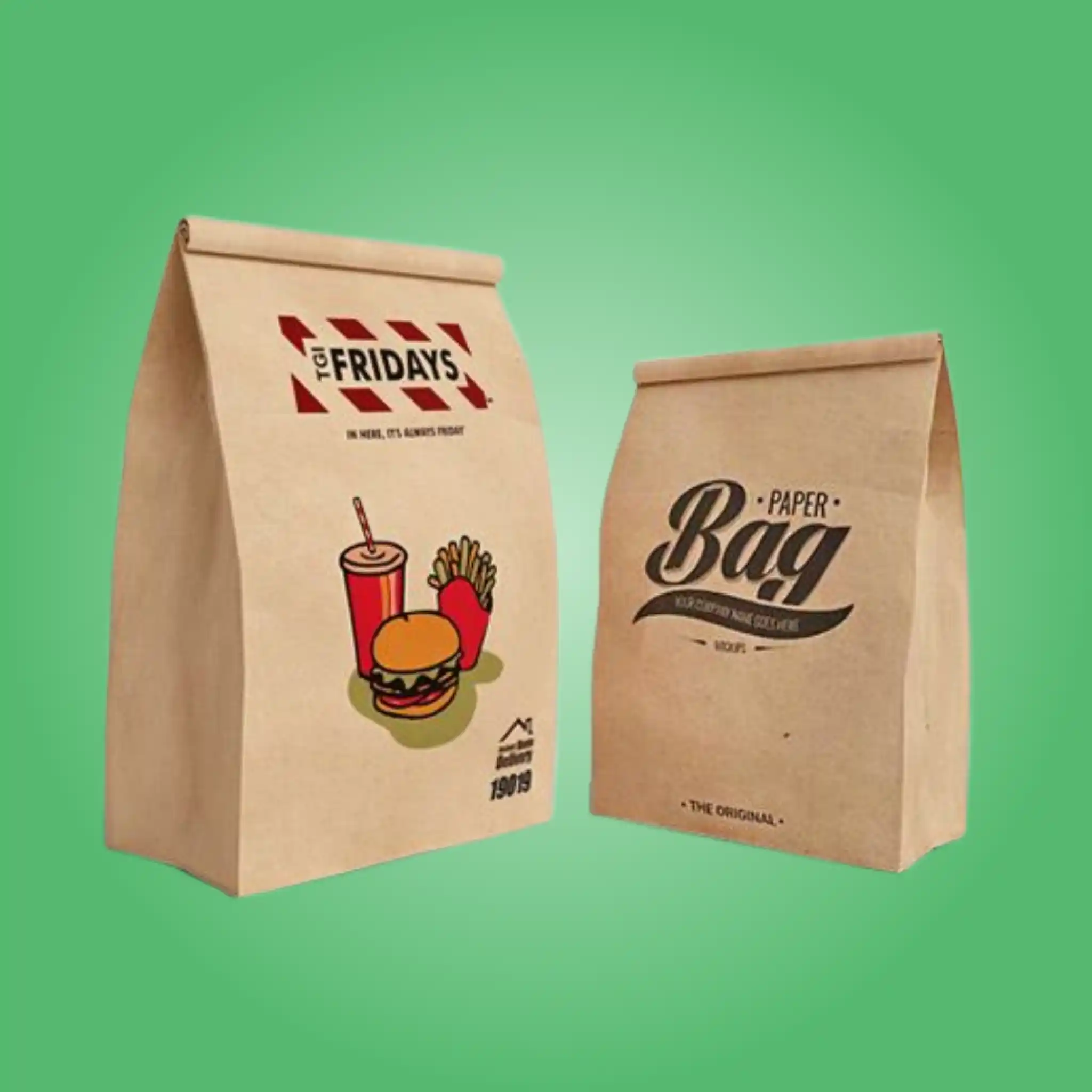
For takeaway and packaged goods, we also produce custom food paper boxes engineered for indirect food contact while maintaining strong structural performance.
We guide clients through GSM and caliper selection to ensure every custom paperboard box meets functional and commercial expectations.
Premium Gift & Retail Presentation Packaging
Seasonal campaigns and promotional launches require packaging that enhances product value at first glance. Retail-ready cartons must fold cleanly, present graphics sharply, and support specialty finishes.
Our custom gift paper boxes are engineered for holiday programs, product launches, and boutique retail collections. These cartons support foil stamping, embossing, and high-end coatings that increase shelf appeal.
Functional Retail Packaging with Carrying Features
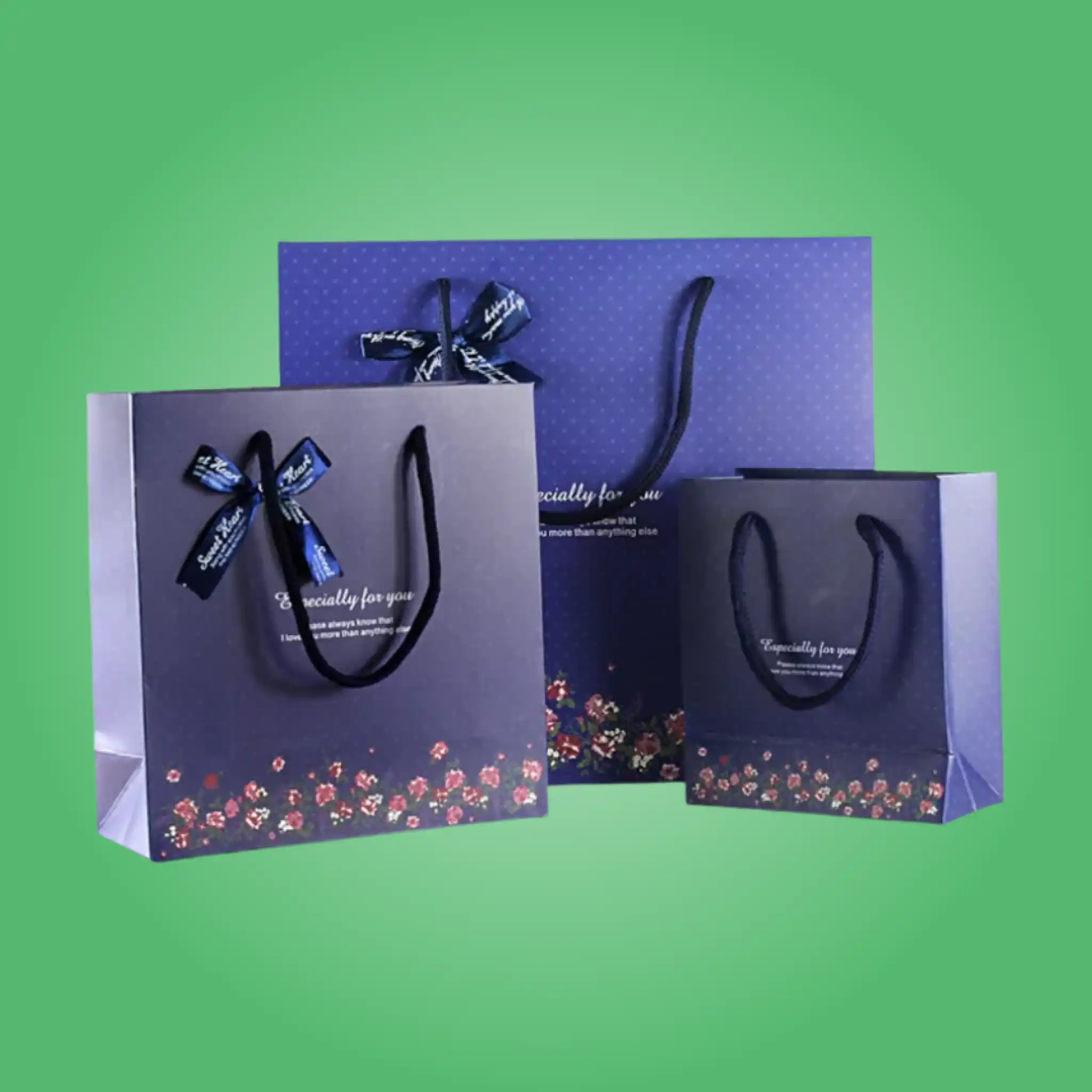
Practical design improves user experience and retail convenience. For in-store portability and event merchandising, we manufacture custom paper boxes with handle that combine structural stability with ease of carrying.
These designs work especially well for boutique retailers and specialty product lines that require strong visual presence and transport convenience.
Premium Lid-Based Presentation Packaging
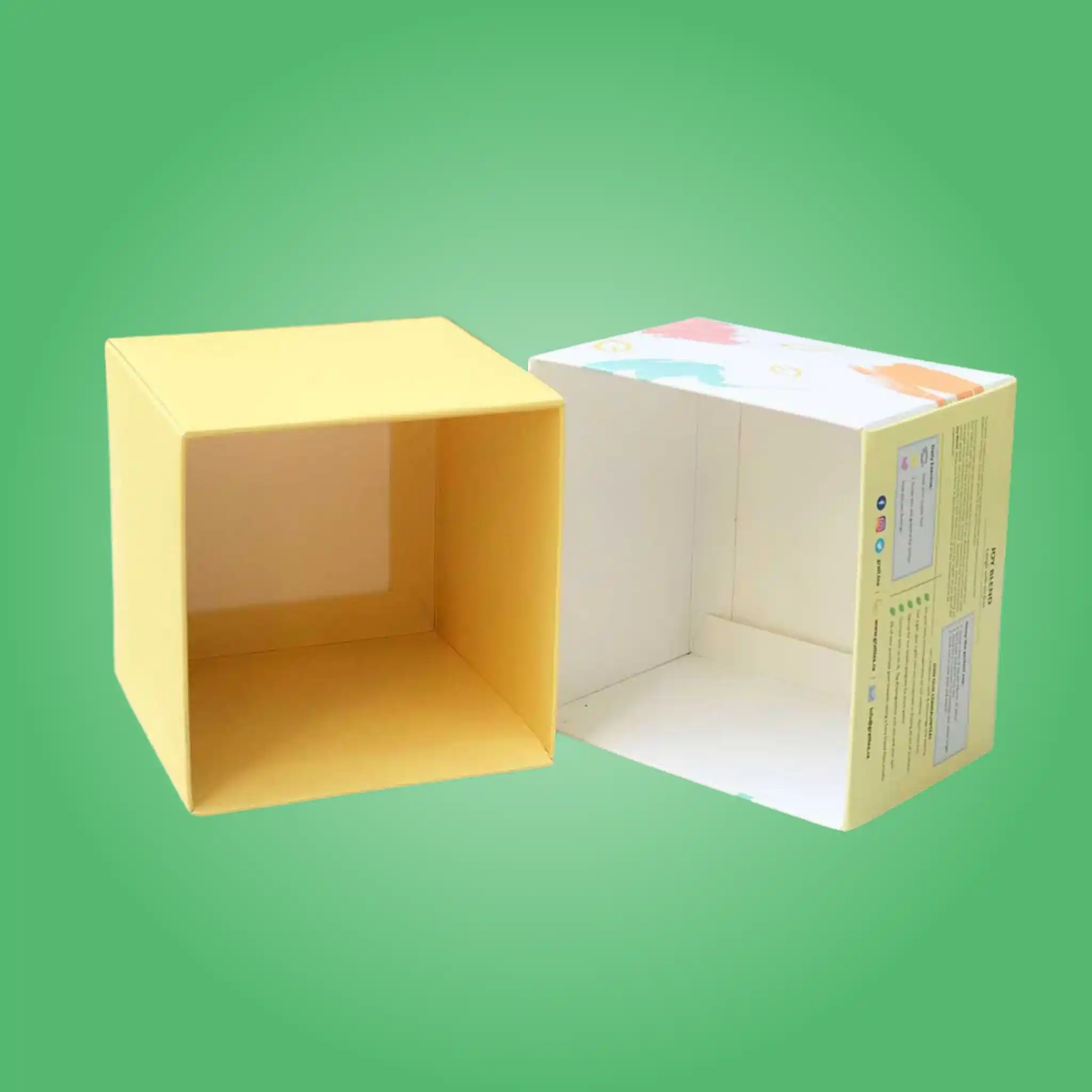
Luxury packaging often relies on structured reveal experiences. For brands that prioritize unboxing appeal, we produce custom paper boxes with lids that create a refined opening mechanism suitable for curated kits and promotional packaging.
This structure enhances product presentation while maintaining paperboard efficiency and scalability.
Advanced Printing Technology & Color Accuracy for Custom Paperboard Boxes
Print quality defines brand credibility. We offer offset printing for high-volume production requiring precise color consistency and fine detail. Digital printing supports short runs, rapid launches, and product testing.
We print using CMYK for full-color designs and Pantone (PMS) systems for exact brand matching. If artwork arrives in RGB format, our design team converts files accurately before production begins.
Marketing teams frequently develop premium pr boxes using advanced finishing and color control to strengthen campaign impact.
Finishes & Surface Enhancements for Custom Paperboard Boxes
Surface treatments protect cartons while elevating brand perception. Gloss lamination enhances vibrancy and scratch resistance.
Matte lamination provides a refined appearance suitable for upscale retail packaging. Soft-touch coatings add a tactile premium feel.
Foil stamping, spot UV, embossing, and debossing allow logos and focal elements to stand out. Many brands coordinate these finishes with cute shipping boxes to maintain cohesive branding across primary and secondary packaging layers.
Printing Methods for Custom Paperboard Boxes
Print method decides how your carton looks and what it costs, so we explain each option separately instead of quoting one blended figure.
Offset Printing
Offset transfers ink from metal plates through a rubber blanket onto the paperboard sheet. It delivers the finest detail, the smoothest gradients and the most consistent color across a long run, which is why national retail brands specify it. Plate setup carries an upfront cost, so offset becomes the economical choice once quantities pass roughly one thousand cartons. Beyond that point, unit price falls steadily as volume grows.
Digital Printing
Digital prints straight from your artwork file with no plates involved. Setup cost disappears, which makes short runs, prototypes and seasonal editions affordable. Digital also supports variable data, so each carton in a single run can carry a different flavor, size or batch code. Color reproduction is excellent today, though very large flat areas of a single color still lay down more evenly on offset.
Flexographic Printing
Flexo prints from flexible plates and suits corrugated and heavier stocks better than fine folding board. Where a paperboard carton ships inside a printed outer case, that case usually runs flexo, since large simple graphics reproduce economically on fluted material.
Color Systems Explained for Paperboard Packaging
Color drives shelf recognition, and the three systems below serve different jobs. Choosing the right one prevents a brand shade drifting between production runs.
CMYK
CMYK builds every color from cyan, magenta, yellow and black separations. It reproduces photography, product imagery and gradients convincingly, and it costs the least because four inks cover the whole design. Certain vivid and metallic shades sit outside its range, so brands with a distinctive house color usually add a spot ink alongside it.
PMS Spot Colors
The Pantone Matching System uses pre-mixed inks, so a specified shade prints identically on every run and across different board types. If your brand is recognized by a color, that color belongs in PMS rather than CMYK. We store your Pantone references permanently and match against a physical draw-down before every press run.
RGB
RGB is a screen color space and cannot print directly. Your website, renders and social assets all live in RGB, and those values require conversion before production. Vivid screen colors often shift during conversion, so we perform it ourselves and show you the printed outcome first. Supply artwork in CMYK or with Pantone references whenever possible.
Finishing Options Explained One by One
Each finish below runs as a separate pass through the plant, so we price them individually. That way you keep only the treatments that earn their cost on your product.
Gloss Lamination
Gloss film raises color saturation and makes imagery look vivid under retail lighting. It also resists moisture and scuffing, which suits cartons that travel and get handled repeatedly. Gloss does show fingerprints, so it works better on busy artwork than on large dark panels.
Matte Lamination
Matte film gives a soft, understated surface that reads as considered rather than loud. Premium and wellness brands choose it most often, and it makes foil or spot UV stand out sharply by contrast. Matte scuffs more visibly than gloss on dark colors, so we sometimes add a scuff-resistant coating underneath.
Soft Touch Lamination
Soft touch produces a velvet surface that feels considerably more expensive than it costs. It resists fingerprints well and adds a tactile moment before the customer even opens anything. Luxury cosmetic and gift cartons use it as a default base finish.
Foil Stamping
Hot foil presses metallic film into the board under heat and pressure. Gold and silver dominate, though copper, rose gold and holographic options all exist. A single foil hit on the logo costs a fraction of full-panel coverage, and customers read the two almost identically.
Spot UV Coating
Spot UV applies high gloss varnish to selected areas only. Against matte lamination the contrast is striking, and it draws the eye exactly where you want it. Keep spot UV away from barcodes, because gloss causes scanning failures at checkout.
Embossing and Debossing
Embossing raises an area of board while debossing presses it in. Both create texture that customers register through touch before conscious thought. Combining a deboss with foil produces the crisp, jeweled effect common on premium retail cartons.
Window Patching
A clear food safe window lets shoppers see the product without opening the carton, and visible product sells itself in food, bakery and gift categories. We seal PET film to the aperture, and frosted or shaped windows are available where a plain rectangle feels ordinary.
Add-Ons That Improve Function, Not Just Appearance
Structural extras change how a carton performs in a store, in a warehouse and in a customer hand.
| Add-On |
What It Does |
Best Suited To |
| Integrated handle |
Lets customers carry the pack |
Bakery, gift sets, multipacks |
| Hang tab |
Allows peg display |
Accessories and small retail items |
| Tear strip |
Opens cleanly without tools |
Subscription and retail cartons |
| Paperboard insert |
Holds contents in position |
Multi-piece kits and sets |
| Auto-lock base |
Assembles in one motion |
High-volume hand packing |
| Tamper-evident seal |
Shows if the pack was opened |
Food, wellness and cosmetics |
| Reclosable tuck |
Allows repeat opening |
Snacks and consumables |
| Printed interior |
Extends the unboxing moment |
Ecommerce and gifting |
Zero MOQ, Scalable Production & Nationwide Delivery
We operate with a zero minimum order quantity policy, allowing businesses to test packaging concepts without committing to high-volume production. As demand increases, we scale output while maintaining consistent quality control.
We provide free shipping throughout the United States, including California, Texas, Florida, New York, Illinois, and all major commercial regions. Our logistics network supports delivery to warehouses, fulfillment centers, and retail chains across all 50 states.
Lead times depend on structural complexity and print method. Standard production schedules remain efficient, and rush manufacturing is available for urgent projects.
Free Professional Packaging Design Services
Effective packaging requires technical precision. Our in-house design team provides free dieline creation, structural optimization, artwork refinement, and print-ready file preparation.
Brands developing recurring packaging programs often request subscription box design consultation to ensure consistent layout alignment across editions.
We provide digital proofs before production to eliminate risk and ensure every custom paperboard box meets commercial standards.
Get a free quote now and let our experts transform your packaging concept into a scalable retail solution.
Common Paperboard Box Sizes to Start From
These dimensions cover most cartons we produce across retail, food and ecommerce. Treat them as reference points, since every die is cut to your exact product at no extra charge.
| Application |
Typical Size (inches) |
Caliper |
Structure |
| Cosmetic serum carton |
1.5 x 1.5 x 4 |
16pt SBS |
Straight tuck end |
| Cream jar carton |
3 x 3 x 3 |
18pt SBS |
Reverse tuck end |
| Supplement bottle box |
2.5 x 2.5 x 5 |
18pt SBS |
Straight tuck with insert |
| Soap and bar carton |
3.5 x 2.5 x 1 |
16pt SBS |
Tuck with window |
| Bakery pastry box |
8 x 8 x 3 |
18pt food board |
Auto-lock base |
| Cereal and dry goods |
8 x 11 x 2.5 |
20pt SBS |
Glued side seam |
| Electronics accessory |
6 x 4 x 1.5 |
18pt SBS |
Tuck with paperboard tray |
| Apparel and softgoods |
10 x 8 x 2 |
20pt SBS |
Lid and base |
| Gift and hamper carton |
12 x 9 x 4 |
24pt or rigid |
Lift-off lid |
| Subscription insert box |
9 x 6 x 2 |
18pt SBS |
Printed interior |
Send your product dimensions and quantity, and we return a free dieline sized precisely to them within one business day.
What Actually Drives the Cost of a Paperboard Box
Two quotes for what looks like the same carton can differ sharply. The variables below explain nearly all of that gap, and most of them are within your control.
Carton size leads, because board is priced by area. Removing a quarter inch of unnecessary clearance from each dimension cuts material on every unit you will ever order. We measure your product rather than working from a rounded figure, and that alone often saves several percent.
Caliper follows. Moving from 16pt to 24pt raises material cost noticeably, so the heavier board belongs only where weight or stacking genuinely demands it. A lightweight cosmetic carton gains nothing from 24pt, while a bakery box carrying a cake definitely needs it.
Finishing sits third, and it is where budgets quietly disappear. Each lamination, foil or spot UV pass adds a step. Spot color count comes next, since every Pantone ink occupies its own press unit. Quantity finishes the list, because plate and setup costs spread across the run.
| Cost Driver |
Impact |
How to Reduce It |
| Carton dimensions |
Highest |
Measure precisely and remove excess clearance |
| Board caliper |
High |
Match thickness to real loaded weight |
| Finishing passes |
High |
One strong finish rather than several |
| Spot color count |
Moderate |
CMYK imagery with one Pantone brand color |
| Structural add-ons |
Moderate |
Keep only features that help the sale |
| Order quantity |
Moderate |
Combine SKUs sharing a die into one run |
| Rush production |
Moderate |
Plan seasonal artwork early |
Quality Checks Before Your Paperboard Order Ships
Folding cartons show defects clearly, and retailers reject them for faults that a shipping box would survive. Every order therefore passes a documented check before it leaves our floor.
| Check |
What We Verify |
Why It Matters |
| Dimensional accuracy |
Internal fit against the approved dieline |
A tight carton buckles during filling |
| Score and crease quality |
Clean folds with no cracking |
Cracked creases expose white board edges |
| Glue bond strength |
Side seam pull test |
A failed seam opens in transit |
| Print registration |
Artwork aligned to cut and fold lines |
Misregistration is visible on shelf |
| Color match |
Pantone against a physical draw-down |
Brand color must hold across reorders |
| Lamination adhesion |
Edge lift and corner bond |
Peeling film reaches the customer looking cheap |
| Foil adhesion |
Tape test on stamped areas |
Lifting foil ruins premium positioning |
| Window film bond |
Adhesion and optical clarity |
Cloudy or lifting film fails inspection |
| Barcode readability |
Scan test on a flat matte area |
Gloss finishes cause checkout failures |
| Assembly test |
A carton built by hand from the run |
Confirms tabs and locks work in practice |
If anything fails, we remake it rather than ship it.
Choosing the Right Paperboard Box: A Decision Guide
Start from what you sell and how it reaches the customer. This guide moves from your product to the specification worth requesting.
| If You Sell |
Choose This Structure |
Caliper |
Key Feature |
| Cosmetics and skincare |
Straight tuck end carton |
16pt to 18pt |
Soft touch with foil logo |
| Supplements and wellness |
Tuck carton with insert |
18pt |
Panel space for required text |
| Bakery and pastries |
Auto-lock base with window |
18pt food board |
Grease resistance |
| Dry food and cereal |
Glued side seam carton |
20pt |
Nutrition panel and barcode |
| Soap and bath products |
Tuck carton with window |
16pt |
Natural kraft or printed SBS |
| Electronics accessories |
Tuck with paperboard tray |
18pt |
Insert holding the item |
| Apparel and softgoods |
Lid and base box |
20pt |
Printed interior |
| Gifting and hampers |
Lift-off lid carton |
24pt or rigid |
Foil and ribbon |
| Ecommerce subscriptions |
Mailer style carton |
18pt with E-flute outer |
Tear strip and printed interior |
When a product sits between two rows, choose the heavier caliper. A carton that arrives creased costs you a refund and a review, both of which dwarf the price difference.
How to Order Custom Paperboard Boxes, Step by Step
Ordering runs through four steps, and our team handles the technical work at each one. You never need packaging expertise to receive a correct carton.
First, send your product dimensions and quantity. If you have the product but no measurements, describe it or send photographs and we work the sizing out with you. Tell us how the carton reaches the customer as well, since a retail shelf and a parcel network demand different specifications.
Second, we return a free dieline and a written quote within one business day. The dieline maps every panel, crease, glue tab and bleed area on a single flat sheet, so your designer places artwork with certainty rather than guessing where a fold lands. That file stays yours permanently.
Third, you approve a digital proof showing artwork in position on the actual structure. Request a physical sample whenever soft touch, foil or a new structure is involved, because those elements read differently in the hand than on a screen. Samples take three to five business days and prevent far more expensive surprises.
Fourth, we produce and ship. Standard production runs eight to twelve business days, rush runs four to six, and shipping across the United States costs nothing. Zero minimum order quantity applies throughout, so a fifty-piece test run follows the same process as fifty thousand.
Reorders, Version Control and Long-Term Consistency
Most paperboard buyers reorder the same carton for years, and consistency matters more than any single first order.
We store your dieline, board specification, Pantone references and print files permanently. Reorders run against that stored specification rather than being rebuilt, so your hundredth carton matches your first. Cases still tile on the same pallet, cartons still fit the same shelf, and your brand color sits in exactly the same place.
When something genuinely changes, we version it. A revised ingredient panel, an updated barcode, a new recycling mark or a seasonal artwork swap each gets logged with a date. We then tell you precisely what differs from the previous run, so nothing changes silently between batches.
For brands running many products, we hold one structural template and vary only the printed panel. Your whole range stays visually consistent on a shelf while each item keeps its own identity, and unit cost falls because the die already exists.
Storage, Humidity and Handling Before Use
Paperboard is hygroscopic, which means it absorbs and releases moisture with the air around it. That property causes most of the carton problems that appear after delivery rather than before it.
Cartons stored in a damp room soften and lose stiffness, so they buckle during filling. Cartons stored somewhere very dry become brittle, and creases then crack when folded. A stable indoor environment between roughly forty and sixty percent relative humidity keeps board behaving predictably.
Keep pallets off concrete floors, since concrete wicks moisture upward into the bottom cases. Leave shrink wrap intact until you need the stock, and rotate older cases forward so nothing sits for years. Store flat cartons horizontally rather than on edge, because standing them upright curls the leading edge over time.
None of this requires special equipment. It only requires a dry indoor space and a little rotation discipline, and it protects the money you spent on the packaging.
Custom Paperboard Boxes for Businesses Across the United States
We manufacture domestically and ship free to every state, which keeps lead times short and removes the customs delays that catch importers before a launch.
Beauty and skincare brands in Los Angeles, Miami and New York order tuck cartons with soft touch and foil. Supplement companies across Utah, Colorado and Texas need panel space for required text and reorder frequently as formulations change. Bakeries and cafés in Chicago, Portland and Atlanta order window cartons and auto-lock bases that assemble quickly during a morning rush. Subscription businesses everywhere order printed interiors, because the opening moment is their only physical touchpoint.
Domestic production also shortens the correction cycle. When a first sample needs a small dimensional change, we make it in days instead of waiting weeks on an overseas revision.
A Real Example: Fixing a Carton That Kept Buckling
A skincare brand came to us frustrated. Their cartons arrived fine, then buckled during hand filling, and their team was discarding roughly one in twenty.
Two things were wrong. The carton was specified at 14pt, too light for a glass bottle of that weight, and the internal dimensions were a fraction tight, so staff forced each bottle in. We moved the board to 18pt SBS and added two millimeters of clearance across the width.
Scrap fell to under one percent immediately. Material cost rose about four cents per carton, while the waste they stopped producing saved several times that. We also added an auto-lock base, which cut their assembly time per unit by roughly half and mattered more to them than the material change.
Sustainability and End of Life
Paperboard is one of the most recycled materials in the United States, and that advantage is easy to preserve or accidentally destroy.
Uncoated and water-based coated cartons move through standard curbside recycling without difficulty. Plastic lamination complicates that path, so where a premium feel is essential we can often reach it with a soft touch aqueous coating rather than a laminate film. Recycled content board and unbleached kraft both lower footprint further, and kraft carries a natural look that many wellness brands prefer anyway.
Soy-based inks are available on request, and we print correct disposal guidance on your panel so customers act on it. We keep those claims accurate rather than decorative, because shoppers in this category check.
Paperboard Packaging Mistakes That Cost Money
A handful of errors recur across this category, and every one of them is avoidable at the dieline stage.
Under-specifying caliper leads the list. A carton that feels adequate empty collapses once loaded and stacked, and the failure appears during filling rather than at delivery. Specify board against the loaded weight and the stack height.
Artwork placed across the glue seam is the second. Every glued carton has a manufacturer joint, and alignment across it is never perfect. Keep logos and critical text clear of that area.
Placing a barcode over gloss lamination or foil causes scan failures at checkout, and retailers escalate that quickly. Codes belong on flat matte areas with proper quiet zones.
Finally, approving artwork without a physical sample leaves a fold running through a product photograph. A sample costs very little compared with a reprint, and we build one whenever a structure is new to you.
Paperboard, Corrugated or Rigid: Choosing the Base Material
Buyers often ask for paperboard when a different substrate suits the job better, or the reverse. The three materials solve genuinely different problems, and mixing them across one range is normal rather than inconsistent.
Paperboard is a single solid ply, typically between 14pt and 24pt. It folds crisply, prints beautifully and costs the least of the three. That combination makes it the right answer for retail cartons, cosmetics, food packaging and anything where the graphic surface does most of the selling. What it does not do is resist crushing under load, so paperboard cartons usually travel inside something sturdier.
Corrugated adds a fluted layer between liners, and that flute is what creates stacking strength and impact resistance. E-flute prints almost as well as folding board while adding real protection, which is why ecommerce mailers use it constantly. B-flute and C-flute step up again for shipping cases and heavier freight.
Rigid board is thick greyboard wrapped in printed paper, assembled by hand rather than folded. It cannot be flat-packed, it costs several times a folding carton, and it delivers a weight and solidity that customers immediately associate with luxury. Reserve it for premium price points and gifting where that impression pays for itself.
Most brands we work with use all three. A rigid box for the flagship gift set, folding cartons for the everyday range, and corrugated shippers carrying both. We keep the printing and color consistent across them, so the range still reads as one brand.
| Material |
Relative Cost |
Ships Flat |
Best Use |
| Paperboard 14pt to 24pt |
Lowest |
Yes |
Retail cartons and food packaging |
| E-flute corrugated |
Moderate |
Yes |
Ecommerce mailers and light shipping |
| B-flute corrugated |
Moderate |
Yes |
Shipping cases and displays |
| Rigid greyboard |
Highest |
No |
Luxury gifting and premium sets |
Retail Requirements and Panel Planning
Retailers apply rules to packaging that many brands only discover after a rejection at receiving. Planning for those rules at the dieline stage costs nothing and prevents a very expensive reprint.
Barcode placement leads. Most retailers expect the code on a specified panel, positioned away from folds, printed with strong contrast and surrounded by an adequate quiet zone. Gloss finishes and metallic foil both interfere with scanning, so we keep the code area flat and matte regardless of how the rest of the carton is finished.
Panel space for required text matters equally. Food products need ingredient lists, allergen statements, net weight and nutrition panels. Cosmetics need ingredient declarations. Supplements need their own panel format. Each element carries a minimum legibility threshold, so it cannot be shrunk to fit an undersized carton. We reserve those zones on the dieline before artwork is placed, and your designer then works around fixed areas.
Shelf dimensions come next. A carton taller than the shelf pitch simply does not get placed, and a carton too narrow gets lost between competitors. Send us your retailer planogram dimensions and we design within them from the start.
To be clear about responsibility: we manufacture the packaging and build the space your labeling requires. Your regulatory advisor confirms the exact wording and which rules apply to your product. Send us that specification and we lay it out precisely, then flag anything in the design that appears to encroach on a reserved panel before the press runs.
Prototypes, Samples and Approval
Approving packaging from a flat screen image is how most costly mistakes begin. We build physical proof into the process instead.
A digital proof arrives first, showing your artwork applied to the three dimensional structure. It confirms position, orientation and how graphics wrap around folds. That step is free and usually turns around within a day.
A plotted sample follows for anyone who wants one. We cut the exact structure on a digital table, apply your artwork, and send it to you assembled. You then put your real product inside it, hand it to colleagues, and see how it photographs. Samples take three to five business days and settle questions that no render can answer.
Only after approval do we commit to plates and tooling. That sequence means the carton you receive at volume is the carton you already held in your hands.
Ready to Upgrade Your Packaging? Let’s Build Your Custom Paperboard Boxes Today
Your packaging is more than a container, it is your first impression, your brand statement, and a direct driver of customer trust.
The right custom paperboard boxes protect your products, strengthen shelf presence, and increase perceived value from the moment customers see them.
At Pioneer Custom Boxes, we make the process simple, scalable, and risk-free. With zero minimum order quantity, free professional design support, flexible production timelines, and free shipping across the USA, you can launch, test, and scale without operational stress.
Whether you need short-run prototypes, wholesale production, or fully customized retail packaging with premium finishes, our team is ready to engineer a solution tailored to your brand.
Request your free quote today.
Send us your artwork or product dimensions.
Speak directly with a packaging specialist and start production with confidence.
Your brand deserves packaging that protects, presents, and performs. Let’s build it together.