
Custom jewelry boxes carry the price tag before the customer ever sees it, so weight and finish do most of the selling. Choose rigid board with velvet or foam inserts, hinged lids, or drawer styles, then add foil logos, embossing, and soft-touch lamination. Order any quantity with zero MOQ, free design support, and free shipping across the USA.
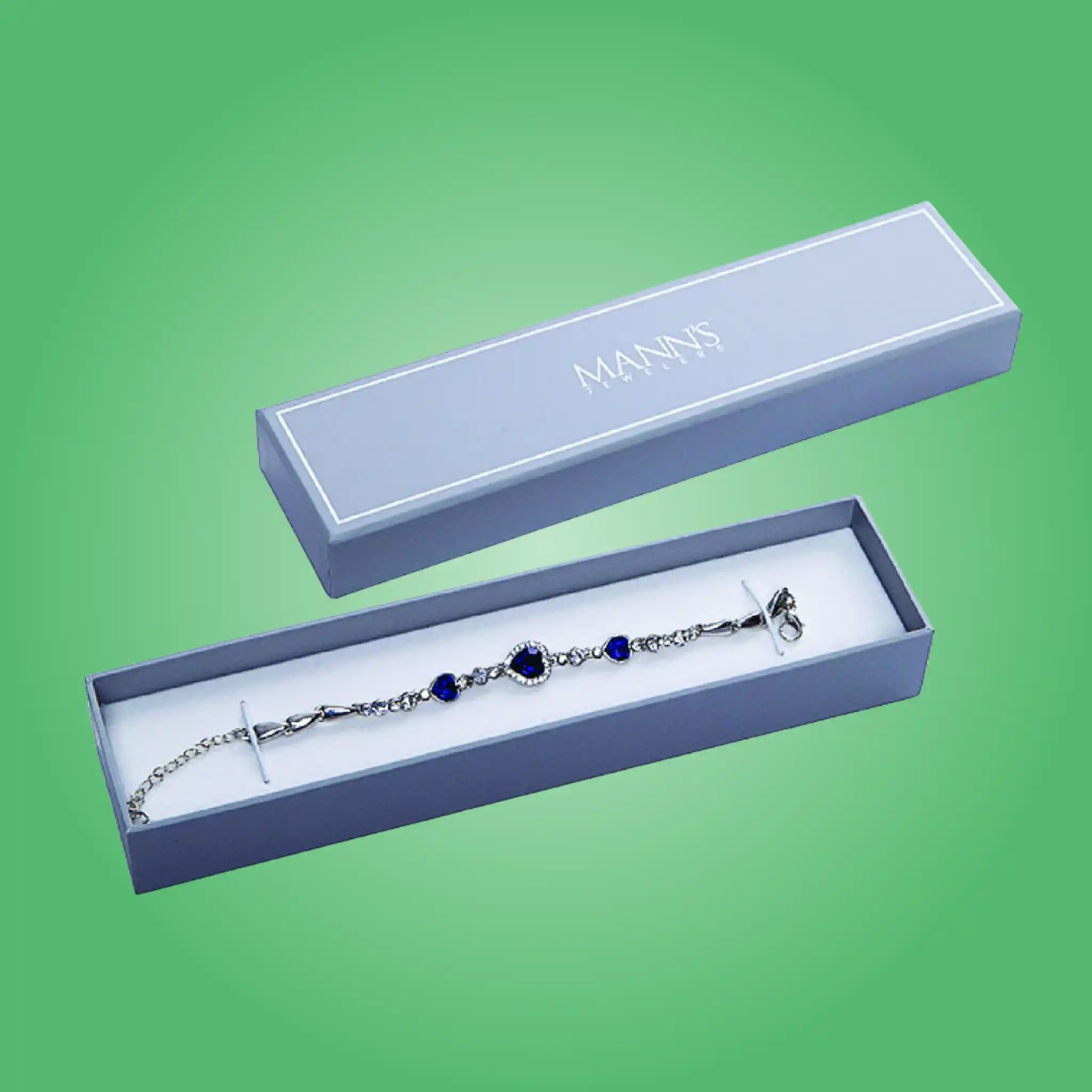
Custom printed anklet boxes designed to keep delicate anklets protected, untangled, and gift-ready at retail. Pioneer Custom Boxes manufactures tight-fit anklet packaging with premium inserts, strong materials, and sharp printing that upgrades perceived value instantly. Order custom anklet boxes wholesale built for boutique jewelry brands and consistent product-line packaging.
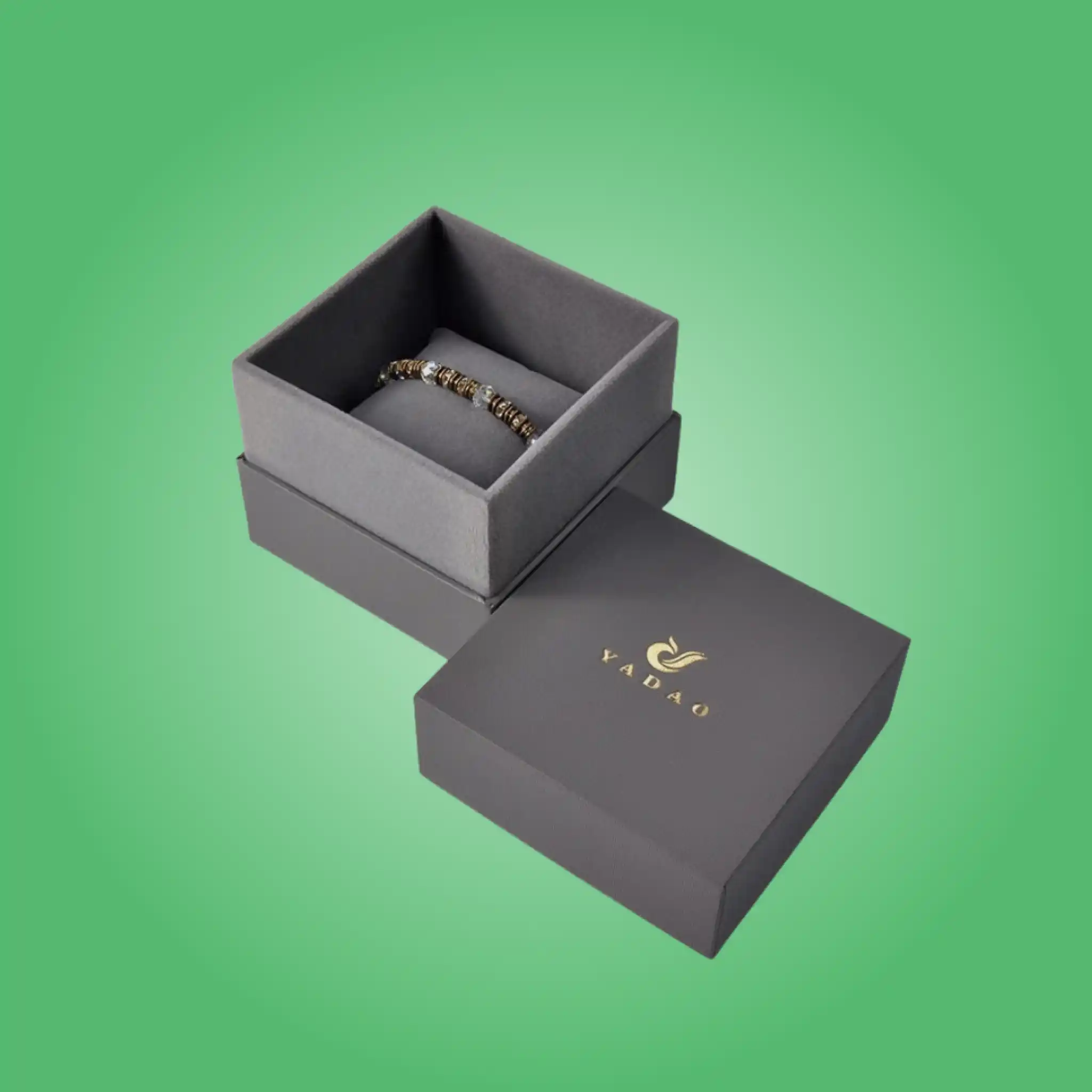
Our custom bracelet boxes are designed to make your jewelry feel more valuable before it’s even worn. From rigid packaging to soft-touch finishes and protective inserts, every detail supports a premium gifting experience. Pioneer Custom Boxes helps bracelet brands deliver packaging that feels high-end, polished, and unforgettable.
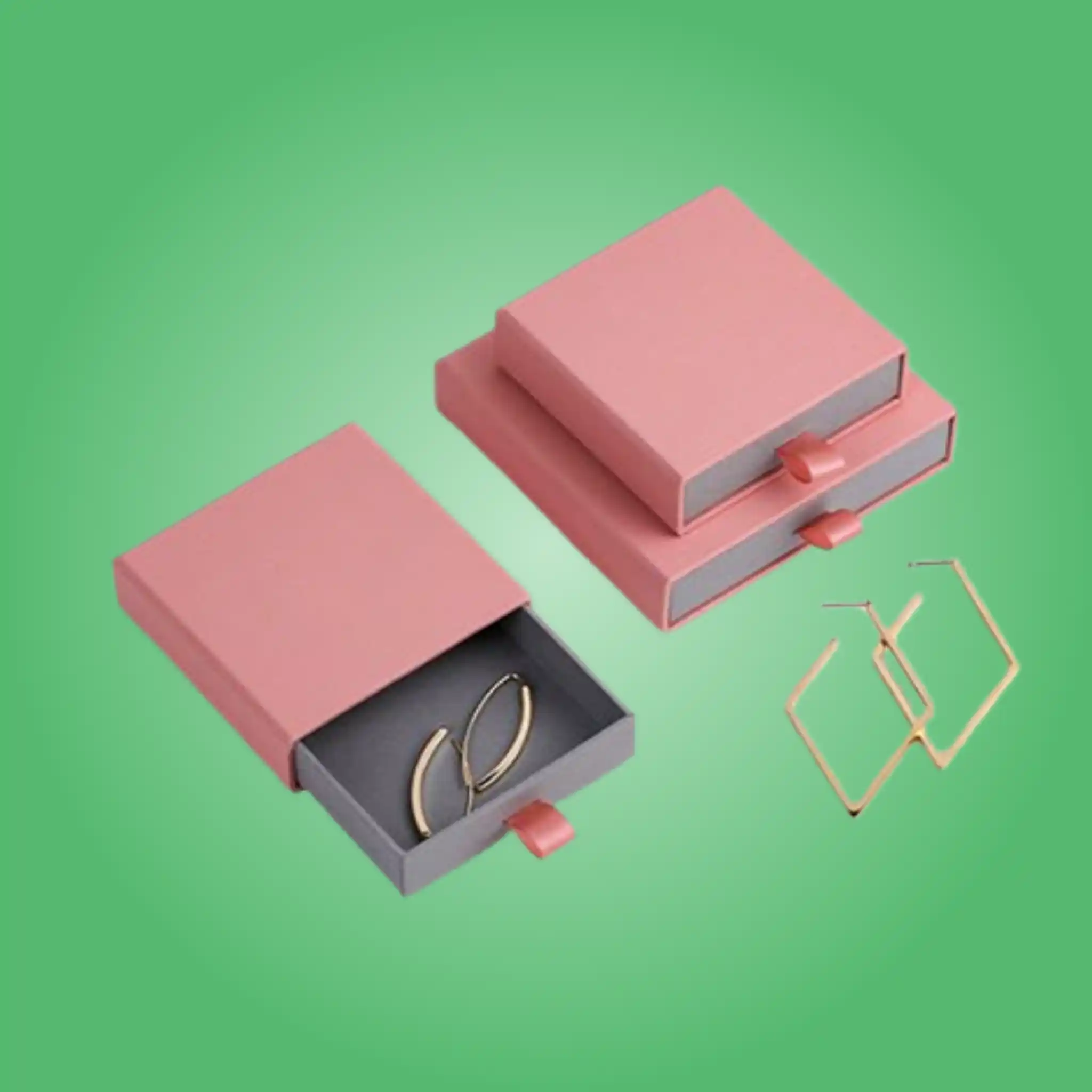
Custom earring boxes designed to protect delicate studs, hoops, and dangle earrings while enhancing the unboxing experience. We create tight-fit packaging with stable inserts, premium materials, and clean printing that makes small jewelry feel luxury. Get custom printed earring boxes that look gift-ready, photograph beautifully, and ship safely across the US.
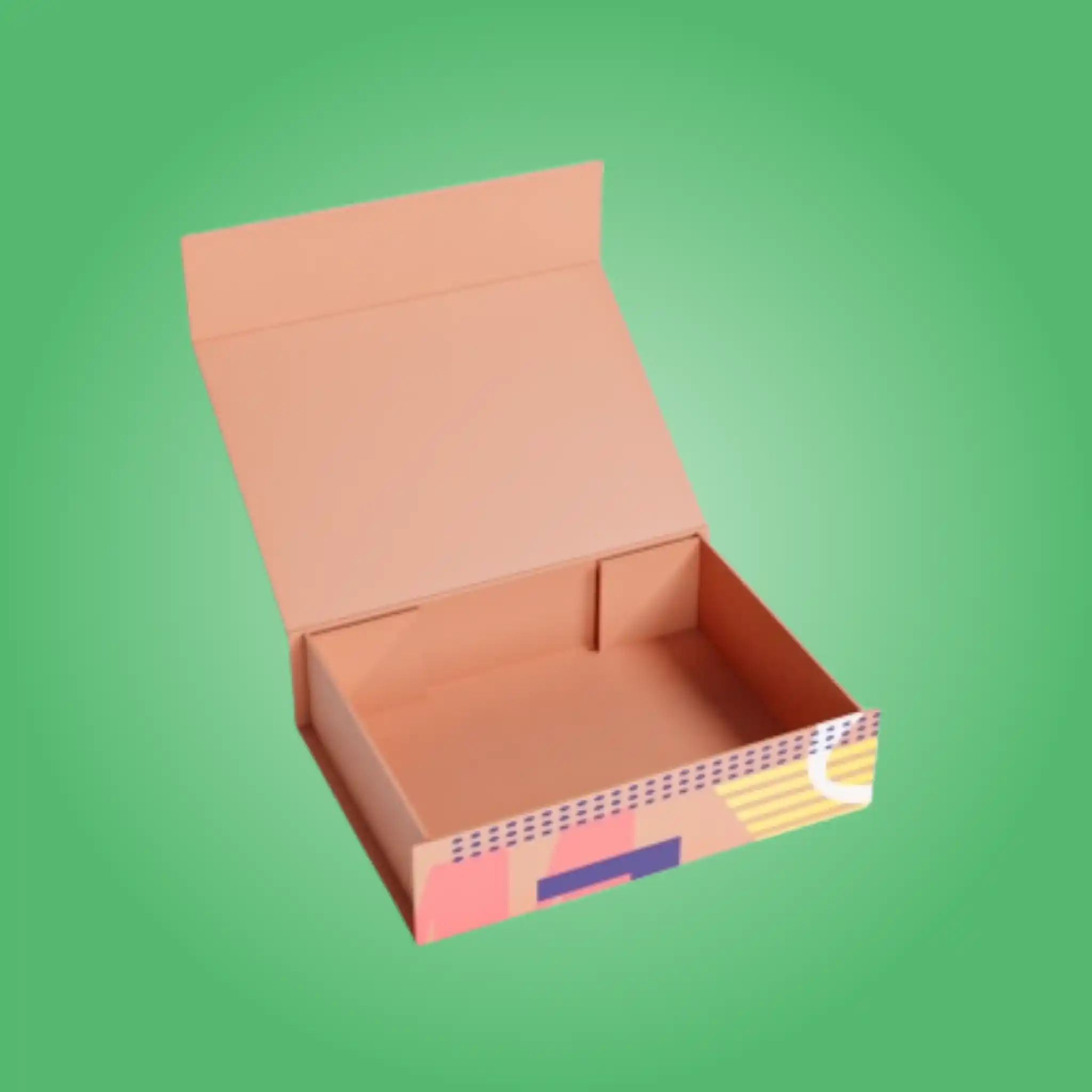
Custom jewelry rigid boxes designed to feel premium before the lid even lifts. We build luxury rigid packaging with strong structure, elegant inserts, and high-end wrap finishes that protect jewelry and elevate gifting. Get rigid jewelry boxes that look boutique, ship safely, and leave a lasting impression across the US market.
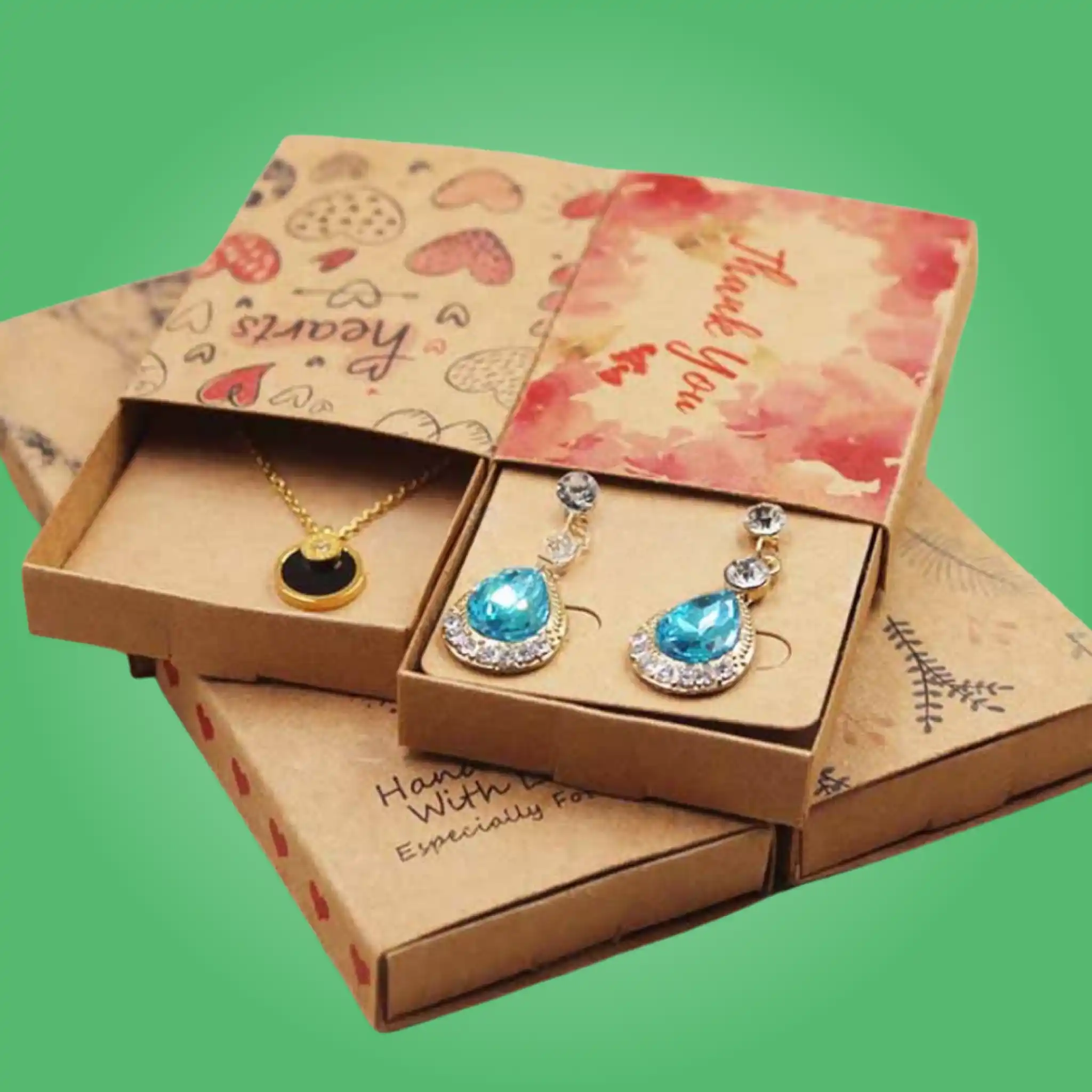
Custom kraft jewelry boxes customized for brands that want a clean, natural, and gift-ready presentation. We create structured kraft packaging with tight sizing, minimalist branding, and insert options that keep jewelry secure and professional. Get kraft jewelry boxes that feel premium, ship cleanly, and fit modern boutique and ecommerce sales.
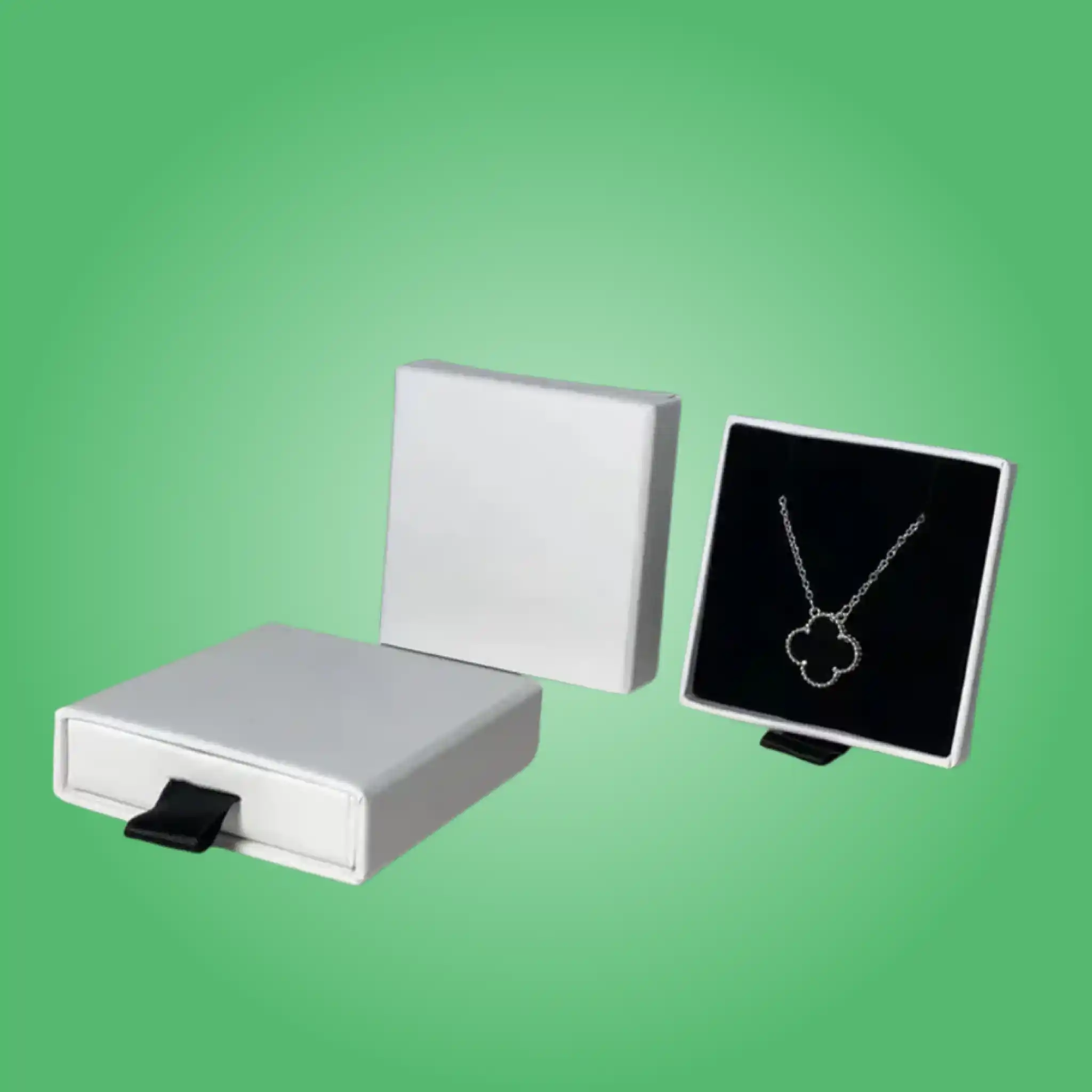
Custom necklace boxes made to prevent tangling, protect pendants, and keep jewelry presentation flawless. We build necklace packaging with exact-fit sizing, anti-tangle inserts, premium materials, and luxury finishes made for gifting and retail display. Get necklace boxes that ship clean, open premium, and sell better across the US market.
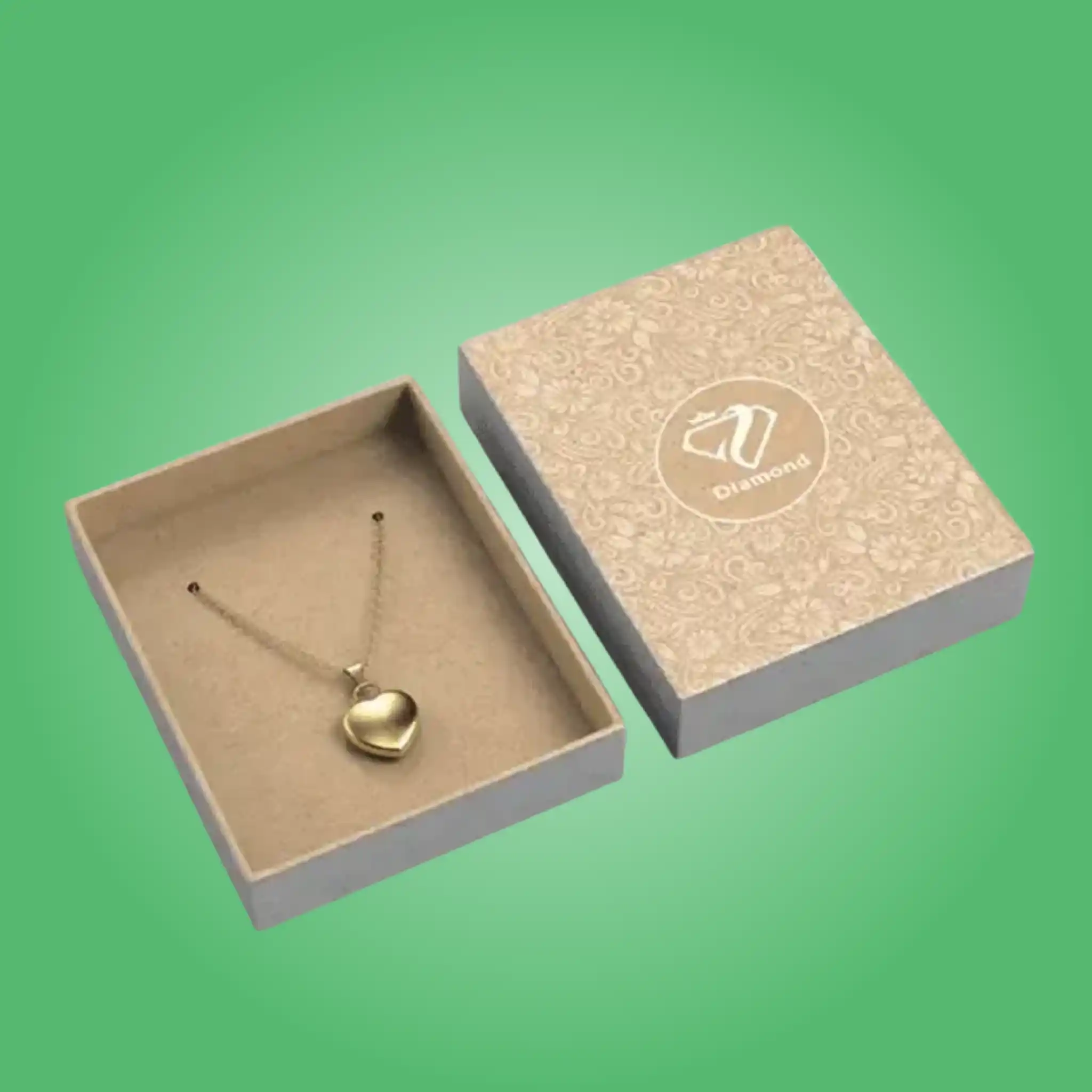
Custom pendant boxes built around the chain as well as the pendant, so nothing arrives tangled. Choose hinged lid rigid, lift-off lid, drawer and sleeve, magnetic closure, folding carton, book style, travel or pendant and earring set construction. Wraps include printed specialty paper, leatherette, velvet and kraft over 1.5 mm to 2.5 mm greyboard. Every interior gets a die-cut chain slot, a fabric covered foam pad and a thumb notch so the piece lifts out cleanly. Add chain hooks for long chains, printed interior lids, ribbon pulls, microfiber pouches and separate earring recesses. Zero minimum order quantity, free structural and pad design, and free shipping across the United States. Get a free quote or order now.
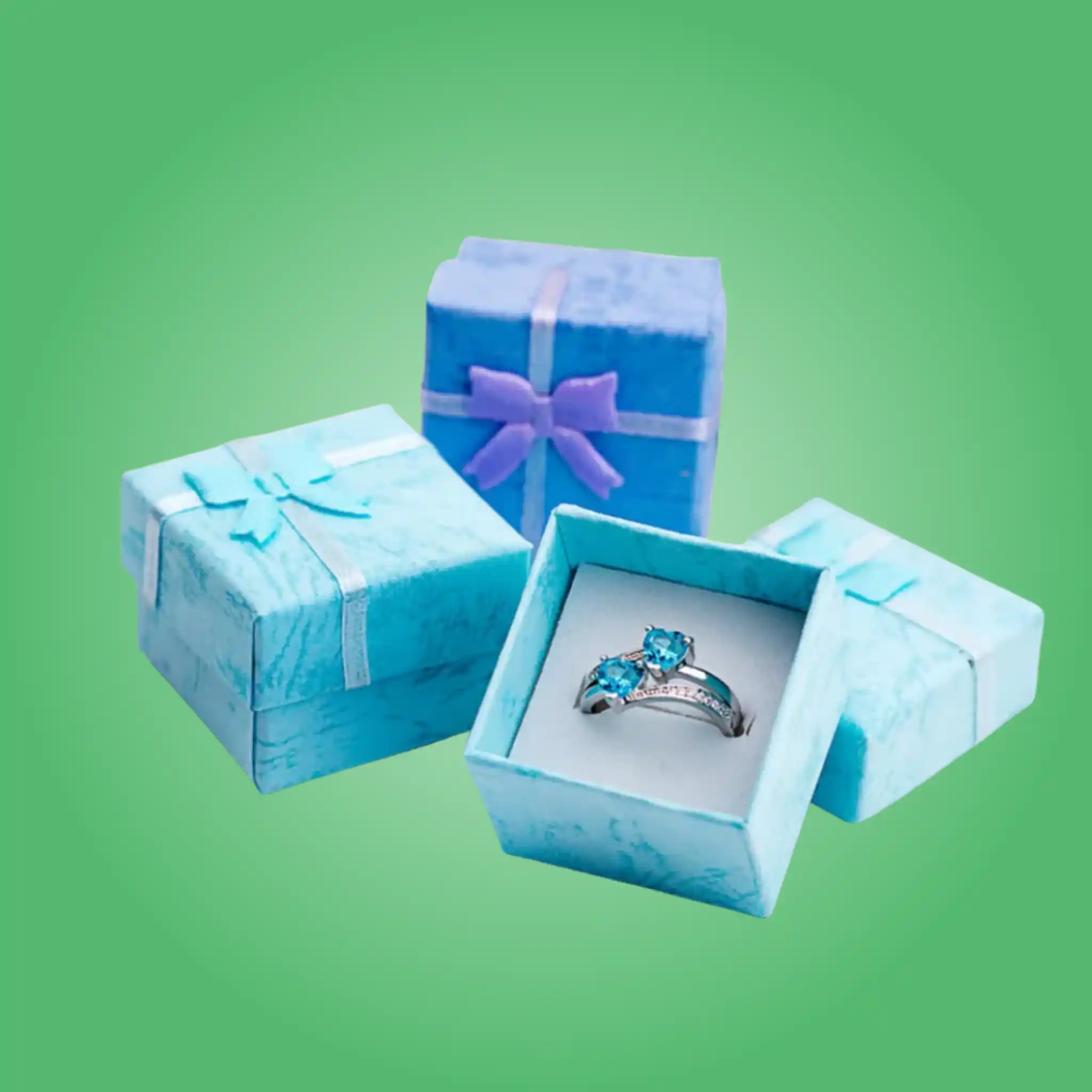
Custom ring boxes customized to make engagement, proposal, and wedding rings feel premium the instant they’re revealed. Our packaging uses tight-fit sizing, stable inserts, and luxury finishes that keep the ring centered and photo-ready. Pioneer Custom Boxes builds ring packaging that protects the moment, not just the product.
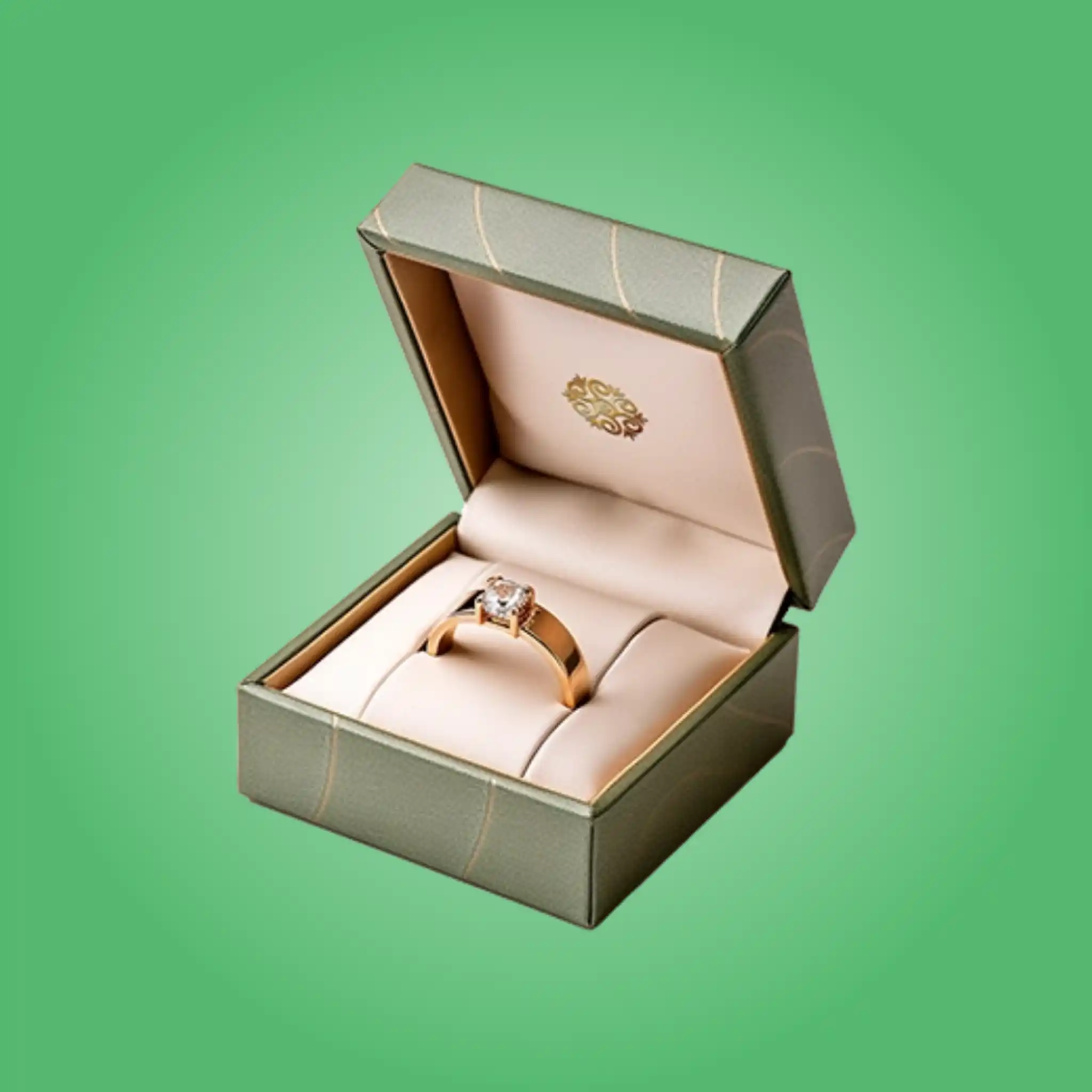
Jewelry boxes with inserts are built to hold pieces in a fixed position, stop shifting during shipping, and keep the presentation clean when opened. Foam inserts, velvet pads, and precision-cut slots protect rings, earrings, and sets from scratches and tangling. These boxes work best in rigid or drawer styles where depth and stability support a premium display.
Custom jewelry boxes can increase perceived value faster than any design change on the jewelry itself. Customers do not only buy the product. They buy the gifting experience, the unboxing moment, and the premium feel in-hand.
Pioneer Custom Boxes manufactures custom jewelry box packaging in the USA for jewelry brands that want packaging built for sales, not decoration.
If you need boxes that protect delicate pieces, look high-end at retail, and ship safely nationwide, we build a packaging system that makes your brand feel expensive immediately.
Jewelry is an emotional purchase. Customers buy it for anniversaries, proposals, birthdays, and personal upgrades. That means packaging has to perform like a premium product presentation tool.
A custom made jewelry box should deliver:
A custom made jewelry box should deliver a premium first impression before the jewelry is even seen, a clean gift-ready look that feels worth keeping, protection that prevents scratches, bending and movement, and consistency across every piece in your range.
When packaging feels cheap, customers downgrade the product in their mind. That kills conversion in retail and online.
This category needs a different approach than most packaging. You are not just putting jewelry inside a box. You are building the product’s display environment.
That is why we design every customized jewelry box around:
That is why we design every customized box around four questions: what the customer is buying, whether it is a gift or a personal purchase, where it will be opened, whether at home, at a retail counter or at an event, how it ships, as single orders, bundles or wholesale shipments, and what it must protect.
Instead of listing random box styles, we build jewelry packaging based on how the piece is used and presented.
These boxes are designed to look premium instantly in boutiques and retail environments. They work best for mid-to-high priced jewelry where packaging affects decision-making.
If you sell jewelry in gift retail settings, matching your presentation with Custom Retail Boxes helps keep your catalog consistent across multiple product categories.
Online jewelry orders need stronger structure. A beautiful box is useless if it arrives crushed.
We build mailer-friendly packaging specs so your jewelry stays secure during shipping across the USA.
Keepsake packaging works for engagement pieces, wedding items, and premium jewelry drops. Customers keep these boxes, which means your brand stays visible for longer.
Jewelry packaging fails when the product moves. A chain sliding around the box looks messy. Earrings shifting inside the box looks cheap.
That is why many brands choose jewelry boxes with inserts to keep pieces aligned and premium.
If you want packaging that holds jewelry perfectly in place, use Jewelry Boxes With Inserts to improve protection, presentation, and buyer trust.
Customers feel packaging before they fully see it. The material must feel premium.
Rigid board boxes create weight and structure. They look more premium and perform better for gifting.
Premium cardstock works for lightweight jewelry categories and retail-ready packaging when you still want strong printing.
Kraft packaging fits brands that want a natural, handcrafted, minimalist feel.
When brands want a high-end signature look, printing alone sometimes looks temporary. That is where engraving and premium detailing create authority.
We support custom engraved jewelry boxes for brands that want packaging that feels personal and collectible.
This option works best for:
These suit luxury jewelry boutiques, bridal jewelry packaging, premium gifting lines and limited edition collections.
Jewelry customers notice details. Your branding must look sharp, clean, and consistent.
We manufacture custom jewelry boxes with logo for brands that want packaging that looks official and premium.
We also support custom jewelry boxes with logo wholesale for brands that need repeat production without losing consistency.
Color systems include CMYK for full-color designs and PMS for accurate brand matching. If your artwork is in RGB, we convert it into print-ready formats.
Jewelry brands lose money when packaging changes between production runs. If the box feels different every time, customers stop trusting the brand experience.
Our custom jewelry boxes wholesale process keeps structure, inserts, materials, and finishing consistent across repeat orders.
If you want the flexibility to adjust packaging for seasons or new launches, we keep your specs stable while allowing controlled upgrades.
Brands often build a catalog across rings, bracelets, and accessories. Packaging should look unified.
If your product line includes ankle jewelry, expand your packaging system with Custom Anklet Boxes so your brand presentation stays consistent across categories.
We manufacture packaging that increases perceived value, protects delicate jewelry, and supports real retail and e-commerce selling.
You get controlled sizing, premium materials, insert support, and consistent production so your packaging looks premium every time.
Quotes in this category vary more than almost any other, and the reason is specification rather than supplier margin. These are the drivers, in the order they matter.
Construction leads. A rigid box costs several times a folding carton, because it is built by hand from thick greyboard and wrapped in printed paper. That construction creates the weight customers associate with value, so it earns its cost at higher price points. Below a certain retail price, a well finished folding carton reads almost as well for far less.
The insert comes second and surprises most buyers. A die-cut foam insert with a ring slot can cost more than the outer box on small orders, because each cavity is cut to your exact piece. Molded pulp and folded paperboard inserts cost less and suit lighter items. Velvet flocking adds cost again, though it is what makes a ring sit properly and photograph well.
Finishing is third. Foil stamping, embossing and soft touch coating each add a pass through the plant. A single foil hit on the lid costs a fraction of foil across the whole surface, and customers read them similarly. Quantity finishes the list, since rigid boxes involve significant hand assembly that does not speed up as much with volume as machine work does.
| Cost Driver | Impact | How to Reduce It |
|---|---|---|
| Rigid vs folding construction | Highest | Use rigid for higher price points only |
| Insert type and cavity count | High | Paperboard inserts where the piece allows |
| Flocking and lining | Moderate to high | Line the tray rather than the full interior |
| Foil and embossing | Moderate | One foil hit on the logo, not full surface |
| Magnetic closures and ribbon | Moderate | Reserve for gift and bridal lines |
| Order quantity | Moderate | Consolidate sizes across your range |
Offset transfers ink from a plate to a rubber blanket and then onto the sheet that wraps a rigid box. Setup takes time, yet the press then runs fast, so unit cost drops sharply at volume. Offset holds fine detail with real accuracy, which matters for delicate line work and small logo type. Brands with strict color standards belong here.
Digital printing needs no plates, so short runs start within hours and cost far less. Fifty boxes and five hundred carry nearly the same setup burden. Digital also allows variable data, so limited editions can be numbered individually. New jewelry brands and seasonal collections suit it well.
CMYK builds color from four inks laid as fine dots and reproduces photography cheaply, though very deep or very pale shades drift slightly between runs. PMS uses premixed Pantone inks, so a signature color stays identical across every reorder, which matters enormously when boxes from different years sit on the same counter. RGB belongs to screens rather than presses, and we convert RGB files before production and flag any shade that shifts.
Pieces arrive damaged in specific, predictable ways, and each has a structural answer that costs very little to build in.
Chains tangle when they can move. A chain that arrives knotted reads as a defect even though nothing is wrong with it, and the customer blames the jewelry rather than the box. The fix is a slotted insert or a card with two cuts holding the chain at both ends, so the piece lifts out already straight.
Rings loosen and rattle when the slot is cut even slightly wide. We size ring slots to the actual band width rather than to a standard, because two millimeters decides whether the ring stays seated through transit. Earrings need paired holes with a backing card, otherwise one post works free and the pair arrives incomplete.
Softer metals and plated finishes scratch against bare board. A flocked or fabric lining prevents that contact entirely. For pieces with raised stones, we recommend a recessed cavity so the stone never bears weight when boxes stack in a carton.
Transit adds a second layer of risk that brands consistently underestimate. A rigid box traveling alone in a poly mailer arrives with crushed corners surprisingly often. We usually recommend an outer shipper around presentation boxes for ecommerce, so the box the customer opens is not the box the carrier handled.
Presentation packaging gets inspected closely, so every order passes a documented check before it leaves our floor.
| Check | What We Verify | Why It Matters |
|---|---|---|
| Insert fit | The actual piece seated in the cavity | A loose cavity lets the piece move in transit |
| Lid alignment | Lid closes square with even gaps | Uneven gaps read as poor quality immediately |
| Magnet strength | Closure holds when the box is inverted | Weak magnets pop open inside a bag |
| Wrap adhesion | Paper bond at corners and edges | Lifting wrap is the most common rigid box defect |
| Foil adhesion | Tape test on stamped areas | Lifting foil destroys premium positioning |
| Flocking coverage | Even pile with no bare patches | Bare patches show under retail lighting |
| Color match | Pantone against a physical draw-down | Brand color must hold across reorders |
| Hinge durability | Repeated open and close cycles | Customers open these many times |
If anything fails, we remake it rather than ship it.
Start from the piece and the price point rather than from a catalog image.
| If You Sell | Structure | Insert | Finish That Suits It |
|---|---|---|---|
| Rings, engagement and fine | Rigid hinged box | Cut foam with slot, flocked | Soft touch with foil logo |
| Necklaces and chains | Flat rigid box or folding carton | Slotted card or pad | Matte with debossed mark |
| Earrings and studs | Small rigid or tuck box | Backing card with holes | Foil accent |
| Bracelets and bangles | Deeper rigid box | Molded pulp or foam ring | Matte lamination |
| Fashion and costume pieces | Printed folding carton | Paperboard insert | Gloss or matte print |
| Watches | Rigid box with pillow | Cushion insert | Soft touch, magnetic lid |
| Gift and bridal sets | Rigid lid and base | Multi-cavity tray | Foil, ribbon pull |
| Ecommerce direct shipping | Presentation box plus outer shipper | Cut foam | Printed interior on the shipper |
When a piece sits between two rows, choose the sturdier option. A damaged arrival in this category almost always becomes a return, and returns cost far more than the packaging difference.
Jewelry brands reorder the same boxes for years, and inconsistency shows badly when old and new stock sit on the same counter.
We keep your dieline, insert pattern, Pantone references and wrap specification on record permanently. Reorders run against that stored specification, so the box you order next year matches the one on your shelf today. If you change a piece and the cavity needs adjusting, we version the insert and tell you exactly what differs from the previous run.
For brands with many SKUs, we can hold one outer box and vary only the insert. That keeps presentation consistent across the whole range while each piece still sits correctly, and it lowers cost because the outer die and wrap are already set up.
We manufacture in the United States and ship to all fifty states, and regional demand differs.
New York brands in the diamond district order the highest volumes of fine jewelry presentation boxes, usually with strict Pantone requirements. Los Angeles and San Diego clients lean toward fashion and costume lines where printed folding cartons work well. Texas businesses in Dallas and Houston send steady bridal and western jewelry work.
Meanwhile Miami and Orlando clients favor bold color and foil. Chicago and the Midwest send consistent department store and gift programs. Seattle and Portland buyers ask about recycled board and plastic-free inserts more than any other region, and we build flocked paperboard alternatives for them.
Wherever your studio or warehouse sits, delivery costs nothing extra. We ship free across the continental United States.
A necklace brand in Rhode Island was seeing steady complaints that chains arrived knotted. Their boxes used a plain foam pad with no retention, so the chain slid freely during shipping.
We changed one thing. We replaced the flat pad with a slotted insert holding the chain at the clasp and at the pendant, so the piece could not move. The box, the wrap and the print stayed exactly as they were.
Complaints about tangling stopped almost entirely within one shipping cycle, and their return rate on necklaces fell noticeably. The insert added under a dime per unit. It is the cheapest fix in jewelry packaging and the one most often left out.
Written by the Pioneer Custom Boxes Editorial Team · Published September 2026 · Last updated September 2026 · Reviewed by our packaging production team
Every dieline and insert we cut is custom, so treat these as starting points rather than a fixed catalog. They cover the requests we receive most often.
| Piece | Typical Box Size (L x W x D, inches) | Construction | Insert |
|---|---|---|---|
| Ring, single | 2 x 2 x 1.5 | Rigid hinged | Flocked foam with band slot |
| Ring, engagement presentation | 2.25 x 2.25 x 2 | Rigid hinged | Deep flocked slot |
| Stud earrings | 2.5 x 2.5 x 1 | Rigid or tuck | Backing card with post holes |
| Drop earrings | 3.5 x 3 x 1 | Rigid flat | Card with paired slots |
| Pendant necklace | 3.5 x 3.5 x 1 | Rigid flat | Slotted pad, clasp and pendant held |
| Chain necklace, longer | 7 x 5 x 1.25 | Rigid flat | Two-point slotted insert |
| Bracelet or bangle | 4 x 4 x 1.5 | Rigid hinged | Molded ring or foam cradle |
| Watch | 4.5 x 4.5 x 3 | Rigid with lid | Cushion pillow |
| Bridal or gift set | 9 x 7 x 2 | Rigid lid and base | Multi-cavity flocked tray |
Measure the actual piece rather than an existing box, and tell us the heaviest item that will ever go in that size. We build the cavity around the real object, because a cavity cut from a drawing rarely holds a real chain properly.
Perceived value in this category comes almost entirely from weight and surface. Material choice controls both.
Rigid boxes wrap thick greyboard, typically 1.5mm to 3mm, in a printed paper sheet. The board does not flex at all, which is what creates the substantial feel customers associate with fine jewelry. Rigid construction cannot fold flat, so factor storage volume into larger orders.
Solid bleached sulphate at 18pt to 24pt folds flat and prints beautifully. It suits fashion jewelry, costume pieces and volume gifting where the price point cannot carry rigid construction. A well finished SBS carton with soft touch coating reads far better than most brands expect.
Uncoated kraft signals handmade and sustainable positioning. It suits artisan and independent jewelry brands, particularly those selling at markets and online direct. Debossing works especially well on kraft, because the impression shows clearly without any ink at all.
Velvet and suede flocking give the softest surface and the best protection against scratching on plated pieces. Printed paper linings cost less and suit fashion lines. Where a client wants a plastic-free build, we use flocked paperboard, which gives a soft surface without synthetic fibers.
Personalization is where jewelry packaging earns its keep, because customers keep boxes that feel made for them.
Foil presses metallic film onto the wrap using a heated die. Gold, silver, rose gold and copper all work, and the contrast against a matte wrap is what catches the eye. Keep foil to the logo or a short name rather than large fields, since restraint reads as luxury and large foil areas show fingerprints.
Debossing presses your mark into the surface without any ink or foil. It produces a quiet, tactile finish that suits minimalist brands, and it costs less than foil because no material is consumed. On kraft and textured wraps it often looks better than printing.
Digital printing lets each box carry different text, so bridal, anniversary and limited edition runs can be personalized individually without separate print runs. We use this most for wedding party gifts and numbered collections.
Brands usually start with one box and end up needing a system. Planning for that early saves money.
The most common scaling mistake is ordering a different box for every piece. Five bespoke sizes cost far more than one outer box with five inserts, and they complicate your stockroom. We normally recommend standardizing on two or three outer sizes and varying the insert, which keeps presentation consistent and cuts tooling cost.
For retail programs, ask your buyer about counter display and shelf depth before finalizing anything. Jewelry counters are shallow, and a box an inch too deep gets rejected. Case packs matter too, because staff restocking a counter want a case that opens cleanly rather than one that has to be cut apart.
Zero minimum order quantity applies here as everywhere. Order twenty boxes for a first collection, then twenty thousand once the range proves out. Your unit price improves with volume, and your dieline and insert pattern stay on file so nothing changes between runs.
Selling online changes the packaging problem completely, because the carrier handles your box before the customer does.
The core mistake is treating the presentation box as the shipping box. A rigid jewelry box traveling alone in a poly mailer arrives with softened corners far more often than brands expect, and a damaged outer box makes the jewelry inside feel cheaper before it is even seen. An outer shipper solves it for a few cents.
That outer shipper is also an opportunity. Printing the inside of the mailer costs little and creates a second reveal, so the customer sees your brand twice: once on opening the shipper and again on the box itself. Subscription and direct-to-consumer jewelry brands get real value from this, because customers photograph the sequence.
Void fill matters more than people think. A presentation box that slides inside a shipper arrives at an angle with the lid partly lifted. A snug insert or a simple paperboard cradle inside the shipper holds it square, and it costs less than the returns it prevents.
Finally, consider the return journey. Jewelry has a high return rate, particularly for rings sized online. A shipper with a second adhesive strip lets the customer reseal the same box, which protects the piece on the way back and saves you shipping a replacement carton.
A large share of jewelry sells as a gift, and the packaging often has to do the wrapping. A ribbon pull, a gift card slot in the lid, or a printed message inside removes the need for the customer to wrap anything. For seasonal peaks we recommend ordering a variant run in advance, because December turnaround times tighten across the whole industry.
Sustainability is harder in this category than most, because the materials that feel luxurious are often the least recyclable. It is workable, but it needs honest choices.
Traditional velvet flocking uses synthetic fibers, and foam inserts are usually polyurethane. Neither recycles in a paper stream. Flocked paperboard gives a similar soft surface using cellulose fibers, and molded pulp replaces foam for many shapes. Both cost roughly the same, and most customers cannot tell the difference by touch.
Greyboard for rigid boxes is typically made from recycled fiber already, which surprises brands. The wrap is where virgin paper usually appears, and we can supply recycled or certified alternatives for it. We state the actual content rather than a general claim, so your marketing team can describe it accurately.
Foil and plastic lamination both interrupt recyclability, though a small foil logo affects it far less than a fully laminated surface. If curbside recyclability is a stated goal, we keep foil to logo-sized hits and use water based coatings instead of film. If the premium feel matters more, we say so plainly rather than pretending you can have both fully.
Jewelry boxes have an advantage almost no other packaging has: customers keep them. A box that stores the piece afterwards has effectively no waste footprint, and designing for that is more honest than a recyclability claim. Sturdy hinges, a lid that closes properly and a clean interior make a box worth keeping.
Boxes waiting in your stockroom are still working packaging, and how you store them decides whether they perform.
Humidity is the main risk for rigid boxes. Wrapped paper can lift at the corners when board absorbs moisture, and flocking flattens in damp conditions. Store boxes off the floor, away from exterior walls, and ideally in a climate controlled space. Studios in Florida and along the Gulf should order smaller batches more often rather than holding a year of stock.
Light matters for colored wraps. Boxes stored near a window fade unevenly, so the ones at the front of a shelf no longer match the ones behind. Keeping stock covered solves it entirely.
Handle flocked inserts with clean hands or gloves during assembly. Flocking picks up oils readily, and a fingerprint on a velvet tray is visible under retail lighting. We ship inserts covered for that reason, and we recommend leaving the covering on until the point of packing.
Ordering takes four steps, and we handle the technical parts of each one.
First, send the piece or its exact dimensions, along with your quantity. For jewelry we genuinely prefer a sample piece where possible, because a chain behaves differently from its drawing and a ring band width decides the slot size. If you cannot send one, clear photographs with a ruler alongside work well.
Second, we return a free dieline, an insert layout and a written quote within one business day. The dieline maps the outer structure while the insert drawing shows every cavity, so you can see exactly how the piece will sit before anything is cut.
Third, you approve a digital proof, and for rigid boxes we strongly recommend a physical sample. Wrap texture, foil brightness and flocking feel are all things you should hold before committing to a full run. Fourth, we produce and ship, free across the United States.
Reorders skip straight to production because your dieline, insert pattern and Pantone references stay on file. Most repeat orders confirm in a single message.
Three things cause almost every delay. Sending the outer box dimensions without the piece means the insert has to be guessed and revised. Missing Pantone references force a proof round that could have been avoided. And artwork built without a dieline usually needs rebuilding, because elements sit across fold lines. Sending all three up front typically saves several days.
Getting a jewelry line into a retailer involves packaging questions that catch independent brands off guard. Buyers check a consistent set of things.
Jewelry counters are shallow, and buyers measure your box against the case before anything else. A presentation box an inch too deep simply will not be listed, however good it looks. Ask for the case dimensions early, because adjusting a dieline costs almost nothing while a rejected listing costs a season.
Many retailers apply security tags to jewelry packaging, and they need a flat area to do it. A fully foiled or heavily textured lid gives them nowhere to place one. We leave a clean panel on the base for this whenever a client is selling into retail.
Buyers want to know how many units ship in a case, whether the case opens cleanly for counter restocking, and whether boxes arrive assembled or flat. Rigid boxes ship assembled and take real volume, so case count matters to their stockroom as much as to yours.
Retail buyers are wary of suppliers whose packaging drifts. Being able to say your dieline, wrap and Pantone references are held on file, and that reorders run against a stored specification, answers a question they were going to ask anyway. It is a small credibility point that costs you nothing.
The same errors recur across jewelry brands of every size, and each is avoidable before tooling is cut.
Cutting a ring slot to a standard width leads the list. Band widths vary by a couple of millimeters between styles, and that small difference decides whether a ring sits securely or rattles loose. We size slots against the actual pieces you sell.
Sending a presentation box alone through a parcel network is second. Rigid boxes crush at the corners, and a scuffed luxury box contradicts the entire message. An outer shipper costs a few cents and prevents most returns in this category.
Choosing rigid construction for every price point is third. A well finished folding carton with a flocked insert reads beautifully below a certain retail price, and reserving rigid for higher-value pieces keeps margins healthy across the whole range.
Lining the full interior when only the tray is seen is a quiet waste. Flocking the cavity where the piece rests gives the entire tactile effect, and lining the lid as well often adds cost nobody notices.
Finally, approving a box from a render. Weight, hinge resistance, magnet strength and the way flocking catches light are the entire proposition, and none of them exist on a screen. We build a physical sample before tooling is committed.
Most jewelry now sells through a screen before it is ever handled, and packaging does specific work in that context.
A box photographs well when its surfaces are matte rather than reflective. Gloss lamination throws hotspots under studio lighting, and photographers then spend time fighting them. Soft touch and matte finishes render evenly, which is one reason they dominate premium jewelry packaging.
Interior contrast matters just as much. A pale piece against a pale lining disappears in a listing image, while a considered contrast makes the piece read instantly at thumbnail size. We can supply the same box with different lining colors across a range for exactly this reason.
Unboxing video is now a real sales channel, and the opening motion is what it captures. A magnetic lid that resists slightly and then closes with a soft sound records far better than a lid that simply lifts off. Those details are cheap to specify and impossible to add later.
Send us a sample piece and we will build a box that presents it well in a photograph as well as in a hand.
Share your jewelry type, required inserts, box style preference, and branding needs. We will recommend the right materials, structure, and finishing options for packaging that sells better in the USA.