

Custom storage boxes keep inventory, files, and seasonal stock organized instead of scattered across a back room. Choose double-wall corrugated or rigid board, then add lids, hand holes, and printed labels so every box is easy to stack and quick to identify. Order any quantity with zero MOQ, free design support, and free shipping across the USA.
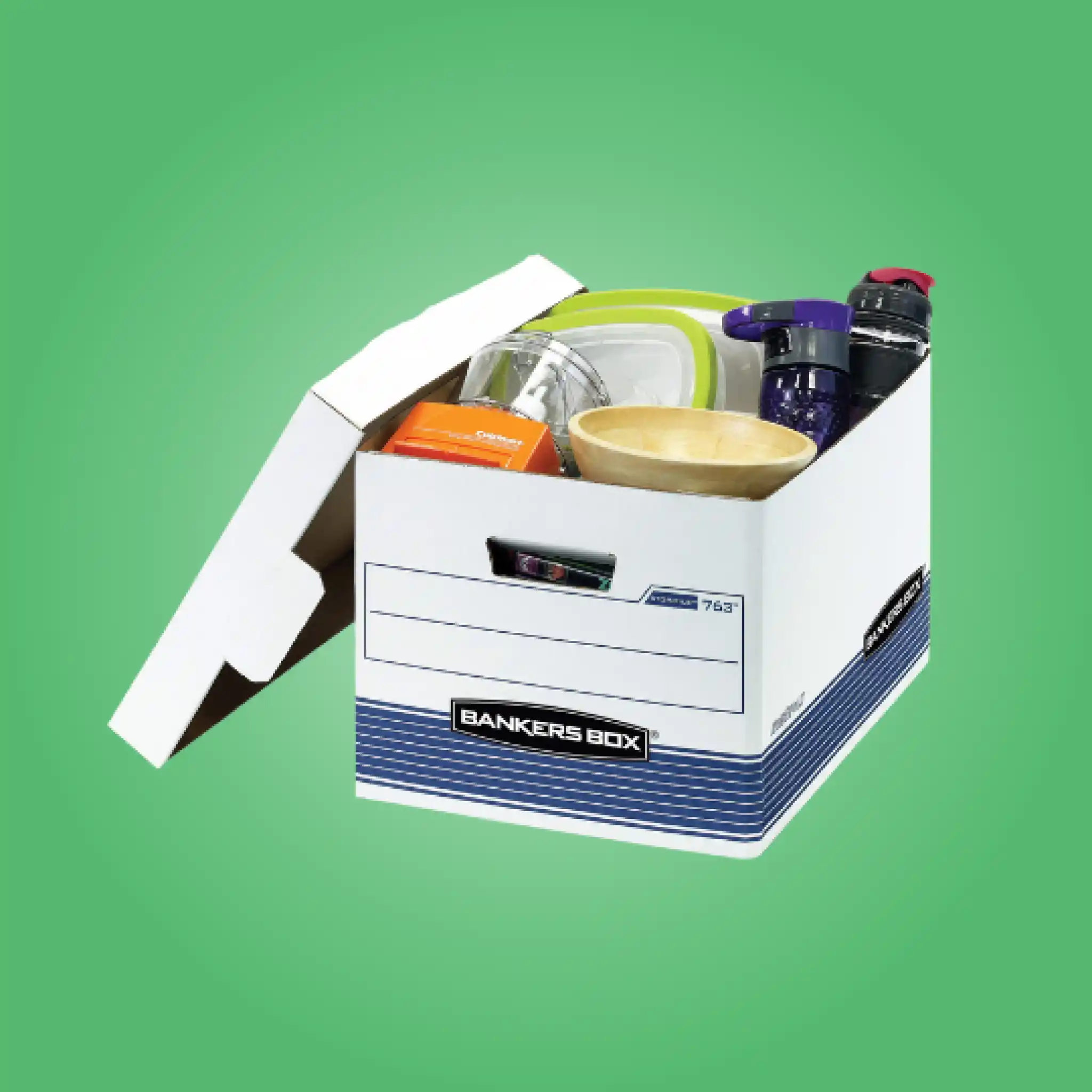
Pioneer Custom Boxes manufactures custom banker storage boxes for offices, law firms, banks, accountants, schools, healthcare departments, warehouses, and records teams that need strong corrugated file boxes, accurate bankers box dimensions, printed record fields, durable handles, archive-ready sizing, and organized document storage.
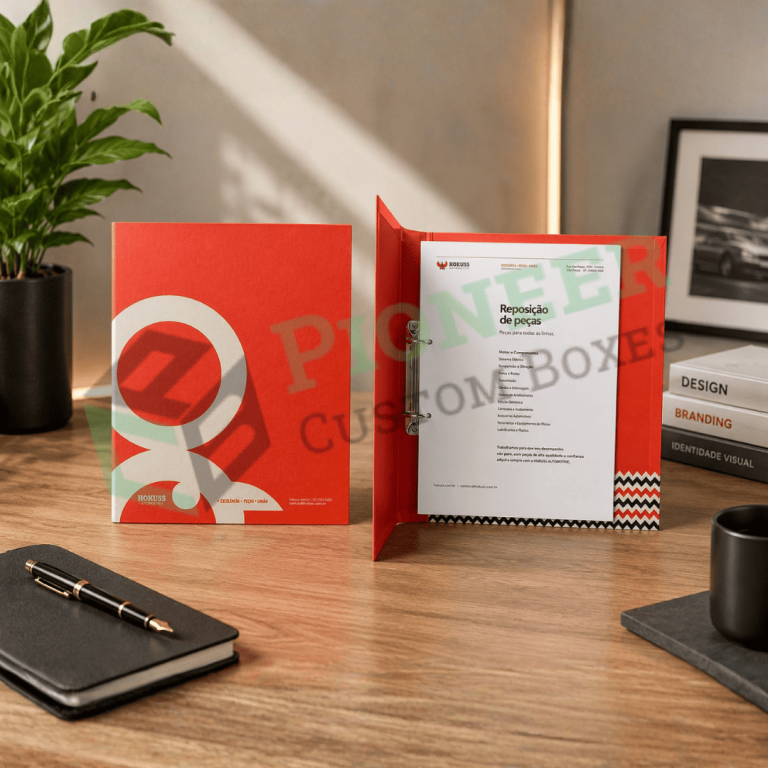
Custom folders with brads built to your exact page count and paper size. Choose 12pt to 18pt board, one or two pockets, business card slits, index tabs and a reinforced spine. We print offset or digital in CMYK, PMS or metallic ink, then finish with gloss, matte, soft touch, spot UV or foil. Zero minimum order quantity, free design support and free shipping across the United States. Standard production runs ten to twelve business days, with rush service available. Get a free quote or order now.

Custom shoe boxes specified against stockroom compression rather than transit alone, because that is where shoe boxes actually fail. Choose two piece lid and base, telescoping, front opening display, drawer and sleeve, magnetic rigid, corrugated shipping, window front or small format construction in E, B, C or double wall board. We print flexo, digital or litho-laminated on kraft or white top liner, inside and out. Add die-cut windows, printed size and SKU panels, barcodes, handles, ventilation holes, return adhesive strips and reinforced corners. We build a free dieline for every size in your range and store your signature color so it matches season after season. Zero minimum order quantity and free shipping across the United States.
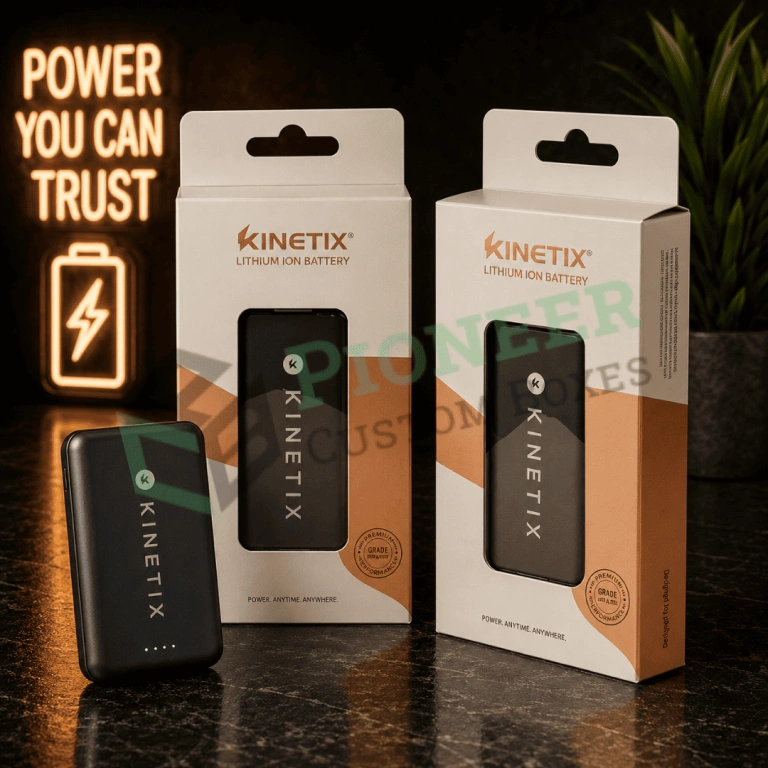
Custom mobile battery packaging from Pioneer Custom Boxes helps phone accessory brands, electronics retailers, repair shops, replacement battery suppliers, ecommerce sellers, and wholesale distributors package mobile batteries with durable custom boxes, secure inserts, barcode zones, warning space, QR panels, branded printing, and free shipping across the USA.
Storage boxes look simple until one collapses. Then a shelf of records hits the floor, or a customer receives crushed inventory. The difference between a box that survives five years of stacking and one that fails in a month comes down to board grade, structure and fit. Those three choices cost very little to get right, and a great deal to get wrong.
Pioneer Custom Boxes manufactures storage packaging in the United States. We cut our own dies, run our own presses, and finish every order in house. That control lets us build to your exact dimensions rather than force your contents into a stock size. It also means you talk to the people who actually make the box.
We supply households organizing garages, offices archiving records, retailers storing seasonal stock, and warehouses running inventory programs. Every order starts at zero minimum quantity. Order twenty boxes or twenty thousand, and free shipping across the USA applies either way.
The word storage covers several very different jobs. Choose by what the box must survive, not by what it looks like on a shelf.
Banker boxes hold letter and legal documents upright. Paper is heavy, so these boxes need genuine strength rather than a token lid. A full letter-size box weighs roughly thirty five pounds. Stack five of those and the bottom box carries well over a hundred pounds. We build ours with double-thick end panels and reinforced hand holes for that reason. Our custom banker storage boxes also take printed index panels, so staff read the contents without opening anything.
A separate lid gives full access to the contents and protects against dust. Two piece construction also stacks more predictably than a folding lid, because the lid sits flush. Households use these for seasonal decorations, documents and keepsakes. Offices use them for supplies and equipment. Depth matters most here, since a shallow lid slides off during handling.
Footwear and clothing need breathability and visibility. A sealed box traps moisture, and trapped moisture damages leather over time. We add ventilation holes and optional clear windows so the contents stay identifiable. Our custom shoe boxes work for retail display and for long term closet storage alike.
Businesses storing stock need boxes that fit the product and the shelf. Wasted space costs money twice, first in materials and again in warehouse volume. We size the die around your actual SKU, then confirm the box fits your rack pitch. Electronics and small components often need internal dividers, and our mobile battery packaging shows how compartmentalized storage protects fragile items.
Some materials need organizing rather than boxing. Folders, binders and presentation covers keep documents flat and sorted inside a larger box. Our folders with brads hold loose pages securely, which prevents the shuffling that makes archives unusable.
Archival storage adds a requirement the others lack: time. Acidic board yellows paper over decades, so archive boxes should use lignin free, acid neutral stock. We supply that grade when your retention schedule runs long. Legal, medical and municipal clients request it most often.
Size decides cost, shelf fit and stacking safety at the same time. Measure the contents first, then add clearance, then check the result against your shelf depth. A box that overhangs a shelf by an inch loses most of its stacking strength, because the corners carry the load and unsupported corners buckle.
The sizes below cover the requests we receive most often. Every one remains adjustable, since we cut a custom die for each order.
| Application | Typical Size (L x W x D, inches) | Suggested Board | Approximate Load |
|---|---|---|---|
| Letter file and banker box | 15 x 12 x 10 | 200# / 32 ECT single wall | 35 lb |
| Legal file box | 15 x 12 x 10 (legal insert) | 200# / 32 ECT single wall | 40 lb |
| Archive record carton | 15 x 12 x 9.5 acid neutral | 32 ECT reinforced base | 40 lb |
| Small parts and component bin | 9 x 6 x 4 | E-flute or 32 ECT | 10 lb |
| Shoe and apparel storage | 13 x 8 x 5 | E-flute with vent holes | 5 lb |
| Seasonal household storage | 18 x 14 x 12 | 32 ECT single wall | 30 lb |
| Heavy inventory and tools | 18 x 18 x 16 | 44 ECT double wall | 80 lb |
| Warehouse bulk storage | 24 x 18 x 18 | 48 ECT double wall | 100 lb |
Record the contents rather than an existing box. Then add roughly a quarter inch on each internal dimension for easy loading. Our design team checks these figures free of charge before we cut anything.
Board choice determines whether your box holds its shape under load. We recommend by weight and by storage duration, not by price alone.
Single wall places one fluted layer between two liners. It handles most household and office storage comfortably. A 32 ECT single wall board carries around thirty to forty pounds and stacks three or four high safely. This grade suits file boxes, seasonal storage and light inventory. It also folds flat for storage, which matters when you buy ahead.
Double wall adds a second fluted layer, roughly doubling compression resistance. A 44 ECT double wall board carries around eighty pounds and stacks far higher. Warehouses, tool storage and dense product inventory need this grade. The board costs more per sheet, yet it prevents the collapse that ruins a whole pallet.
Flute size changes thickness, cushioning and print surface. B-flute measures about an eighth of an inch and balances strength with a printable face. C-flute runs slightly thicker and improves stacking. E-flute is thin and smooth, so it prints beautifully but carries less. BC double wall combines two profiles for maximum strength. We match the flute to your load rather than defaulting to one grade.
Chipboard suits lightweight, presentation focused storage such as keepsake and gift boxes. Rigid construction wraps thick greyboard in printed paper, producing a box that does not flex at all. These formats look considerably more premium, though they do not fold flat. Retail and luxury storage programs choose them deliberately.
Kraft board shows natural brown fiber and costs less. White top board gives cleaner contrast for printed labels and photography. Warehouses generally prefer kraft for cost. Retail and customer facing storage generally prefers white. Both recycle in standard paper streams when you avoid plastic lamination.
Two ratings describe corrugated strength, and buyers often confuse them. Understanding both prevents ordering a box that fails under its own stack.
Edge Crush Test, written as ECT, measures how much force the board edge resists before crushing. It predicts stacking performance directly, so it matters most for storage. Bursting Test, written with a pound figure such as 200#, measures resistance to puncture. It matters more for rough handling than for shelving.
For storage, buy on ECT. The table below maps common grades to real loads. Remember that humidity reduces strength substantially, so damp basements and unconditioned warehouses need a grade above the calculation.
| Board Grade | Typical Load Per Box | Safe Stack Height | Best Use |
|---|---|---|---|
| 26 ECT single wall | 20 lb | 2 to 3 boxes | Light household items, linens |
| 32 ECT single wall | 35 lb | 3 to 4 boxes | Files, records, general storage |
| 44 ECT double wall | 80 lb | 5 to 6 boxes | Books, tools, dense inventory |
| 48 ECT double wall | 100 lb | 6 or more boxes | Warehouse and pallet storage |
| Triple wall | 250 lb plus | Pallet grade | Industrial and machinery parts |
Storage duration matters as much as weight. Board relaxes under sustained load, so a box holding weight for two years needs more strength than one moved next week. Add roughly thirty percent capacity for long term storage.
Printing on storage boxes serves function before decoration. A clear label panel saves staff minutes on every retrieval, and those minutes compound across a year. We match the press to your quantity and to how much color the design actually needs.
Flexo prints directly onto corrugated board using flexible plates. It handles solid colors, logos and large text economically at high volume. Fine detail and photography sit beyond its comfortable range. Most warehouse and file storage boxes print this way, because they need bold, legible marks rather than imagery. Costs stay low once quantities pass a few thousand.
Litho lamination prints a paper sheet offset, then bonds that sheet to corrugated board. The result carries photographic quality across the full surface. Retail storage, gift boxes and customer facing packaging use it. The extra step raises cost, so we recommend it when the box is seen by buyers rather than by warehouse staff.
Digital printing skips plates entirely, so short runs start within hours. Fifty boxes cost far less than they would on a plated press. Digital also supports variable data, which lets each box carry a different department name, location code or date range. Offices ordering department specific archive boxes benefit directly from that capability.
We advise honestly on which method fits. If flexo saves you money at your volume, we quote flexo and say so plainly.
Three color systems appear in packaging conversations. Each behaves differently on corrugated board, which absorbs more ink than coated stock.
CMYK builds color from cyan, magenta, yellow and black inks laid as fine dots. It reproduces photographs and gradients at low cost, so full color storage packaging normally uses it. On uncoated kraft corrugated, those dots spread slightly and colors read darker. We compensate during prepress, and litho lamination removes the problem entirely.
PMS uses premixed inks rather than blended dots, so a Pantone number arrives as an exact recipe. Consistency across repeat runs is the real benefit here. Storage programs reorder for years, and a brand color that drifts between batches looks careless on a shelf of boxes. Solid Pantone ink also covers kraft board far better than four color dots.
RGB describes light on screens rather than ink on board. Printing cannot reproduce every RGB color, because ink reflects light instead of emitting it. We convert your files to CMYK or Pantone before production and flag any shade that shifts noticeably. Send a Pantone reference wherever exact brand color matters.
Add-ons on storage boxes should solve a handling problem. Each one adds cost, so choose the ones your workflow genuinely needs.
Hand holes let staff lift boxes safely and speed up retrieval. Unreinforced holes tear under load, so we add a folded reinforcement flap on anything carrying real weight. Placement matters too: holes cut too close to the top edge weaken the rim exactly where the lid sits.
A separate telescoping lid slides over the base and adds compression strength, which helps stacking. An attached folding lid costs less and never gets separated from its box. Full telescoping lids that cover the entire side wall give the greatest strength, and archive programs often specify them.
A printed white panel gives staff a clean surface for writing contents and dates. A die-cut index window holds a replaceable card instead, which suits boxes that get reused across projects. Both remove the guesswork that turns an archive into a search.
Corners carry most of a stack load, so reinforcing them raises capacity more than thickening the walls. Double-thick end panels are the standard approach on file boxes. An auto-lock or glued base then stops the bottom from dropping out when someone lifts a full box carelessly.
Dividers turn one box into organized compartments, which protects fragile items and speeds up picking. Paperboard dividers fold from the same stock and recycle together with the box. Foam and molded pulp cradle delicate contents more firmly when the items justify it.
Basements, garages and unconditioned warehouses expose boxes to humidity, and damp corrugated loses strength quickly. A water resistant coating slows that absorption considerably. We recommend it whenever storage sits below ground level or near loading doors.
Buyers often compare quotes without knowing which variable moved the price. Understanding the drivers lets you cut cost without cutting performance.
Size drives cost first, because board is priced by area. Shaving one inch off each dimension can reduce material use by close to ten percent, and that saving repeats on every unit. Board grade comes second: moving from single wall to double wall roughly adds forty percent to material cost, so specify it only where the load demands it.
Print complexity comes third. One color flexo costs a fraction of full color litho lamination. Many storage programs need only a logo and a label panel, and paying for photographic printing on a box that lives in a warehouse wastes money. Quantity comes fourth, since plate and setup costs spread across the run.
Finally, structural extras add up individually. Hand holes, reinforced corners, telescoping lids and dividers each carry a cost. We price them separately in every quote, so you can see exactly what each feature costs and drop the ones that do not earn their place.
| Cost Driver | Impact on Price | How to Reduce It |
|---|---|---|
| Box dimensions | Highest | Measure contents precisely, remove excess clearance |
| Board grade | High | Match ECT to real load rather than over-specifying |
| Print method and colors | High | Use one or two colors where boxes are not customer facing |
| Order quantity | Moderate | Consolidate annual needs into fewer, larger runs |
| Structural add-ons | Moderate | Keep only the features your handling actually requires |
| Coatings | Low to moderate | Apply only where humidity is a genuine risk |
Assembly time is a hidden cost that rarely appears on a quote. A team building four hundred archive boxes will feel the difference between a five second fold and a forty second one. We design for the people who will actually put these together.
Auto-lock bottoms fold into shape in one motion and lock without tape. They cost slightly more per unit, yet they save enormous labor on large orders. Regular slotted bases cost less but need tape along the seam. For a run of fifty boxes, tape is fine. For a run of two thousand, auto-lock usually wins on total cost.
Flat packing matters just as much. Corrugated storage boxes ship flat, which means a pallet holds many times more than assembled boxes would. That reduces your freight and your storage footprint until you need them. Rigid boxes cannot fold flat, so factor their storage volume into the decision before ordering in bulk.
We also consider lifting safety. A box wider than eighteen inches becomes awkward to carry when full, and staff compensate by gripping the base, which crushes the corners. Where a load is heavy, we often recommend a smaller box rather than a stronger one. Two manageable boxes beat one that nobody can carry properly.
A storage box that cannot be identified quickly costs more than it saves. Good labeling turns a room of boxes into a working archive, and the box design either helps or hinders that.
Printed label panels work best in a consistent position, normally on the short end that faces out on a shelf. We print a bordered white area with ruled lines for contents, department and date range. Staff then write in the same place on every box, which makes scanning a shelf visually fast.
Barcode and QR placement needs a flat, matte, uncoated area. Gloss lamination reflects scanner light and causes read failures, so we leave a deliberate matte window where the code sits. Warehouses running scanner-based inventory should specify this at the dieline stage rather than discovering the problem later.
Color coding helps more than most teams expect. Printing the same box in four spot colors lets departments identify their own records across a room instantly. Because the structure stays identical, you keep one dieline and one price, and only the ink changes between runs.
Corrugated board is paper, and paper responds to its environment. Planning for the storage conditions protects the contents far better than simply buying a stronger box.
Humidity is the main enemy. Board absorbs moisture from the air, and absorbed moisture reduces compression strength substantially. A box rated for eighty pounds in a dry warehouse may hold considerably less in a damp basement. Where humidity is unavoidable, we specify water resistant coatings and recommend raising the bottom boxes off the floor on pallets or shelving.
Temperature swings cause a subtler problem. Repeated expansion and contraction loosens glued joints over months. Unconditioned garages and attics see this constantly, which is why boxes there fail sooner than the same boxes in an office.
Pests matter for long term paper storage. Cardboard offers both shelter and food to some insects, and corrugated flutes make ideal nesting space. Sealed lids reduce access considerably, and storing boxes away from exterior walls helps further. For genuinely critical archives, we advise clients to pair good boxes with a controlled environment rather than relying on packaging alone.
Corrugated is among the most recycled materials in the United States, which makes storage packaging an easy environmental win when specified thoughtfully.
Most board we run contains substantial post consumer recycled fiber, and we can state the exact percentage for your order when you need it for reporting. Higher recycled content shows slightly more color variation between batches, and most storage buyers accept that readily.
Recyclability depends on what you add to the board. Plastic lamination breaks the paper recycling stream, because separating film from fiber is impractical at scale. Water based coatings avoid that problem while still resisting moisture. We default to water based wherever the performance allows it.
Reuse deserves mention too. A well built storage box survives many cycles, and a box with an index window rather than a printed label can be relabeled indefinitely. Specifying for reuse often reduces both cost and waste more than any material choice.
Most storage problems trace back to a handful of avoidable decisions. These are the ones we see most often.
Buying by price alone is the first. A box that costs fifteen cents less but collapses in a year is not cheaper. Calculate cost across the retention period rather than per unit. The second mistake is ignoring shelf dimensions, which is how boxes end up overhanging and crushing at the front edge.
Overfilling is third, and it is the most common of all. A box rated for thirty five pounds fails when someone packs it with sixty pounds of paper. Sizing boxes so that a full box lands near the rated weight solves this automatically, because staff physically cannot overfill them.
Finally, teams often mix box sizes across a program. Mixed sizes cannot stack squarely, and unstable stacks collapse. Standardizing on one or two sizes across your whole operation improves safety and cuts your unit price at the same time.
Most buyers arrive knowing the contents but not the specification. This guide moves from what you are storing to what you should order.
| If You Are Storing | Choose This Structure | Board Grade | Key Feature |
|---|---|---|---|
| Office files and records | Banker box with telescoping lid | 32 ECT single wall | Reinforced hand holes |
| Long term legal archives | Archive carton, acid neutral | 32 ECT reinforced base | Index window |
| Books and heavy paper | Compact double wall box | 44 ECT double wall | Glued base |
| Seasonal household items | Lidded storage box | 32 ECT single wall | Stackable flush lid |
| Shoes and apparel | Lidded box with ventilation | E-flute | Vent holes, optional window |
| Small parts and components | Compartment box | E-flute or 32 ECT | Paperboard dividers |
| Retail display storage | Litho laminated corrugated | E-flute | Full color print |
| Warehouse bulk inventory | Heavy duty shipper | 48 ECT double wall | Water resistant coating |
If your situation sits between two rows, choose the stronger option. Under-specifying a storage box costs more than over-specifying it, because a collapse damages the contents as well as the box.
Ordering custom storage boxes takes four steps, and we handle the technical parts of each one.
First, send your dimensions and your load. Tell us what goes inside, roughly how heavy it is, and how high you plan to stack. If you only have the product and no measurements, describe it and we will work the sizing out with you. Second, we return a free dieline and a written quote within one business day. The dieline maps every fold, glue tab and cut on a single flat sheet.
Third, you approve a digital proof. We show the printed artwork in position on the structure, so nothing is left to imagination. Larger orders can add a physical sample before the full run, and we recommend that whenever the structure is new. Fourth, we produce and ship. You get tracking, and delivery across the United States costs nothing.
Reorders skip straight to production, because we keep your dieline and print files on record. Most repeat orders confirm in a single message.
Every storage order passes a documented check before it leaves our floor. These are the points we verify.
| Check | What We Verify | Why It Matters |
|---|---|---|
| Dimensional accuracy | Internal size against the approved dieline | Contents must fit without forcing |
| Board grade | ECT certification on the delivered stock | Stacking safety depends on it |
| Score and fold accuracy | Clean folds with no cracking | Cracked scores fail under load |
| Glue and joint strength | Manufacturer joint and base seams | Bases drop out when joints are weak |
| Print registration | Color alignment and label panel position | Misaligned panels look unprofessional |
| Hand hole reinforcement | Flap presence and tear resistance | Unreinforced holes tear under weight |
| Stack test | Compression against the rated load | Confirms real world stacking capacity |
| Moisture readiness | Coating coverage where specified | Damp board loses strength quickly |
If anything fails, we remake it rather than ship it. That policy costs us occasionally and saves you consistently.
Business storage carries requirements that household storage does not. Retention schedules, audit access and staff safety all shape the specification.
Records management teams need consistent sizing across years, because mixed box sizes destroy shelf efficiency. They also need durable index panels, since a box that cannot be identified is effectively lost. We keep your dieline on file so the boxes you order in three years match the ones you order today.
Retail operations need storage that moves between stockroom and shop floor. Those boxes get handled constantly, so hand holes and reinforced corners pay for themselves. Printed storage boxes also double as display units during sales periods, which saves buying separate fixtures.
Warehouses prioritize stacking safety and cube efficiency. A box sized to your pallet footprint eliminates wasted space on every layer, and that saving compounds across a full rack. We work backwards from your pallet dimensions when you ask us to.
Storage programs run for years, so consistency matters more here than in almost any other packaging category. We keep your dieline, board specification, print files and Pantone references on record permanently.
When you reorder, we produce against that stored specification rather than rebuilding it. Boxes therefore stack with the ones already on your shelves, and your labels sit in the same position. If you need a change, we version the specification and tell you exactly what differs from the previous run. Nothing changes silently between orders.
We manufacture in the United States and ship to all fifty states. Regional demand differs, and our recommendations shift accordingly.
Law firms and medical practices in New York, Boston and Philadelphia order archive cartons with acid neutral board and long retention in mind. California businesses in Los Angeles, San Diego and the Bay Area request retail-facing printed storage more than any other region. Texas clients in Houston, Dallas and Austin order high volumes of warehouse grade double wall boxes.
Meanwhile Chicago, Detroit and Cleveland send steady industrial and parts storage work. Florida clients in Miami, Orlando and Tampa ask for moisture resistant coatings, because humidity there degrades untreated board quickly. Seattle and Portland buyers request recycled content and documentation more often than most.
Wherever your facility sits, delivery costs nothing extra. We ship free across the continental United States to warehouses, offices, storage facilities and homes.
Most packaging suppliers demand a thousand units or more. That policy forces small businesses to buy years of inventory at once. We removed the minimum entirely. Order twenty boxes to test a size, then reorder five thousand once it proves out. Your unit price still improves with volume, so growing never feels like a penalty.
Standard production runs eight to ten business days after proof approval. Rush production runs four to six business days when a move or an audit will not wait. Double wall builds with heavy coatings can add two days. We confirm your timeline in writing before production begins, and we tell you immediately if anything shifts.
Shipping across the United States is free on every order, at every quantity. No fuel surcharge and no handling fee appear afterwards. The quote you approve is the amount you pay.
Our in house design team supports every order at no charge. Send your dimensions and we return a free dieline within one business day. That dieline shows every fold, tab, hand hole and label panel on one flat sheet, so your designer places artwork with confidence.
Arriving with only a logo is completely normal. Our designers build the full layout, position label panels where staff will actually read them, and place barcodes on a flat, uncoated area so scanners work first time. You review a digital proof, request changes, and approve only when it looks right.
We accept AI, PSD, PDF and high resolution TIFF files. Vector artwork prints sharpest, especially for logos and small text. Raster images should reach 300 DPI at final size. Our prepress team checks resolution, ink coverage and bleed before the press runs.
A regional accounting firm in Ohio stored client files in stock banker boxes bought from an office supplier. Their shelving was eleven inches deep, and the boxes measured twelve inches wide. Every box overhung the shelf by an inch.
That overhang caused two problems. The unsupported front edge crushed under stacking, so boxes deformed within a year. Staff also could not stack more than two high safely, which wasted most of the vertical space in the room.
We built a box measuring fifteen by ten and a half by ten, sized to sit fully on the shelf, in 32 ECT board with double-thick end panels. Files still fit, because letter documents need only twelve and a half inches of length. The boxes now stack four high without deformation, and the firm fits roughly sixty percent more records into the same room. Unit cost fell slightly too, since the smaller footprint uses less board.
We are a direct manufacturer rather than a reseller. Your order runs on our presses, gets finished by our team, and ships from our own floor. That control removes broker markup and removes the delays that appear when work passes between companies.
You get zero minimum order quantity, free design support, free dielines and free shipping across the United States. You also get honest technical guidance, including the times we tell you a lighter board will do the job and cost you less. Records managers and warehouse buyers value that consistency, and small businesses value the access it gives them.
Tell us what you are storing, how heavy it is, and how high you stack. Our team will specify the right box and price it within hours. Order now, or get a free quote and let us build the dieline first.
Written by the Pioneer Custom Boxes Editorial Team · Published September 2026 · Last updated September 2026 · Reviewed by our packaging production team