
Custom bakery boxes keep cakes, cupcakes, cookies, pastries, and macarons fresh from the counter to the customer’s door. Choose food-safe kraft, corrugated, or SBS board, then add clear windows, inserts, and full-color printing that puts your bakery name front and center. Order any quantity you need with zero MOQ, free design support, and free shipping across the USA.
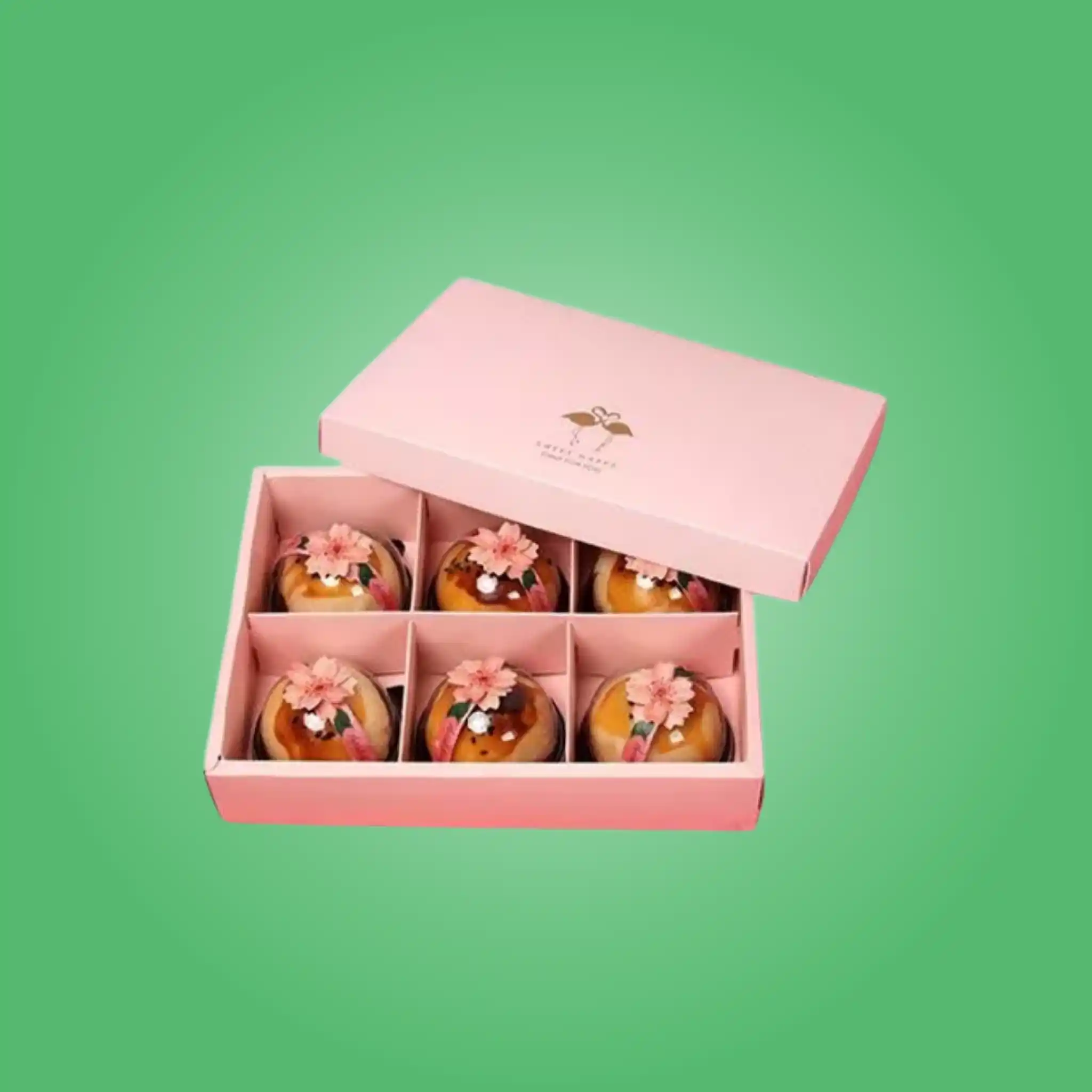
Keep cupcakes, donuts, macarons, and pastries perfectly stable with custom bakery boxes featuring secure inserts. Designed for busy US bakeries, these boxes prevent tipping, smearing, and breakage during delivery. Enjoy custom sizes, premium materials, and free USA shipping.
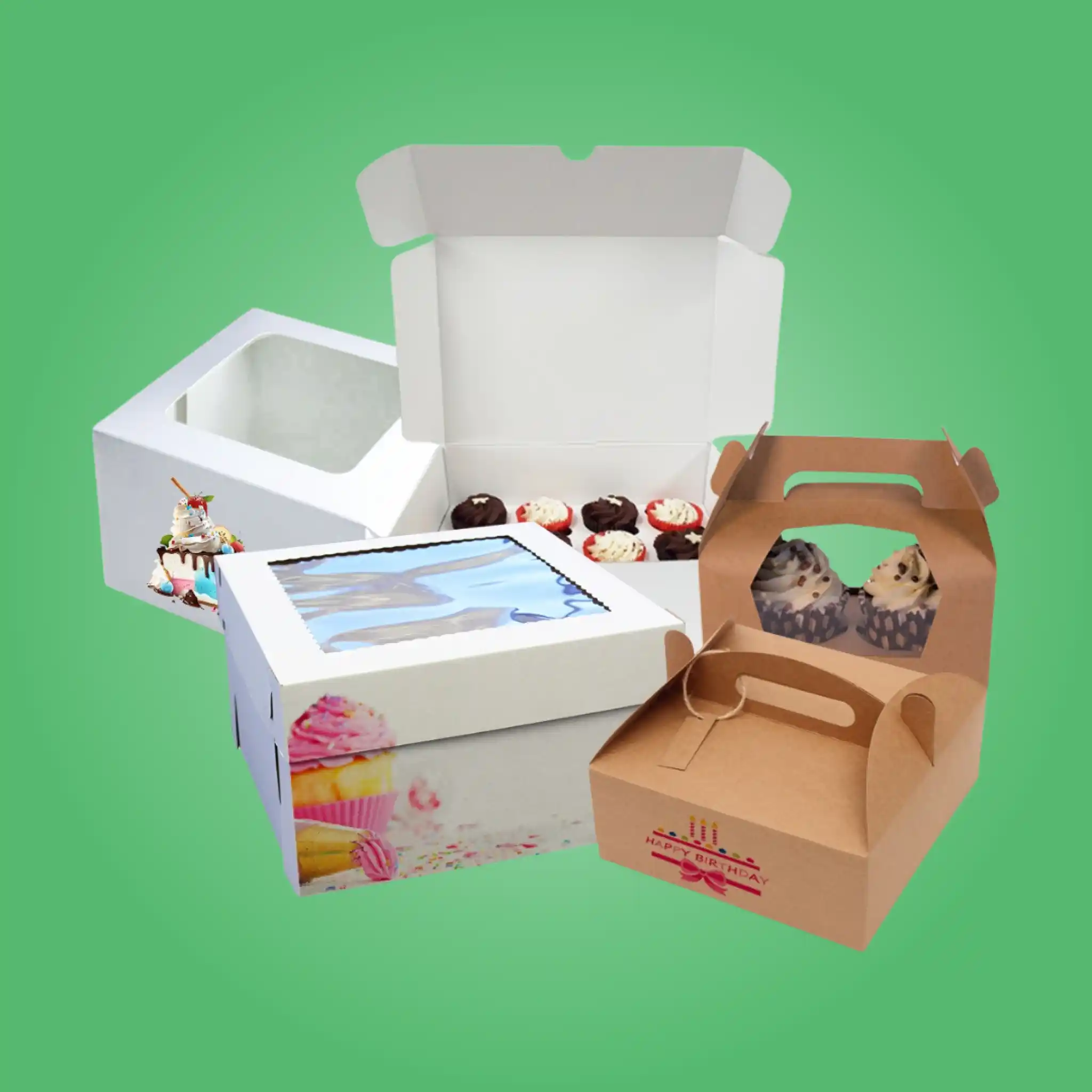
Get fast attention across the USA with bakery boxes that show every detail at first glance. These windowed designs boost trust, improve presentation, and support stronger sales in busy US bakeries. Each box delivers clean visibility and professional branding for shops in any US city.
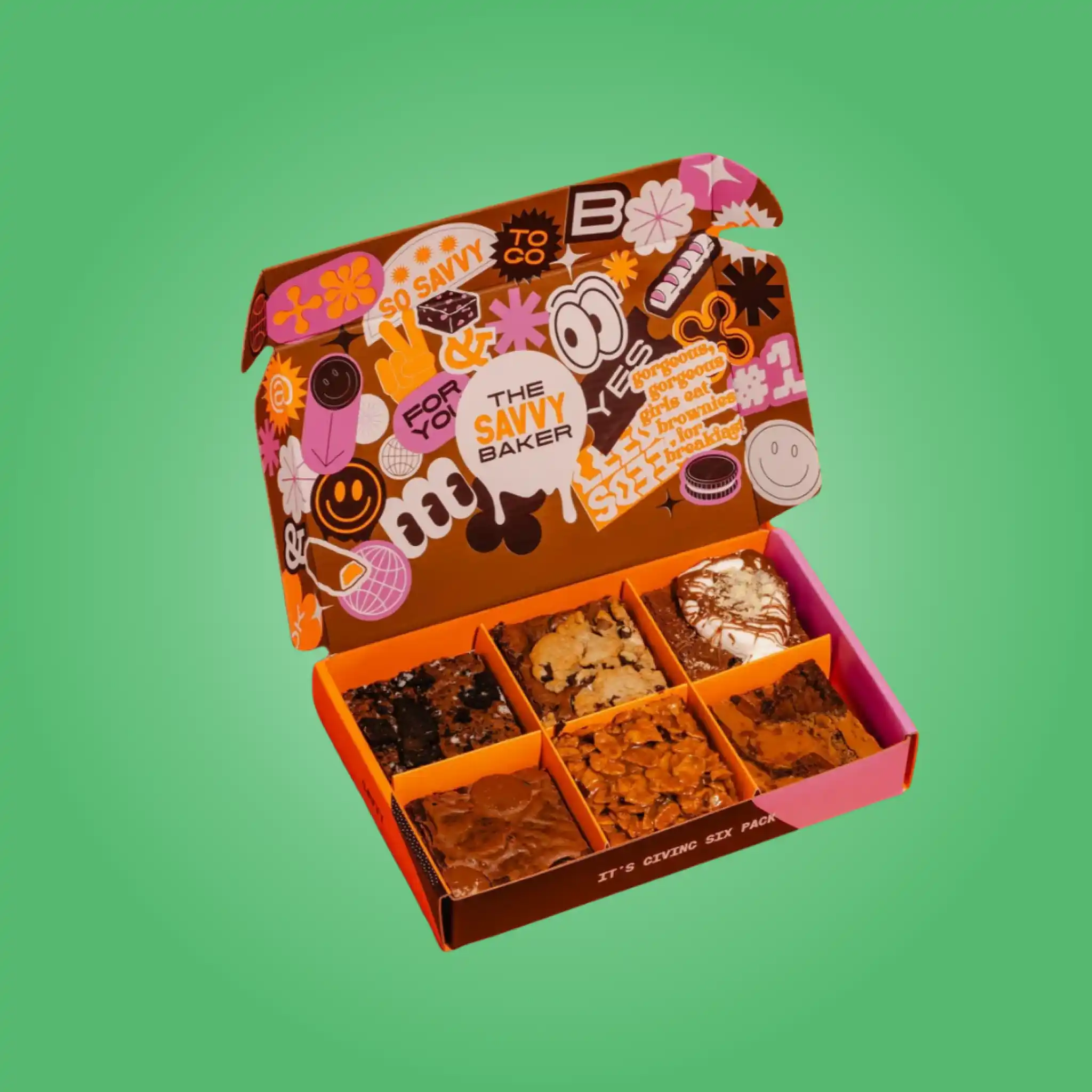
Custom brownie boxes from Pioneer Custom Boxes help bakeries, dessert brands, delivery kitchens, gifting businesses and mail order sellers package dense, greasy baked goods without staining or crushed edges. Choose grease-resistant SBS, kraft or E-flute board with windows, divider grids, greaseproof liners, venting, auto-lock bases, free design support, no MOQ and free USA shipping.
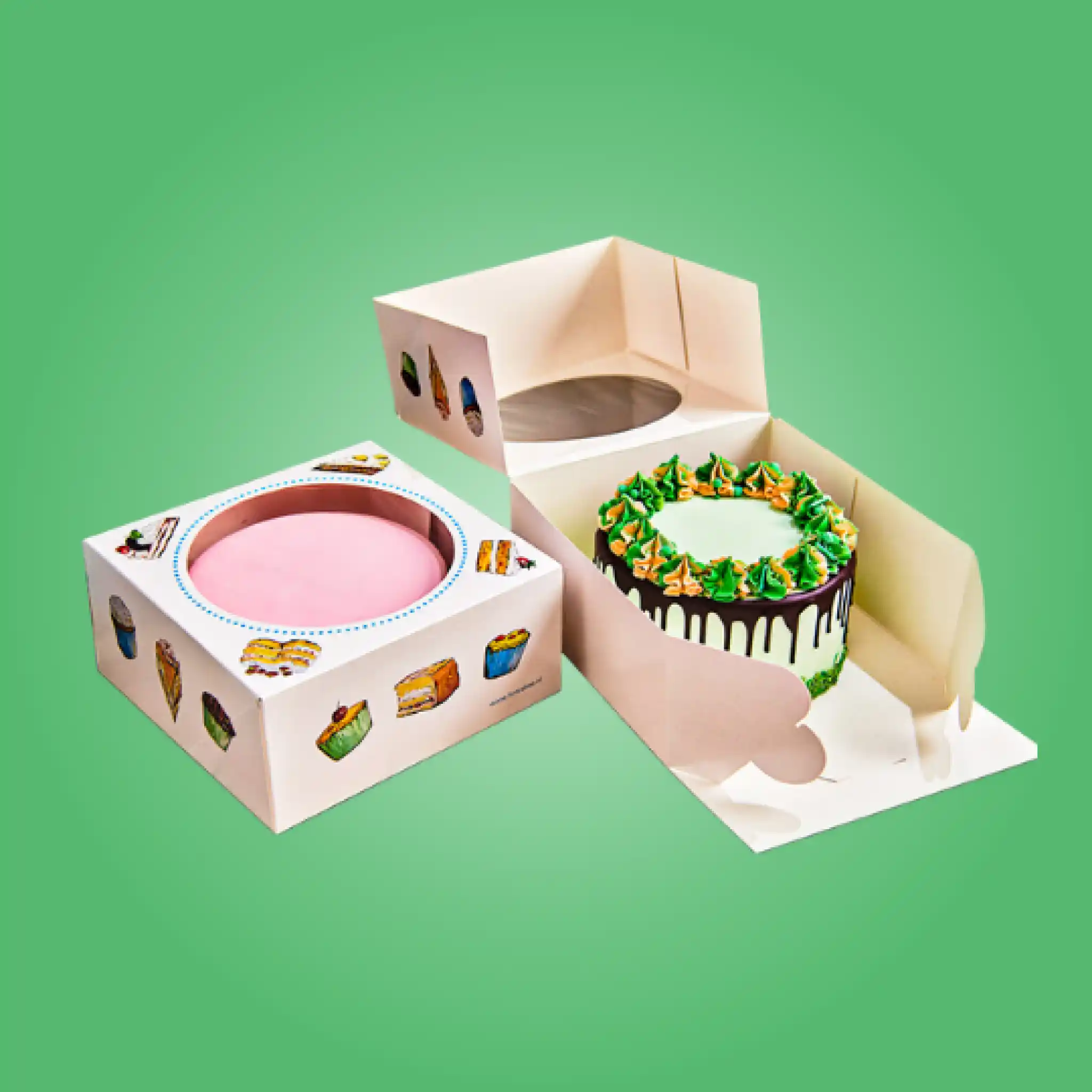
Perfect for US bakeries, Custom Cake Boxes keep cakes stable, clean, and photo-ready during pickup and delivery. Every box protects frosting, supports height, and strengthens branding across all major US cities. These boxes help bakeries deliver flawless cakes with confidence.
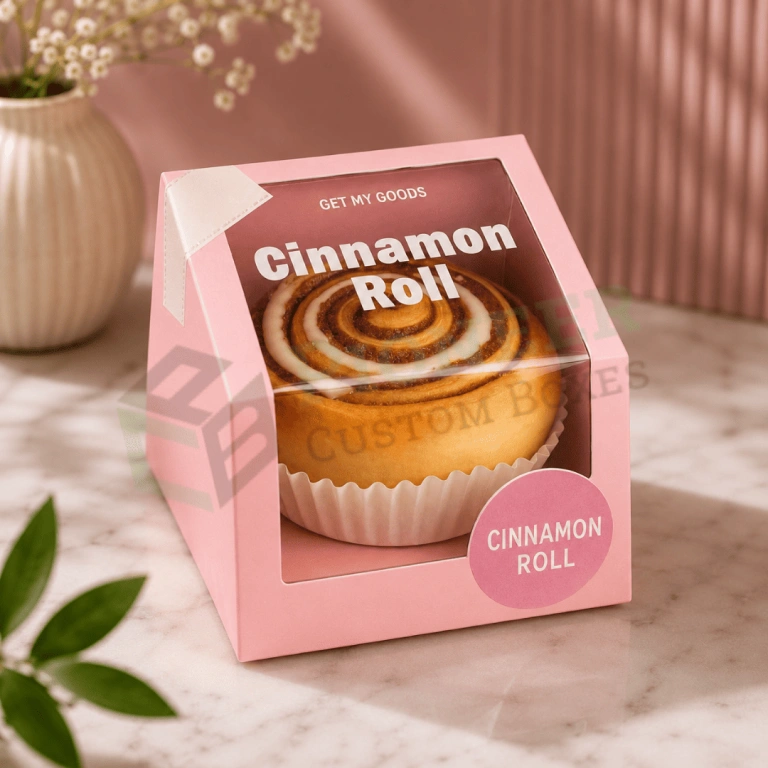
Custom cinnamon roll boxes are bakery packaging boxes made for cinnamon rolls, cinnamon buns, frosted rolls, sticky buns, breakfast pastries, bakery gift packs, café desserts, retail roll packs, catering trays, and delivery-ready baked goods. Pioneer Custom Boxes can customize cinnamon roll box size, paperboard stock, grease-resistant direction, inserts, trays, windows, handles, sleeves, tuck styles, kraft finishes, printed branding, barcode panels, frosting clearance, and shipping cartons for single rolls, two-packs, four-packs, six-packs, dozen boxes, and wholesale bakery packaging.
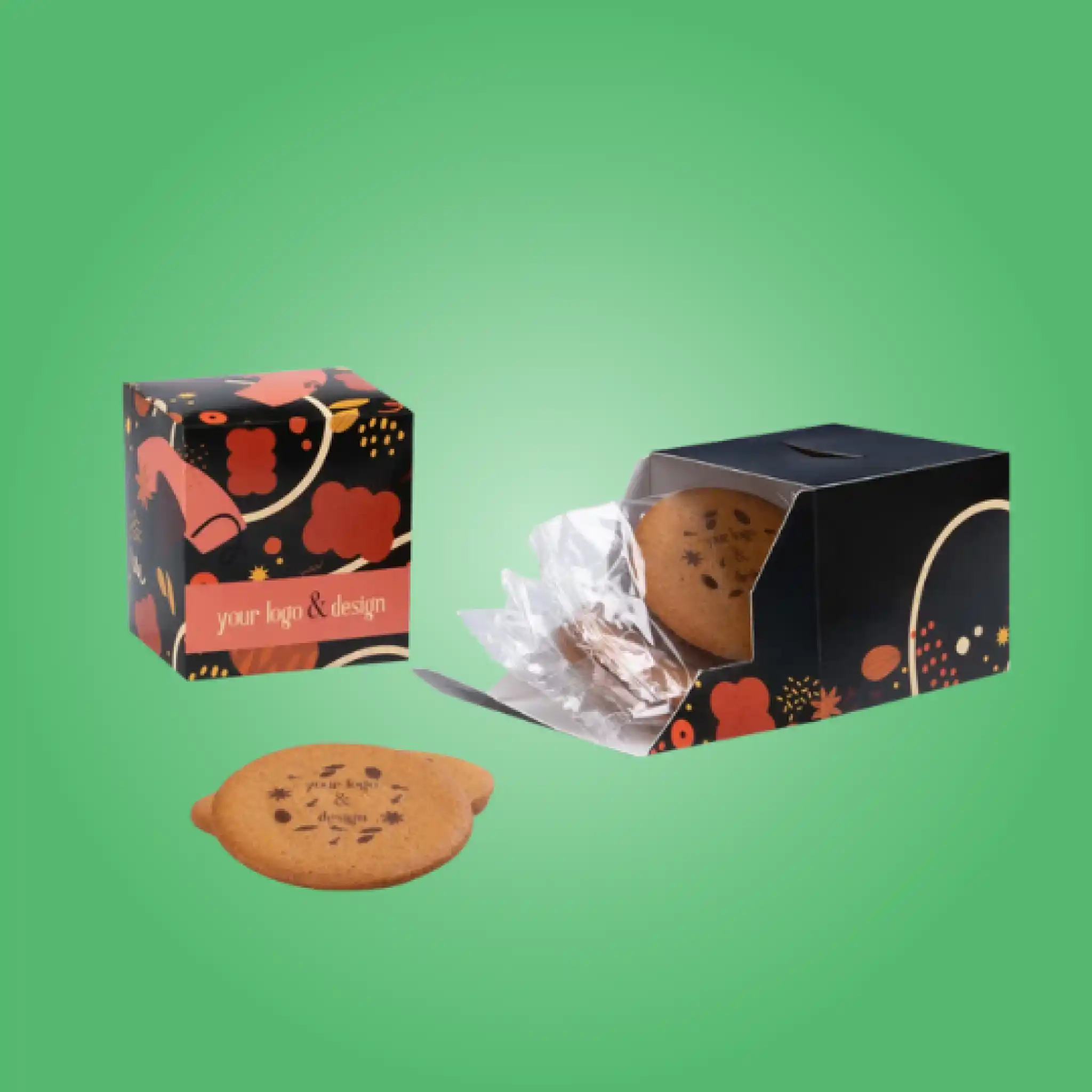
Custom cookie boxes built to your exact cookie size and count. Choose tuck end, auto lock bottom, window front, bakery tray, gable or corrugated mailer structures. We print on food safe SBS, kraft, recycled chipboard and E-flute in CMYK, PMS or metallic ink. Add grease resistant liners, dividers, molded pulp trays, windows and allergen panels. Zero minimum order quantity, free design support and free shipping across the United States. Standard production runs ten to twelve business days, with rush service available. Get a free quote or order now.
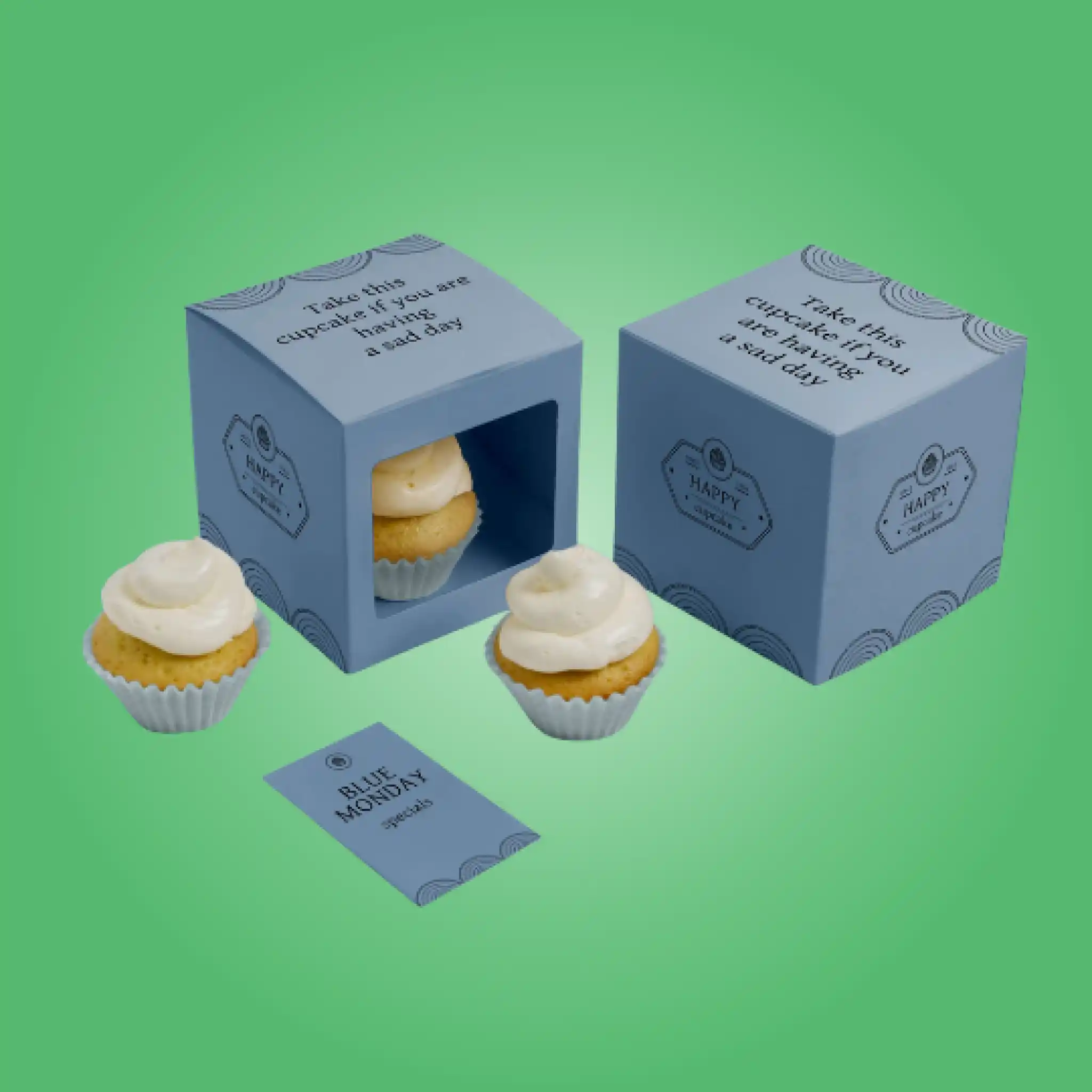
Custom cupcake boxes from Pioneer Custom Boxes hold each cake upright and keep frosting untouched for retail bakeries, home bakers, wedding suppliers, grocery bakeries and dessert delivery brands. Choose one to twenty-four cavity formats in grease-resistant SBS, kraft or E-flute board, with fitted inserts, windows, tall swirl clearance, free design support, zero MOQ and free USA shipping.
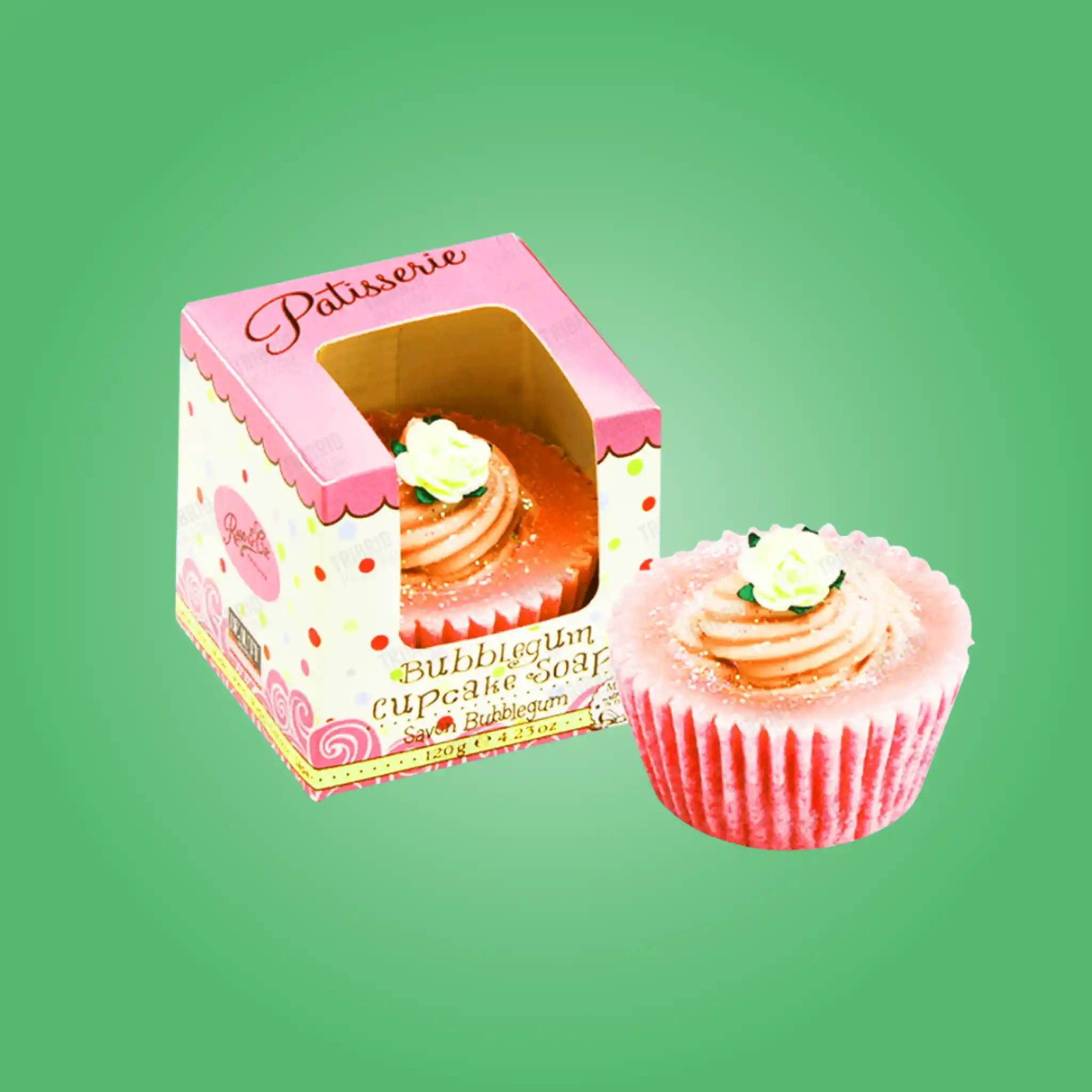
Custom dessert boxes from Pioneer Custom Boxes hold soft, chilled desserts level and intact for patisseries, cafes, restaurants, dessert delivery brands, grocery counters and caterers. Choose slice, tray and lid, cup carrier, multi-portion or whole dessert formats in grease-resistant SBS, kraft or E-flute board, with reinforced bases, anti-fog windows, free design support, zero MOQ and free USA shipping.
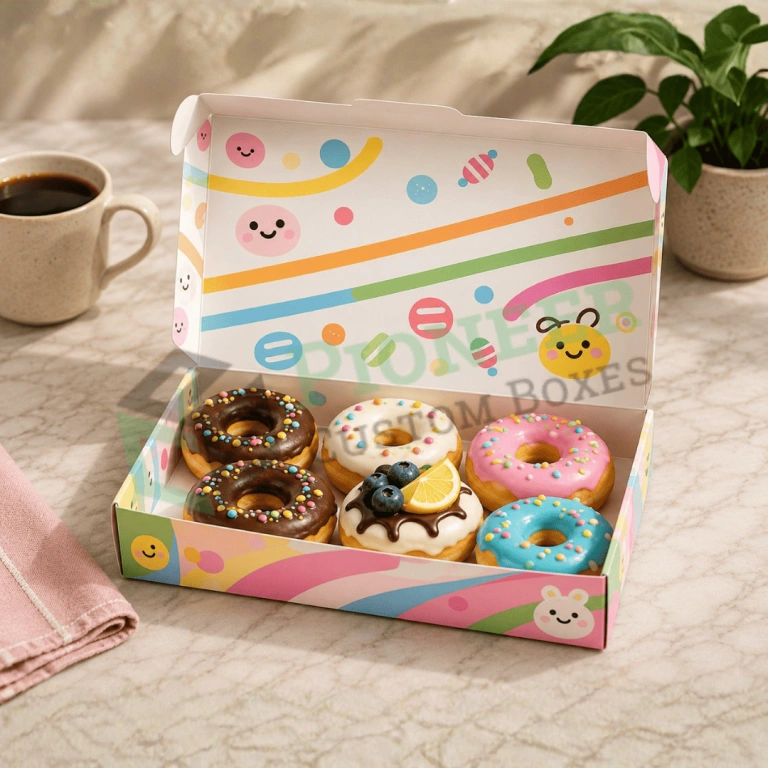
Custom donut boxes protect donuts from smudging, crushing, moisture buildup, and poor presentation. They work well for bakeries, cafes, dessert shops, delivery orders, single donut packaging, window boxes, and bulk donut boxes.
Bakeries compete through taste, freshness, and presentation. Because packaging shapes how customers experience every pastry, cake, or cookie, custom bakery boxes must balance strength, hygiene, insulation, and aesthetics.
At Pioneer Custom Boxes, we engineer bakery packaging for cakes, cupcakes, cookies, donuts, pastries, macarons, muffins, bread loaves, and cake slices.
Each box supports US retail expectations, e-commerce delivery, and busy bakery rush hours.
American bakeries serve customers who judge quality through appearance before flavor. Therefore, your bakery boxes must protect delicate frosting, hold warm goods safely, and present your brand clearly.
Cities like Los Angeles, Houston, Miami, Chicago, New York City, and Phoenix expect clean printing and reliable structure.
Also, hot regions such as Texas and Florida need grease-resistant coatings that protect against humidity.
Strong boxes help desserts survive car rides, delivery routes, and store handling. As a result, packaging becomes part of your product’s value.
We design structures for many bakery items sold in the USA.
Cakes need stable bases, tall walls, and grease-resistant liners. Window options help customers see decorations. Inserts keep multi-tier cakes steady.
Cupcakes tip easily, so insert holes to hold each cupcake firmly. Boxes must support tall frosting and prevent sliding.
Cookies need flat bases and minimal internal movement. Strong folds prevent breakage during delivery.
Donut glazes melt in heat, so boxes need breathable structure and anti-stick liners.
Layered pastries require ventilation to prevent sogging. Durable corners help protect flaky crusts.
Macarons crack easily. Trays must secure each piece. Rigid walls support long-distance delivery.
Bread loaves need larger boxes with moisture control. Kraft options match rustic bakery branding.
Cake slice boxes require triangular or rectangular shapes with stable bases.
Each product needs unique structural decisions, so we adjust dimensions and inserts for every US bakery.
Bakery products vary by region and bakery style. Because of that, we offer dimensions based on American standards.
Small cakes sit comfortably in an eight by eight by five inch box. Medium cakes need ten by ten by five inches, and larger celebration cakes call for twelve by twelve by five. Height matters as much as footprint here, because piping and decoration must never touch the lid.
A single cupcake travels in a four by four by four inch box with an insert. Six-packs run ten by seven by four inches, and a dozen needs fourteen by ten by four. Every one of these depends on an insert cup, since an unsupported cupcake tips within the first block of a delivery.
Cookies and individual pastries suit an eight by six by two inch box. Mixed pastry assortments need ten by eight by three inches, which leaves room for items of different heights without crushing the shorter ones.
A standard loaf fits twelve by five by five inches. Bread continues releasing steam after baking, so ventilation matters more than any other feature in this format.
Macaron sleeves run eight by two and a half by two inches for a short row. Multi-tray presentations use ten by four by two and a half inches. Cavity depth is critical, because a macaron that shifts even slightly arrives with a cracked shell.
Triangular slice boxes measure six by six by three inches, and rectangular versions run six by four by three. Both need a flat base so the slice arrives standing rather than lying on its decorated face.
We tailor dimensions for your bakery products, insert systems, and delivery style.
SBS supports high-resolution printing and clean folds. Its smooth coating resists minor moisture and protects frosting edges from sticking. Many US bakeries use 18pt for light pastries and 24–28pt for cakes or cookie assortments.
Kraft offers a natural, rustic look favored by organic bakeries. It absorbs small amounts of steam and reduces fogging inside warm pastry boxes. The board strength also suits bread loaves and eco-focused packaging.
E-Flute adds insulation and load strength. It protects tall cakes and cupcake sets during delivery. Its shock-absorption prevents sliding in rideshare and courier vehicles.
These boards resist oil from donuts, cookies, and pastries. The coating creates a barrier layer that prevents staining and keeps graphics sharp. It is essential for hot climates in Texas, Florida, and Arizona.
Specialty liners control humidity inside the box. They help maintain the crispness of pastries and prevent icing breakdown.
Matte reduces glare under bakery lighting and gives an upscale, soft appearance. It hides minor handling marks and works well for artisan pastries.
Gloss enhances color depth and improves resistance to grease spots. It suits bright donut branding, birthday cake boxes, and kids’ dessert lines.
Soft-touch adds a velvety feel and elevates premium bakery sets. It also reduces friction, helping tall boxes slide smoothly into display shelves.
Foil highlights logos and brand badges. Gold foil is popular for luxury cake boutiques, while silver foil fits modern macaron lines.
Spot UV sharpens edges on logos or dessert images. It adds dimension and makes product photography appear richer.
These textures add tactile feedback. Embossed logos help customers grip boxes securely, such as huge cake boxes.
Windows allow customers to preview frosting, toppings, or pastry layers. Clear PET windows meet indirect food-contact safety standards.
Inserts stabilize cupcakes, macarons, and pastries. Standard US cupcake inserts fit 2.25-2.5-inch cups. Macaron trays use shallow cavities that prevent lateral movement.
Laser-cut vents allow warm pastries to release steam. This prevents sogging and maintains crisp layers.
Handles support safe transport for cakes and assorted dessert boxes. Reinforced folds stop tearing.
Dividers separate pastries to prevent flavor mixing and crushing.
Layouts hold mixed desserts such as cookies, slices, and pastries in one box.
Helpful for day-old pastries or subscription dessert boxes.
Anti-fog films prevent condensation on windows when transporting warm donuts or pastries.
Custom builds often match our custom Kraft boxes for eco-focused branding.
CMYK prints photos, desserts, and branding clearly.
PMS keeps your brand colors consistent across all US regions.
Inside panels can show care instructions or flavor lists.
Metallic ink adds shine for special bakery collections.
High temperatures soften frosting and weaken box integrity. Heat-stable laminations reduce warping.
Gulf and East Coast bakeries face humidity that affects pastry crispness. Moisture barriers and vented designs reduce sogging.
Corrugated builds help maintain cake temperature during delivery. They slow heat transfer to preserve structure.
Wholesale bakeries require boxes that support stacking. E-Flute and 24pt+ SBS provide reliable compression strength.
Insert placement and tight folds reduce internal shifting during delivery.
Grease-proof linings keep pastries fresh and prevent oil staining.
Bakery packaging turns over constantly, so print method decides both your unit cost and how quickly you can change a design. We explain each option separately rather than quoting one blended figure.
Offset transfers ink from metal plates through a rubber blanket onto the sheet. It gives the sharpest detail and the most consistent color across a long run, which suits established bakeries ordering thousands of boxes at a time. Plate setup costs money upfront, so offset becomes economical past roughly one thousand pieces and improves steadily from there.
Digital prints directly from your file with no plates, so setup cost disappears entirely. Seasonal artwork, wedding orders, limited flavors and brand-new bakeries all benefit. Digital also supports variable data, meaning a single run can carry different flavor names or store locations on individual boxes.
Flexo suits corrugated stock and large simple graphics. Bakery shipping cases and outer cartons usually run flexo, since it covers big areas economically on a fluted surface.
Bakery brands live and die by appetite appeal, and color carries most of that work. The three systems below serve different purposes.
CMYK builds color from cyan, magenta, yellow and black separations. It reproduces photography of cakes, glazes and fillings convincingly, and it costs the least because four inks cover the entire design. Very vivid pastels and metallics fall outside its range, so a signature color often needs a spot ink alongside it.
Pantone inks arrive pre-mixed, so your shade prints identically on every run and on every board type. A bakery recognized by a particular pink or teal should specify that color in PMS rather than CMYK. We keep your references on file and match against a physical draw-down before the press runs.
RGB is a screen color space and cannot print directly. Your website, delivery app listings and social posts all live in RGB, and those values need conversion before production. Bright screen colors frequently shift during that conversion, so we handle it ourselves and show you the printed result first. Send artwork in CMYK or with Pantone references whenever possible.
Bakery packaging touches food directly, and that carries obligations ordinary retail cartons do not. Buyers and inspectors increasingly ask for paperwork rather than assurances.
We supply food grade board and food safe inks as standard for direct contact applications, and we document both for your compliance file. When a health inspector, a wholesale buyer or a catering client asks what your packaging is made from, that documentation turns a stressful question into a two-minute answer.
Grease resistance is a performance property rather than a safety one, and the two are frequently confused. A grease-resistant treatment stops butter and oils migrating through the board and staining the exterior. It does not by itself make packaging food safe, so we specify each property separately and never let one imply the other.
Labeling requirements sit with you and your advisor, and they vary by product and by state. Allergen declarations, ingredient lists and net weight all need planned space. We lay those zones out at the dieline stage rather than squeezing them in after artwork approval, because a late change to a required panel usually means a reprint.
This table gathers the formats above in one place. Every die is cut to your exact product, so use it as a reference rather than a limit.
| Product | Typical Size (inches) | Board | Key Feature |
|---|---|---|---|
| Small cake | 8 x 8 x 5 | 18pt SBS | Tall enough for decoration |
| Medium cake | 10 x 10 x 5 | 18pt to 20pt | Auto-lock base |
| Large celebration cake | 12 x 12 x 5 | 20pt or E-flute | Reinforced base |
| Single cupcake | 4 x 4 x 4 | 16pt SBS | Insert cup |
| Six cupcakes | 10 x 7 x 4 | 18pt SBS | Six-cavity insert |
| Twelve cupcakes | 14 x 10 x 4 | 18pt to 20pt | Twelve-cavity insert |
| Cookies and pastries | 8 x 6 x 2 | 16pt grease resistant | Window optional |
| Mixed pastry assortment | 10 x 8 x 3 | 18pt grease resistant | Divider panel |
| Bread loaf | 12 x 5 x 5 | 18pt kraft | Ventilation holes |
| Macaron sleeve | 8 x 2.5 x 2 | 16pt SBS | Fitted tray |
| Macaron multi-tray | 10 x 4 x 2.5 | 18pt SBS | Two-layer tray |
| Cake slice | 6 x 4 x 3 | 16pt grease resistant | Flat stable base |
Send your product dimensions and quantity, and we return a free dieline within one business day.
Bakery margins are tight, so knowing which variables move packaging price genuinely matters. Most of them sit within your control.
Size leads, because board is priced by area. A box sized to the actual product rather than to a rounded figure saves material on every unit forever. Board grade follows, and grease-resistant or moisture-resistant stocks cost more than plain board. Apply them to the items that genuinely need them rather than across your whole range.
Coatings are the third driver and the one most often over-bought. A full barrier coating costs considerably more than a targeted grease-resistant treatment, and most bakery items only need the latter. Print method comes next, and one or two colors on kraft costs a fraction of full-color work. For boxes discarded after one afternoon, the simpler method often sells just as well.
Inserts, windows, handles and ventilation each add a line item. We price them individually so you can drop the ones that do not earn their place on your counter.
| Cost Driver | Impact | How to Reduce It |
|---|---|---|
| Box dimensions | Highest | Size to the real product, not a rounded figure |
| Board and barrier grade | High | Apply grease resistance only where oils are present |
| Coating type | High | Targeted treatment rather than full barrier |
| Insert and tray tooling | High on small runs | Paperboard inserts where the item allows |
| Print method and colors | Moderate | One or two colors on kraft for daily items |
| Windows and handles | Moderate | Keep them where they drive the sale |
| Order quantity | Moderate | Consolidate sizes across your menu |
They need consistent stock for daily rush periods.
These stores require branding that stands out under intense retail lighting.
Eco materials support small-batch and organic sellers.
They need boxes that survive long shipping without crushing.
Corporate clients require neat, uniform packaging for events.
Related food sellers often coordinate packaging with custom food boxes for unified product lines.
We supply bakeries throughout California, Texas, Florida, New York, Illinois, Georgia, Washington and Arizona, and we ship free to every other state as well. Our busiest metro areas include Los Angeles, Houston, Miami, Chicago, Seattle, Phoenix, Atlanta and New York City, though a single-location bakery in a small town orders on exactly the same terms.
Each region requires unique packaging due to climate, customer behavior, and store conditions.
Zero minimum order quantity means small and growing bakeries order what they actually need. Fast turnaround covers holiday seasons and weekly specials, with rush production available in four to six business days. Structural and graphic design come free and are tailored to each dessert type. Shipping across the United States is free on every order. Bulk pricing applies for cafés, dessert chains and multi-location bakeries, and it improves as volume grows.
“Our cake boxes survived hot Texas deliveries without collapsing.” – Rise USA.
“The macaron trays were perfect for our NYC boutique bakery.” – Delight US.
“Pastry boxes arrived clean and sturdy for Florida humidity.” – Bakes USA.
Bakery boxes get assembled by hand during a rush and judged by a customer minutes later, so every order passes a documented check before it leaves our floor.
| Check | What We Verify | Why It Matters |
|---|---|---|
| Food grade materials | Board and ink certification on delivered stock | Direct contact compliance depends on it |
| Grease resistance | Coating coverage and edge penetration | Stains appear at the seams first |
| Assembly speed | Fold and lock action timed by hand | Staff build these during a morning rush |
| Base strength | Loaded weight test on the finished base | A dropped cake is a lost customer |
| Dimensional accuracy | Internal fit against the approved dieline | Decoration must never touch the lid |
| Insert fit | A real cupcake or macaron seated in the cavity | Loose cavities let product tip |
| Score and fold quality | Clean folds with no cracking | Cracked scores leak and weaken under heat |
| Ventilation placement | Hole position and size where specified | Trapped steam ruins pastry texture |
| Window film bond | Adhesion, clarity and anti-fog performance | Fogged film hides the product |
| Color match | Pantone against a physical draw-down | Brand color must hold across reorders |
If anything fails, we remake it rather than ship it.
Start from the product and how it travels. A box that works on a counter can fail completely in a delivery bag.
| If You Sell | Choose This Structure | Board | Key Feature |
|---|---|---|---|
| Decorated cakes | Auto-lock base with tall walls | 18pt to 20pt SBS | Height clearance above decoration |
| Cupcakes | Window box with cavity insert | 18pt SBS | Insert cups holding each cake |
| Cookies and brownies | Tuck carton with window | 16pt grease resistant | Grease barrier |
| Croissants and pastries | Vented carton | 18pt grease resistant | Ventilation to keep them crisp |
| Bread and sourdough | Kraft carton with vents | 18pt kraft | Steam release |
| Macarons | Fitted tray in a sleeve | 16pt to 18pt SBS | Precise cavity depth |
| Cake slices | Small box with flat base | 16pt grease resistant | Stability during transport |
| Delivery and courier orders | Corrugated outer with insert | E-flute | Crush resistance and handle |
| Wedding and event orders | Rigid or heavy carton with ribbon | 20pt or rigid | Presentation and stability |
| Farmers market sales | Kraft carton with window | 16pt kraft | Low cost, natural look |
When a product sits between two rows, choose the sturdier option. A collapsed box costs you the product, the refund and the review all at once.
Packaging cost is not only what you pay per box. It is also what your staff spend assembling them, and in a bakery that time lands during the busiest twenty minutes of the day.
A carton needing four folds, a tuck and a manual base takes several seconds longer than an auto-lock structure that snaps square in one motion. Multiply those seconds across hundreds of boxes a week and the difference becomes real labor cost. Auto-lock bases cost slightly more per unit and usually repay that difference many times over.
Pre-assembly matters too. Many bakeries build a stack of boxes before opening, which works beautifully for structures that hold their shape and badly for ones that need contents to stay square. We ask how your team actually works before recommending a structure, because a box that suits a packing line often frustrates a counter.
Storage space is the other constraint. Flat cartons stack in a fraction of the space assembled ones occupy, so we design for flat delivery wherever the structure allows. That keeps your back room usable and lets you hold more stock without renting more space.
Tell us your daily volume and where boxes get assembled, and we will recommend a structure that saves time rather than only material.
Ordering takes four steps, and our team handles the technical work in each one.
First, send your product dimensions and quantity. If you have the cake but no measurements, photograph it beside a ruler and we work the sizing out with you. Tell us whether the box travels by car, by courier or only across a counter, because that changes the specification.
Second, we return a free dieline and a written quote within one business day. The dieline maps every panel, fold, vent and glue tab on one flat sheet, so your designer never guesses where artwork lands.
Third, you approve a digital proof, and we recommend a physical sample whenever a structure is new. Put a real product inside it, hand it to your staff, and see how quickly it assembles before you commit to a full run.
Fourth, we produce and ship. Standard production runs eight to twelve business days, rush runs four to six, and shipping across the United States is free. Zero minimum order quantity applies, so a fifty-box test follows the same process as five thousand.
Bakeries reorder constantly, and consistency matters more here than in almost any category, because your boxes sit in a stack where every difference shows.
We keep your dieline, board specification, insert tooling, Pantone references and print files on record permanently. Reorders run against that stored specification, so your boxes stack with the ones already in your back room and your logo sits in exactly the same position.
Seasonal work is where this pays off most. Keep one structure all year and change only the printed panel for holidays, and each seasonal run costs less because the die and the insert already exist. We version every artwork change with a date, so you always know which design shipped when.
For multi-location bakeries and dessert chains, we can hold one shared structure and vary only the store name or the campaign panel. The range stays consistent across every location, and unit cost falls because tooling is shared.
A dessert shop running delivery through third-party apps came to us with a specific complaint. Cupcakes were arriving tipped over, frosting pressed against the lid, and refund requests were climbing.
The box itself was fine. The problem was the insert, which used a generic cavity slightly wider than their cupcake liner. That small gap let each cake rotate, and a rotated cupcake in a courier bag ends up on its side.
We cut a new insert sized to their actual liner, added a quarter inch of headroom above the frosting, and moved the base to an auto-lock structure so staff could build boxes faster during their evening peak. We also added two small vents, because warm cupcakes had been fogging the window.
Complaints dropped by roughly ninety percent over the following two months. Cost per box rose about six cents, and the refunds they stopped issuing covered that difference many times over. The faster base was the change their staff mentioned most.
Bakery packaging is used once and discarded quickly, so its end of life matters more here than in categories where a box gets kept.
Uncoated and water-based coated paperboard recycles through standard curbside programs. Kraft board made from recycled fiber lowers footprint further and carries a natural look many artisan bakeries prefer anyway. Where grease resistance is essential, we favor greaseproof treatments over plastic lamination, because coated board stays recyclable while laminated board often does not.
Plastic windows are the usual weak point. They protect visibility beautifully and complicate disposal, so we offer smaller apertures, frosted alternatives and window-free designs where the product photographs well on the lid instead. Compostable window films are available for bakeries that need them.
Right-sizing helps more than any material swap. A box cut to the product uses less board and needs no filler, and that reduction is real rather than symbolic. Soy-based inks are available on request, and we print correct disposal guidance on your panel.
A few errors recur across bakeries of every size, and each is avoidable before a die is cut.
Under-specifying the base leads the list. A cake box that feels sturdy empty flexes badly under three pounds of frosted sponge, and the failure always happens while someone is carrying it. Specify the base against the loaded weight.
Skipping ventilation is second. Warm product releases steam, and trapped steam turns crisp pastry soft and fogs a window within minutes. A few correctly placed vents solve it completely.
Sizing a cavity to a drawing rather than to the real product is third. Handmade items vary, so we cut inserts against physical samples of what you actually produce.
Placing a barcode or a label over gloss lamination causes scanning and adhesion problems, and wholesale buyers push back on both. Keep those areas flat and matte.
Finally, approving artwork without assembling a physical sample hides a fold running through your logo or a base that takes too long to build. A sample costs very little compared with a reprint, and we make one whenever the structure is new to you.
Bakeries supplying cafés, grocers, hotels and corporate clients face packaging requirements that a retail counter never imposes.
Wholesale buyers ask for case quantities that stack safely on a pallet, scan reliably at receiving and carry consistent labeling. We design the retail box and the shipping case together, so cases tile cleanly across a standard pallet and nothing crushes on the bottom layer. That single decision usually saves more in freight than the cases cost.
Catering brings different constraints. Large orders travel in vehicles rather than parcel networks, so handles, stackability and a flat stable base matter more than crush ratings. Trays with fitted lids work well here, because staff can carry several at once without stacking pressure reaching the product.
Grocery placement adds labeling requirements. Ingredient panels, allergen statements, net weight and a scannable barcode all need planned space, and each has a legibility threshold that cannot be compressed. We reserve those zones on the dieline before artwork is placed.
Multi-location bakeries usually want one structure and many printed panels. We hold shared tooling and vary only the store name or seasonal artwork, which keeps every location consistent while lowering cost per unit. Reorders for any location run against the same stored specification.
The same box performs differently in Phoenix and in Seattle, which is why we ask where your product travels before recommending a specification.
Hot climates put pressure on frosting, chocolate work and glazes. Insulating structures, deeper headroom above decoration and light-colored board all help, because a dark box absorbs heat in a car within minutes. Bakeries across Texas, Arizona and Florida usually specify heavier board than the same shop would need further north.
Humid regions attack the board itself. Paperboard softens as it absorbs moisture, so grease-resistant and moisture-managed stocks earn their cost through a Gulf Coast summer. Ventilation still matters, since sealed boxes trap condensation against pastry.
Cold and dry climates create the opposite problem. Very dry storage makes board brittle, and creases then crack during assembly. Storing stock in a stable indoor environment solves it without any change to the specification.
Delivery distance is the final variable. A box carried across a counter needs almost nothing. A box riding thirty minutes in a courier bag needs a locking base, controlled movement inside and ventilation that keeps texture intact on arrival.
Most bakery owners are excellent at baking and were never meant to become structural packaging designers. Our design service exists precisely so you do not have to be.
Send us a photograph of your product and a rough idea of what you want, and our team produces the dieline, positions your logo, sets the vent pattern and sizes the insert. If you have no artwork at all, we can lay out a clean design using your existing signage or menu as a starting point. None of this carries a charge.
For bakeries that already work with a designer, we supply a layered print-ready template marked with fold lines, bleed areas, safety margins and reserved panels. Your designer then works with certainty rather than guessing, and proofs come back correct the first time.
We also check the practical details that get missed. Decoration clearance, base strength against your heaviest item, window placement relative to steam, and whether your barcode sits somewhere a scanner can actually read it. Those checks cost you nothing and prevent the reprints that hurt most.
Strong bakery packaging keeps desserts safe, builds brand appeal, and supports US bakery operations. Contact Pioneer Custom Boxes for custom sizes, advanced printing, durable builds, and free USA shipping.