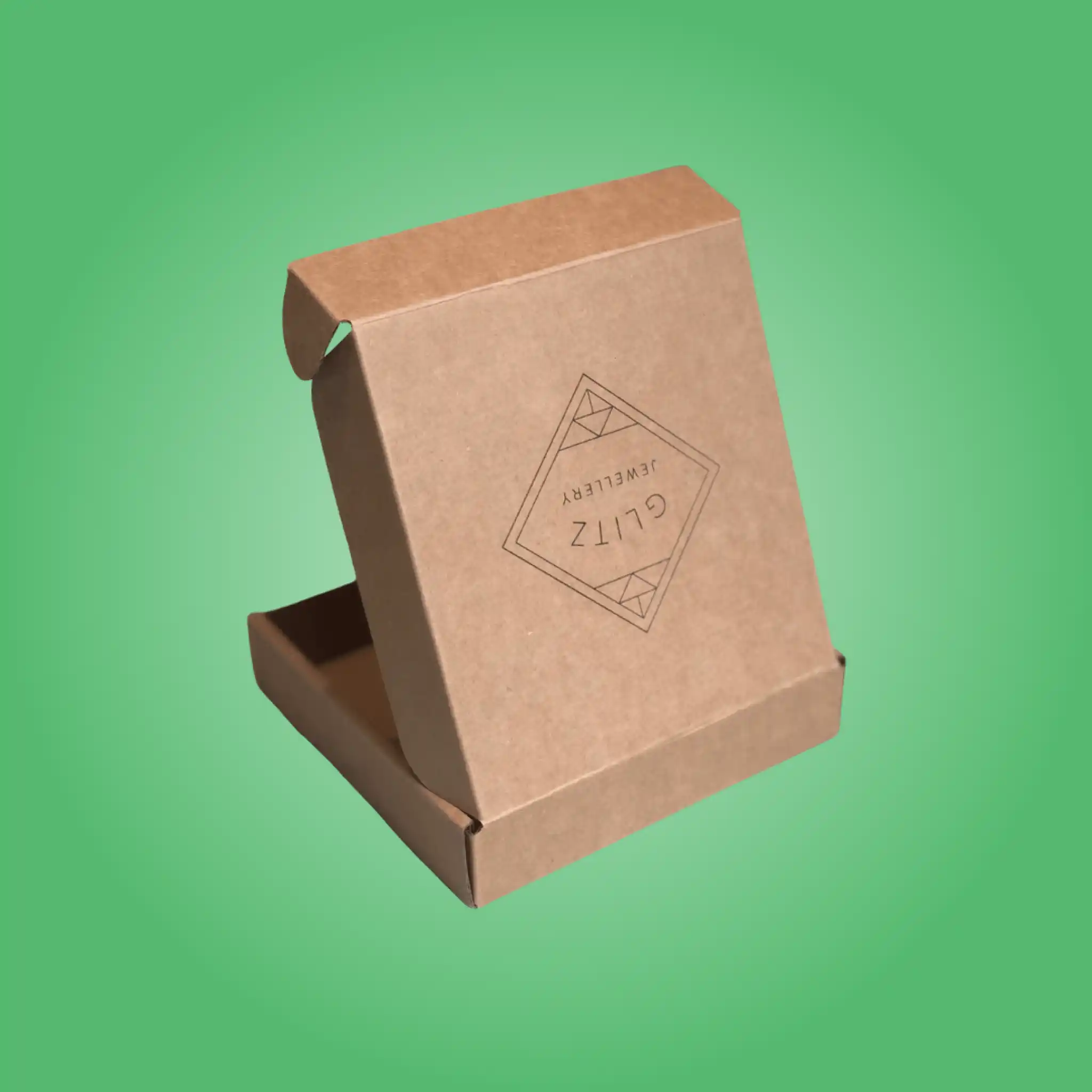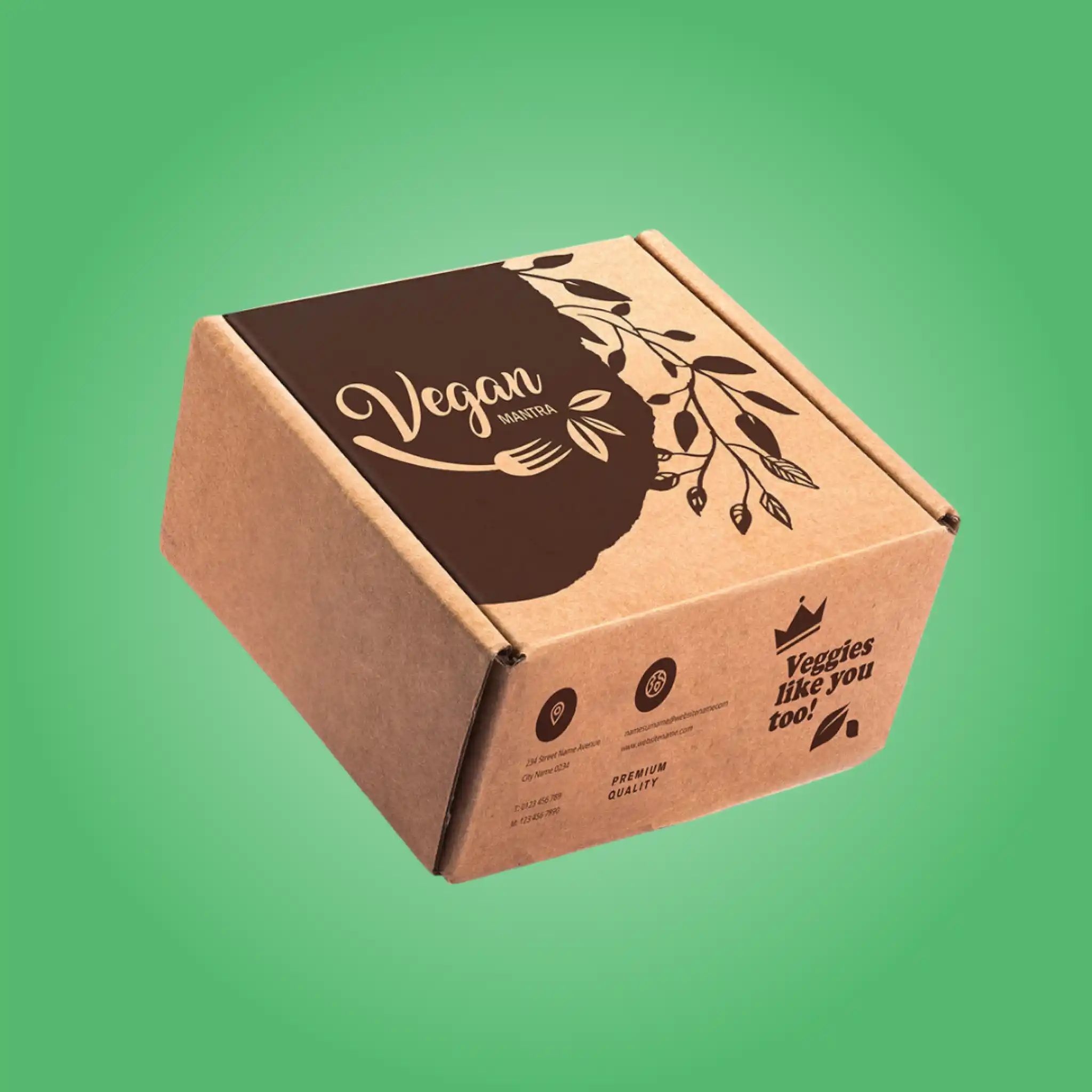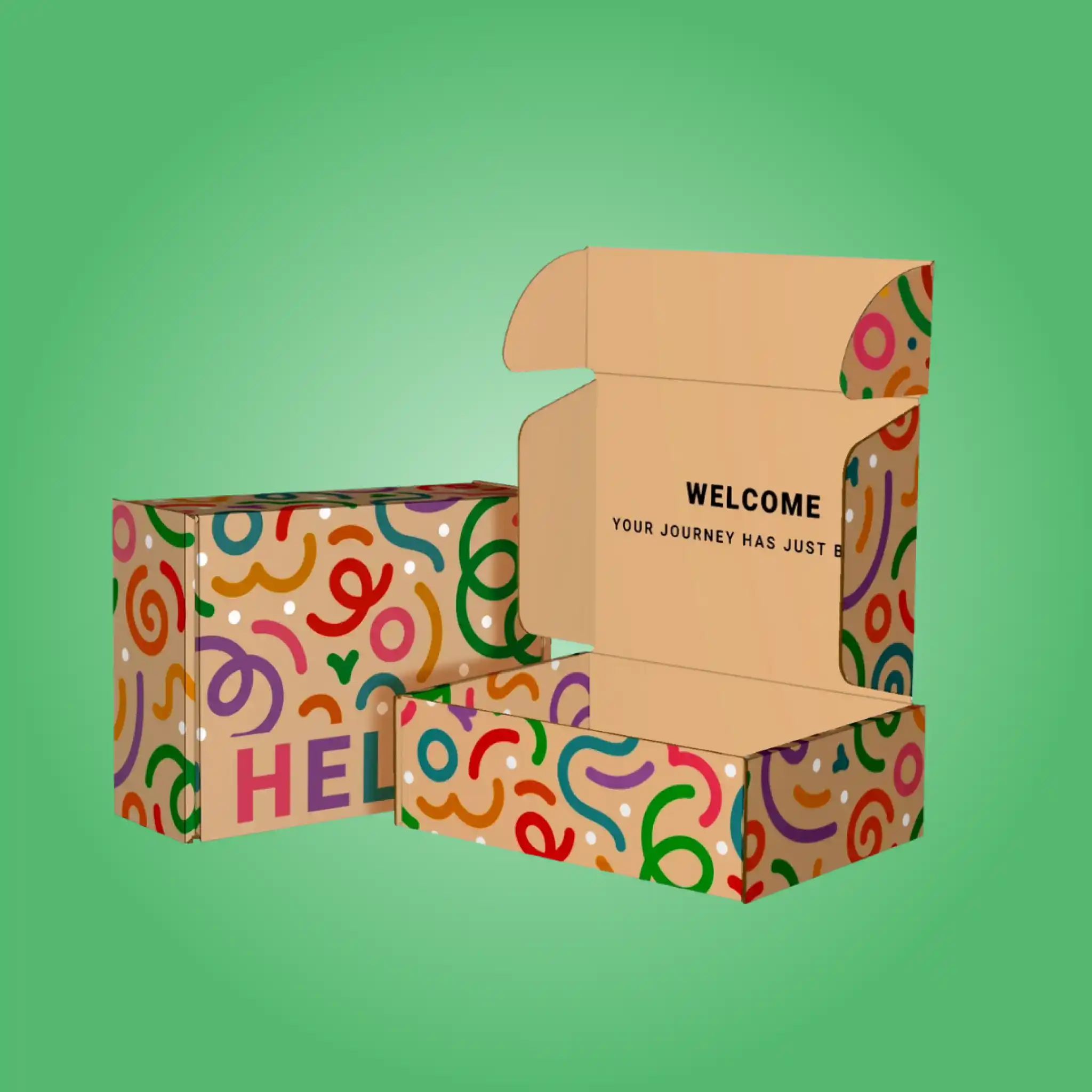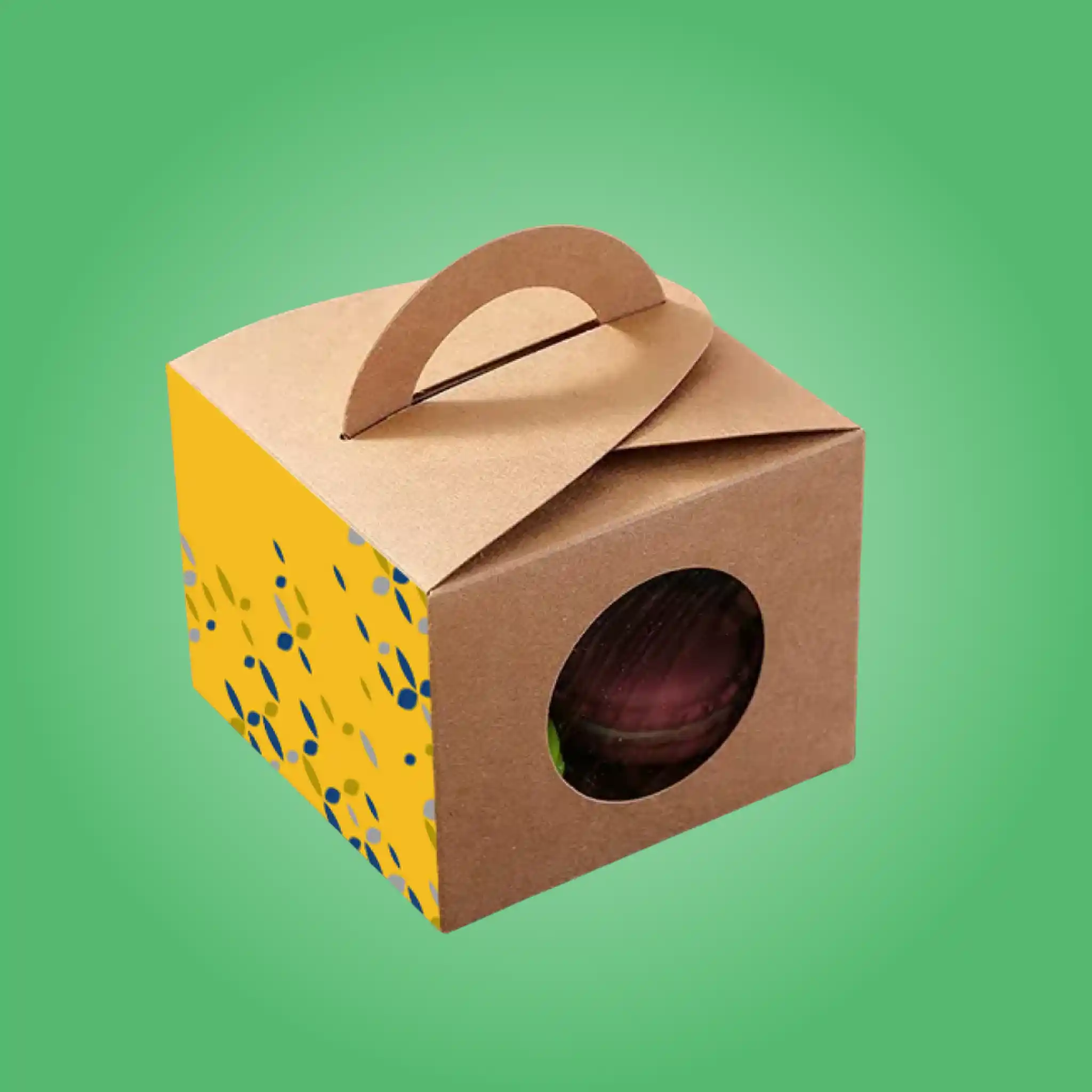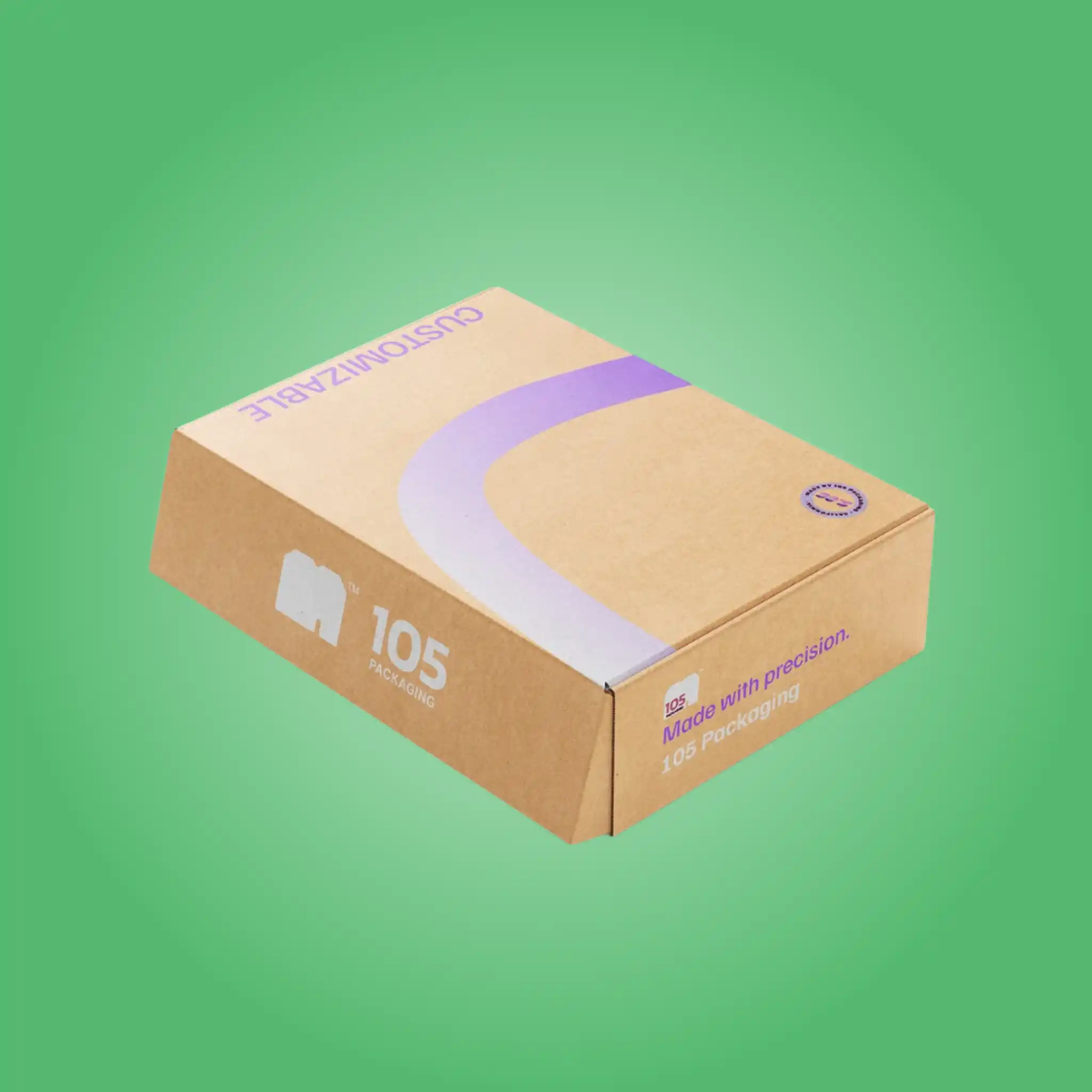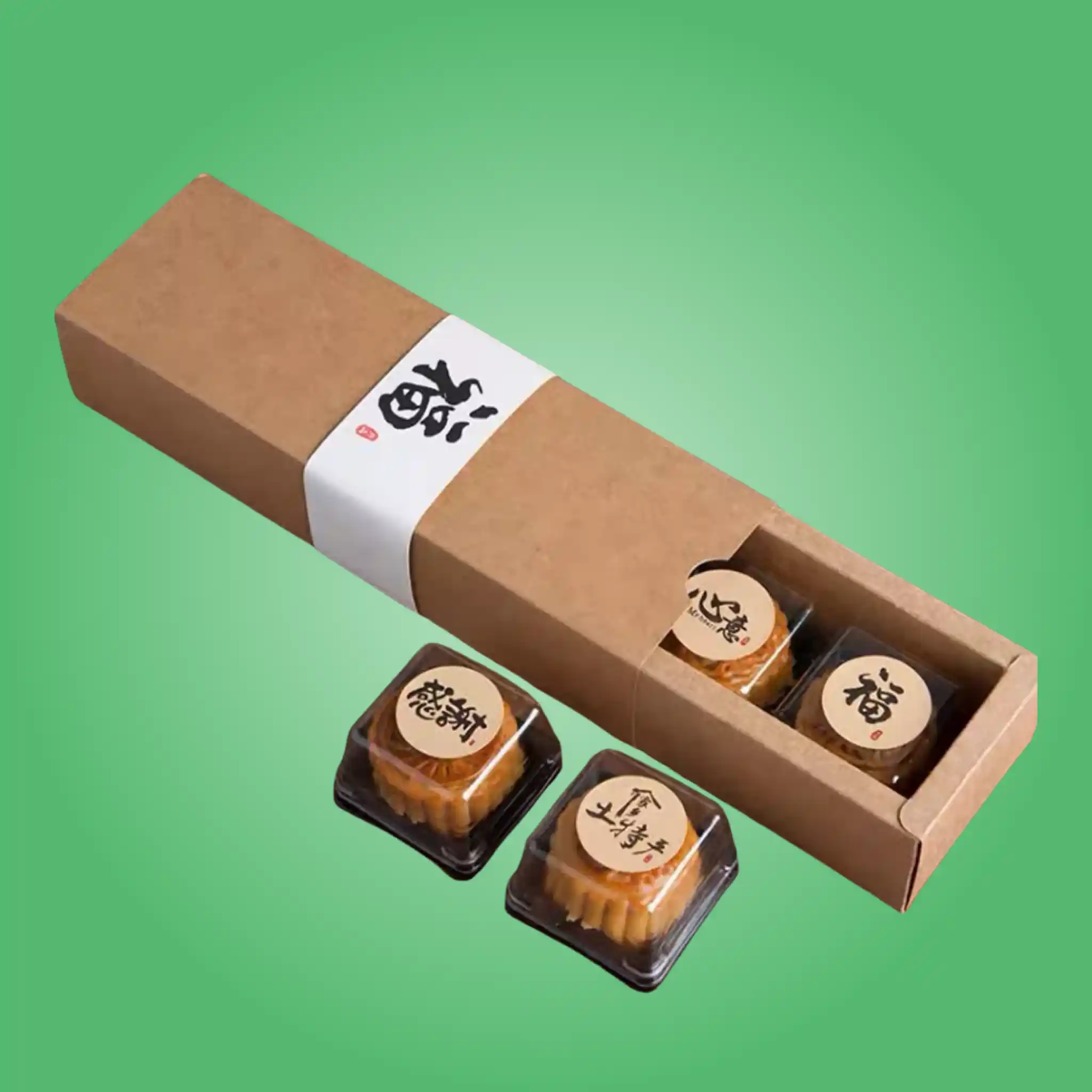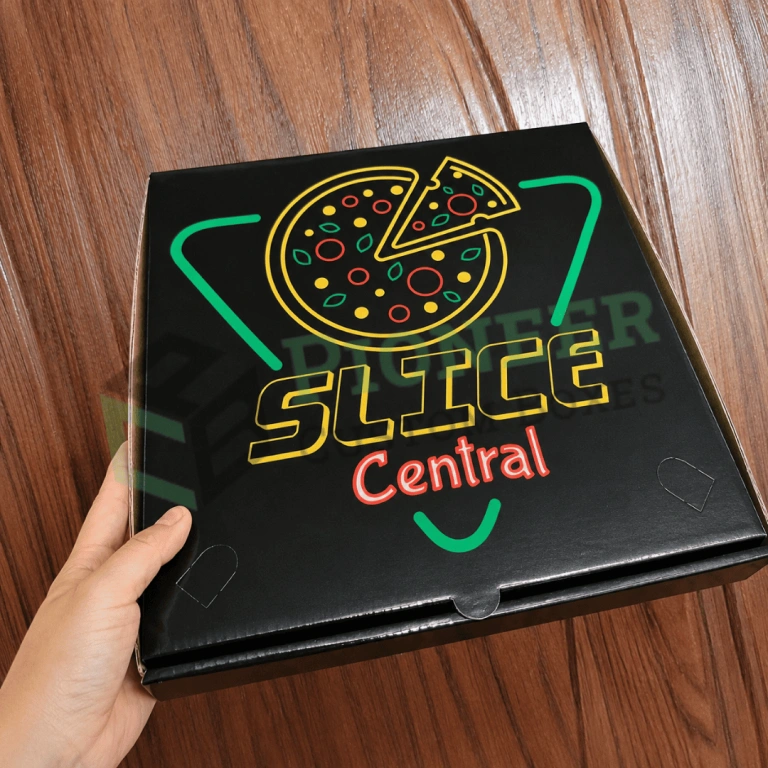
Custom brown boxes from Pioneer Custom Boxes are right-sized kraft corrugated cartons for ecommerce sellers, wholesalers, subscription brands, manufacturers and fulfillment operations. Choose RSC, full overlap, die-cut mailer or double wall builds in 32 ECT to 48 ECT kraft, with flexo or digital printing, moisture-resistant treatment, free design support, zero MOQ and free USA shipping.
Custom brown boxes are unbleached kraft corrugated cartons, printed or plain, built to ship products safely at the lowest sensible cost. Pioneer Custom Boxes manufactures them across the United States with zero minimum order quantity and free shipping.
Brown boxes are the most bought and least considered packaging in America. Most businesses order them by rough size from a catalog, then absorb the consequences for years without connecting them back to the box.
Those consequences are measurable. An oversized brown box costs more in board, more in void fill and considerably more in freight, because carriers bill on dimensional weight rather than actual weight.
Strength is the other half, and it is where the industry language causes real confusion. Edge crush and bursting strength measure different things, and ordering the wrong one produces either crushed shipments or boxes far stronger than the contents need.
We manufacture custom printed brown boxes for ecommerce sellers, wholesalers, subscription brands, manufacturers, distributors and fulfillment operations. Furthermore we cut our own dies and run our own presses, so the box is built around your actual product rather than rounded to a stock size.
Order wholesale brown boxes in any quantity you need. There is no minimum order, design support costs nothing, and shipping across the United States stays free on every order.
Most brown box requirements resolve into a handful of structures, and picking correctly saves more than any material choice.
The standard shipping box, where all flaps are the same length and the outer pair meet in the middle. It is the most economical corrugated structure ever devised and it covers the large majority of shipping needs.
An RSC where the outer flaps fully overlap, doubling the board across the top and bottom. It suits heavy contents and rough handling, since the stacked flaps resist crushing far better.
An open-top box with no upper flaps, used with a separate lid or for parts handling inside a facility rather than for shipping.
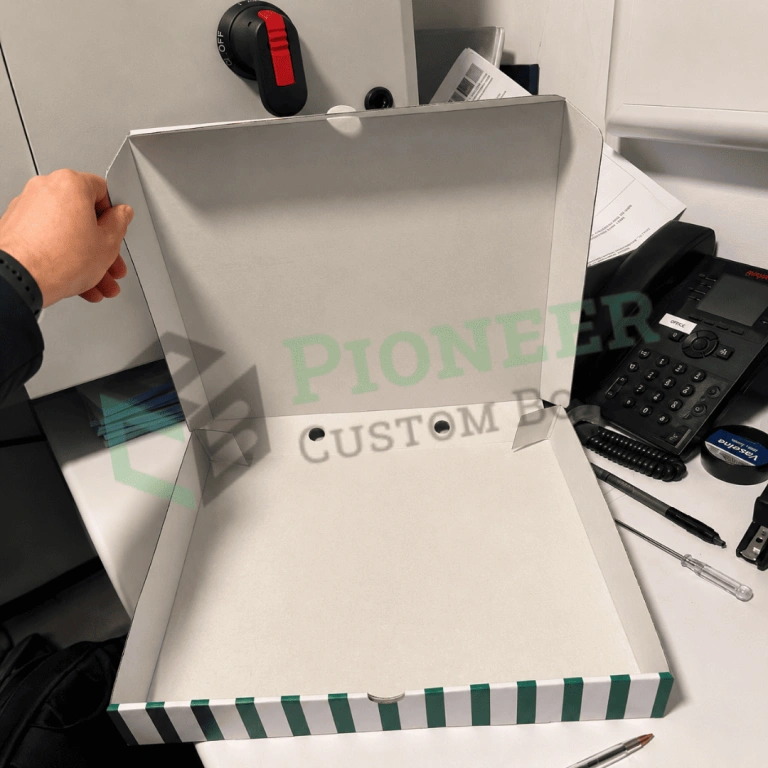
A one-piece box that folds and locks without tape, popular with ecommerce because it opens cleanly and presents well. It uses more board per unit than an RSC but removes taping labor entirely.
A separate base and lid that slide over each other, used for long or awkward items and for products that need depth flexibility.
Plain unprinted boxes in common sizes, bought for internal use, storage and low-value shipping where branding adds nothing.
Two fluted layers for heavy, dense or high-value contents. It costs noticeably more and is genuinely necessary above roughly sixty-five pounds.
| Box Type | Board Efficiency | Assembly | Best For |
|---|---|---|---|
| Regular slotted container | Highest, minimal waste | Tape required | Most shipping and wholesale |
| Full overlap container | Lower, doubled flaps | Tape required | Heavy contents and rough handling |
| Half slotted container | Moderate | Open top, separate lid | Internal handling and parts |
| Die-cut mailer | Lower per unit | Folds and locks, no tape | Ecommerce and subscription |
| Telescoping two-piece | Lower | Two pieces | Long or awkward items |
| Bin and stock box | Highest | Tape required | Storage and internal use |
| Double wall box | Lowest | Tape required | Above about 65 pounds |
Send us your product dimensions and its weight. Those two numbers decide the structure and the board grade, and everything else follows from them.
Every box is cut to your product. These sizes cover the brown boxes we produce most often.
| Size (inches) | Board Grade | Typical Contents | Common Use |
|---|---|---|---|
| 6 x 4 x 4 | 32 ECT single wall | Small accessories, jewelry, parts | Ecommerce singles |
| 8 x 6 x 4 | 32 ECT single wall | Apparel, cosmetics, small goods | Ecommerce standard |
| 10 x 8 x 6 | 32 ECT single wall | Multi-item orders | Ecommerce and subscription |
| 12 x 9 x 4 | 32 ECT single wall | Flat goods, books, prints | Media and flat items |
| 12 x 12 x 12 | 32 ECT single wall | Bulkier light goods | General shipping |
| 14 x 10 x 6 | 32 ECT single wall | Mixed wholesale cases | Wholesale supply |
| 16 x 12 x 8 | 32 ECT or 44 ECT | Heavier multi-item orders | Wholesale and fulfillment |
| 18 x 14 x 10 | 44 ECT single wall | Heavy or dense contents | Distribution |
| 20 x 16 x 12 | 48 ECT double wall | Heavy equipment and bulk | Industrial shipping |
| 24 x 18 x 12 | 48 ECT double wall | Large heavy contents | Freight and pallet loads |
| Custom to your product | Specified to weight | Anything | Right-sized shipping |
Stock sizes are convenient and almost always slightly wrong. A custom size that fits your product removes void fill, cuts dimensional weight and usually pays for itself within the first few hundred shipments. The same principle governs how we specify custom shipping boxes.
This is where most brown box orders go wrong, because two different strength measures are used interchangeably by people who should know better.
Edge crush test measures how much force the board withstands on its edge, which is what matters when boxes are stacked on a pallet. It is expressed as a number such as 32 ECT.
Bursting strength, sometimes called the Mullen test, measures resistance to a puncture through the face of the board. It is expressed in pounds, such as 200 lb test.
They are not interchangeable, and 32 ECT is roughly equivalent to 200 lb test in everyday use rather than identical to it. Ordering by the wrong measure produces a box that either crushes in a stack or costs more than the contents require.
Stacking is the practical question for most businesses. If your boxes sit on a pallet or in a warehouse rack, edge crush is the number that matters and bursting strength tells you very little.
Puncture resistance matters for different reasons. Products with hard corners, or shipments handled roughly by a parcel network, benefit from bursting strength that ordinary stacking would never demand.
Flute profile sits alongside both. C-flute is the general purpose standard, B-flute is thinner with better crush resistance for printing, E-flute is thin and prints well for retail-facing boxes, and double wall combines two profiles for heavy loads.
The Fibre Box Association publishes the standards this language comes from, and a box maker certificate printed on the box itself records what was actually supplied.
Tell us the weight and how the boxes will be stored, and we will specify the grade. Guessing upward is the most common and most expensive mistake in brown box ordering.
Brown box material choice is narrower than most categories, and the differences that exist matter commercially rather than aesthetically.
The default. Unbleached kraft liner over a fluted medium, supplied at 32 ECT for general purpose use and 44 ECT where loads are heavier. It covers the overwhelming majority of shipping requirements.
Two fluted layers between three liners. It roughly doubles the crush resistance and costs considerably more, so it belongs above about sixty-five pounds rather than as a general upgrade.
Kraft construction with a white outer liner. It gives a clean print surface while keeping kraft economics, and it suits brands that want printed graphics without paying for full bleached board.
Corrugated already carries high recycled content as standard, and higher recycled grades are available where a brand wants to make a specific claim. Performance is effectively unchanged at normal grades.
Treated board for cold chain, humid warehouses and produce. Ordinary corrugated loses a significant share of its strength when it absorbs moisture, which is why a cold store needs treated stock.
Thinner profiles with a smoother surface, used where a brown box has to carry decent printed graphics rather than just a logo.
Available across grades, and increasingly requested by wholesale customers who report packaging sourcing to their own clients.
| Material | Typical Grade | Strength Behavior | Best For | Relative Cost |
|---|---|---|---|---|
| Kraft single wall | 32 ECT | General purpose stacking | Most shipping and ecommerce | Lowest |
| Kraft single wall, heavy | 44 ECT | Higher stacking loads | Heavier wholesale cases | Moderate |
| Double wall | 48 ECT and above | Roughly double crush resistance | Above about 65 pounds | Higher |
| White top kraft | 32 ECT | Same as kraft | Printed graphics on kraft economics | Moderate |
| Moisture-resistant treated | 32 ECT treated | Holds strength when damp | Cold chain and humid storage | Moderate |
| E-flute or B-flute | Varies | Better print, less cushioning | Retail-facing shipping boxes | Moderate |
| FSC-certified kraft | Any grade above | Unchanged | Brands documenting sourcing | Small premium |
One point brands rarely hear. Corrugated loses a meaningful proportion of its stacking strength as it absorbs moisture, so a box specified for a dry warehouse can fail in a cold store at the same grade.
Printing on kraft follows different rules from printing on white board, and understanding them saves a great deal of disappointment.
The workhorse for brown boxes. Flexo prints directly onto corrugated at very low cost and handles solid areas and line work well. One or two colors on kraft is the most economical branding available in packaging.
Digital prints directly onto board without plates, which suits short runs, seasonal designs and businesses running many box sizes. It costs more per unit than flexo and removes plate charges entirely.
An offset-printed sheet laminated onto corrugated, giving full photographic quality on a shipping box. It costs considerably more and is reserved for retail-facing and premium ecommerce packaging.
The liner is printed before the board is made, giving consistent high quality across very large runs. It only makes economic sense at substantial volumes.
Kraft is brown, absorbent and uncoated, and all three change what printing can achieve.
The substrate color mixes with every ink laid on it. A blue printed on kraft reads as a muted, warmer blue, because the brown underneath shows through rather than being covered.
White does not print as white. Kraft has no bleached base, so white ink sits as a pale beige unless a heavy opaque white is used, which costs more and still rarely reads as true white.
Absorbency softens fine detail. Uncoated kraft draws ink into the fiber, so small type and fine line work spread slightly compared with the same artwork on coated board.
The practical answer is to design for kraft rather than adapt a white-board design onto it. One or two strong colors, generous type sizes and line art all perform well.
Where a design genuinely needs photographic reproduction or accurate white, white top kraft or litho lamination are the honest answers rather than pushing flexo beyond what it does.
This is not a limitation so much as an aesthetic. Kraft signals natural, practical and unpretentious, and the brands that use it best lean into that rather than fighting it.
Color on brown board follows the same systems as anywhere else, with one large caveat running through all of them.
CMYK builds shades from cyan, magenta, yellow and black. On kraft it produces muted, earthy results rather than accurate ones, because process inks are transparent and the brown substrate shows through every shade.
Pantone inks arrive pre-mixed and print identically each run, and they are the right choice on kraft. A spot ink laid down solid holds far better on brown board than a process build, and most kraft designs use one or two.
RGB is a screen color space and presses cannot print it. Approving a kraft design from a screen mockup is how brands end up surprised, because the screen shows the ink over white rather than over brown.
We always proof kraft designs on the actual board rather than on paper. Seeing a color over brown is the only reliable way to approve it, and it takes one extra day rather than one wasted production run.
Each option below either protects the contents, speeds up packing or reduces what you spend on freight.
The additions worth specifying on a plain shipping box are the ones that either speed up packing or stop returns. A tape-free tuck closure and a tear strip both remove a step from a packing bench, and an integrated return strip turns one box into two journeys where a brand handles exchanges regularly.
Die-cut inserts and dividers earn their cost wherever a product can move, and corner reinforcement matters on anything heavy enough to concentrate load at the base.
Printing is where most brands stop too early. A single-color logo on kraft costs very little and converts an anonymous brown box into a branded delivery, and a printed inner face gives a moment of surprise that plain board never will. Beyond that, a clear label panel and a scannable code area are worth reserving before artwork is approved rather than after.
Right-sizing is the only item on that list that reliably pays for itself. Everything else is a genuine choice, whereas a box cut to your product saves board, void fill and freight simultaneously.
This is the section that saves brown box buyers the most money, and it has nothing to do with the price of the box.
Carriers bill on whichever is greater, actual weight or dimensional weight. Dimensional weight is calculated from the length, width and height of the box, which means the air inside a box costs the same as product would.
An oversized box therefore charges you three times over. You pay for board you did not need, void fill to stop the product moving, and freight on the empty volume for the life of the product.
The freight component dwarfs the other two. A box two inches larger in each dimension than necessary can add meaningful dimensional weight on every single shipment, which across a year of orders is a serious number.
Right-sizing is therefore the highest-return decision available in brown boxes, and it is the one most businesses never make because stock sizes are so convenient to reorder.
Carriers publish their own calculations and divisors, and carrier dimensional weight rules are the sensible place to confirm how your own shipments are billed before you commit to a box size.
There is a floor to this. A box sized too tightly leaves no room for cushioning, and damage costs far more than freight. The target is the smallest box that still protects the product properly.
| Cost of an Oversized Box | How It Shows Up | Typical Scale |
|---|---|---|
| Extra board | Higher unit price per box | Small but constant |
| Void fill | More material and more packing time | Moderate and recurring |
| Dimensional weight freight | Charged on every shipment | Largest by a wide margin |
| Packing labor | Longer to fill and seal | Moderate at volume |
| Damage from product movement | Returns and replacements | Occasional but expensive |
Send us your product dimensions and we will calculate the smallest box that still protects it. That calculation is part of free design support rather than a paid service.
Brown boxes compete almost entirely on price, so knowing which variables actually move the number is worth real money.
Board grade leads. Moving from 32 ECT to double wall is a substantial cost increase, and it is genuinely necessary far less often than it is specified.
Box dimensions come second, because corrugated is priced by area. A box two inches larger in each direction uses noticeably more board on every panel.
Print approach ranks third, and the gap is wide. One color flexo on kraft costs a fraction of litho lamination, and on a shipping box it usually achieves the same commercial result.
Structure, quantity and finishing follow.
The overspend we correct most often is double wall board on contents under thirty pounds. It feels safer and it costs meaningfully more on every single box.
Brown boxes are judged by whether contents arrive intact and whether staff can pack them quickly, so we test both.
Brown boxes are bought on strength rather than appearance, so nearly everything we check is structural and measured rather than judged by eye.
Board grade gets verified against the specification on every run, because edge crush rating is the number a buyer relies on and it is invisible in a finished box. A carton that looks identical can sit a full grade below what was ordered.
Compression testing loads a box the way a pallet stack would and holds it, since the bottom layer carries that weight for weeks in a warehouse rather than for a moment on a test bed.
Drop testing targets corners and edges, because that is where parcel networks concentrate impact and where a weak glue joint gives way first. We check the manufacturer joint specifically after each drop.
Score and fold quality gets inspected for cracking through the liner, since a cracked score is a hinge that will fail under load even when the board grade is correct. We also confirm the box squares cleanly by hand, because a carton that fights an assembler costs real time in a packing operation running hundreds a day.
Pallet fit is worth calling out. A box that leaves four inches of overhang on a standard pallet wastes a layer per pallet on every shipment, and adjusting the footprint slightly often recovers it.
Brown boxes serve almost every industry, and the requirement shifts more than the appearance suggests.
Ecommerce prioritizes right-sizing and opening experience. Dimensional weight is billed on every order, so box size is a direct and permanent cost, and a tear strip turns a plain box into a better arrival.
Subscription boxes sit between shipping and retail. The box is seen and photographed, so a printed interior or a mailer box structure usually earns its cost where a plain RSC would not.
Wholesale and trade supply needs case packing, consistent grades and pallet efficiency. Handles matter here in a way they never do in ecommerce.
Manufacturing and distribution runs on stacking strength and repeatability. Edge crush is the governing number, and a box maker certificate provides the audit record.
Cold chain and produce need moisture-resistant treated board, because ordinary corrugated loses real strength as it absorbs humidity in a chill store.
Retail-ready shipping needs a box that works as both transit protection and shelf presentation, which usually means B-flute or E-flute with better print.
Most businesses need three or four sizes rather than one. A single compromise size wastes freight on small orders and risks damage on large ones.
Brown corrugated is the strongest sustainability story in packaging, and it is a story most businesses undersell.
Corrugated is the most recovered packaging material in the country, and EPA figures for paper and paperboard recovery bear that out year after year. Unbleached kraft already carries substantial recycled content as standard.
Skipping the bleaching stage is a genuine saving rather than a marketing position. Brown board is brown because it has not been processed further, which uses less energy and fewer chemicals than white board.
What undermines recovery is what gets added. Plastic tape, wax coating, heavy lamination and polystyrene void fill all complicate an otherwise clean stream, and each is replaceable.
Paper tape, paper void fill and printed interiors instead of inserts all keep a shipment in a single material, which is far easier for a household to recycle correctly.
Right-sizing remains the largest environmental improvement available, because it reduces board, void fill and transport emissions together rather than trading one against another.
Certified fiber is straightforward to supply, and we document what your board contains for customers who report packaging sourcing to their own clients.
These errors repeat across businesses of every size, and each one is avoidable before an order is placed.
Ordering by stock size leads the list. It feels efficient and it permanently overpays on dimensional weight, void fill and board, on every shipment for years.
Specifying double wall for light contents is second. It feels safer, costs meaningfully more per box, and does nothing for a product that weighs fifteen pounds.
Confusing edge crush with bursting strength is third, and it produces boxes that are wrong in whichever direction the guess went.
Designing kraft artwork on a white background is a reliable disappointment. The brown substrate mutes every color, and white ink never reads as white without opaque coverage.
Ignoring pallet fit wastes a full layer on every pallet, which is invisible in a quote and obvious in a freight bill.
Using ordinary corrugated in a cold store produces failures that look random and are entirely predictable, because damp board loses real stacking strength.
Finally, approving a box without a loaded drop and compression test. Both failures happen in transit rather than in the warehouse, which is the most expensive place to discover them.
An ecommerce seller came to us using three stock box sizes for a catalog of about forty products.
Their most common order shipped in a 12 x 12 x 12 box because it was the size they had, even though the product occupied roughly half that volume. The rest was paper void fill.
Dimensional weight was being charged on the full cube on every one of those shipments, and they had never connected the freight line on their invoice to the box on their shelf.
We measured their twelve highest-volume products and built four right-sized boxes covering the range, none of which matched a stock size. We also moved them from plastic to paper tape so the whole shipment stayed in one recycling stream.
Board cost per box fell slightly, void fill consumption dropped by roughly two thirds, and the freight saving on dimensional weight was several times larger than both combined.
We manufacture domestically and ship free to every state, so reorders arrive predictably and nothing waits at a port.
Our brown box customers include ecommerce sellers, wholesalers, subscription brands, manufacturers, distributors, fulfillment operations and retailers.
We supply high-volume shipping markets in Los Angeles, New York, Chicago, Dallas, Atlanta, Memphis and Phoenix, and we serve smaller operations across California, Texas, Florida, Ohio, Pennsylvania, Indiana and the Carolinas.
Warehouse conditions vary more than climate does. A humid coastal facility and a dry inland one need different board treatments at the same nominal grade, and we specify to the conditions rather than to the state.
Wherever you ship from, the terms stay identical. Zero minimum order quantity, free design support, free shipping and a written specification with every order.
Ordering runs through four steps and our team handles the technical work at each one.
First, send your product dimensions and weight, plus how the boxes are stored and shipped. Stacking on a pallet and traveling by parcel are different problems and they need different board.
Second, we return a free dieline and a written quote within one business day, with board grades costed separately so you can see what double wall actually adds before you commit to it.
Third, you approve the specification and we recommend a physical sample. Pack it, seal it, stack it and drop it, because all three failures happen after the box leaves you.
Fourth, we produce and ship. Standard production runs eight to twelve business days, rush production runs four to six, and shipping anywhere in the United States costs nothing.
Three commitments make custom brown boxes workable for a small seller as well as a distribution operation, and none carry a hidden charge.
Zero minimum order quantity means you order what you need. A small seller can order a right-sized box in modest quantities instead of buying a pallet of the nearest stock size.
Free design support covers the dieline, board grade specification, right-sizing calculations and artwork preparation for flexo on kraft. The dimensional weight calculation is part of that rather than an extra.
Free shipping applies across the United States on every order, rush production included. We manufacture domestically, so a peak season reorder never waits in a customs queue.
We are a direct manufacturer rather than a broker. We cut our own dies, run our own presses and finish every order in house, which is why we quote quickly and stand behind what leaves our floor.
On brown boxes the deciding properties are measurable. Edge crush under a stacking load, drop performance when packed and the real dimensional weight of a finished box are all numbers rather than opinions, and we test them before approving a run.
You also get the record. Every order ships with a specification naming the board grade, the flute, the structure and the treatment, and a box maker certificate printed on the box itself.
Send us your product dimensions, its weight and how you store and ship, and we will return a free dieline and a written quote for custom brown boxes within one business day. Order now, or get a free quote and we will right-size the box rather than selling you the nearest stock item.
| Box Style | Custom Brown Boxes |
| Dimension (L + W + H) | All Custom Sizes & Shapes |
| Quantities | No Minimum Order Required |
| Paper Stock | 10pt to 28pt (60lb to 400lb) Eco-Friendly Kraft, E-flute Corrugated, Bux Board, Cardstock |
| Printing | No Printing, CMYK, CMYK + 1 PMS color, CMYK + 2 PMS colors |
| Finishing | Gloss Lamination, Matte Lamination, Gloss AQ, Gloss UV, Matte UV, Spot UV, Embossing, Foiling |
| Included Options | Die Cutting, Gluing, Scored, Perforation |
| Additional Options | Eco-Friendly, Recycled Boxes, Biodegradable |
| Proof | Flat View, 3D Mock-up, Physical Sampling (On request) |
| Turnaround | 4 – 8 Business Days, RUSH |
| Shipping | FLAT |
Every great product deserves packaging that turns heads. Here's how we make it happen — step by seamless step.
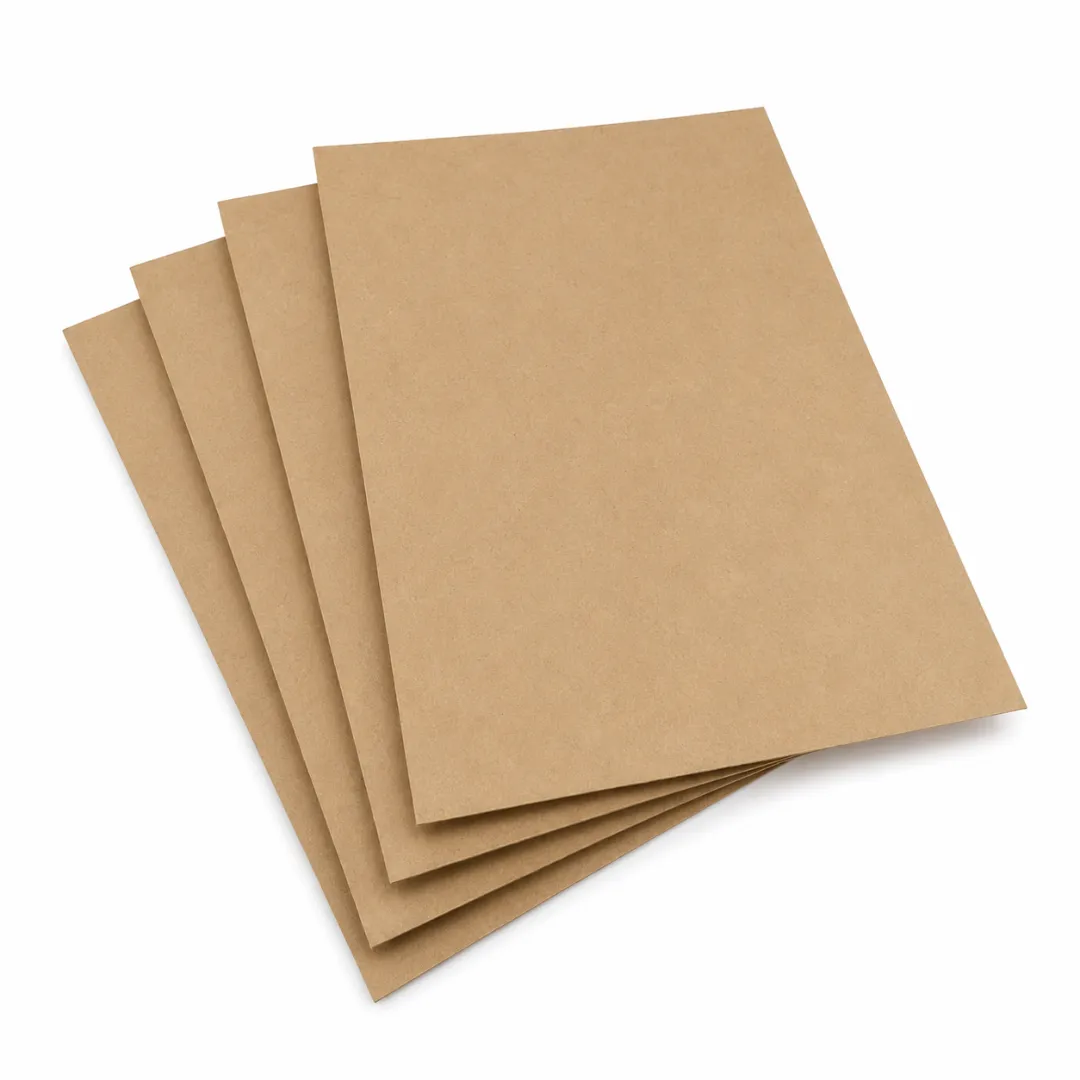
Kraft paper is a strong, durable and reliable material that is widely used across many different industries.
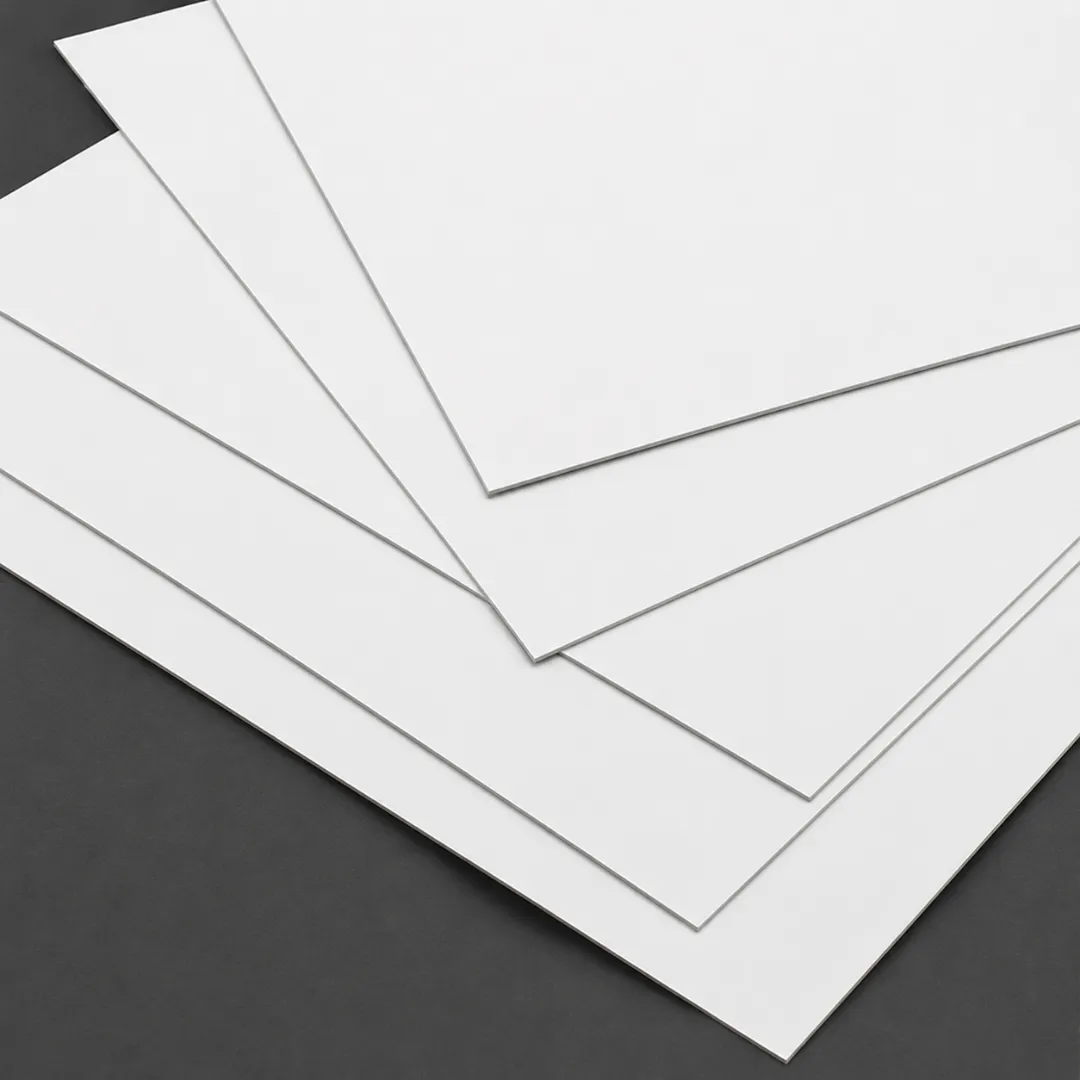
We use cardboard material with the least environmental impact and minimizes waste generation.
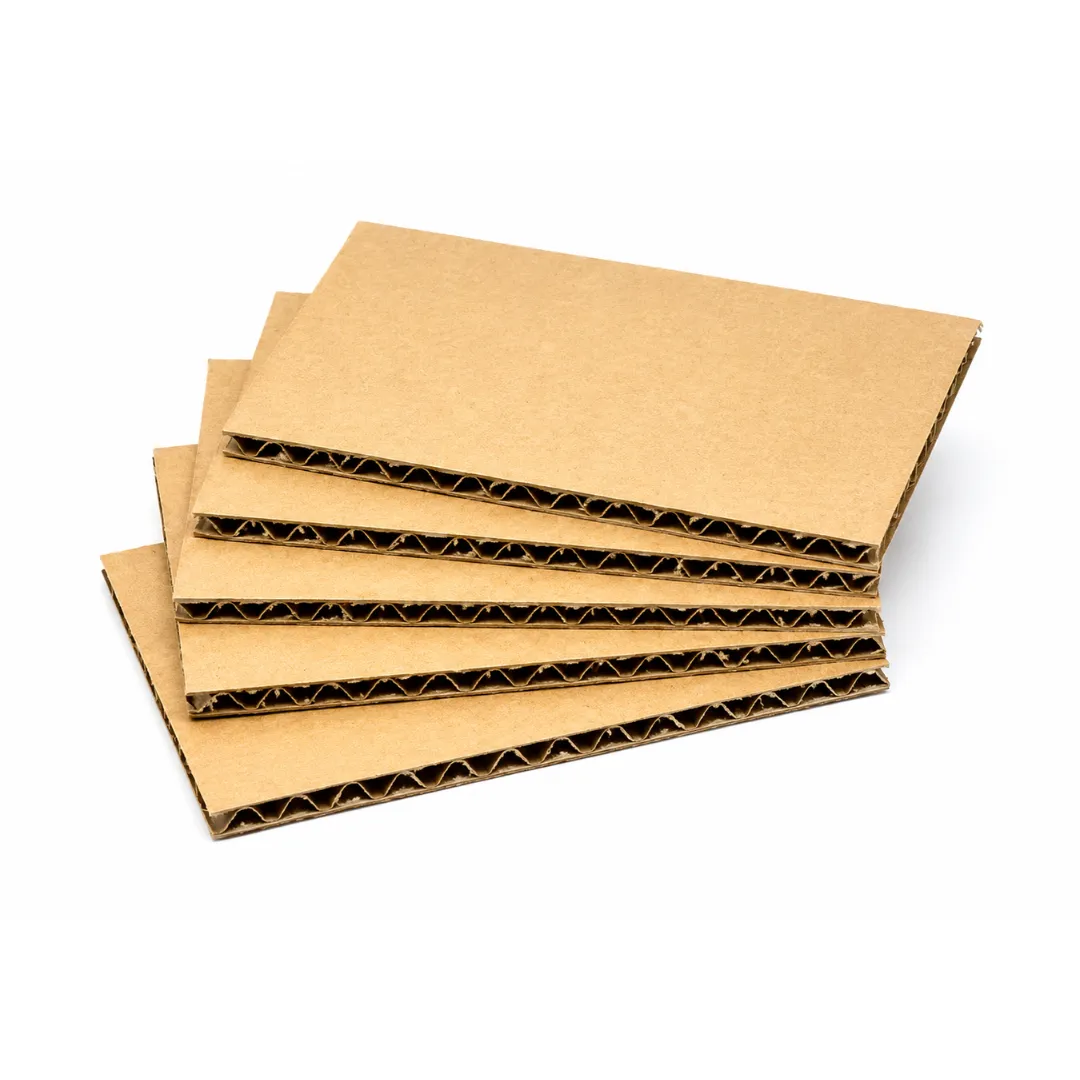
Corrugated material is easy to customize, cost effective and sustainable. It is also great for branding purposes.
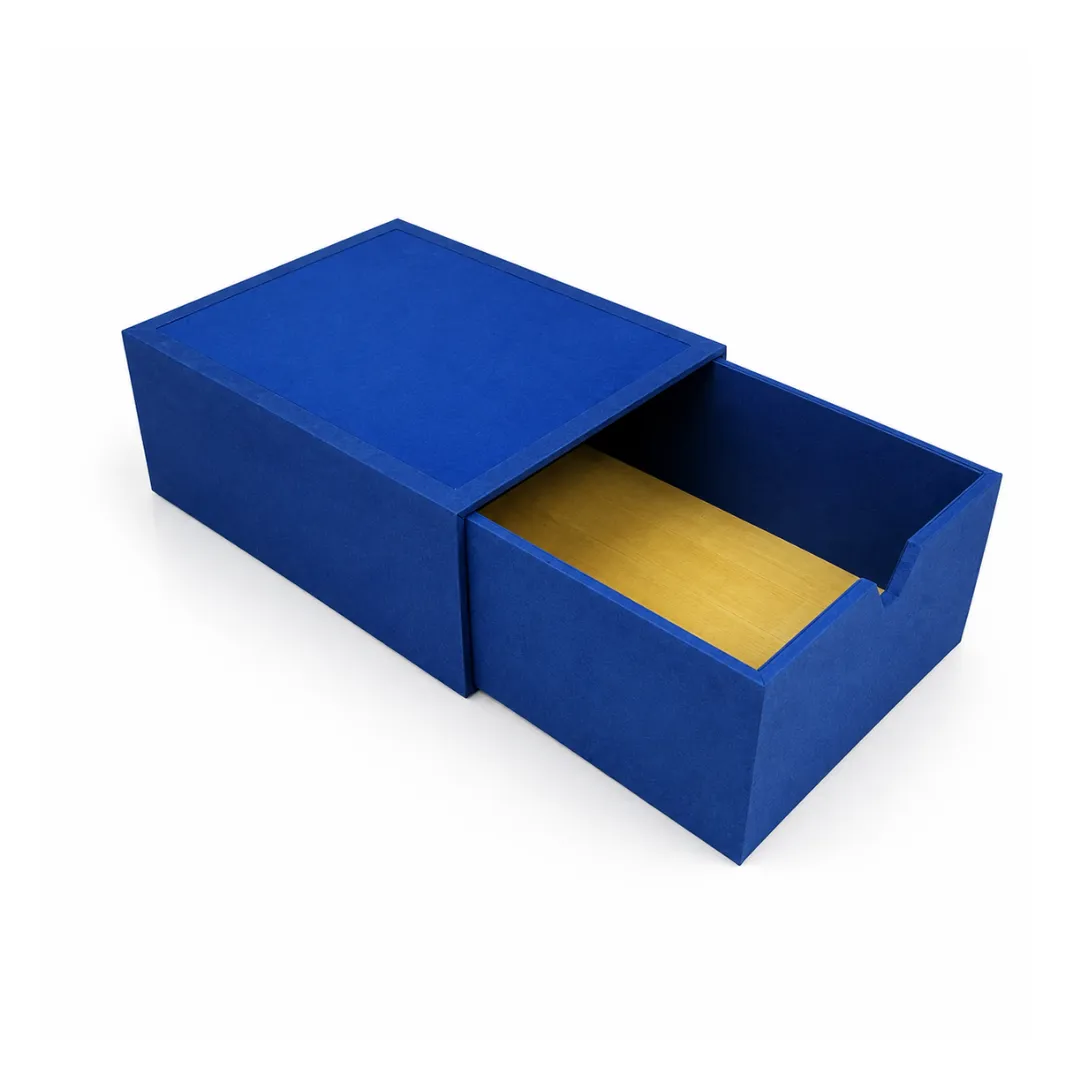
Rigid is highly protective, affordable and recyclable material. These boxes provide maximum protection.
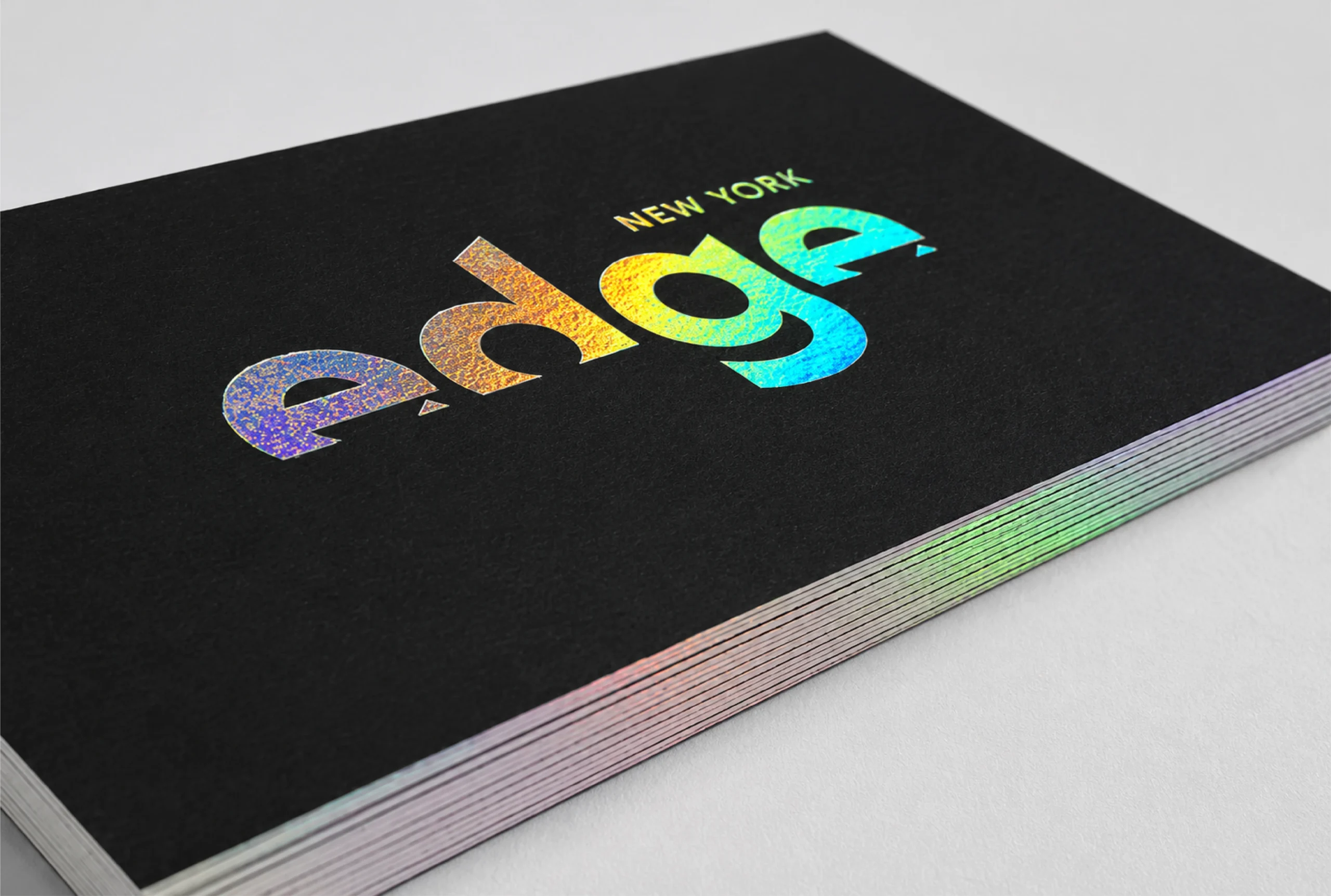
Holographic foil diffracts light and reveals the colors of the rainbow at various angles.
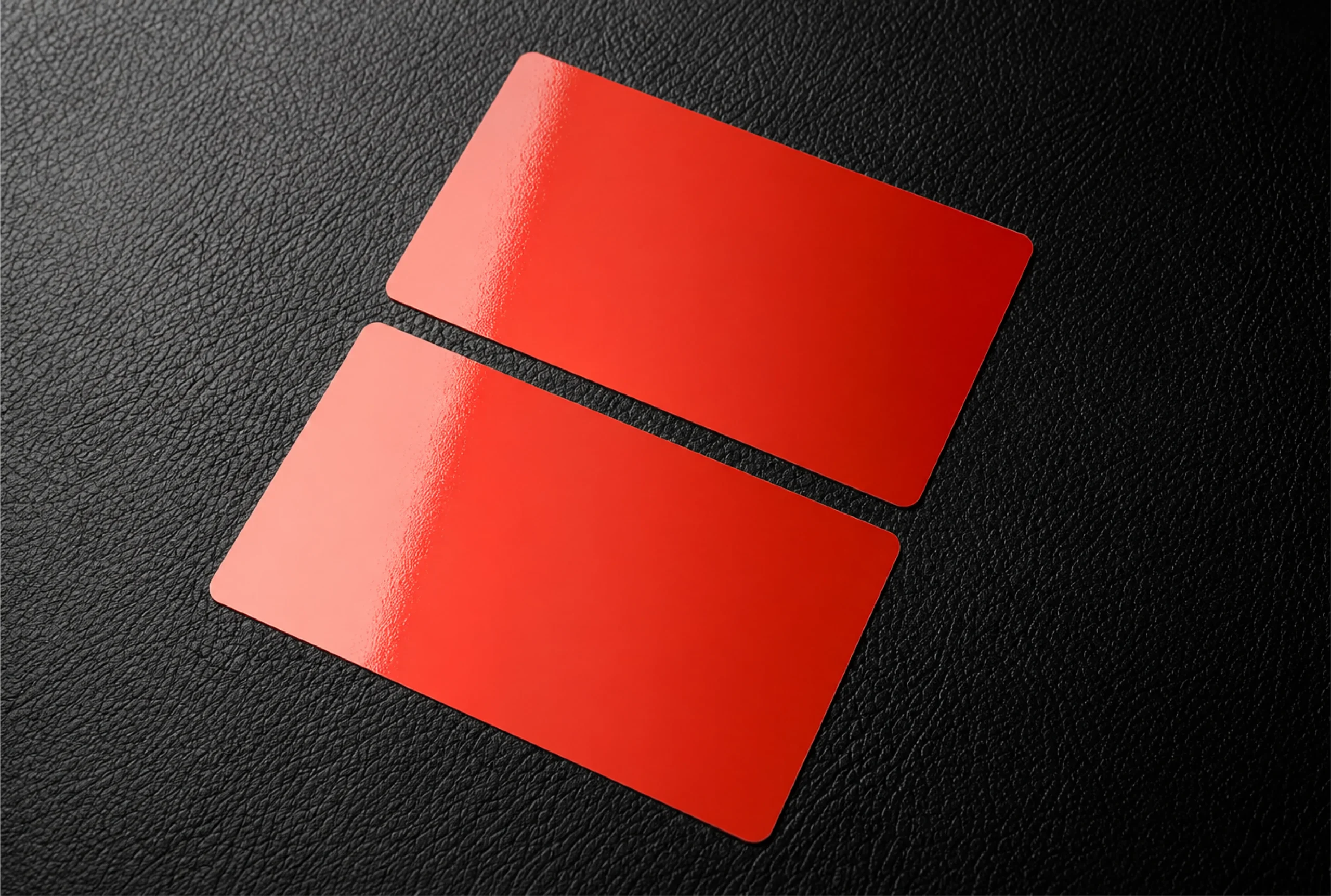
Our glossy finishing gives your packaging an extra layer of shine.
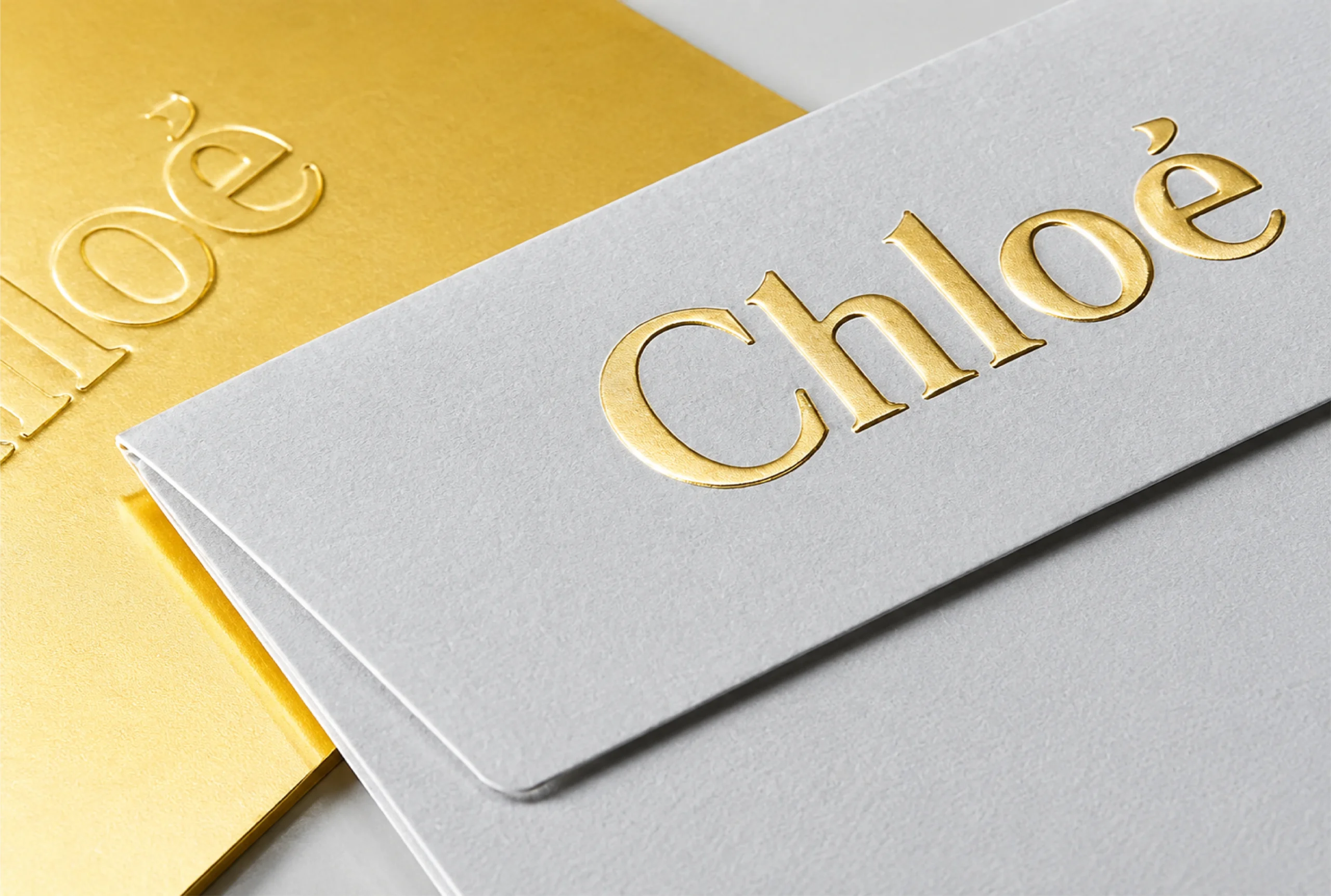
Decorate a wide range of your product packaging with our foil stamping.

With our embossing technique, we transfer the finest details of your product on packaging.
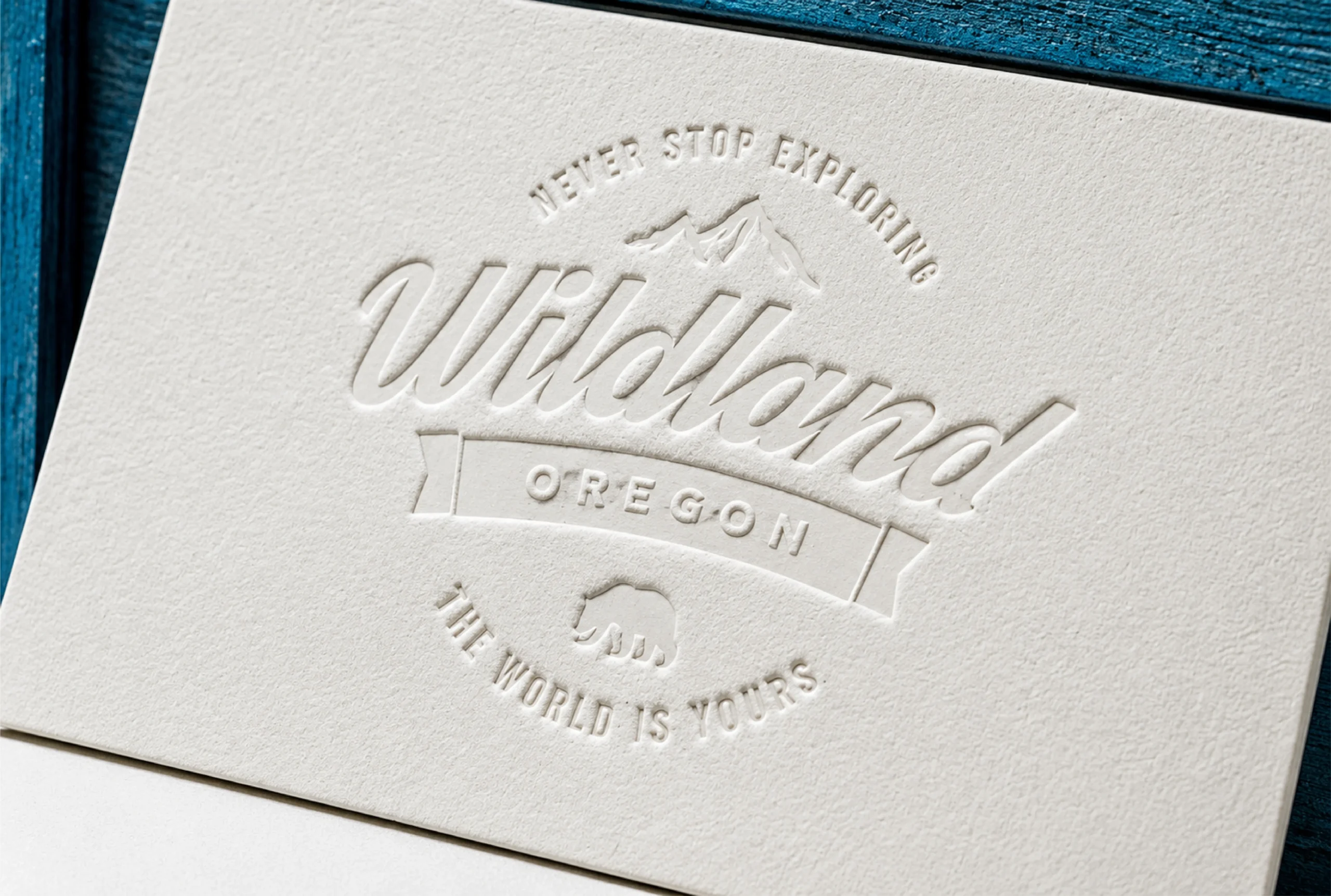
We use debossing technique to add unique graphics into your packaging.
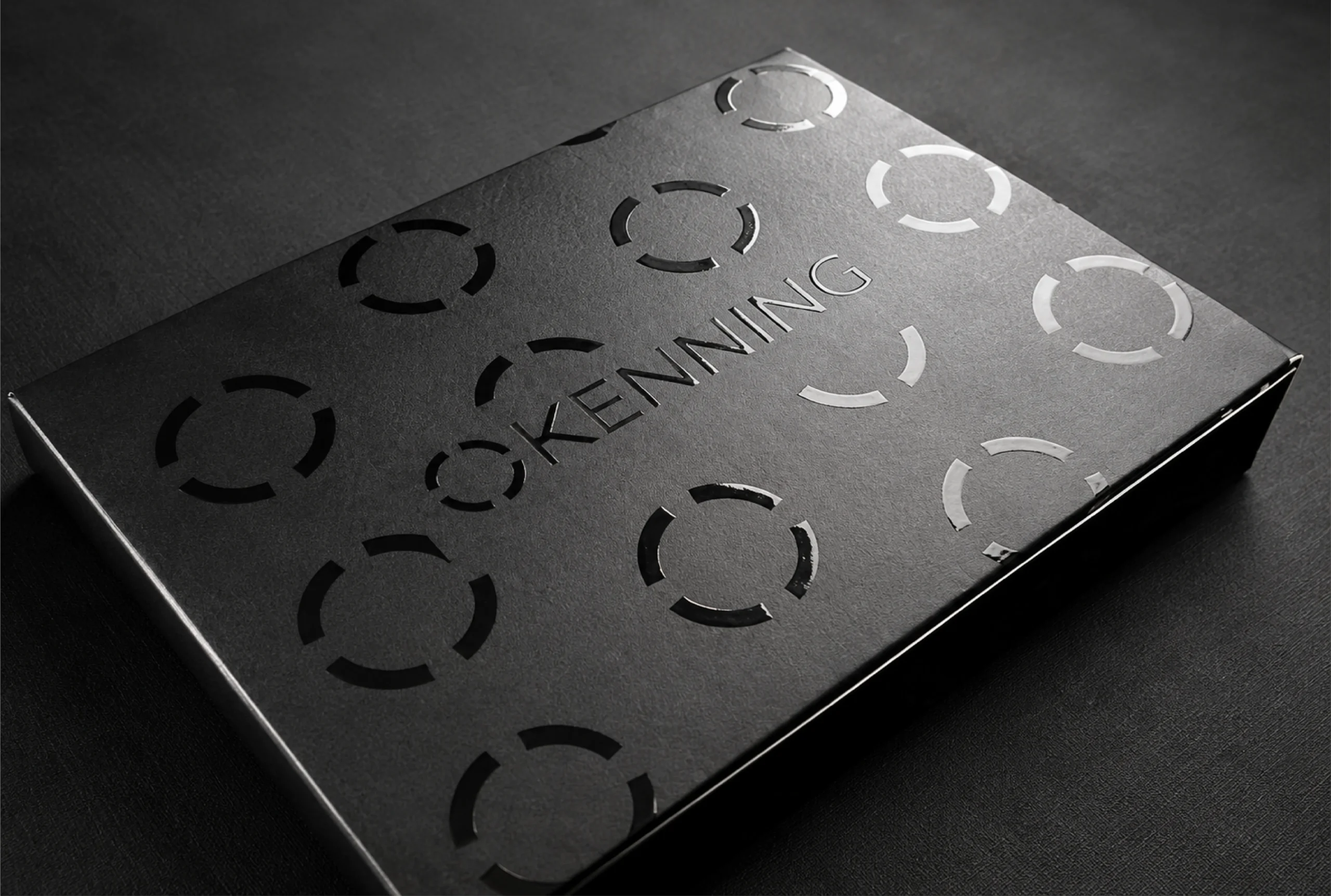
Our high-gloss UV coating gives light and shine to cure the printed material's varnish.
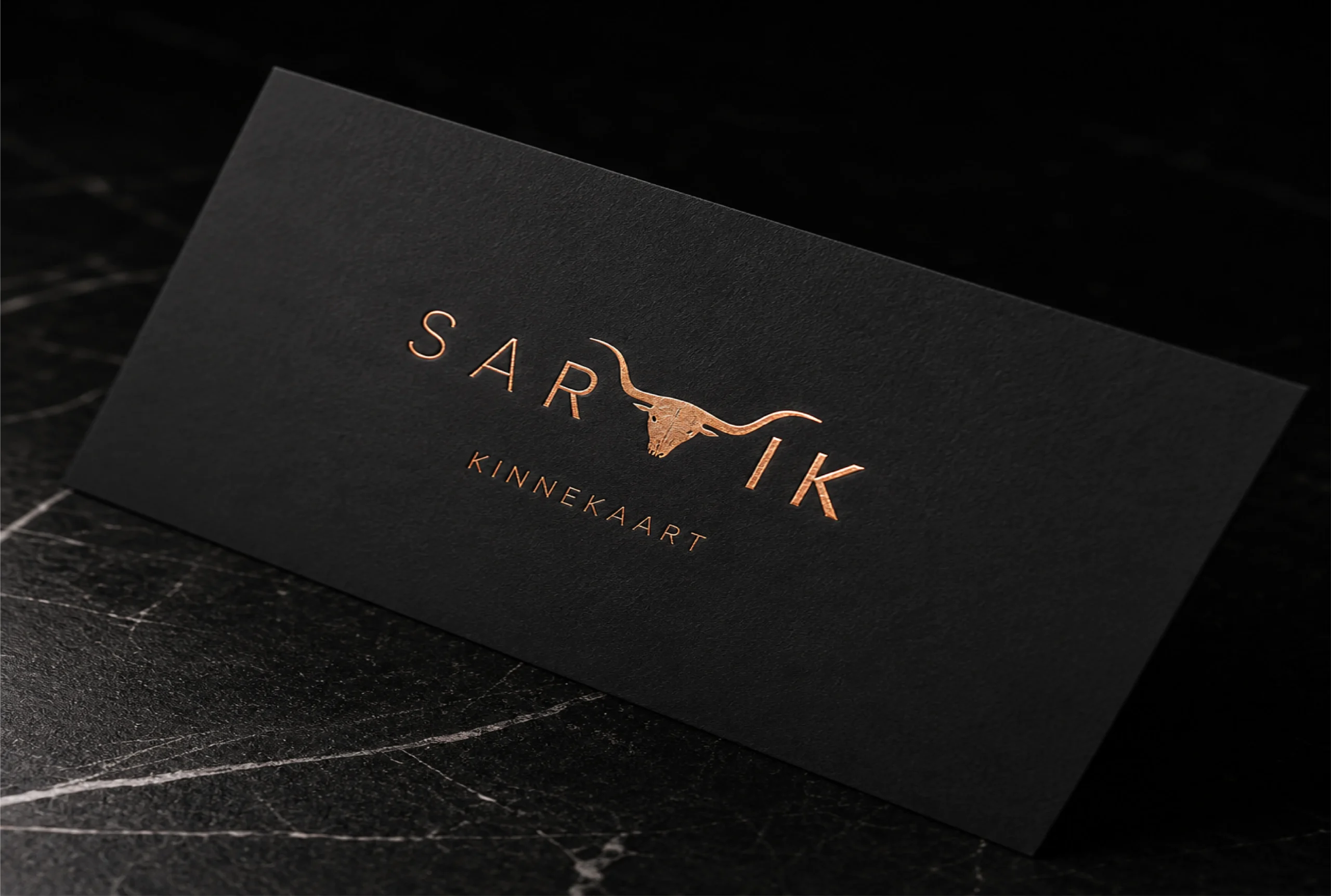
We add additional layer of protection with soft touch lamination from toner chipping.
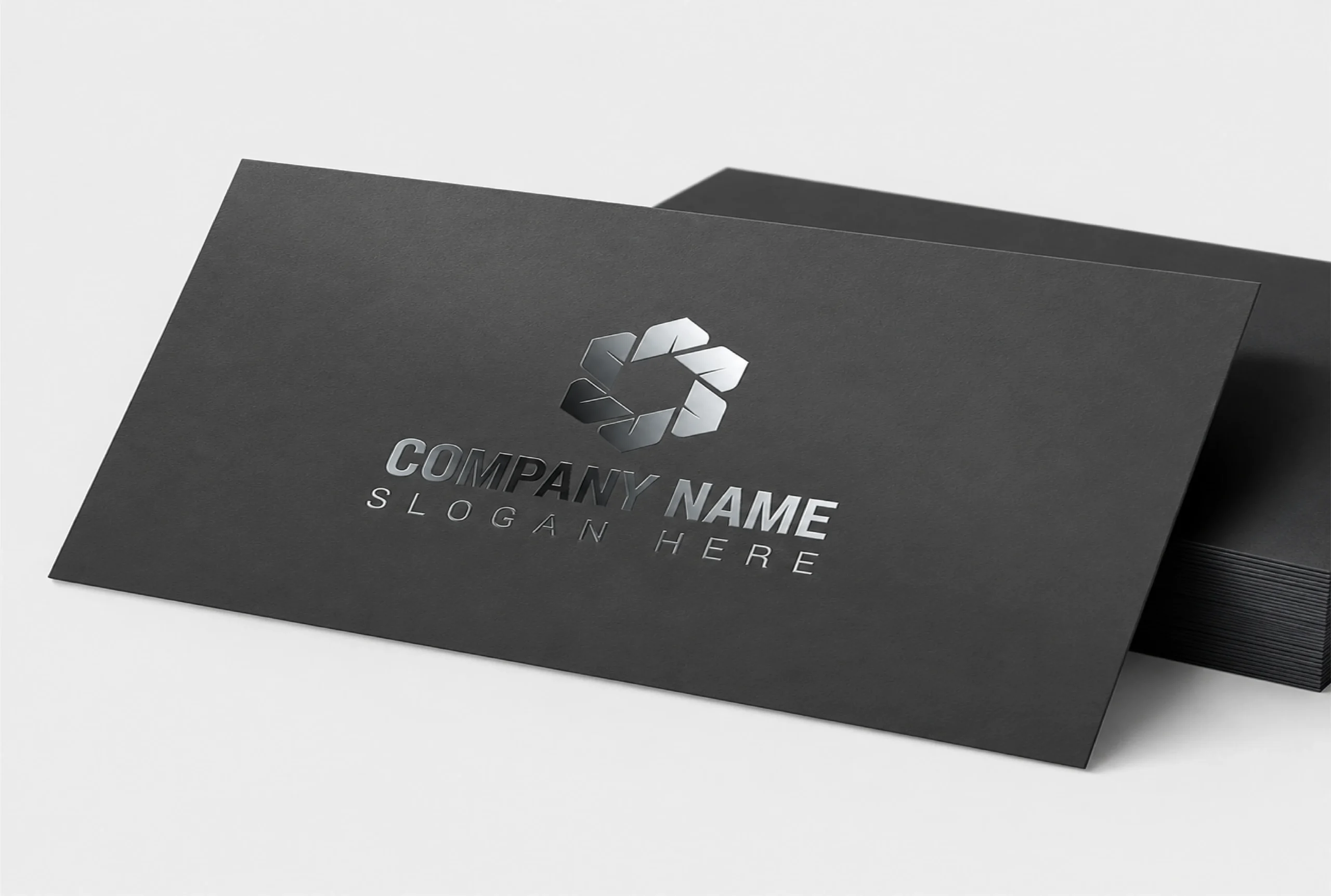
With our matte finish, fingerprints and smudges will now be less visible on the packaging.

Custom die cut kraft boxes cut to any shape you can draw, with the dieline built around your product rather than a catalog. Choose roll end tuck top, locking front mailer, auto lock bottom, window front, gable handle, pillow box, sleeve and tray or a fully custom silhouette. We print digital, offset or flexo on natural kraft, bleached kraft back, recycled chipboard and kraft E or B flute. Add windows, hand holes, euro hanging slots, tear strips, inserts, interior printing and grease resistant liners. Zero minimum order quantity, free structural design and free shipping across the United States. Standard production runs ten to twelve business days, with rush service available. Get a free quote or order now.
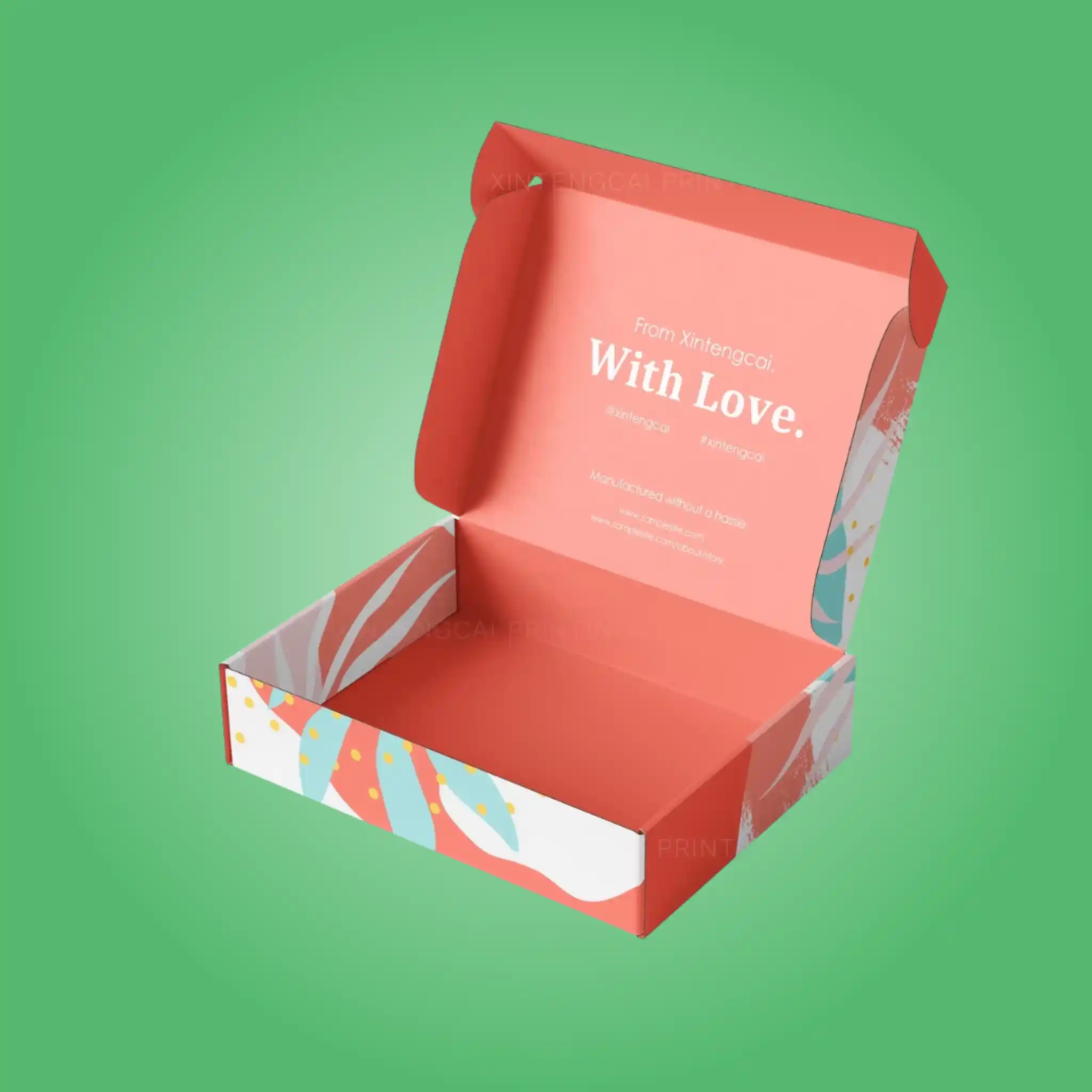
Custom Eco Friendly Boxes are packaging solutions designed to reduce waste while keeping structure strong for retail display and shipping. These boxes use kraft and corrugated materials, efficient sizing, and clean print layouts to deliver premium presentation without excess packaging. Ideal for ecommerce brands, gifting products, and packaging supplies that need sustainability with real performance.
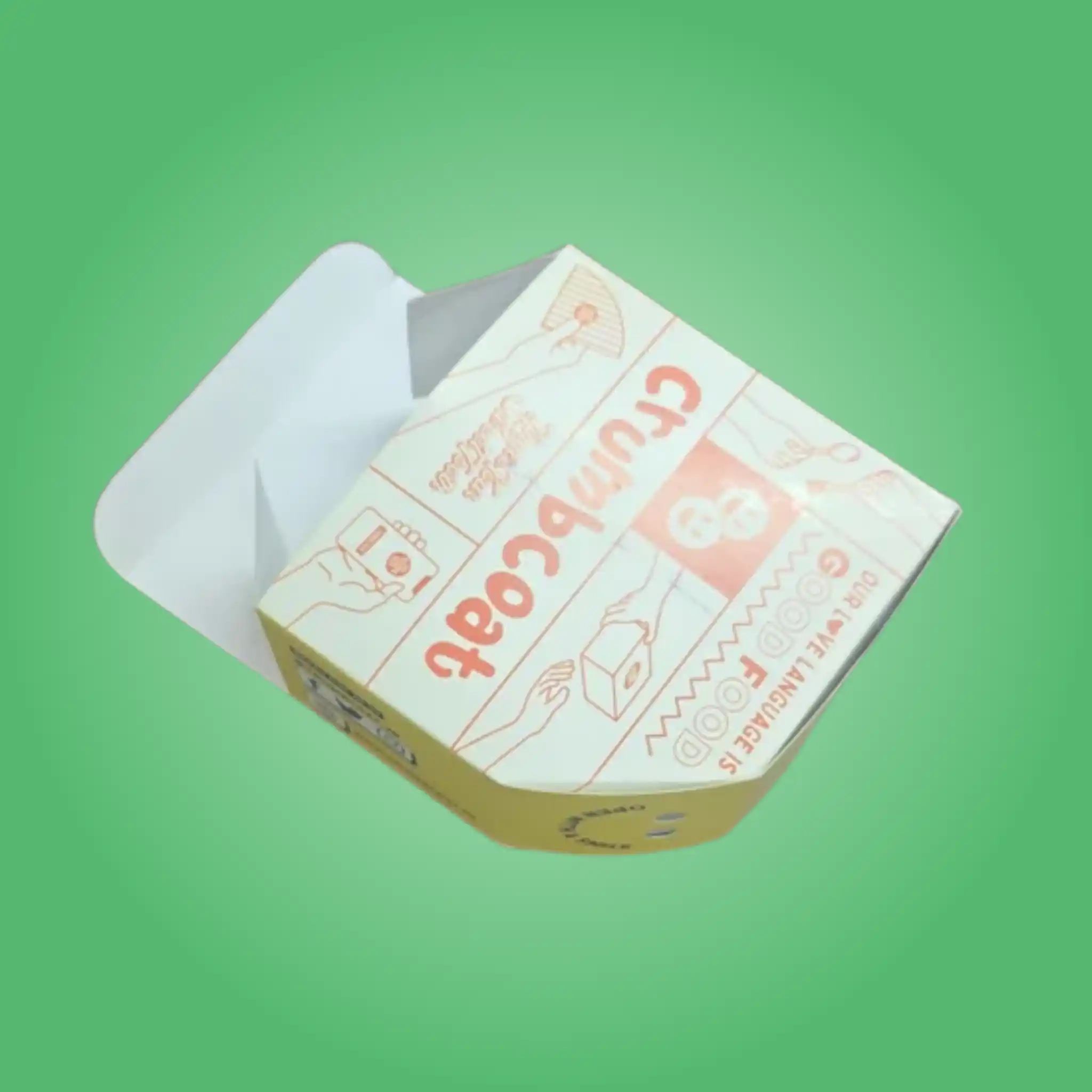
Custom kraft food boxes are built to handle hot meals, steam, grease, and delivery stacking without collapsing or leaking. With size planning, barrier-lined kraft options, secure closures, and performance upgrades like ventilation and tamper-evident features, these boxes keep food looking clean on arrival. Ideal for takeaway, catering, and retail-ready food packaging that needs both strength and premium presentation.

Custom recyclable boxes protect your products while reducing packaging waste with materials designed for easy recycling. They suit retail, eCommerce, food, and shipping needs while keeping branding clean and modern. Choose recyclable structures, strong board grades, and print options that support eco-forward packaging goals.