From Concept to Creation – Start Your Packaging Journey Here

Get Custom Quote

🛠 Dimensions

ⓘ More Info

🛠 Add Ons

🧑 Personal Info

🏳 Shipping Country

Custom Mailer Boxes with Inserts

Custom mailer boxes with inserts from Pioneer Custom Boxes help cosmetic, glassware, candle, electronics, ceramics and subscription brands cut damage rates in transit. Choose die-cut corrugated trays, partitions, molded pulp cradles, paperboard platforms or foam, designed on one dieline with the box, with free design support, no MOQ and free USA shipping.

Custom Mailer Boxes With Inserts That Stop Damage Before It Starts

A mailer box with a fitted insert solves a problem that a stronger box cannot. Board grade protects against crushing from outside. Almost all the damage we are asked to investigate comes from movement inside, where a product slides, rotates or falls against a wall during handling and arrives scuffed, chipped or broken.

An insert removes that movement entirely rather than cushioning around it. The product is held in a cavity cut to its shape, it cannot shift, and impacts reach the box rather than the contents. That is a fundamentally different approach from filling space with air pillows and hoping.

The economics are usually better too. Void fill costs money on every single shipment, adds packing labor, and generates customer complaints about waste. An insert is a one-time tooling cost amortized across a run, and it recycles with the box when it is cut from paperboard or molded pulp.

Pioneer Custom Boxes designs the mailer and the insert on one dieline in the United States, with zero minimum order quantity, free design support and free shipping nationwide. One tooling charge covers both parts, and they arrive matched rather than approximately compatible.

Insert Types and What Each One Protects Against

Different failure modes need different answers, and choosing correctly matters more than choosing the most expensive option.

Die-Cut Corrugated Inserts

Cut from the same board as the box, these hold a product in a shaped cavity or between partitions. They cost the least, recycle with the box, and suit the large majority of ecommerce products. For anything flat, rectangular or moderately shaped, this is usually the right answer and we recommend it first.

Corrugated Partitions

A grid of interlocking dividers that isolates each item from its neighbors. Essential wherever multiple glass or ceramic items travel together, because bottles and jars break each other far more often than they break against the box wall.

Molded Pulp Trays

Formed from recycled paper fiber into a shaped cavity. Pulp cradles curved and irregular shapes that flat board cannot hold, absorbs impact well, stacks predictably in a packing area, and recycles alongside the box. Most brands moving away from foam land here once they compare samples.

Die-Cut Foam Inserts

Foam cut to the exact product outline gives the tightest hold and the best shock absorption. It earns its cost for heavy, precision or genuinely fragile items such as instruments, devices and lab equipment. It does not recycle with the box, so we specify it only where board and pulp cannot do the job.

Suspension and Retention Packaging

The product is held between two membranes, floating inside the box so no impact reaches it directly. This is the highest level of protection available and suits electronics and high-value fragile goods where a single failure costs more than a run of packaging.

Paperboard Platforms and Sleeves

A folded card platform that holds a lightweight product upright and presents it well. Common in cosmetics and accessories, where the insert is doing presentation work as much as protection.

Insert Type Best For Recycles With Box Relative Cost
Die-cut corrugated Most ecommerce products Yes Low
Corrugated partitions Bottles, jars, multiple units Yes Low
Molded pulp tray Curved and irregular shapes Yes Moderate
Paperboard platform Light products, presentation Yes Low
Die-cut foam Heavy or precision items No High
Suspension packaging High-value fragile electronics Partly Highest

How Products Actually Break in Transit

Designing an insert well starts with understanding what parcel networks do to a box, because the failure modes are specific and predictable.

Corner impact is the dominant one. Parcels are dropped on corners far more often than on faces, and a corner drop concentrates the entire force into a small area. A product sitting against a corner takes that force directly, which is why an insert holding the item away from every corner does more than moving up a board grade.

Repeated small shocks matter as much as one large drop. A parcel is handled between ten and twenty times, and a product that shifts slightly on each handling arrives scuffed even though nothing dramatic happened. This is the damage type most brands misdiagnose as a board problem.

Rotation is the quiet failure. A cylindrical item that can spin inside a box rubs its printed label against the board on every movement, and the label arrives worn. Cavity shape, not cushioning, is what stops rotation.

Compression comes from stacking rather than dropping. Boxes sit under other boxes in a truck and a warehouse, and an insert that carries some of that load away from the product prevents crushing that the board alone would not.

Vibration over long distances loosens fittings, works caps free and abrades surfaces. Long-haul freight produces damage that local delivery never would, so we ask about shipping distance before specifying.

Failure Mode What Causes It The Insert Answer
Corner impact damage Parcels dropped on corners Hold the product clear of all corners
Scuffing and abrasion Small repeated movement in handling Snug cavity that removes movement
Label rub and rotation Cylindrical items spinning Shaped cavity that prevents rotation
Crushing under load Stacking in trucks and warehouses Structural insert carrying the load
Items breaking each other Multiple hard items loose together Partitions isolating each unit
Loosening and vibration damage Long-haul freight Retention that holds under continuous movement

Send us your current damage rate and a description of what arrives broken, and we will tell you which of these is happening. The fix is often the insert rather than the box, and it is usually cheaper.

Common Sizes for Mailer Boxes With Inserts

Every die is cut to your product and its insert together. These formats show what we produce most often.

Application Typical Size (inches) Board Insert Type
Cosmetics and skincare set 8 x 6 x 3 32 ECT E-flute Die-cut corrugated tray
Single glass bottle 5 x 5 x 10 44 ECT single wall Corrugated collar
Two to six bottles 12 x 8 x 10 44 ECT double wall Partition grid
Candle gift set 9 x 9 x 5 32 ECT E-flute Collar inserts
Jewelry and small goods 6 x 4 x 2 32 ECT E-flute Paperboard platform
Electronics accessory 9 x 7 x 3 32 ECT E-flute Molded pulp tray
Ceramics and homeware 12 x 10 x 8 44 ECT double wall Molded pulp cradle
Precision instruments 14 x 10 x 5 44 ECT single wall Die-cut foam
Multi-item gift box 12 x 9 x 4 32 ECT E-flute Multi-cavity tray
High-value electronics 16 x 12 x 6 44 ECT double wall Suspension packaging

Send us the product itself where you can. An insert cut against a physical item fits properly, and one cut from a drawing frequently does not.

Designing the Box and the Insert Together

The most common insert problem we are asked to fix is a tray that does not fit a box, because the two were designed separately by different people at different times.

We build both on one dieline. The box internal dimensions account for the insert material thickness on every wall it touches, the cavity accounts for the real product with its tolerances, and the whole assembly is proven before tooling is cut. That also means one tooling charge rather than two.

Insert material thickness is the detail most often missed. A corrugated tray adds roughly an eighth of an inch on each wall it contacts, and a box sized to bare contents simply will not accept it. Molded pulp adds more again.

Product tolerance is the second. Hand-made and hand-filled products vary between units, and a cavity cut to a nominal drawing traps some items and lets others rattle. We cut against physical samples of your actual production and build in the variation you tell us about.

Insert height relative to the box matters for stacking. A tray that sits below the product line lets the box compress onto the item under load, while a tray sized to the full internal height carries that load itself. For anything shipped on a pallet, the second is worth specifying.

Retention against gravity is the last consideration. A cavity that holds a product when the box sits upright may release it when the box is inverted, which parcels frequently are. We test inverted before approving.

Materials and Board for Mailers With Inserts

The box and the insert can use different materials, and choosing each independently usually produces a better result than matching them by default.

E-Flute Corrugated

E-flute is the standard for the mailer itself. It prints well, adds real crush resistance and ships alone through a parcel network. At 32 ECT it handles typical ecommerce contents comfortably.

B-Flute and Double Wall Corrugated

Heavier contents move the box to B-flute or double wall. Multi-bottle shipments, ceramics and anything above about 65 lb loaded need this, and the insert becomes more important rather than less as weight increases.

Corrugated for Inserts

The same E-flute or B-flute board cut into trays, partitions and pads. It costs the least, recycles with the box and suits most products. For flat and rectangular items it is almost always the correct choice.

Molded Pulp

Recycled paper fiber formed into shaped cavities. It handles curves and irregular shapes that flat board cannot, and it recycles with the box. Tooling costs more than a die-cut corrugated insert, so it earns its place at higher volumes or where the shape genuinely demands it.

Die-Cut Foam

Polyethylene or polyurethane foam cut to the product outline. It gives the best shock absorption and the tightest hold, at the cost of recyclability. We specify it for heavy, precision or high-value fragile items and recommend against it elsewhere.

White Top and Kraft Liners

The mailer exterior can be white top for accurate color reproduction or natural kraft for lower cost and sustainable positioning. Inserts are usually kraft regardless, since they are rarely printed.

A frequent and effective combination is a printed white top E-flute mailer with an unprinted kraft corrugated tray inside. The exterior does the brand work, the insert does the protection work, and the cost stays sensible.

Printing and Color for Mailers With Inserts

The mailer exterior and interior are printed surfaces that do brand work. The insert usually is not, though it can be.

Flexographic Printing

Flexo prints directly onto corrugated from flexible plates, handling bold graphics and solid colors economically. It is the standard for mailer exteriors and works well for one or two color brand designs. Fine photographic detail reproduces less crisply because the fluted structure creates uneven pressure.

Litho Lamination

A sheet printed offset then bonded to the corrugated board, giving photographic quality on a structural box. Premium brands use it where the exterior carries imagery. It costs more than direct flexo and looks substantially better.

Digital Printing

Digital prints directly with no plates, removing setup cost and making short runs and seasonal artwork practical. It also allows different artwork within one production run.

CMYK

CMYK builds color from four separations and reproduces photography and gradients accurately on a white top liner. On natural kraft it shifts warmer and loses brightness, so kraft mailers usually use flat graphics rather than photography.

PMS Spot Colors

Pantone inks arrive pre-mixed and print identically on every run, and they reproduce far more cleanly on corrugated than a four-color build. A single strong spot color on a mailer is both the most economical and the most effective route. We store your references permanently and match against a physical draw-down.

RGB

RGB is a screen color space and cannot be printed. Your website and product photography live in RGB, and conversion shifts saturated colors noticeably. We convert and show you the printed result on your actual board before the full run.

Printing the insert is worth considering where it is visible on opening. A tray printed in a single color, or carrying a short message in the cavity beneath the product, costs very little and turns a functional component into part of the experience.

What Actually Drives the Cost of a Mailer With an Insert

Adding an insert changes the cost profile in ways that are worth understanding before comparing quotes.

Insert material leads. A die-cut corrugated tray costs a fraction of molded pulp, which costs a fraction of die-cut foam. Choosing the cheapest option that genuinely protects your product is the single largest lever available, and for most products that is corrugated.

Box dimensions come next, and they cost twice: board is priced by area and carriers bill on volume. An insert designed efficiently often lets the box shrink, so the insert can pay for itself in freight rather than only in reduced damage.

Cavity complexity is third. A simple rectangular cavity cuts cleanly, while intricate outlines with tight interior angles need more blades and produce more scrap. We frequently simplify a cavity slightly during dieline review without affecting how well it holds the product.

Flute grade, print method and quantity finish the list. An important note: adding a good insert often lets you drop a flute grade, because the product is no longer relying on the board to absorb impact.

Cost Driver Impact How to Reduce It
Insert material Highest Corrugated before pulp, pulp before foam
Box dimensions High, material plus freight Efficient insert design shrinks the box
Cavity complexity Moderate Simplify outlines that add no retention
Flute grade High A good insert can allow a lighter board
Print method Moderate Flexo spot colors instead of litho lamination
Void fill eliminated Saving A fitted insert removes filler entirely
Damage rate reduction Largest hidden saving Fewer replacements and refunds

Cost the insert against your damage rate rather than against the box price. A brand replacing three percent of shipments is usually spending far more on replacements than a good insert would cost across the whole run.

Quality Checks Before Your Order Ships

An insert either holds the product or it does not, and that is a physical property rather than a visual one. Every order passes a documented check before leaving our floor.

Check What We Verify Why It Matters
Product seating The real product placed in the cavity A cavity cut from a drawing often does not fit
Inverted retention Box turned upside down with product inside Parcels are frequently inverted in transit
Insert seating in box Tray sits flat and fills the footprint A tray that shifts is no better than none
Corner clearance Product held away from every corner Corner drops are the dominant impact
Rotation prevention Cylindrical items cannot spin Rotation abrades printed labels
Compression under load Loaded box under stacking weight The insert should carry load, not the product
Assembly test Box and insert assembled by hand from the run Assembly speed is real labor cost
Dimensional accuracy Both parts against the approved dieline The two must fit each other, not just the product
Print registration and color Artwork aligned, Pantone against draw-down Exterior is the brand impression
Label area suitability Shipping label adheres cleanly Labels lift off gloss varnish

For any new insert design we also run a drop test with your actual product where you can supply one. If anything fails, we remake it rather than ship it.

Industries That Need Mailers With Inserts

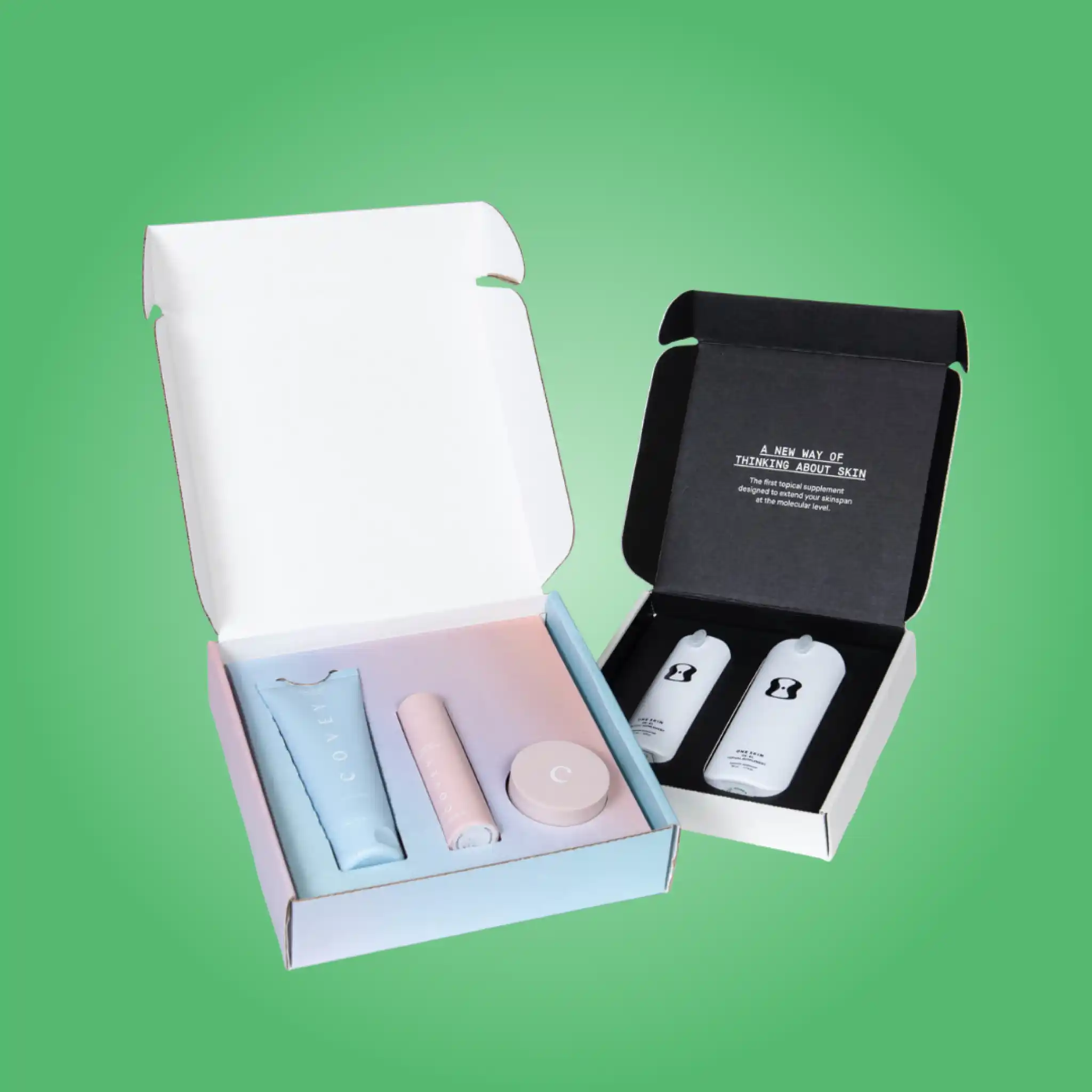
Cosmetics and skincare brands use fitted trays for multi-item sets, where several bottles and jars of different sizes need to arrive arranged rather than jumbled. The tray does presentation work as well as protection.

Glass and beverage brands need partitions above everything else, because bottles break each other far more often than they break against the box. A partition grid isolating each unit is the difference between a viable shipping program and a constant stream of replacements.

Candle makers use collar inserts that hold a filled vessel centered and away from the corners. The vessel is heavy and fragile, and corner impact is exactly what breaks it.

Electronics and device brands use molded pulp or foam trays, often with a staged reveal where the device sits above accessories in a lower compartment. Protection and presentation are doing equal work.

Ceramics and homeware brands need molded pulp cradles for irregular curved shapes that flat board cannot hold. A single breakage in this category usually exceeds the packaging cost for a whole run.

Instrument, laboratory and precision equipment suppliers use die-cut foam and suspension packaging, where the value of the contents justifies the cost and the recyclability trade-off.

Subscription businesses use trays that adapt across changing contents, usually a divider grid rather than a fitted cavity, since next month is a different set of items in the same footprint.

Sustainability and Recyclable Protection

Inserts are where most ecommerce packaging loses its recyclability, and it is usually avoidable.

Corrugated inserts and molded pulp both recycle alongside the box through standard curbside programs. Foam does not, and neither do plastic clamshells and bubble wrap. For the majority of products, a corrugated or pulp insert achieves what foam would, and the difference in protection is smaller than most buyers expect.

Molded pulp is made from recycled paper fiber and is frequently the right replacement for foam on curved and irregular items. We produce samples in both so you can compare the retention directly rather than taking our word for it.

Eliminating void fill is the second gain. Loose fill and air pillows are the packaging customers complain about most, they cost money on every shipment, and a fitted insert removes the need for them entirely.

Right-sizing follows naturally. An efficiently designed insert frequently lets the box shrink, which reduces board, reduces trailer space and reduces dimensional weight together. We print recycling guidance on the box and document what every component is made from, so your claims stay accurate.

Mistakes That Cost Money on Inserts

These errors recur, and each is avoidable before tooling is cut.

Designing the box and the insert separately leads the list. The tray then does not fit the box, or the box was sized to bare contents and cannot accept the tray at all. Both parts belong on one dieline.

Cutting a cavity from a drawing rather than a physical product is second. Hand-made and hand-filled items vary, and a cavity cut to a nominal figure traps some units and lets others rattle.

Specifying foam by default is third and is the most expensive habit here. Foam is the right answer for genuinely precision or high-value fragile items, and for most ecommerce products a corrugated tray does the same job at a fraction of the cost while recycling with the box.

Sizing the cavity too tightly causes its own problem. A product that has to be forced in gets damaged during packing and slows the packing station, and staff eventually start leaving it out.

Ignoring inverted retention means the product falls out of its cavity when the parcel is turned over, which parcels routinely are. We test inverted as standard.

Finally, adding void fill on top of an insert. If filler is still needed, the insert is not doing its job and should be redesigned rather than supplemented.

A Real Example: Cutting a Breakage Rate From Six Percent to Under One

A ceramics studio came to us replacing roughly six percent of their shipments. They had already moved to double wall board and the rate had barely improved, which is the usual sign that the box was never the problem.

Their mugs shipped in a double wall box surrounded by air pillows. On a corner drop the pillows compressed and the mug swung into the corner, which is exactly where the force concentrates. The board was doing its job and the contents were still breaking.

We designed a molded pulp cradle that held each mug by the base and the rim, suspended away from every corner and wall, with a second cradle inverted on top. We then dropped the box from double wall back to 44 ECT single wall, because the pulp was now absorbing the impact rather than the board.

Breakage fell below one percent. Packaging cost per shipment went down rather than up, because the lighter board and the eliminated void fill together cost less than the pulp cradles. Their packing time also fell, since staff placed two cradles instead of arranging filler.

How to Order Custom Mailer Boxes With Inserts

Ordering runs through four steps, and the first one matters more here than in any other category.

First, send us the product itself if you can. An insert cut against a physical item fits properly and one cut from a drawing frequently does not. Tell us your current damage rate and what specifically arrives broken, because that diagnoses which failure mode you are dealing with.

Second, we return a free dieline covering the box and the insert together, plus a written quote, within one business day. We will usually quote two insert options at different price points so you can see the trade-off.

Third, you approve a digital proof, and on this product we strongly recommend a physical sample. Put your real product in it, turn it upside down, and if you can, drop it. Samples take three to five business days and prevent the failures this category exists to solve.

Fourth, we produce and ship. Standard production runs eight to twelve business days, rush production runs four to six, and shipping across the United States costs nothing. Reorders run straight against your stored specification for both parts.

Zero MOQ, Free Design Support and Free USA Shipping

Three things make custom mailer boxes with inserts practical at any scale, and none carry a hidden charge.

Zero minimum order quantity means you can trial an insert design on a hundred units before committing to a full program. For a brand currently absorbing damage costs, that trial usually pays for itself immediately.

Free design support covers the box, the insert, the cavity design and artwork preparation. We measure your product, design both parts on one dieline, and prepare print-ready files. One tooling charge covers the pair rather than two separate charges.

Free shipping applies across the United States on every order, rush production included. We manufacture domestically, so an insert revision after the first sample happens in days rather than weeks.

Why Pioneer Custom Boxes

We are a direct manufacturer rather than a broker. We cut our own dies, run our own presses and produce inserts in house, which is why the box and the tray actually fit each other and why we can adjust a cavity mid-conversation.

On this product that control is the whole value. An insert is a physical solution to a physical problem, and it has to be tested with your real product rather than approved from a drawing. We do that testing before you commit.

Send us your product, your current damage rate and your shipping method, and we will return a free dieline and a written quote for custom mailer boxes with inserts within one business day. Order now, or get a free quote and we will design the protection around what is actually breaking.

Box Style Custom Mailer Boxes with Inserts
Dimension (L + W + H) All Custom Sizes & Shapes
Quantities No Minimum Order Required
Paper Stock 10pt to 28pt (60lb to 400lb) Eco-Friendly Kraft, E-flute Corrugated, Bux Board, Cardstock
Printing No Printing, CMYK, CMYK + 1 PMS color, CMYK + 2 PMS colors
Finishing Gloss Lamination, Matte Lamination, Gloss AQ, Gloss UV, Matte UV, Spot UV, Embossing, Foiling
Included Options Die Cutting, Gluing, Scored, Perforation
Additional Options Eco-Friendly, Recycled Boxes, Biodegradable
Proof Flat View, 3D Mock-up, Physical Sampling (On request)
Turnaround 4 – 8 Business Days, RUSH
Shipping FLAT
Our Process

Your Idea. Our Craft.
Packaging Perfected.

Every great product deserves packaging that turns heads. Here's how we make it happen — step by seamless step.
01
Share Your Requirements
Tell us your vision — size, material, quantity. We listen, we plan, we deliver.
Convert Idea Into Design
Our designers bring your brand to life with stunning custom artwork.
02
03
3D Mockup Presentation
Rotate, zoom, inspect — see exactly what you'll get before printing.
Approved for Printing
Happy with the preview? One approval and the presses start rolling.
04
05
Production Facilities
Premium machines, strict quality checks, flawless finishing every time.
Shipped to Your Door
Fast worldwide delivery — unbox packaging that makes your product shine.
06
Kraft

Kraft

Kraft paper is a strong, durable and reliable material that is widely used across many different industries.

Cradboard

Cardboard

We use cardboard material with the least environmental impact and minimizes waste generation.

Corrugated

Corrugated

Corrugated material is easy to customize, cost effective and sustainable. It is also great for branding purposes.

Rigid

Rigid

Rigid is highly protective, affordable and recyclable material. These boxes provide maximum protection.

Holographic

Holographic Foiling

Holographic foil diffracts light and reveals the colors of the rainbow at various angles.

GLoss

Gloss

Our glossy finishing gives your packaging an extra layer of shine.

Foil Stamping

Foil Stamping

Decorate a wide range of your product packaging with our foil stamping.

Embossing

Embossing

With our embossing technique, we transfer the finest details of your product on packaging.

Debossing

Debossing

We use debossing technique to add unique graphics into your packaging.

Spot UV

Spot UV

Our high-gloss UV coating gives light and shine to cure the printed material's varnish.

Soft Touch Lmination

Soft Touch Lamination

We add additional layer of protection with soft touch lamination from toner chipping.

Matt

Matte

With our matte finish, fingerprints and smudges will now be less visible on the packaging.

Frequently Asked Questions

Do I need an insert or just a stronger box?
Usually an insert. Board grade protects against crushing from outside, but most damage comes from the product moving inside and hitting a corner. If you have already increased board grade and damage has not improved, the box was never the problem.
Start with die-cut corrugated, which costs the least and recycles with the box. Move to molded pulp for curved or irregular shapes, and to foam only for heavy, precision or high-value fragile items. For most ecommerce products corrugated does the job.
Often yes. A fitted insert eliminates void fill, which costs money on every shipment, and it frequently lets you drop a board grade because the insert absorbs impact instead of the box. It also cuts replacement and refund costs, which are usually the largest hidden expense.
Almost always because the two were designed separately. Insert material adds thickness on every wall it touches, so a box sized to bare contents will not accept a tray. We design both on one dieline so they fit each other, and that also means one tooling charge instead of two.
Yes. We seat your actual product in the cavity, turn the box upside down to check retention, test compression under stacking load, and run a drop test where you can supply a sample. An insert is a physical solution and it has to be proven physically rather than approved from a drawing.

Our Previously Produced Boxes

Related Products

Custom Amazon Boxes

Stop FBA damage and high dimensional weight charges. Our custom Amazon boxes are engineered for stacking, handling, and delivery. FBA compliant, logo-ready, and tested for real fulfillment center conditions. Get a free compliance check.
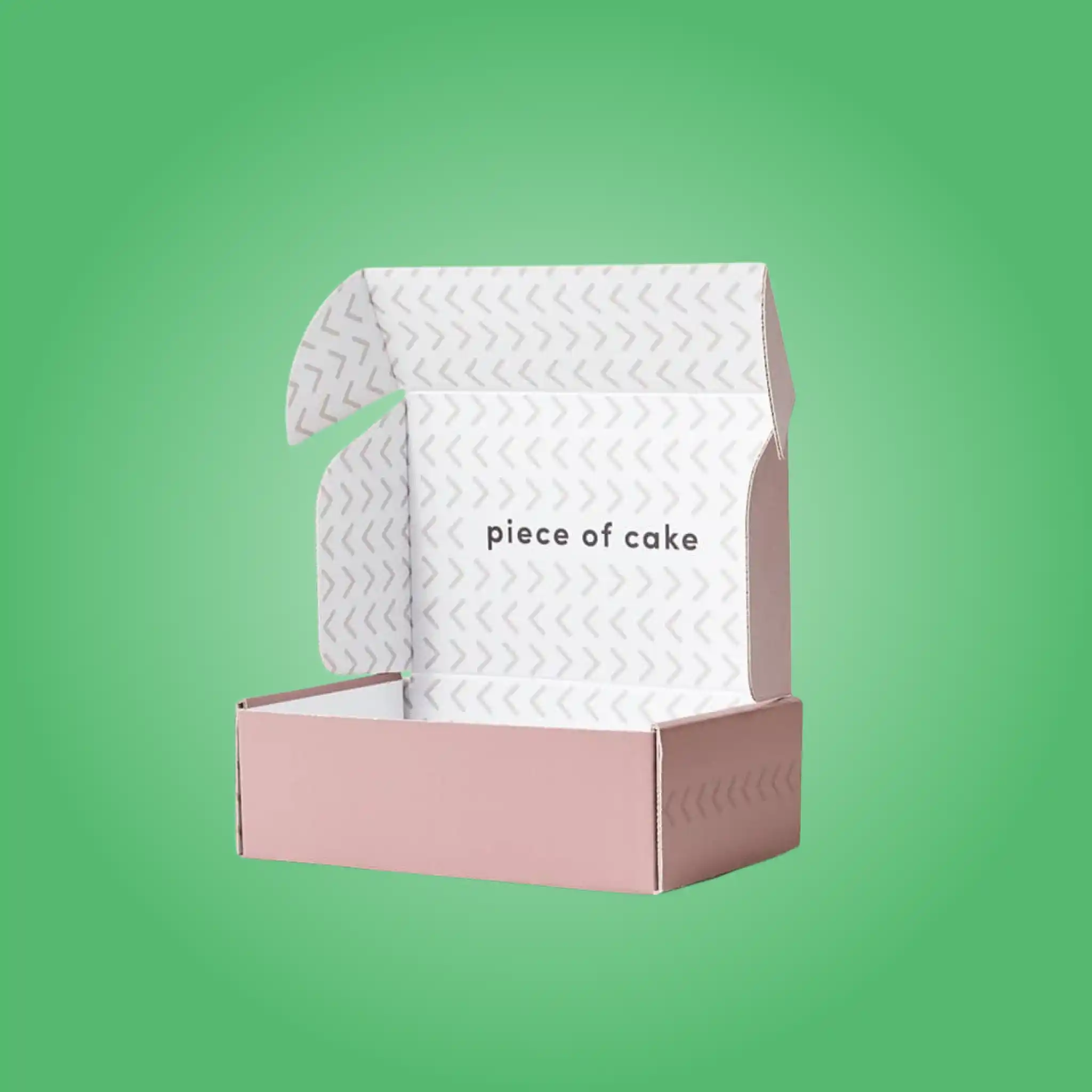
Custom Shipping Boxes

Custom shipping boxes from Pioneer Custom Boxes help ecommerce, subscription, wholesale, food, hardware and homeware brands ship products safely at a lower freight cost. Choose 32 to 51 ECT single or double wall corrugated, RSC, mailer, full overlap or telescope styles, partitions, pulp trays, flexo or litho printing, free design support, no MOQ and free USA shipping.

Custom Takeout Mailer Boxes

Custom takeout mailer boxes from Pioneer Custom Boxes help restaurants, ghost kitchens, fast casual chains, bakeries, caterers and meal kit brands deliver food in the condition it left the kitchen. Choose food grade SBS, kraft or corrugated with grease-resistant or barrier coatings, venting, dividers, handles, tamper seals, free design support, no MOQ and free USA shipping.

Custom Shoulder Mailer Boxes

Custom shoulder mailer boxes from Pioneer Custom Boxes help jewelry, watch, fragrance, premium skincare, technology, spirits and collector brands present products in three-part rigid construction with a flush lid and a slow, controlled close. Choose 2mm to 3mm greyboard with printed, textured, soft touch or leatherette wraps, flocked cavities, molded cradles, foil, blind debossing, free design support, no MOQ and free USA shipping.

Find Your Product Without Any Difficulties