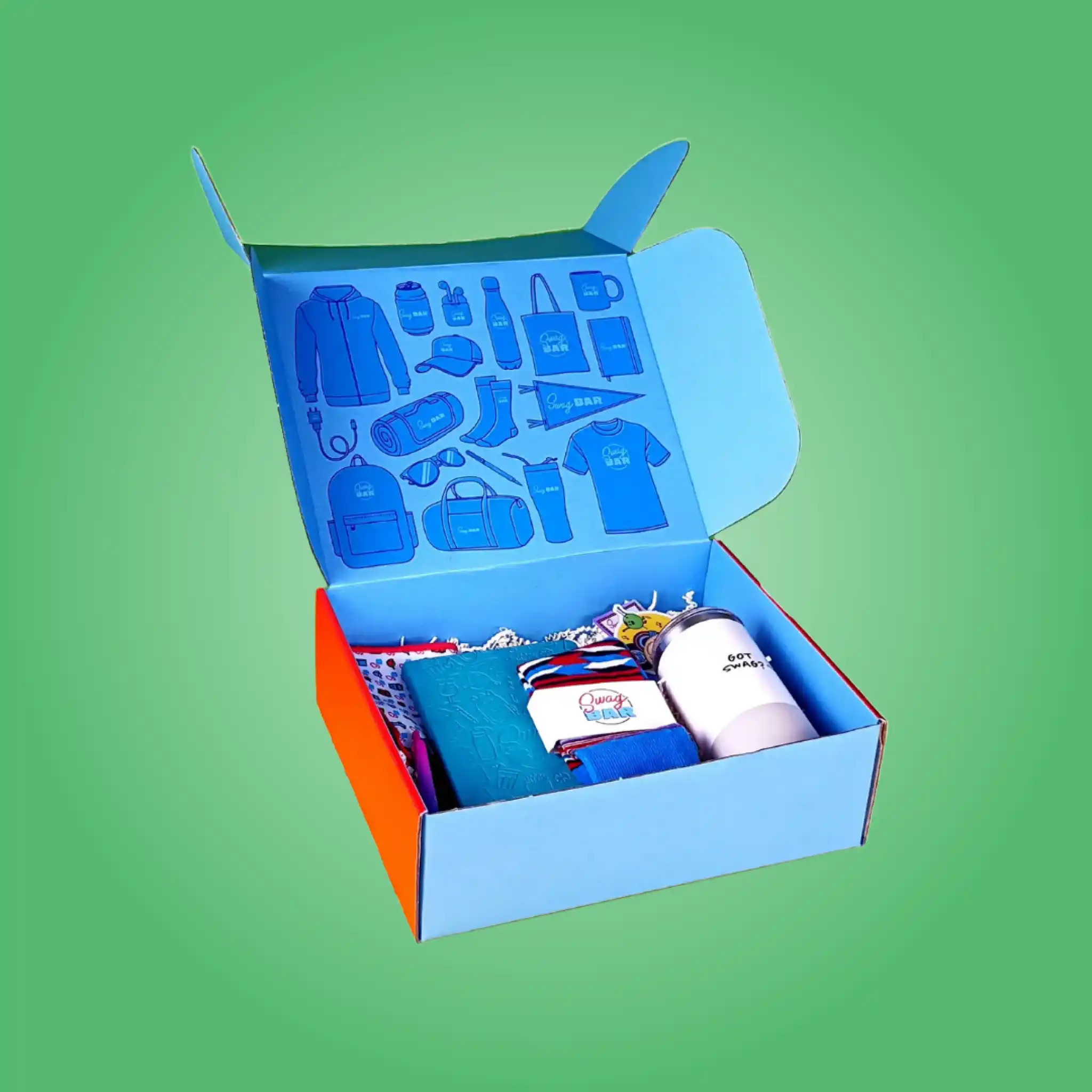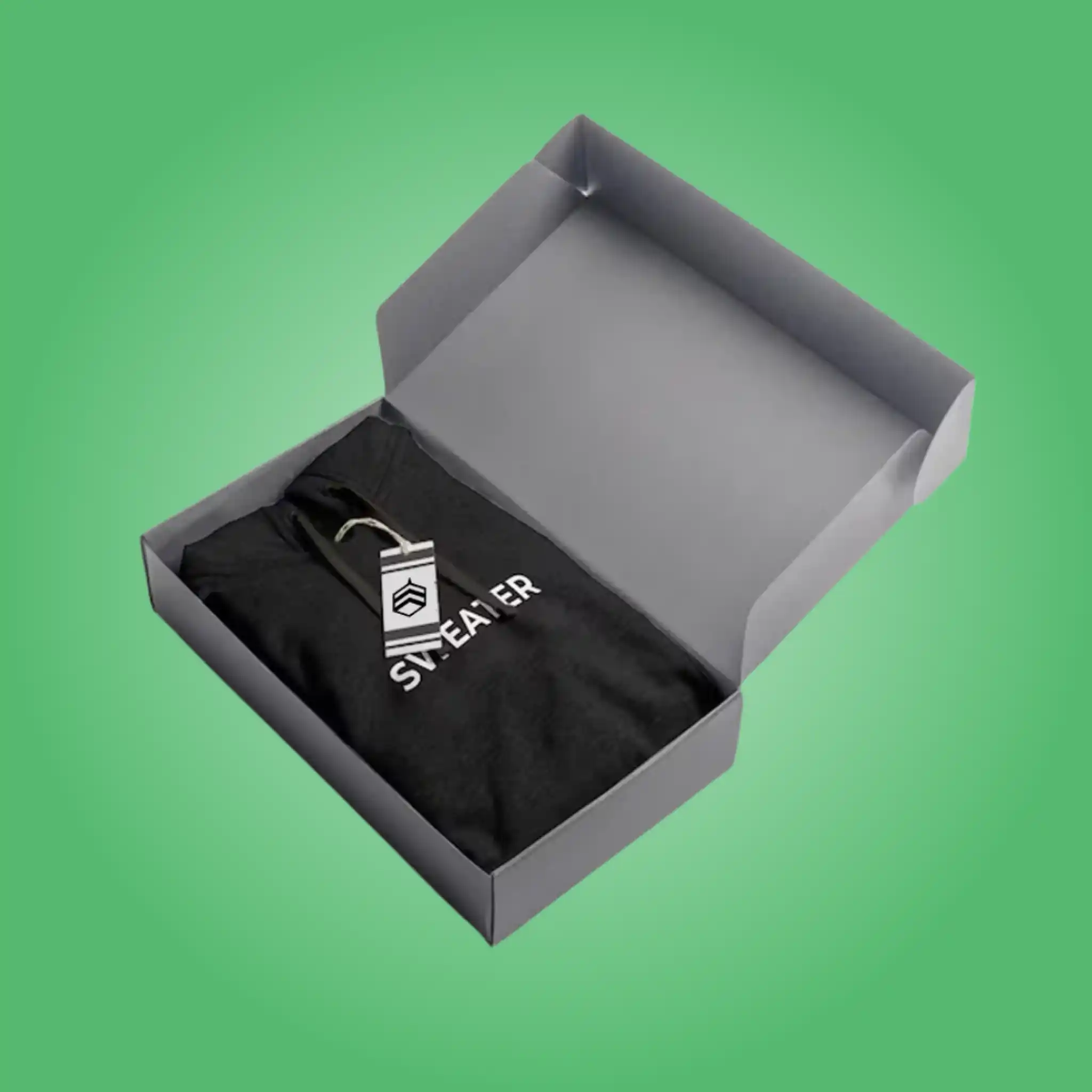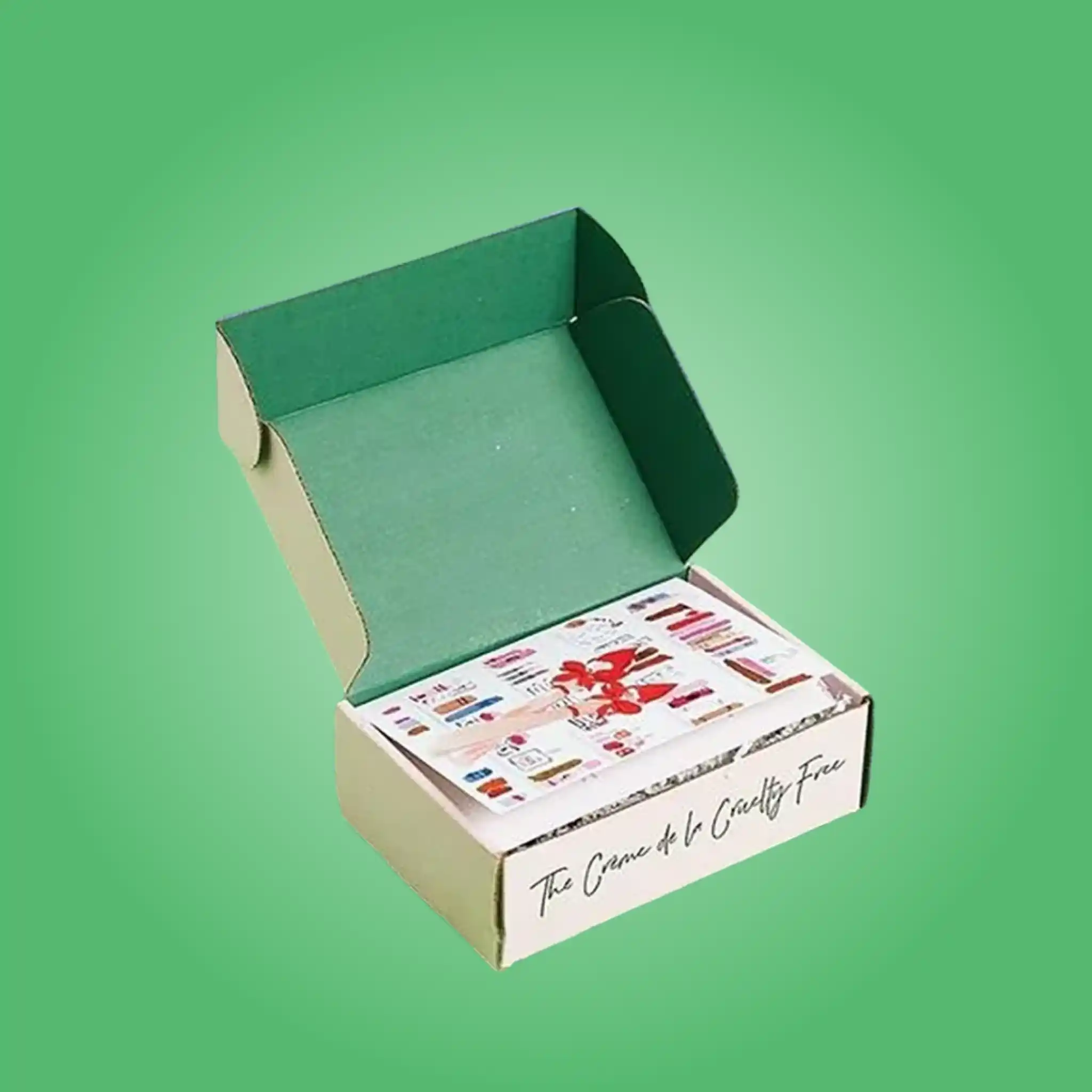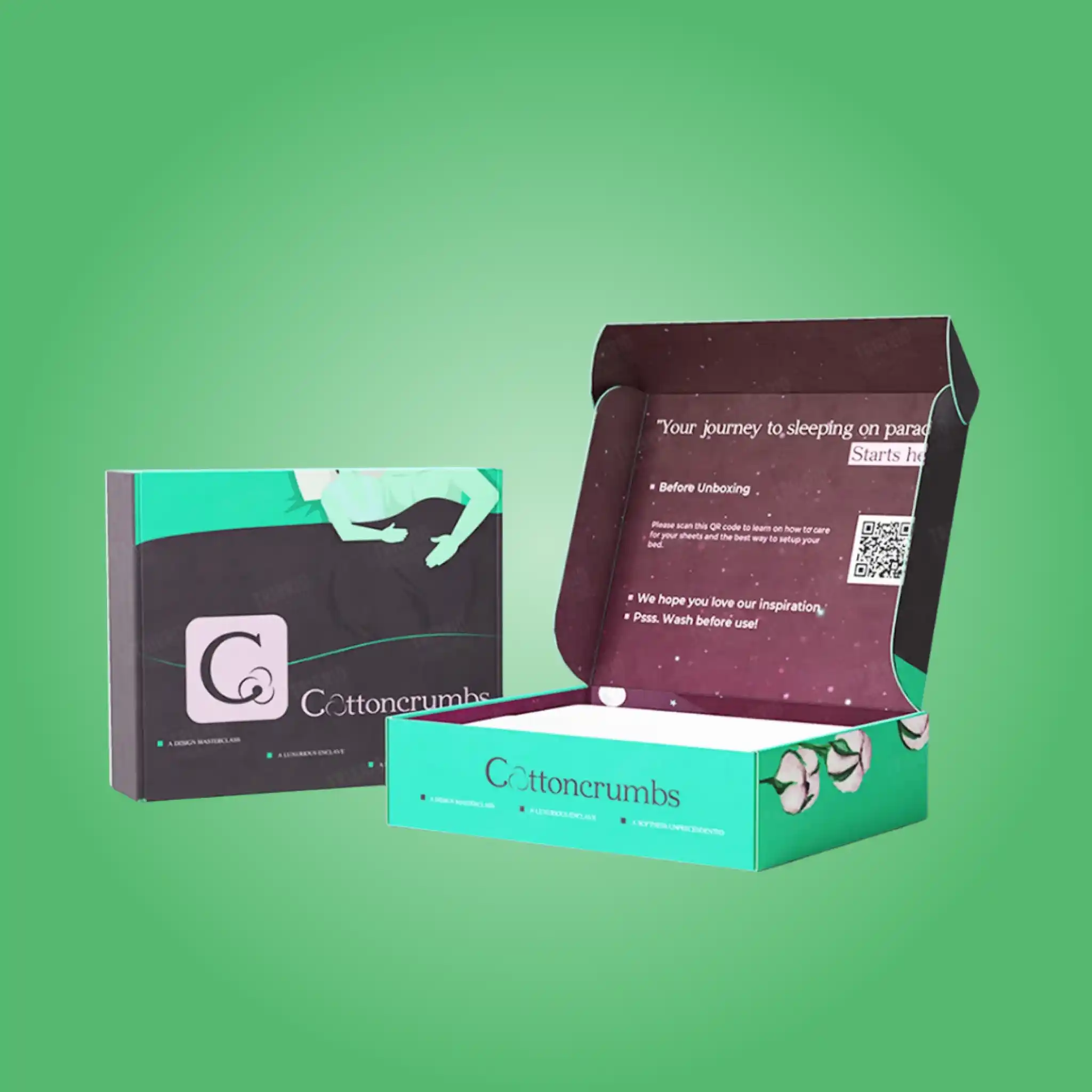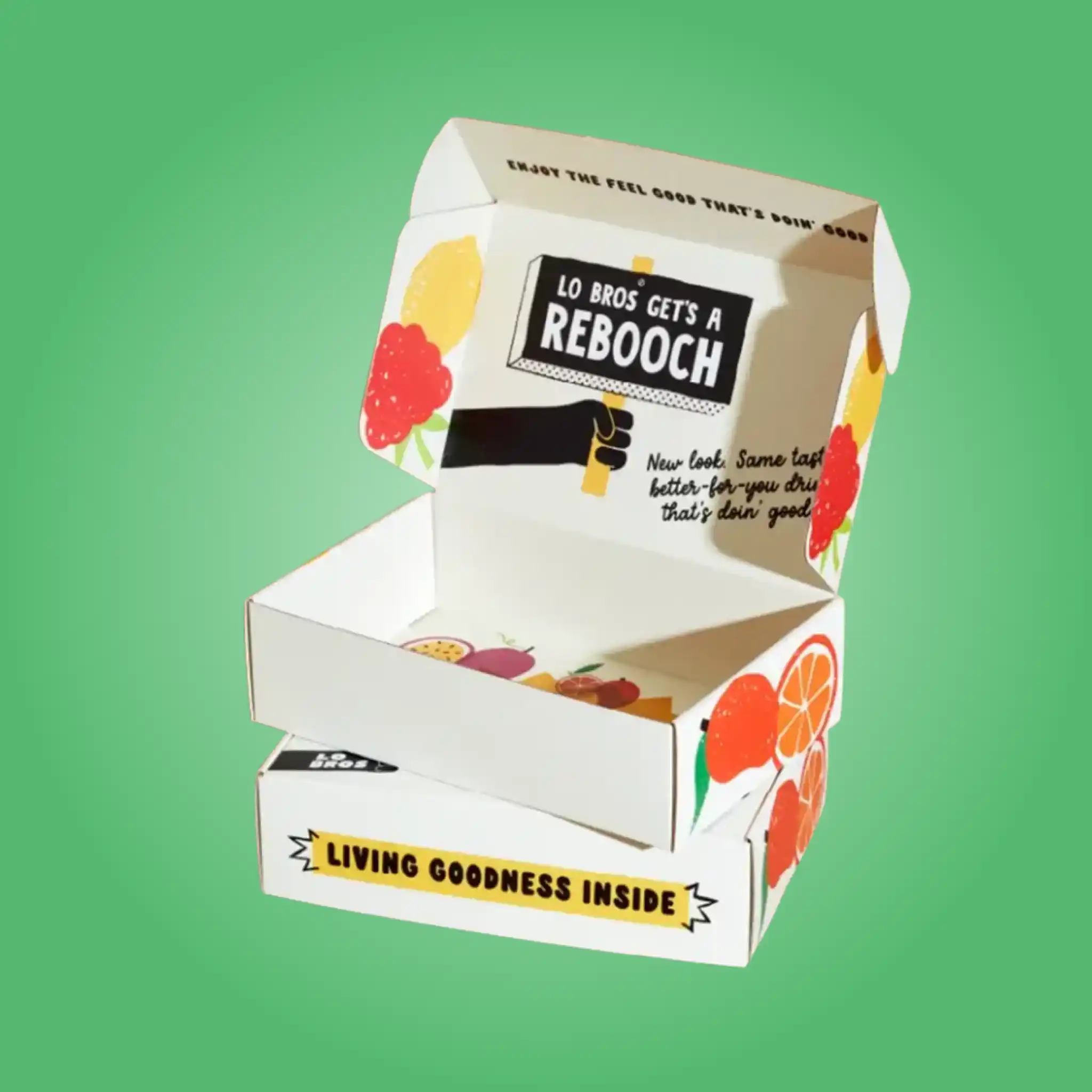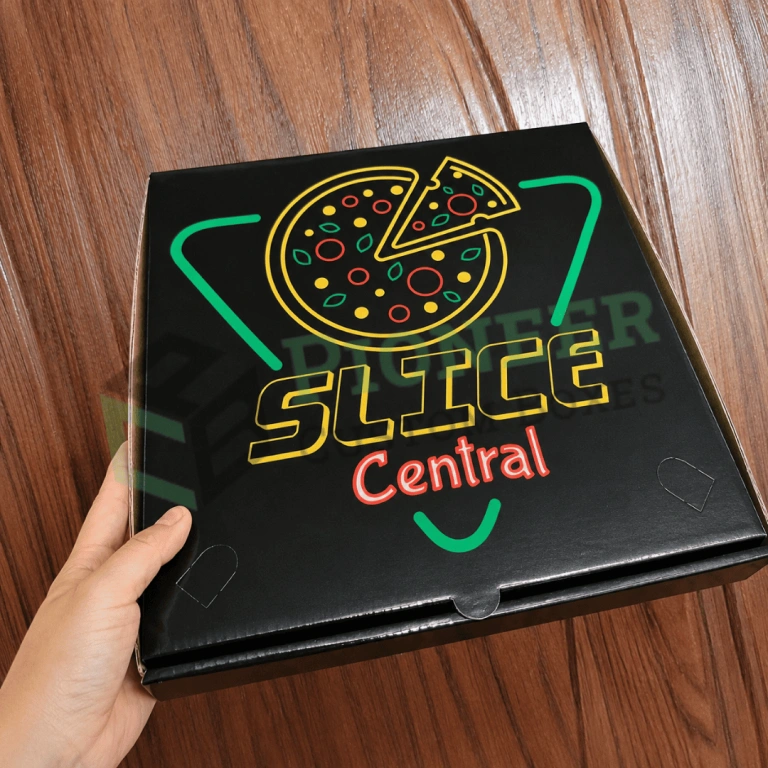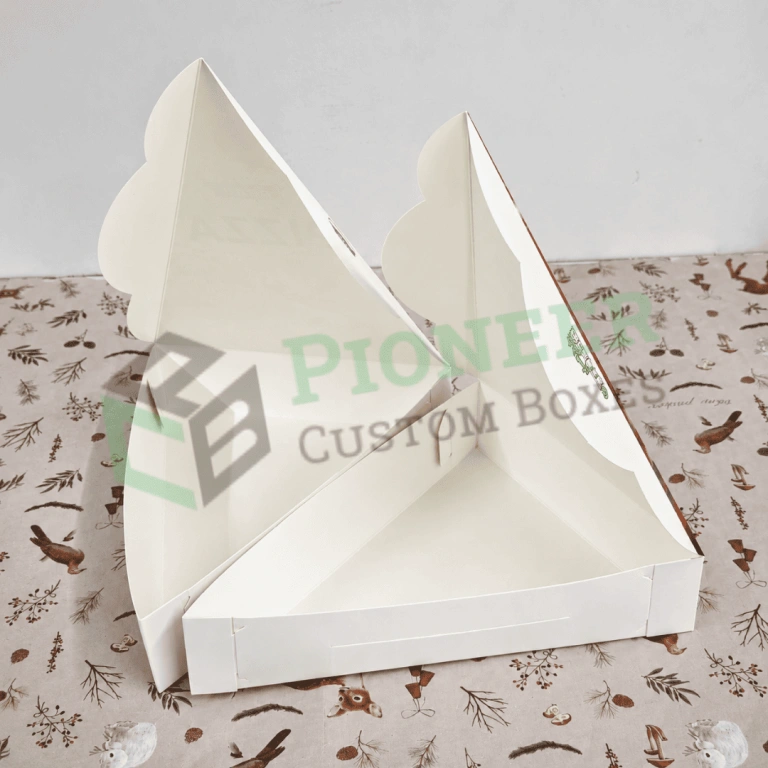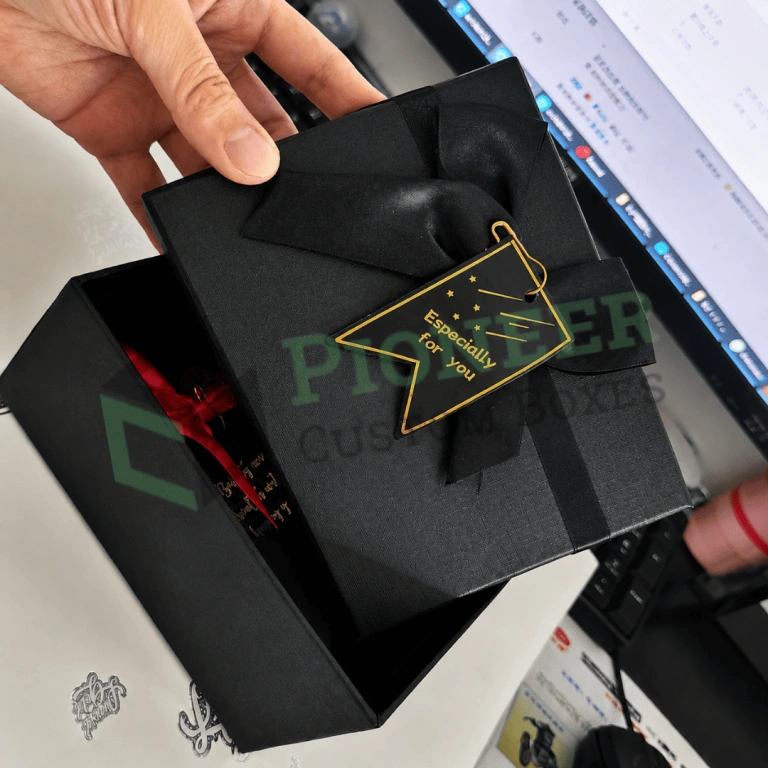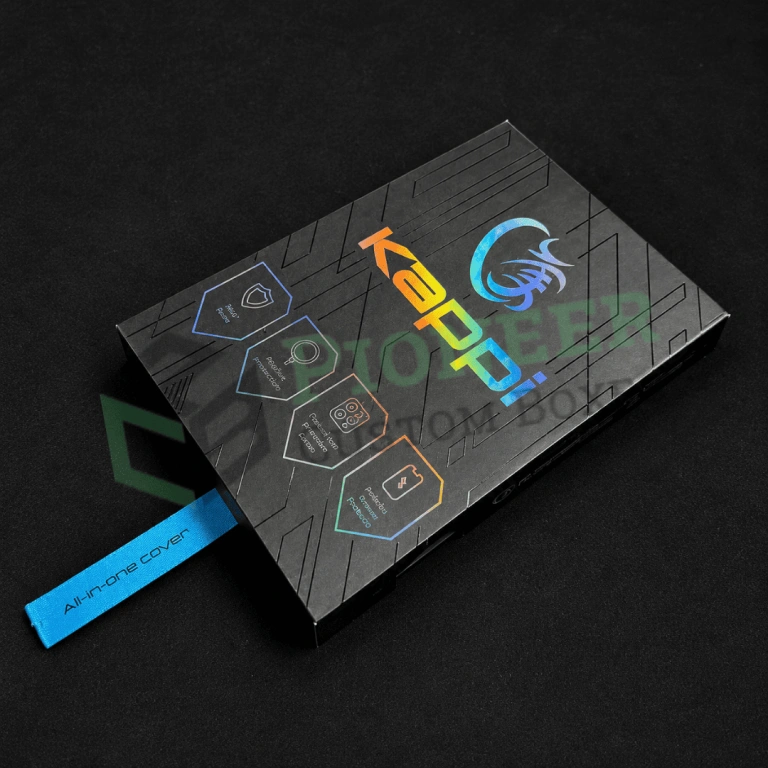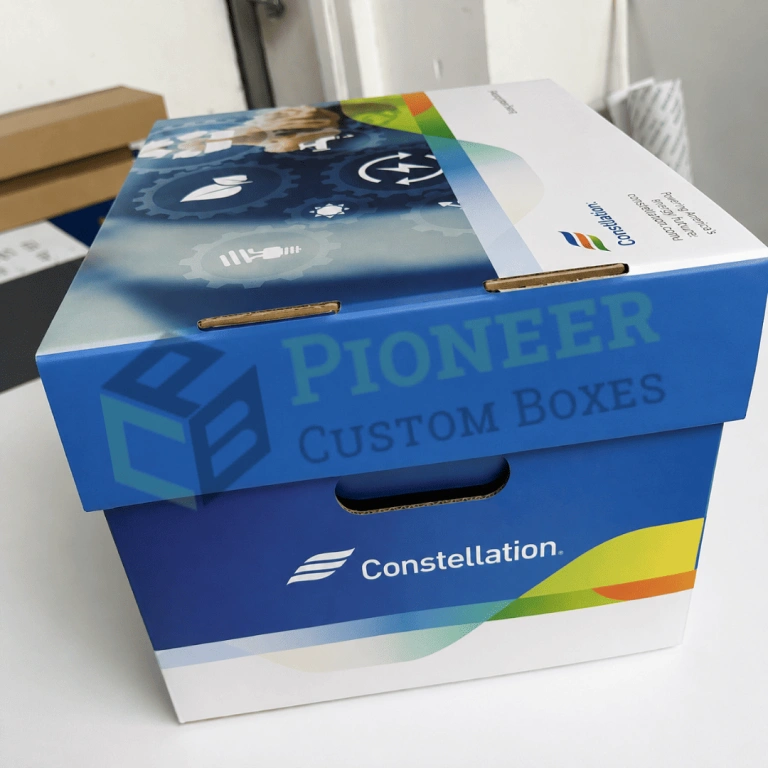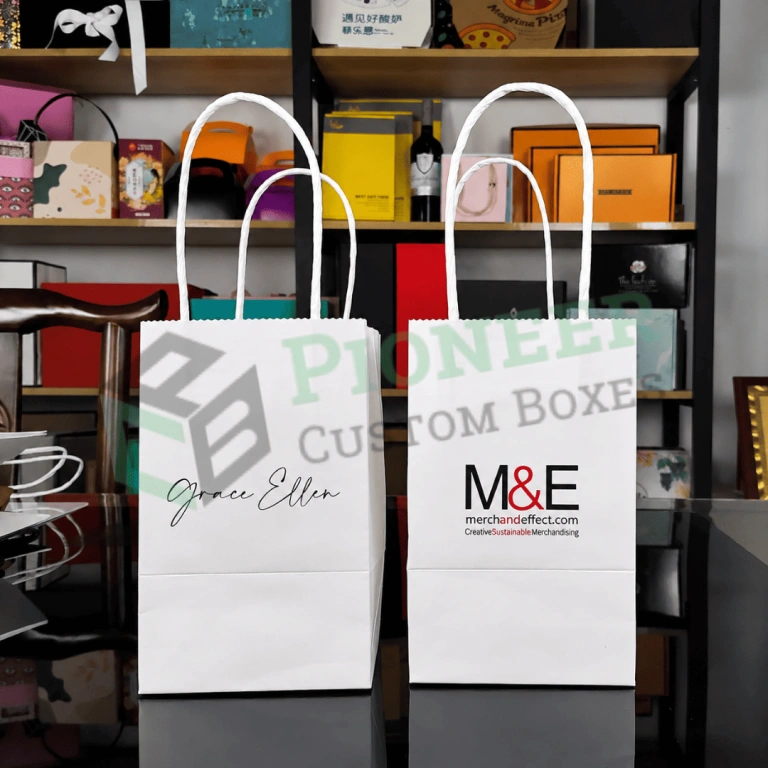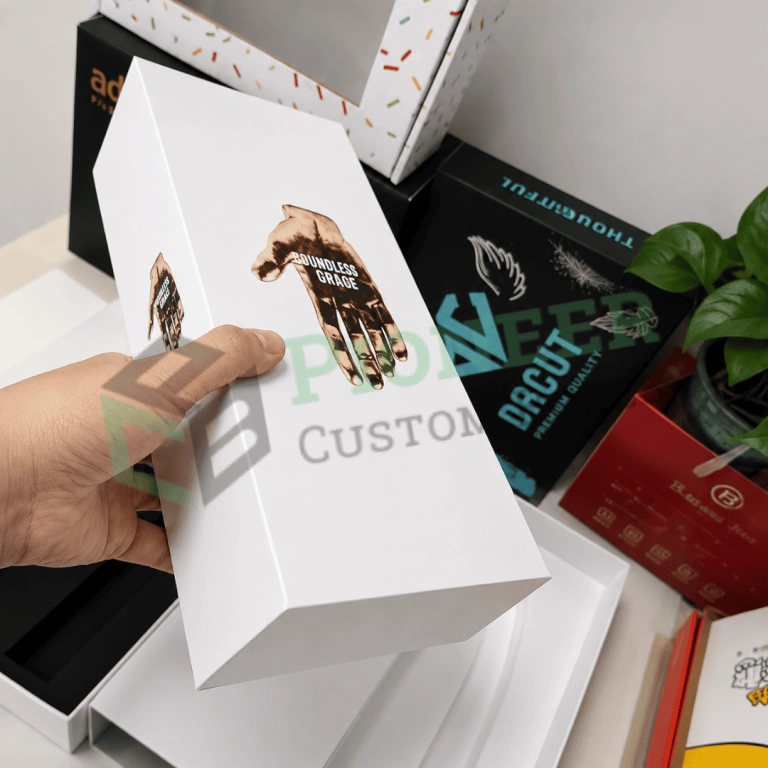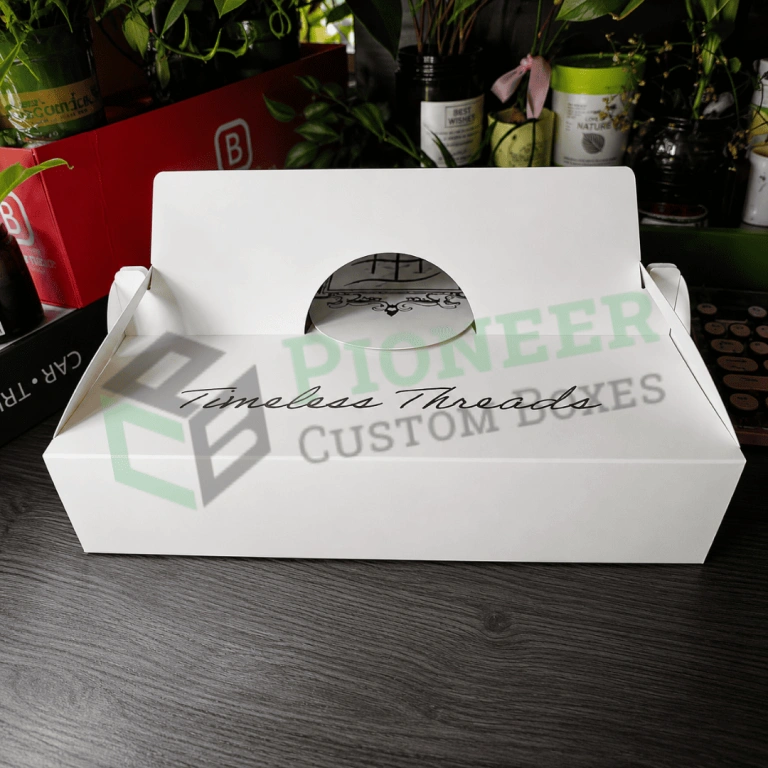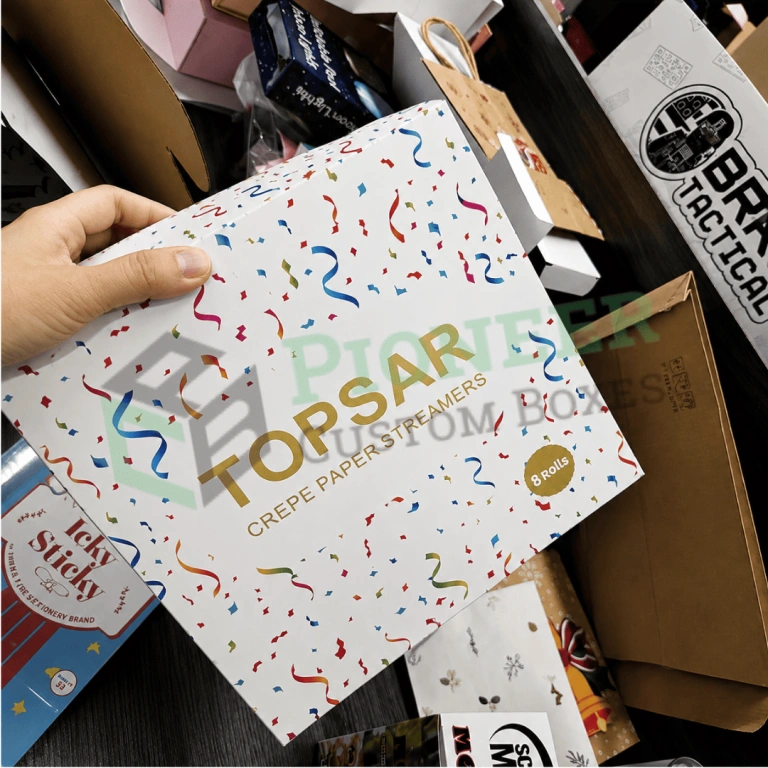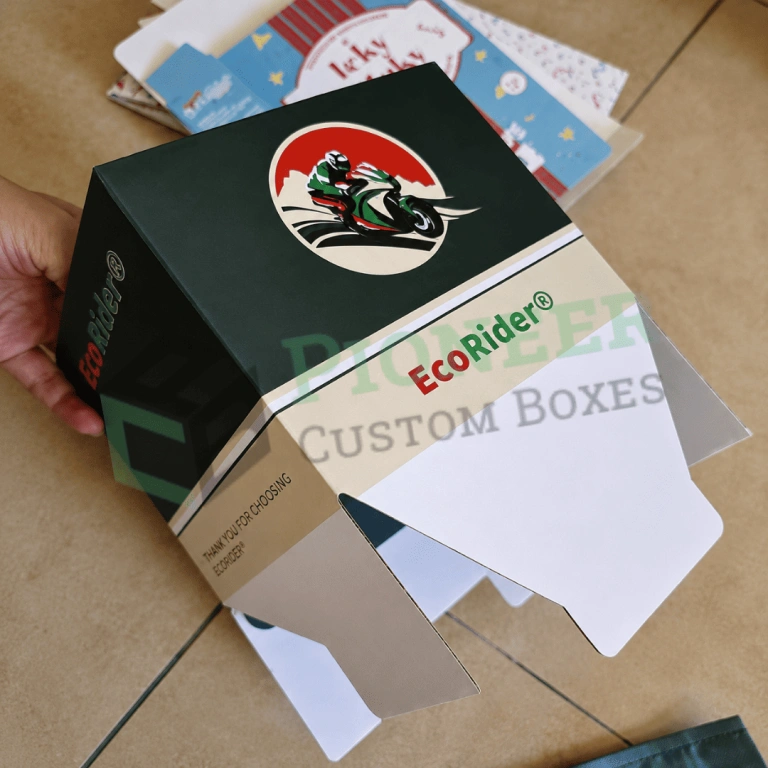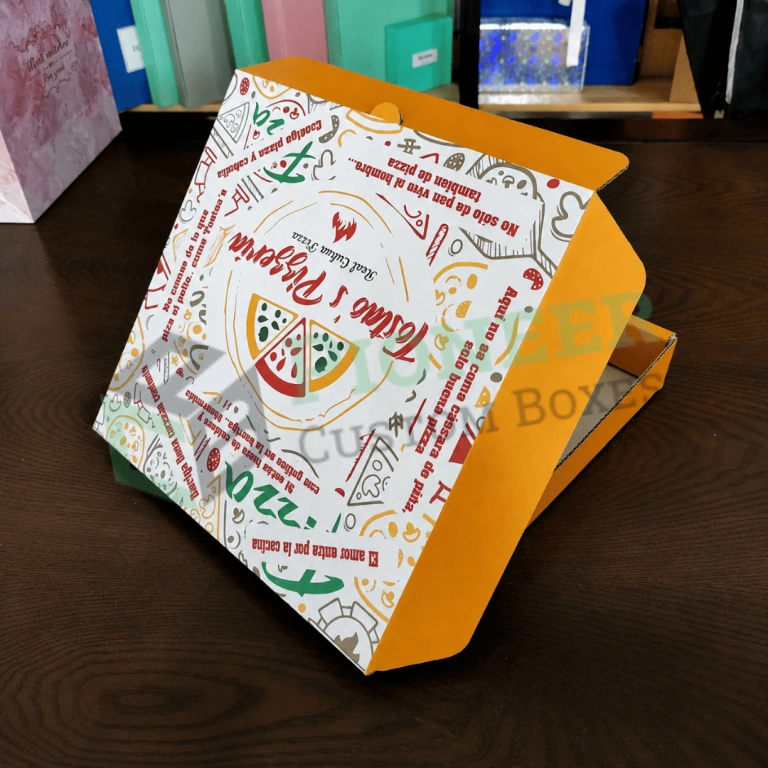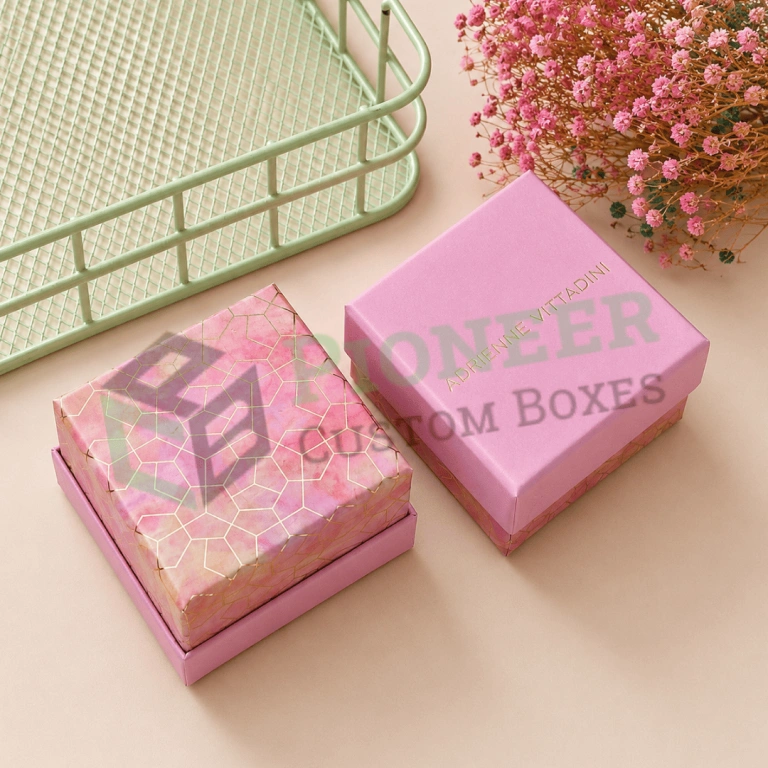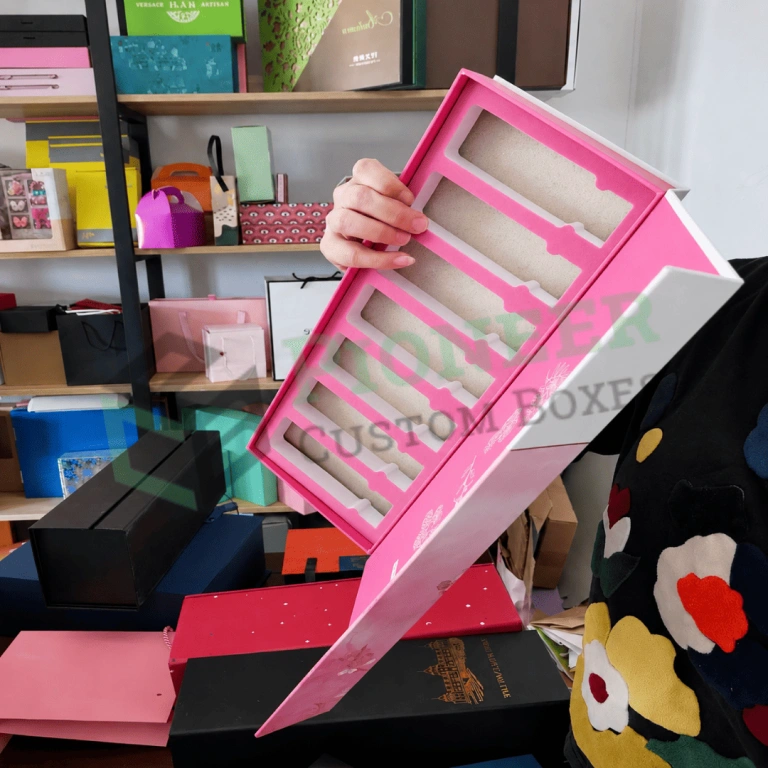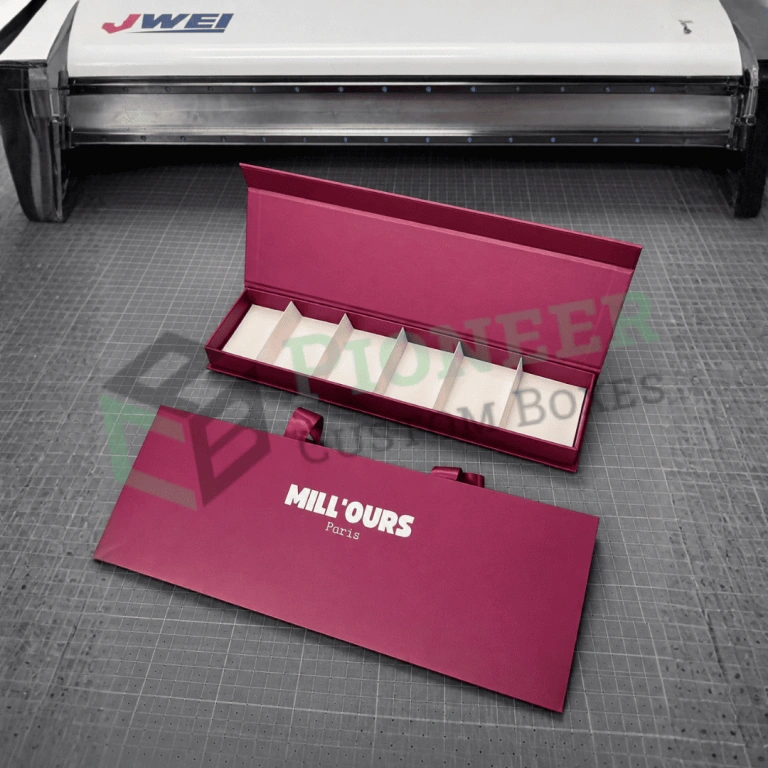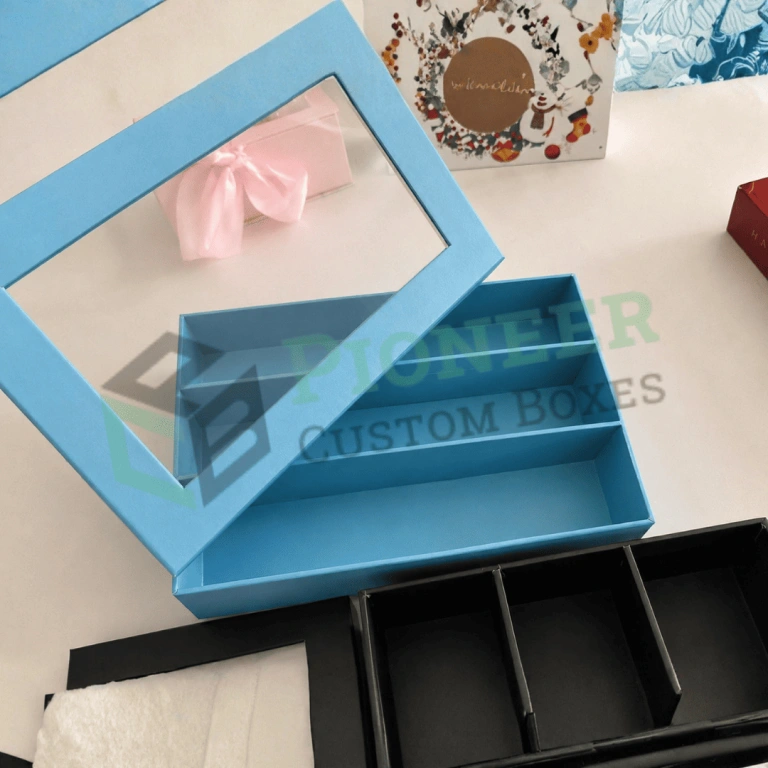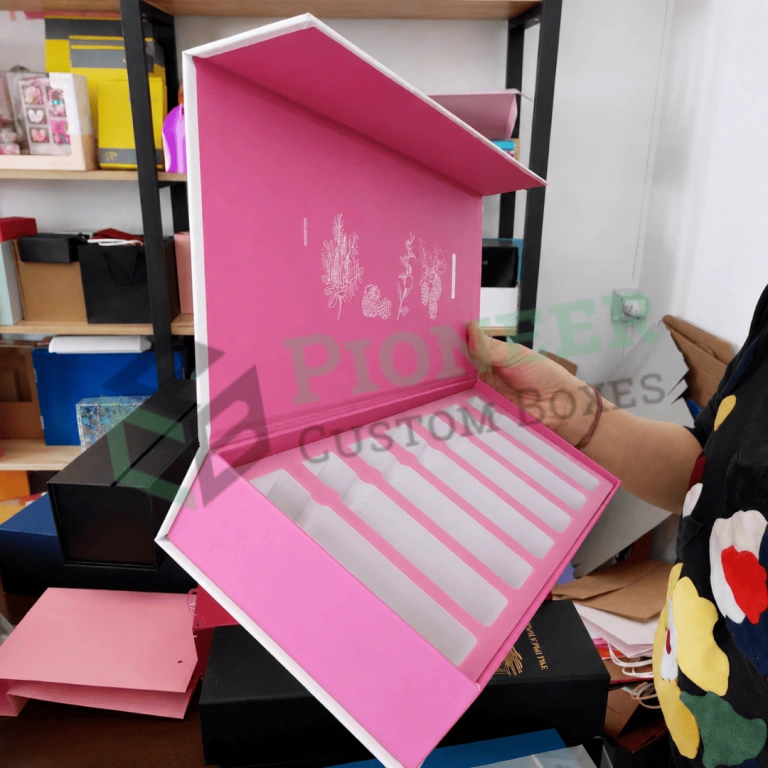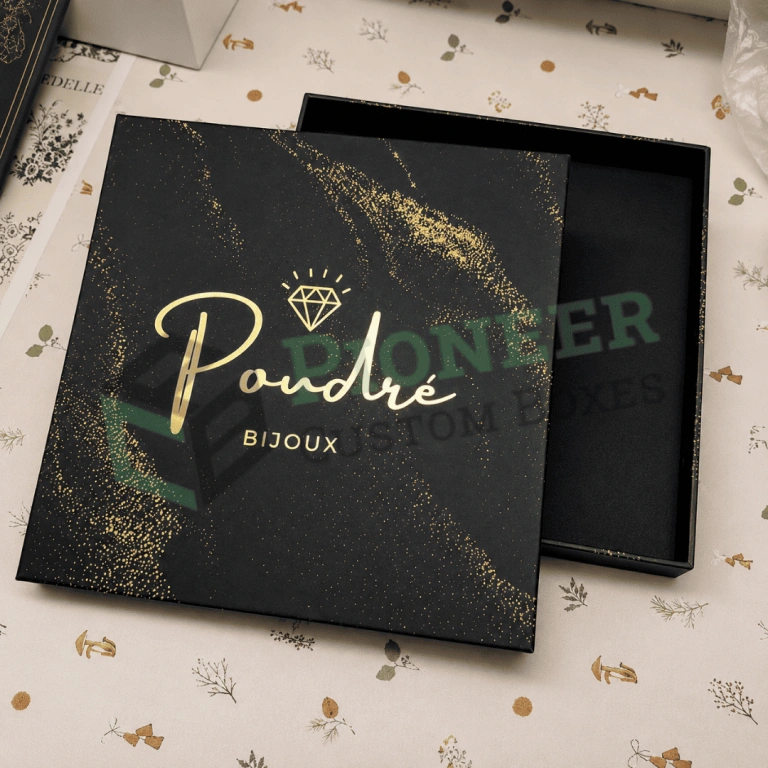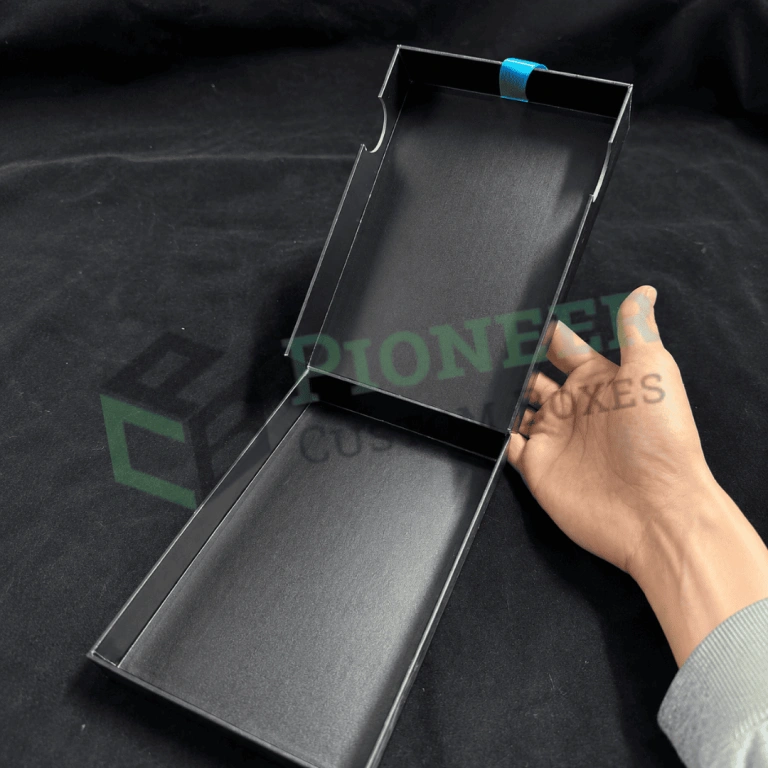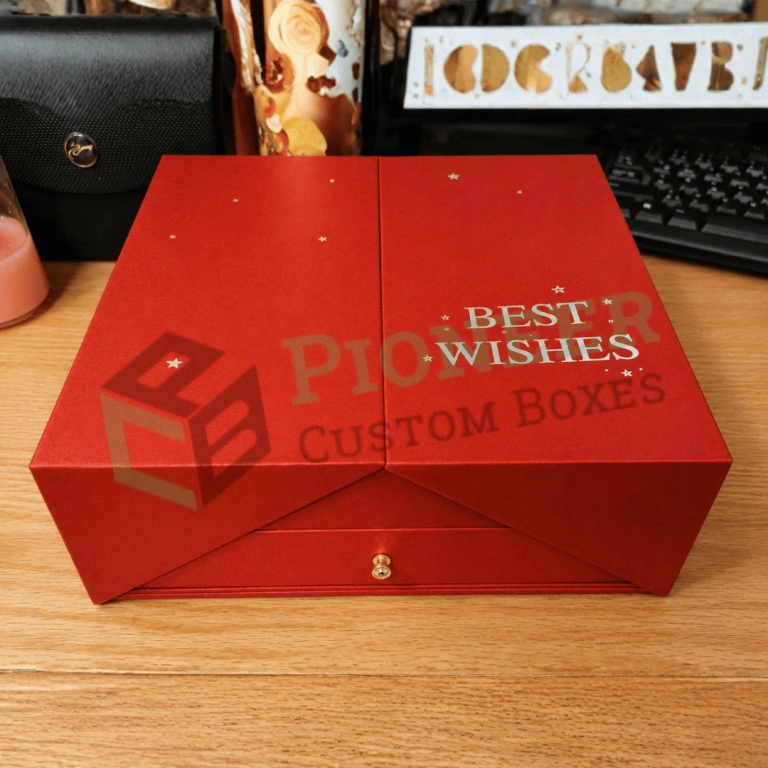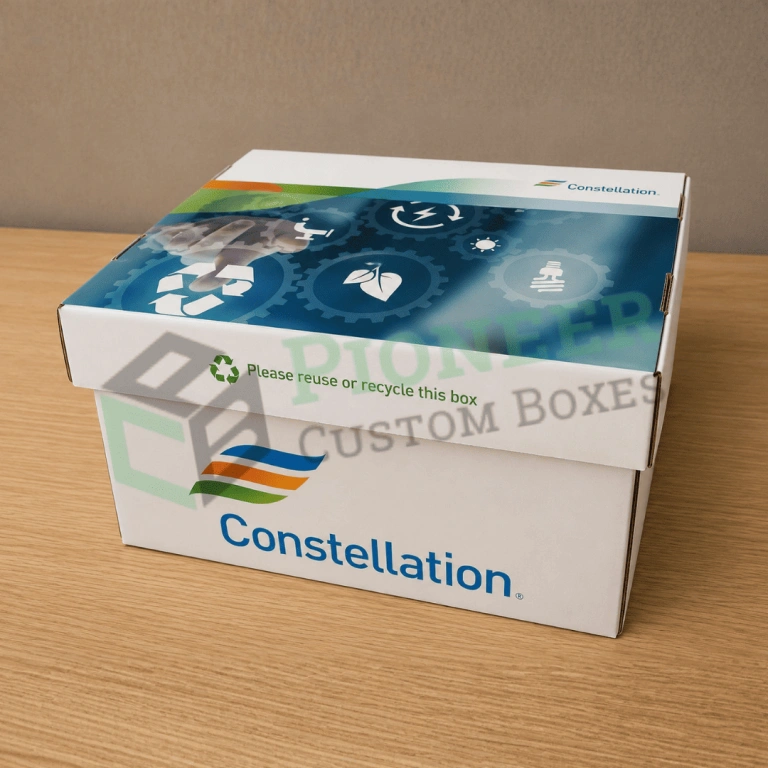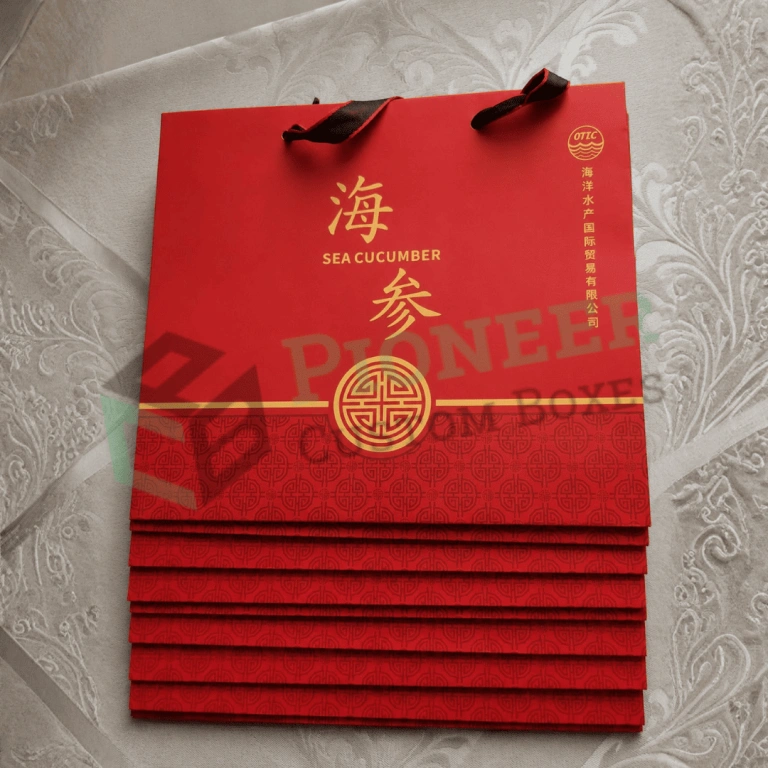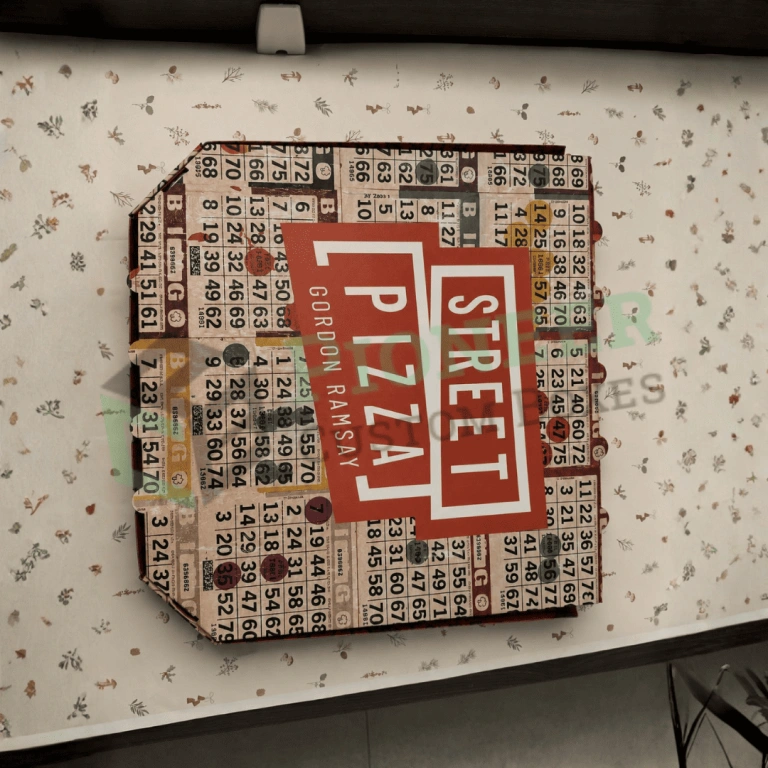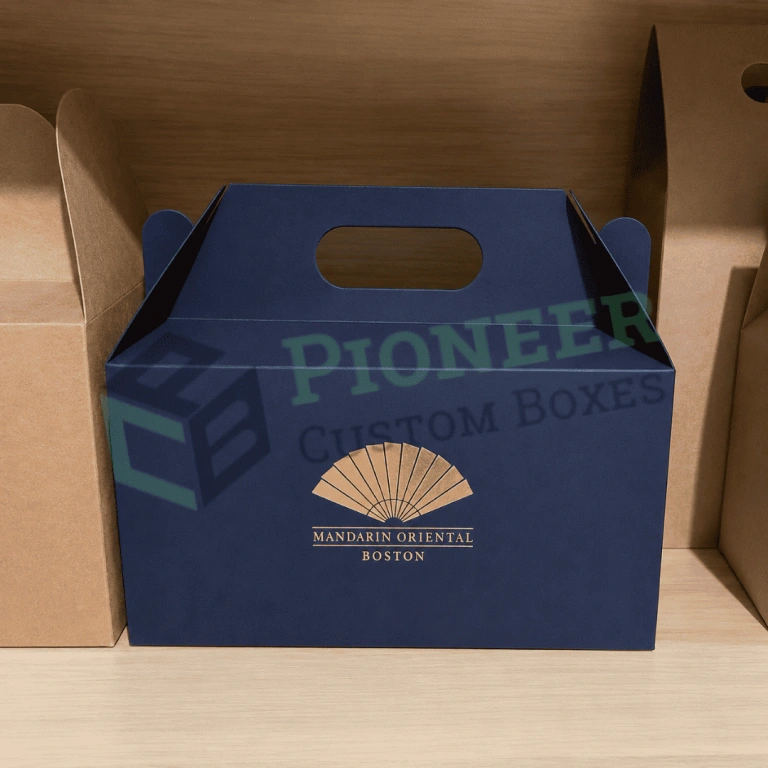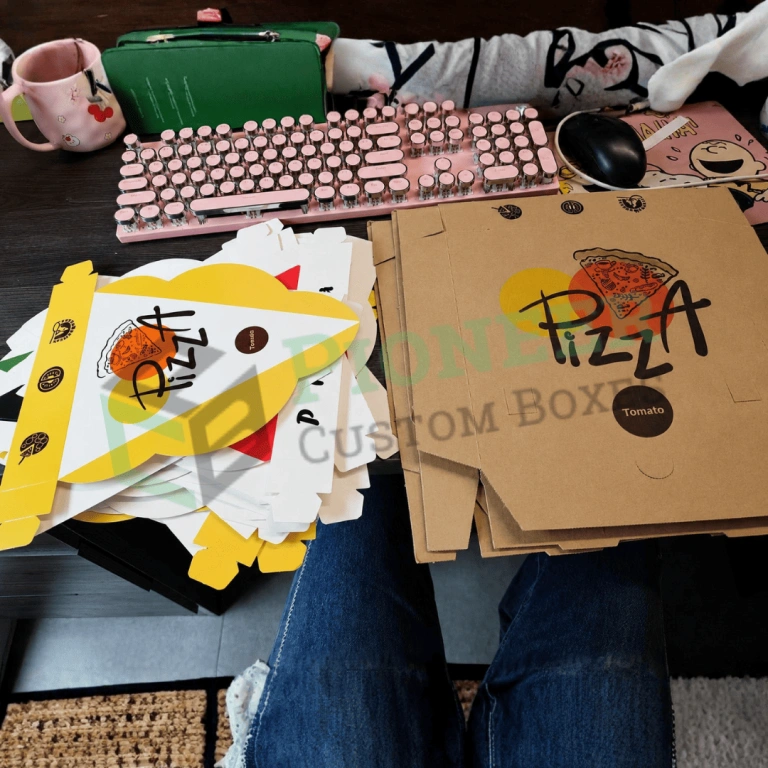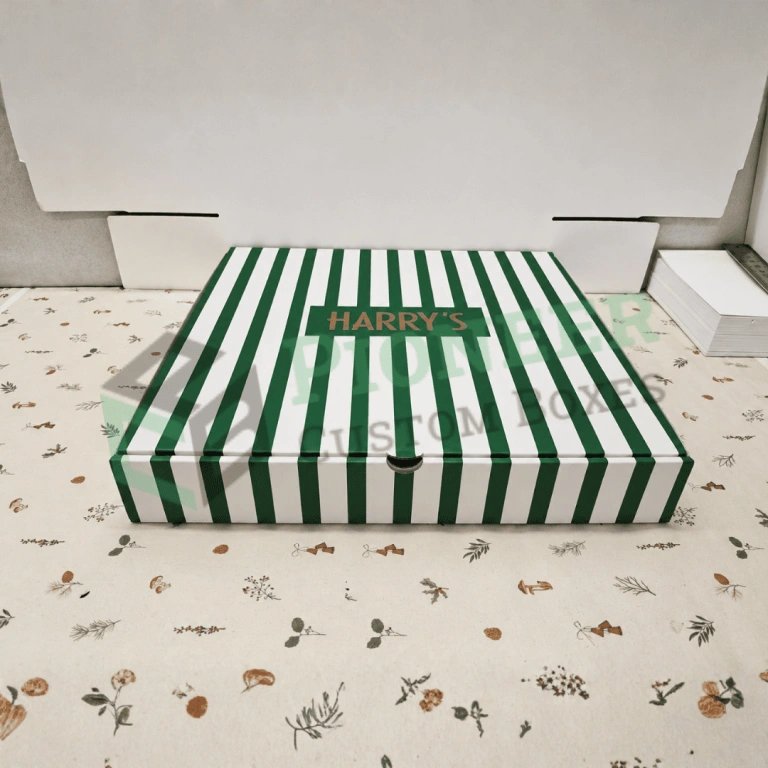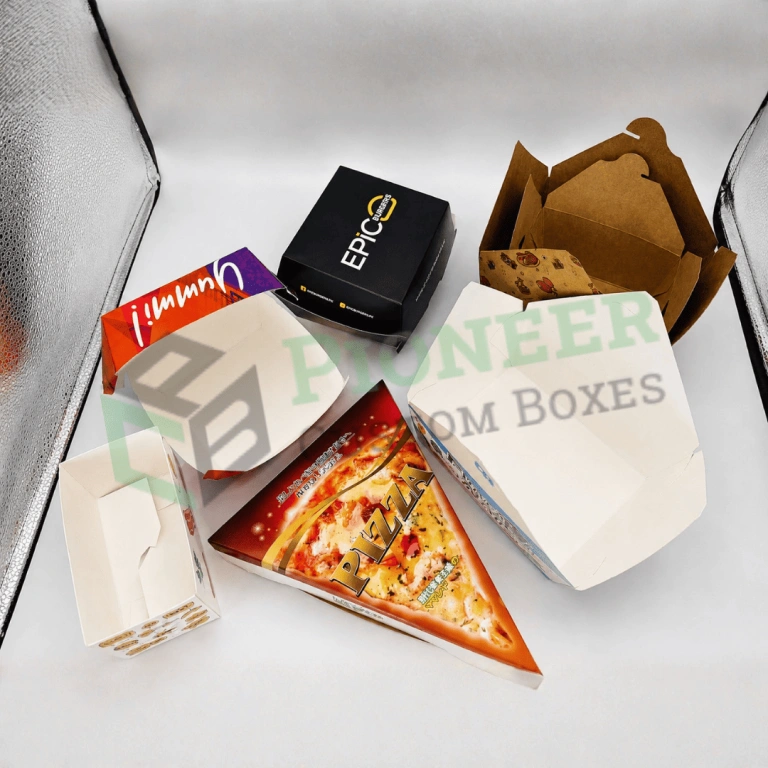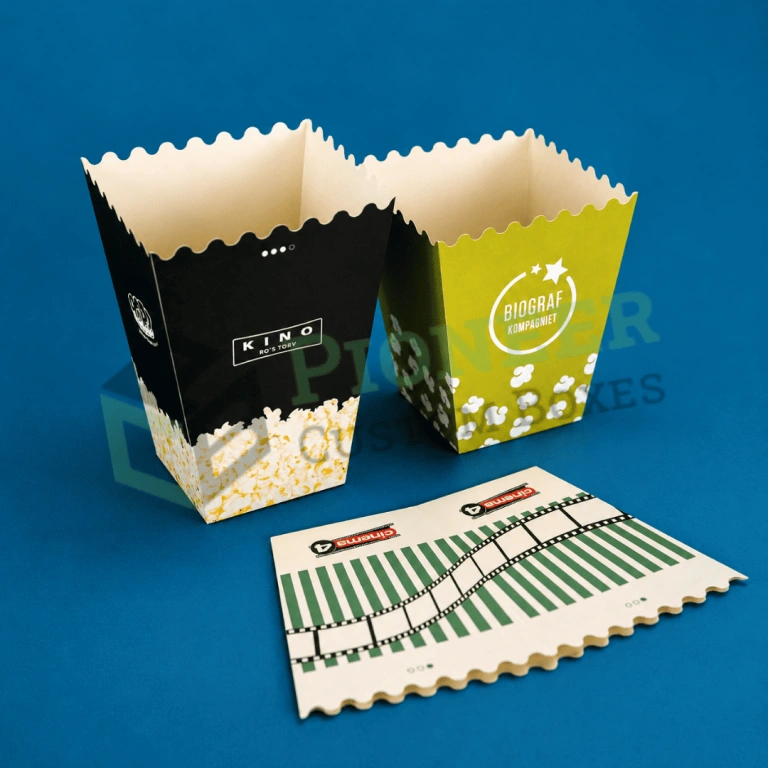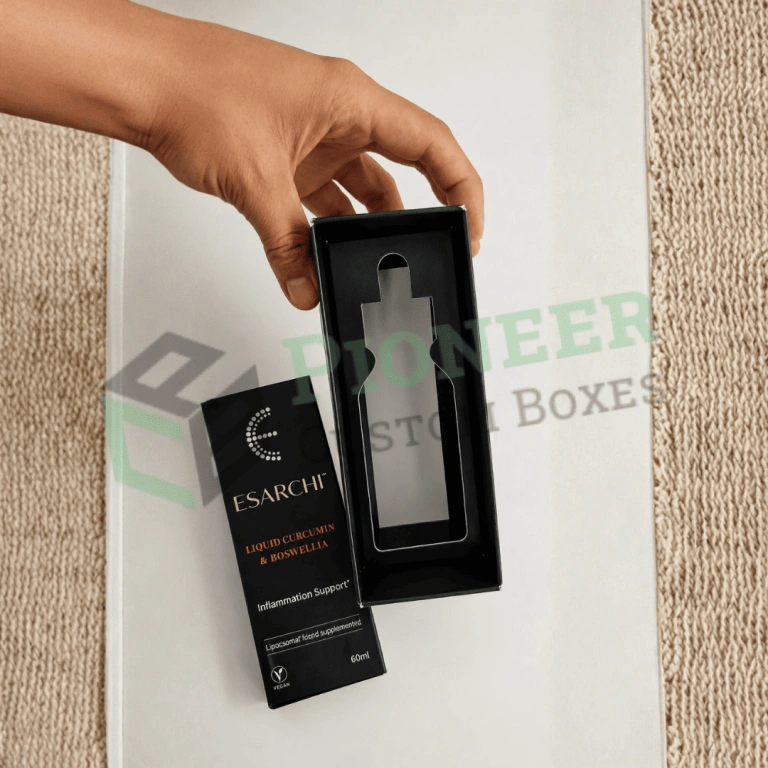
Custom luxury mailer boxes from Pioneer Custom Boxes help jewelry, watch, beauty, fragrance, apparel, electronics and premium gifting brands ship packaging that justifies the price point. Choose collapsible rigid, magnetic closure or litho laminated E-flute construction with flocked cavities, molded trays, soft touch lamination, foil stamping, free design support, no MOQ and free USA shipping.
A luxury mailer has to solve a contradiction. It must survive a parcel network, which is an environment designed around throughput rather than care, and it must arrive feeling like something a customer paid a premium for. Those two demands pull in opposite directions, and resolving them is what separates a luxury mailer from an ordinary one with better artwork.
The resolution is mostly structural rather than decorative. Rigid-feel construction, a controlled opening motion, a fitted interior and a surface that resists abrasion do more for perceived value than any amount of printing. A box that arrives scuffed and opens awkwardly cannot be rescued by a foil logo.
The second thing that matters is the sequence of the opening. Luxury packaging reveals its contents in stages rather than all at once, and each stage should feel deliberate. A magnetic lid that resists slightly and then closes with a soft sound is doing real work, and it costs less than most brands assume.
Pioneer Custom Boxes produces luxury mailers in the United States with zero minimum order quantity, free dielines, free design support and free shipping nationwide. We cut our own dies and finish in house, so the details that create the impression are controlled rather than outsourced.
Several structures achieve a luxury impression, and they differ in how well they survive shipping alone and what they cost.
A rigid or heavy corrugated box with concealed magnets in the lid and front flap. The lid resists slightly then closes decisively, which is the single most recognizable luxury packaging cue available. It ships flat as a collapsible version or arrives assembled as a rigid one, and the collapsible route saves substantially on freight and storage.
Rigid greyboard construction that folds flat for transit and locks into a solid box on assembly. It gives most of the weight and solidity of a traditional rigid box while shipping at a fraction of the volume. For direct-to-consumer luxury this is frequently the best balance available.
A corrugated mailer wrapped in an offset-printed sheet. It gives retail print quality with genuine crush resistance and costs considerably less than rigid construction. Where the impression comes from artwork and finish rather than from weight, this is the practical choice.
A full lid opening that reveals the contents arranged in a fitted tray. Less overtly expensive than a magnetic box and often more effective, because the reveal does the work rather than the closure.
The most premium presentation, protected by a separate shipping box. It costs the most in materials and freight, and it is the right answer for genuinely high-value items where the presentation box is intended to be kept.
| Structure | Ships Alone | Perceived Value | Relative Cost |
|---|---|---|---|
| Magnetic collapsible rigid | Yes with care | Highest | High |
| Collapsible rigid box | Yes | High | Moderate to high |
| Litho laminated E-flute mailer | Yes | High | Moderate |
| Roll end with fitted tray | Yes | Moderate to high | Low to moderate |
| Two-piece lid and base | No, needs a shipper | Highest | Highest |
Buyers often assume luxury packaging is about spending more on finishing. In practice a small number of specific details carry most of the effect, and several of them are inexpensive.
Weight comes first. Customers associate heft with quality before they consciously assess anything, which is why rigid and collapsible rigid construction read as expensive immediately. Where rigid is not viable, a heavier caliper or a litho sheet over E-flute recovers part of that impression.
The closure is second. A magnetic lid, a ribbon pull or a snug friction fit all create a moment of resistance followed by release, and that moment is what people remember. A lid that simply falls open communicates nothing.
Surface texture is third and is frequently underestimated. Soft touch lamination feels like a different category of object, and it costs less than most brands expect. Against soft touch, a small foil hit or a spot UV mark reads as considered rather than decorative.
The interior matters as much as the exterior. Bare brown corrugated inside a beautifully printed box undoes the impression the moment it opens. A printed interior, a fitted tray or even tissue with a branded sticker resolves that inexpensively.
Fit is the detail brands miss most. A product that shifts inside a luxury box feels cheap regardless of what the box is made of, and a fitted cavity that holds the item exactly is the cheapest luxury signal available.
Restraint runs through all of it. One strong finish on a considered design consistently outperforms three competing treatments, and over-decorated packaging reads as trying rather than confident.
Every die is cut to your product. These formats show what we produce most often for premium direct-to-consumer work.
| Application | Typical Size (inches) | Construction | Interior |
|---|---|---|---|
| Fine jewelry | 6 x 5 x 2 | Collapsible rigid, magnetic | Flocked foam cavity |
| Watches | 7 x 5 x 3 | Rigid with outer shipper | Cushion insert |
| Premium skincare set | 9 x 7 x 3 | Litho laminated E-flute | Fitted paperboard tray |
| Fragrance | 6 x 5 x 5 | Collapsible rigid, magnetic | Molded cradle |
| Apparel, premium single item | 13 x 10 x 3 | Litho laminated E-flute | Printed tissue and band |
| Electronics and devices | 11 x 8 x 3 | Collapsible rigid | Die-cut foam tray |
| Wine and spirits, single bottle | 13 x 5 x 5 | Rigid with cradle | Molded pulp or foam |
| Corporate gift set | 13 x 10 x 4 | Collapsible rigid, magnetic | Multi-cavity tray |
| Confectionery gift box | 9 x 9 x 2 | Litho laminated E-flute | Molded tray |
| Quarterly premium subscription | 12 x 9 x 4 | Roll end with fitted tray | Printed interior and tray |
Send your product and your target unit cost, and we will show you two or three structures at different price points rather than assuming the most expensive one is what you want.
Material choice on a luxury mailer is a balance between how the box feels and how much volume it occupies in transit.
Thick chipboard wrapped in printed or textured paper, assembled rather than folded. It delivers the weight and solidity customers associate with luxury and cannot be flat-packed in its traditional form, so it takes real volume in transit and storage. Reserve it for genuinely high price points.
Rigid board engineered to fold flat and lock into shape on assembly. It gives most of the weight and solidity of traditional rigid at a fraction of the shipping volume, and for direct-to-consumer luxury it is usually the right compromise. Assembly takes a few seconds per box.
Corrugated wrapped in an offset-printed sheet. Print quality matches a retail carton, the flute provides crush resistance, and it ships flat. It is lighter in the hand than rigid, so the impression comes from artwork and finish rather than heft.
For smaller luxury items, heavy folding board with a premium finish achieves a great deal at a modest cost. It has no crush resistance, so it belongs inside an outer shipper for parcel delivery.
Rigid and collapsible rigid boxes are wrapped rather than printed directly, which opens up materials that cannot be run through a press. Textured papers, linen finishes, leatherette and colored uncoated stocks each create a distinct impression, and many luxury brands use an unprinted textured wrap with a single foil mark.
One trade-off is worth stating plainly. Traditional rigid boxes cost more in freight and storage than any other option, because they ship assembled. If your volumes are meaningful, collapsible construction usually saves more in logistics than it costs in engineering.
| Material | Typical Caliper | Strengths | Best For | Relative Cost |
|---|---|---|---|---|
| SBS paperboard | 14pt to 24pt | Bright white face, sharp print | Retail cartons judged on shelf | Moderate |
| Kraft paperboard | 16pt to 24pt | Natural look, hides marking | Organic and artisan positioning | Lower |
| Coated recycled board | 16pt to 22pt | Recycled content under a print face | High-volume ranges on cost | Lower |
| E-flute corrugated | 32 ECT typical | Impact and crush resistance | Heavier products and parcel shipping | Higher |
| Recycled and FSC-certified stocks | Any grade above | Documented sourcing and content | Brands audited on sustainability | Small premium |
On a luxury mailer, finishing is not decoration. It is the primary means by which the box communicates its price point before anything is read.
The most effective single finish available in this category. It produces a velvet surface that feels like a different class of object, resists fingerprints on a box customers handle carefully, and provides the ideal background for foil.
A restrained surface that reads as considered, resists glare in photography and makes metallic accents stand out sharply. It costs less than soft touch and achieves much of the same effect.
Metallic film pressed into the surface under heat and pressure. No printed ink reproduces it, which is precisely why it signals expense. A single hit on the logo costs a fraction of full coverage and reads almost identically. Gold and copper suit warm palettes, silver and holographic suit modern ones.
High-gloss varnish on selected areas, creating contrast you can see and feel against a matte or soft touch background. Used on a pattern or a wordmark it adds depth without adding color.
Raised or recessed detail that customers register through touch. On rigid and heavy paperboard it works beautifully, and a blind deboss with no ink at all is one of the most understated premium effects available. On corrugated it crushes the flute, so we use foil or spot UV instead there.
Grosgrain ribbon pulls, magnetic closures and elastic bands each create a moment in the opening sequence. Magnets in particular are the clearest single luxury cue available and cost less than most brands expect.
A practical hierarchy for a limited budget: soft touch first, then one foil hit, then a magnetic closure, then a printed interior. Adding more beyond that rarely improves the impression and frequently dilutes it.
| Finish | Effect | Durability | Recycling Impact | Best For |
|---|---|---|---|---|
| Soft touch lamination | Velvet hand feel, premium signal | High | Complicates recovery | Prestige unboxing brands |
| Matte lamination | Flat, soft, hides handling marks | High | Complicates recovery | Most luxury mailers |
| Foil stamping | Metallic cue at low coverage | High | Minimal at small coverage | Logos and rules |
| Spot UV coating | Selective gloss against matte | Moderate | Minimal | Patterns behind a logo |
| Embossing and debossing | Tactile raised or recessed detail | High | None | Registered detail with foil |
| Ribbon, magnets and closures | Controlled opening ritual | High | Remove before recycling | Gift and subscription boxes |
Luxury packaging is judged on color accuracy more harshly than most categories, because a shade that drifts undermines exactly the impression of care the box exists to create.
Rigid and collapsible rigid boxes are wrapped in a flat sheet, which is printed offset before application. That gives you the full quality range of flat sheet printing, including fine detail, smooth gradients and precise color, with none of the limitations corrugated imposes.
The same principle applied to corrugated. A sheet is printed offset and bonded to the board, delivering retail print quality on a shipping-capable structure.
Digital removes plate costs entirely, making short runs and limited editions viable. For a luxury brand testing a concept or producing a seasonal variant, digital is often the only economical route, and quality is now high enough for premium work.
CMYK builds color from four separations and reproduces photography accurately. It cannot reach certain deep, vivid or metallic shades, which matters more in this category than most because luxury palettes often sit at the edges of the achievable range.
Pantone inks arrive pre-mixed and print identically on every run. Luxury brands should specify their core color in PMS without exception, since drift between production batches is exactly the kind of inconsistency this category cannot tolerate. We store references permanently and match against a physical draw-down.
RGB is a screen color space and cannot be printed. Renders, website assets and social imagery all live in RGB, and conversion shifts saturated colors noticeably. We convert with proper profiles and show you the printed result on your actual substrate before production.
A note specific to deep colors. Rich blacks, navies and burgundies are common in luxury packaging and are the hardest colors to hold consistently. We usually build them as a spot ink rather than a four-color composite, because the composite shifts between runs in ways customers notice when boxes sit together.
| Method or System | Best Quantity | What It Delivers | Limitations | Use It For |
|---|---|---|---|---|
| Offset printing on wrap sheets | 1,000 and above | Finest detail on the wrap | Plate cost per design | Rigid mailer wraps |
| Litho lamination | 500 and above | Offset quality on fluted board | Higher tooling cost | Shipping-ready premium mailers |
| Digital printing | 1 to 1,000 | No plates, unlimited variants | Cost flattens at volume | Launches and seasonal runs |
| CMYK process color | Any | Photography and gradients | Deep tones drift between runs | Imagery-led designs |
| PMS spot colors | Any | Exact color, run after run | Extra ink station | Brand colors customers recognize |
| RGB | Screens only | Cannot be printed directly | Needs profile conversion | Web and campaign imagery |
Everything inside the box is doing the work the exterior promised, and this is where luxury packaging most often fails.
| Element | What It Does | Notes |
|---|---|---|
| Printed interior | Continues the brand at the moment of opening | Bare board undoes the exterior immediately |
| Flocked foam cavity | Holds the item with a soft surface | Standard for jewelry and watches |
| Die-cut foam tray | Precise hold for devices and instruments | Best protection, does not recycle |
| Molded pulp cradle | Cradles curved shapes, recyclable | Good foam alternative for most shapes |
| Fitted paperboard tray | Arranges a multi-item set | Economical and recycles with the box |
| Ribbon pull | Lifts the product out cleanly | Adds a deliberate step to the reveal |
| Tissue and branded seal | A layer before the product appears | Very low cost, high perceived effect |
| Magnetic closure | Resistance then release on opening | Clearest single luxury cue available |
| Thank you card or certificate | Personalizes a high-value purchase | Cheap and disproportionately effective |
The sequence matters as much as the components. Lid opens, tissue or a card is seen first, the product is revealed second, accessories are found underneath third. Designing that order deliberately costs nothing and is what makes an unboxing feel considered rather than merely well made.
Fit is worth repeating because it is the most common failure. A product that moves inside a luxury box feels cheap immediately, and a cavity cut to the actual item is the cheapest way to prevent it.
This is the problem unique to luxury mailers, and the one most brands underestimate. A premium box is a premium box only until it arrives scuffed.
Corner damage is the dominant failure. Parcels are dropped on corners, and a rigid or heavy box concentrates that force at exactly the point customers examine first. A scuffed corner on a plain shipper is invisible. On a soft touch black box it is the only thing anyone sees.
Surface abrasion is the second failure. Conveyor belts and other parcels rub against the box for the whole journey. Matte and soft touch finishes scuff more visibly than gloss, particularly on dark colors, which is why we often add a scuff-resistant layer beneath a dark matte lamination.
There are two viable approaches. The first is an outer shipper: the presentation box travels inside a plain corrugated box sized to hold it without movement, so the carrier never touches the box the customer sees. It costs more in materials and freight and it is close to foolproof.
The second is engineering the luxury box itself to survive alone, using litho laminated E-flute with a scuff-resistant surface and generous corner protection in the structure. It costs less overall and requires more care in specification.
We recommend the outer shipper wherever the presentation box is intended to be kept, and the self-shipping route where the box is opened and recycled. Tell us which applies and we will specify accordingly.
One more consideration. A shipping label applied directly to a soft touch or foiled surface looks wrong and often peels. We reserve a matte label area on self-shipping luxury boxes, or place the label on the outer shipper where one is used.
Luxury packaging quotes vary more than any other category, because almost every element involves either hand work or an additional process.
Construction leads by a wide margin. Traditional rigid costs several times a litho laminated mailer, and collapsible rigid sits between them. That decision alone usually accounts for most of the difference between two quotes.
The insert comes second and frequently costs more than the box on small runs, because a flocked or die-cut foam cavity is tooled to your exact product. Molded pulp and fitted paperboard cost substantially less and suit many products just as well.
Finishing is third. Soft touch with foil and spot UV involves three passes, and each one adds a step. Freight is fourth and is invisible on a unit price: assembled rigid boxes occupy several times the volume of flat-packed ones, inbound and outbound.
| Cost Driver | Impact | How to Reduce It |
|---|---|---|
| Construction type | Highest | Collapsible rigid or litho E-flute instead of traditional rigid |
| Insert type | High on small runs | Molded pulp or paperboard instead of flocked foam |
| Finishing passes | High | Soft touch plus one foil hit, nothing more |
| Shipping volume | High, often hidden | Flat-packed construction |
| Outer shipper | Moderate | Only where the box is meant to be kept |
| Spot colors | Moderate | One brand spot color alongside CMYK |
| Order quantity | Moderate | Hand assembly means volume helps less than usual |
Quantity behaves differently here than elsewhere. Because assembly is manual on rigid construction, unit cost falls more gently with volume than it does for folding cartons, so ordering a year ahead helps less than it would in other categories.
Luxury packaging is inspected more closely by customers than any other category, so our inspection has to be stricter than theirs.
| Check | What We Verify | Why It Matters |
|---|---|---|
| Wrap adhesion | Paper bond at corners, edges and turn-ins | Lifting wrap is the classic rigid box defect |
| Seam alignment | Wrap seams meet cleanly and consistently | A visible seam undoes the whole impression |
| Magnet strength | Closure holds firmly when inverted | A weak magnet reads as a cheap imitation |
| Lid fit and gap | Even reveal on all sides when closed | Uneven gaps are noticed immediately |
| Insert fit | The real product seated in the cavity | Movement contradicts the price point |
| Flocking coverage | Even pile with no bare patches | Bare patches show under any light |
| Foil adhesion | Tape test on stamped areas | Lifting foil ruins premium positioning |
| Surface scuff resistance | Rub test on the finished surface | Dark matte surfaces scuff most visibly |
| Corner squareness | True right angles on all faces | Rigid construction shows any deviation |
| Color consistency | Pantone against a retained physical sample | Deep colors drift most between runs |
For any new luxury design we also assemble, load and open a sample the way a customer would, and we do it more than once to check the closure holds up. If anything fails, we remake it rather than ship it.
Fine jewelry and watches use rigid and collapsible rigid with flocked cavities, usually inside an outer shipper because the presentation box is intended to be kept.
Premium beauty and fragrance brands use magnetic closures and soft touch surfaces, with molded cradles holding glass. This category invests more in unboxing than almost any other because their customers photograph it.
Premium apparel and footwear use litho laminated mailers with printed interiors and tissue, where the box supports a price point the garment alone has to justify.
Consumer electronics use collapsible rigid with die-cut foam and staged interiors, following a pattern the category established and customers now expect.
Wine and spirits brands use rigid boxes with molded cradles, where breakage risk and gifting occasion both justify the specification.
Corporate gifting programs at the premium end use magnetic collapsible rigid with multi-cavity trays, since the box is the gift as much as its contents.
Quarterly and high-tier subscription businesses use roll end structures with fitted trays and printed interiors, achieving a premium impression at a cost their recurring model can sustain.
Luxury packaging faces more scrutiny on waste than most, because a substantial box for a small product is visible and customers comment on it.
Paper-based construction recycles through standard programs, and rigid greyboard is itself made largely from recycled fiber. What complicates recycling is film lamination and foam inserts, so where recyclability matters we recommend aqueous or matte varnish over lamination, and molded pulp over foam.
Flocked cavities are the hardest element to replace, since the tactile quality is doing genuine work in jewelry and watch packaging. Where a brand wants to remove them, a debossed paperboard cavity with a soft printed liner achieves part of the effect.
Collapsible construction is a real environmental gain rather than a marketing one. A box that ships flat occupies a fraction of the trailer space of an assembled rigid box, and that reduces transport emissions inbound and outbound.
Right-sizing matters most of all here, because oversized luxury packaging attracts criticism that oversized plain packaging does not. A box cut to its contents with a fitted tray looks more considered and generates fewer complaints than a larger box filled with material.
These errors recur, and each one costs more than the saving that caused it.
Printing a beautiful exterior over a bare brown interior leads the list. The impression collapses at the exact moment the customer opens the box, which is the moment the packaging exists for.
Sizing the cavity loosely is second. A product that shifts inside a premium box feels cheap regardless of construction, and a cavity cut to the actual item is the cheapest luxury signal available.
Shipping a rigid presentation box without an outer shipper is third. It saves a small amount per order and produces scuffed corners on a meaningful share of shipments, which then become returns in a category where customers are least tolerant.
Layering every available finish is a quieter failure. Soft touch plus foil plus spot UV plus embossing plus a ribbon reads as trying too hard, costs four passes, and consistently looks less expensive than a restrained alternative.
Applying a shipping label directly to a soft touch or foiled surface looks wrong and frequently peels. Reserve a matte label area or use an outer shipper.
Finally, approving from a render. Weight, closure resistance, surface texture and the sound a magnetic lid makes are the entire proposition, and none of them exist on a screen.
A premium skincare brand came to us with a traditional rigid gift box that customers loved and finance did not. It arrived at their fulfillment center assembled, occupying nearly four times the volume of a flat-packed box, and every one of those cubic inches was paid for twice.
Inbound freight, warehouse storage and outbound parcel cost were all inflated by the same air. The box itself was excellent and the logistics around it were unsustainable at their growth rate.
We rebuilt it as a collapsible rigid box with a magnetic closure, in the same soft touch black with the same foil logo. Their team assembles each box in about eight seconds during pack-out, and the finished box is visually indistinguishable from the original.
Inbound freight fell by roughly sixty percent and their storage footprint fell by a similar margin. The assembly added real labor, so we costed both sides honestly with them before they committed. Across the first year the change paid for itself several times over, and no customer noticed anything except that fewer boxes arrived damaged.
Ordering runs through four steps, and on this product the sample stage is not optional.
First, send your product and tell us your target unit cost and your price point. Those three things together let us recommend a structure honestly rather than defaulting to the most expensive option.
Second, we return a free dieline and a written quote within one business day, usually covering two or three structures at different price points so you can see what each level of investment actually buys.
Third, you approve a physical sample rather than a render. Hold it, open it, load it with your product and close it repeatedly. This category is judged by hand and it has to be approved by hand. Samples take five to seven business days for rigid construction.
Fourth, we produce and ship. Rigid and collapsible rigid production runs twelve to eighteen business days depending on structure and finishing, litho laminated mailers run eight to twelve, and rush production is available. Shipping across the United States costs nothing.
Three things make luxury packaging accessible to brands that are not yet large, and none carry a hidden charge.
Zero minimum order quantity means a brand launching a premium line can order a hundred boxes rather than committing to volume before the line has proven itself. Digital printing covers those runs with no plate cost.
Free design support covers structure selection, the dieline, the insert, wrap material recommendations and artwork preparation. We will also tell you honestly when a cheaper structure will achieve the impression you are describing, which is advice most suppliers have no incentive to give.
Free shipping applies across the United States on every order, rush production included. We manufacture domestically, so a wrap material change or a cavity adjustment after the first sample happens in days rather than weeks.
We are a direct manufacturer rather than a broker. We cut our own dies, wrap our own rigid boxes, run our own presses and finish every order in house, which matters more here than anywhere else because luxury packaging is judged on details that only manufacturing control can guarantee.
The difference between an excellent rigid box and a mediocre one is almost entirely in the wrap: whether the paper turns every corner cleanly, meets without a visible seam and adheres without a single bubble. That is skilled hand work, and it is done on our floor by people we can talk to.
Send us your product, your price point and your target unit cost, and we will return a free dieline, a written quote and an honest structural recommendation for custom luxury mailer boxes within one business day. Order now, or get a free quote and we will show you what each level of investment actually delivers.
| Box Style | Custom Luxury Mailer Boxes |
| Dimension (L + W + H) | All Custom Sizes & Shapes |
| Quantities | No Minimum Order Required |
| Paper Stock | 10pt to 28pt (60lb to 400lb) Eco-Friendly Kraft, E-flute Corrugated, Bux Board, Cardstock |
| Printing | No Printing, CMYK, CMYK + 1 PMS color, CMYK + 2 PMS colors |
| Finishing | Gloss Lamination, Matte Lamination, Gloss AQ, Gloss UV, Matte UV, Spot UV, Embossing, Foiling |
| Included Options | Die Cutting, Gluing, Scored, Perforation |
| Additional Options | Eco-Friendly, Recycled Boxes, Biodegradable |
| Proof | Flat View, 3D Mock-up, Physical Sampling (On request) |
| Turnaround | 4 – 8 Business Days, RUSH |
| Shipping | FLAT |
Every great product deserves packaging that turns heads. Here's how we make it happen — step by seamless step.
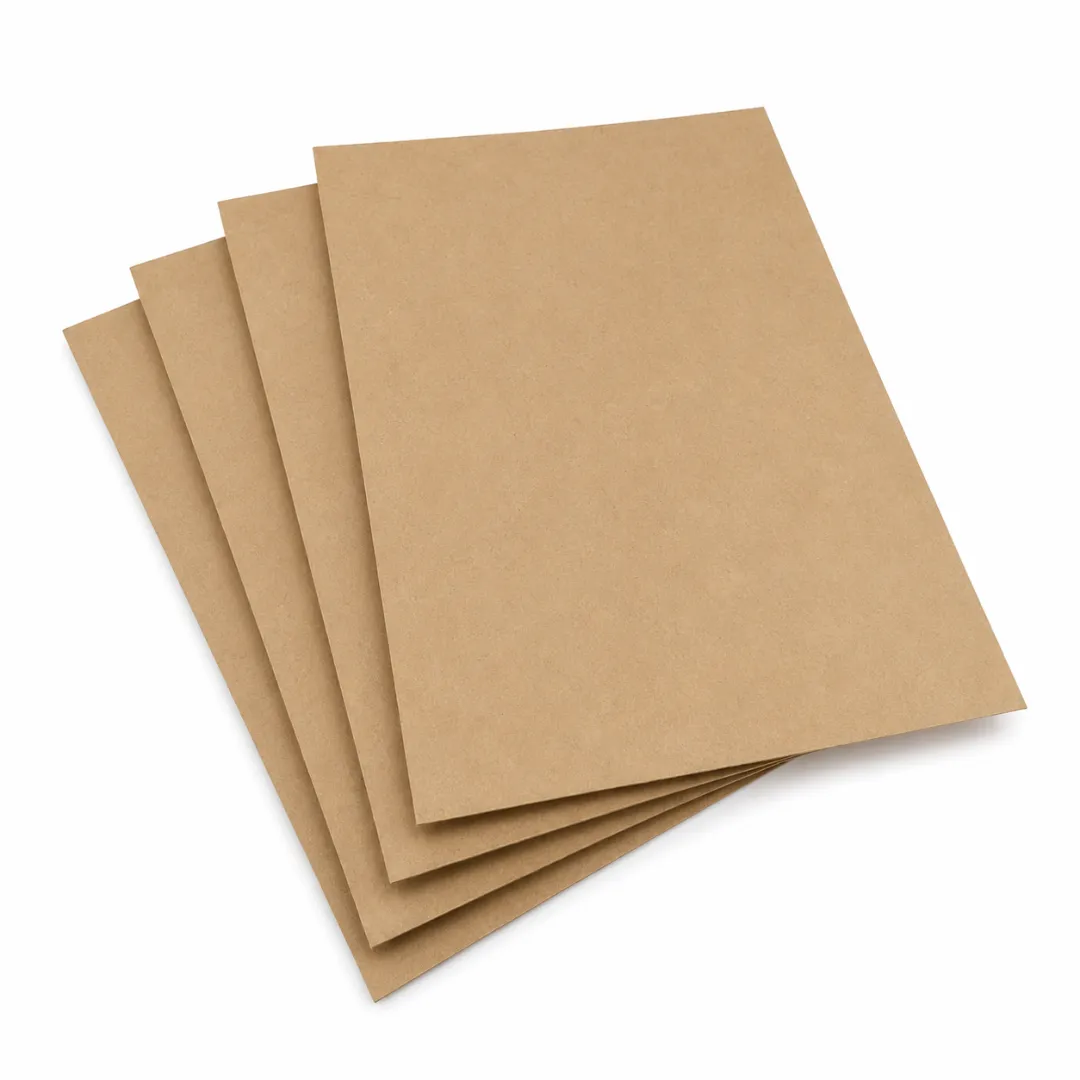
Kraft paper is a strong, durable and reliable material that is widely used across many different industries.
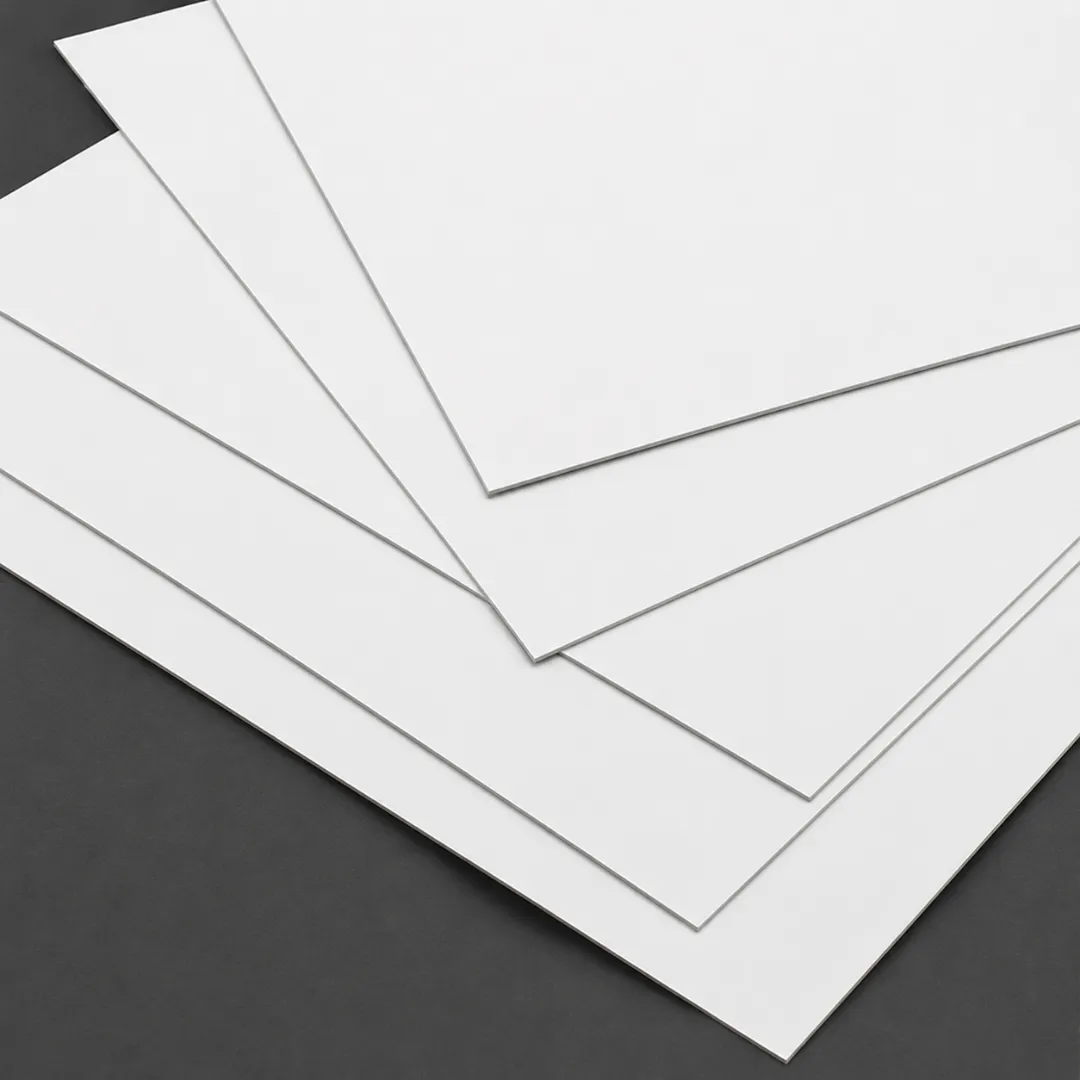
We use cardboard material with the least environmental impact and minimizes waste generation.
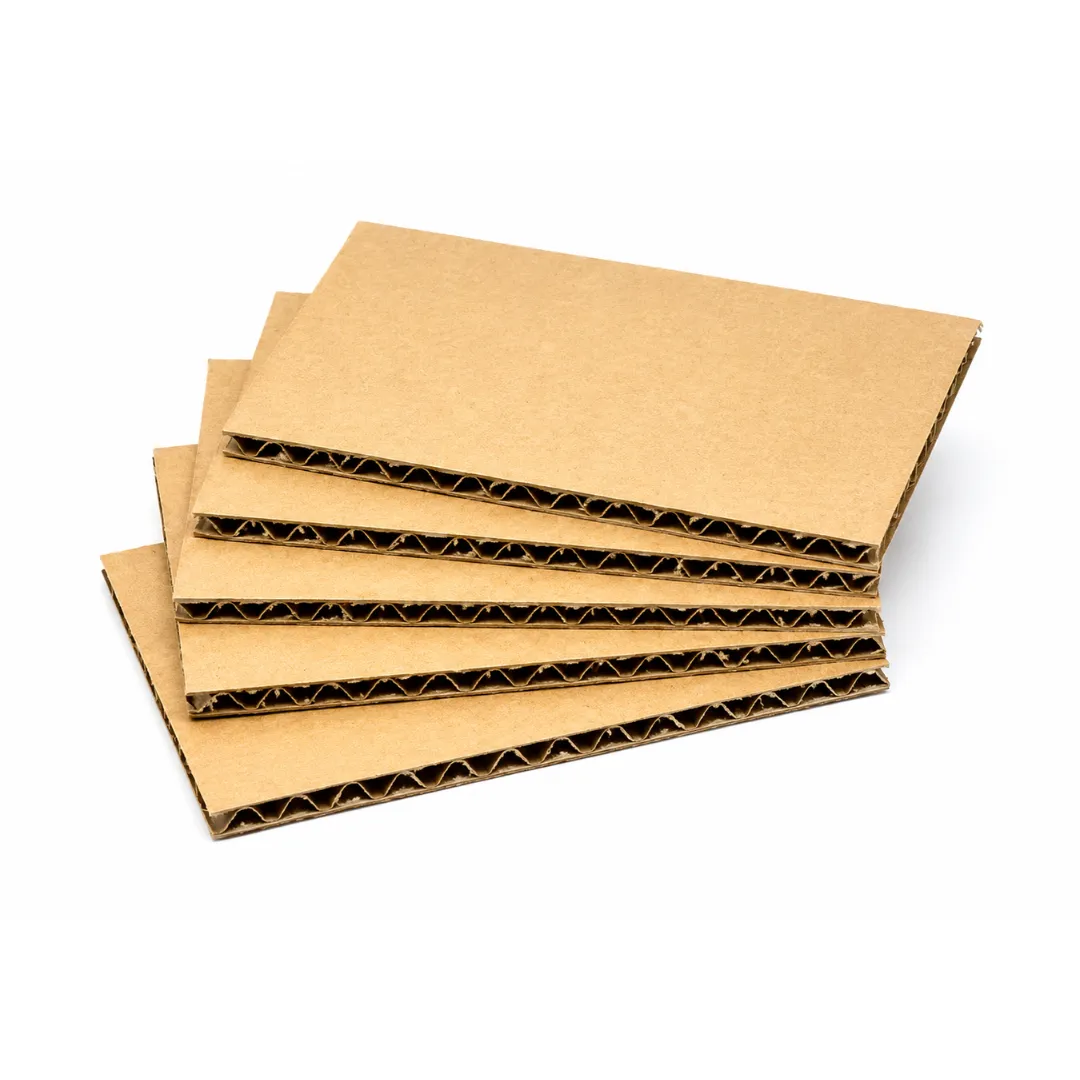
Corrugated material is easy to customize, cost effective and sustainable. It is also great for branding purposes.
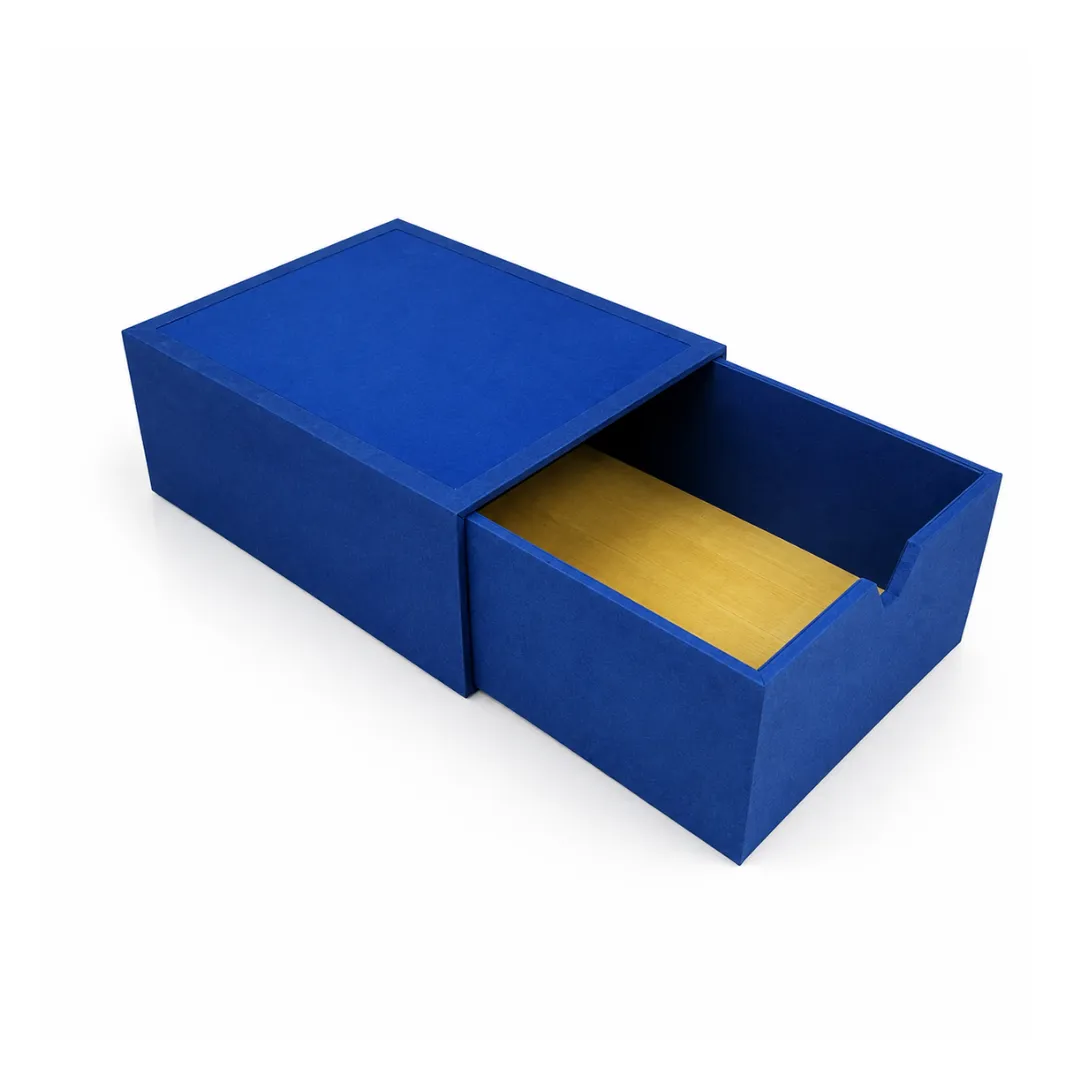
Rigid is highly protective, affordable and recyclable material. These boxes provide maximum protection.
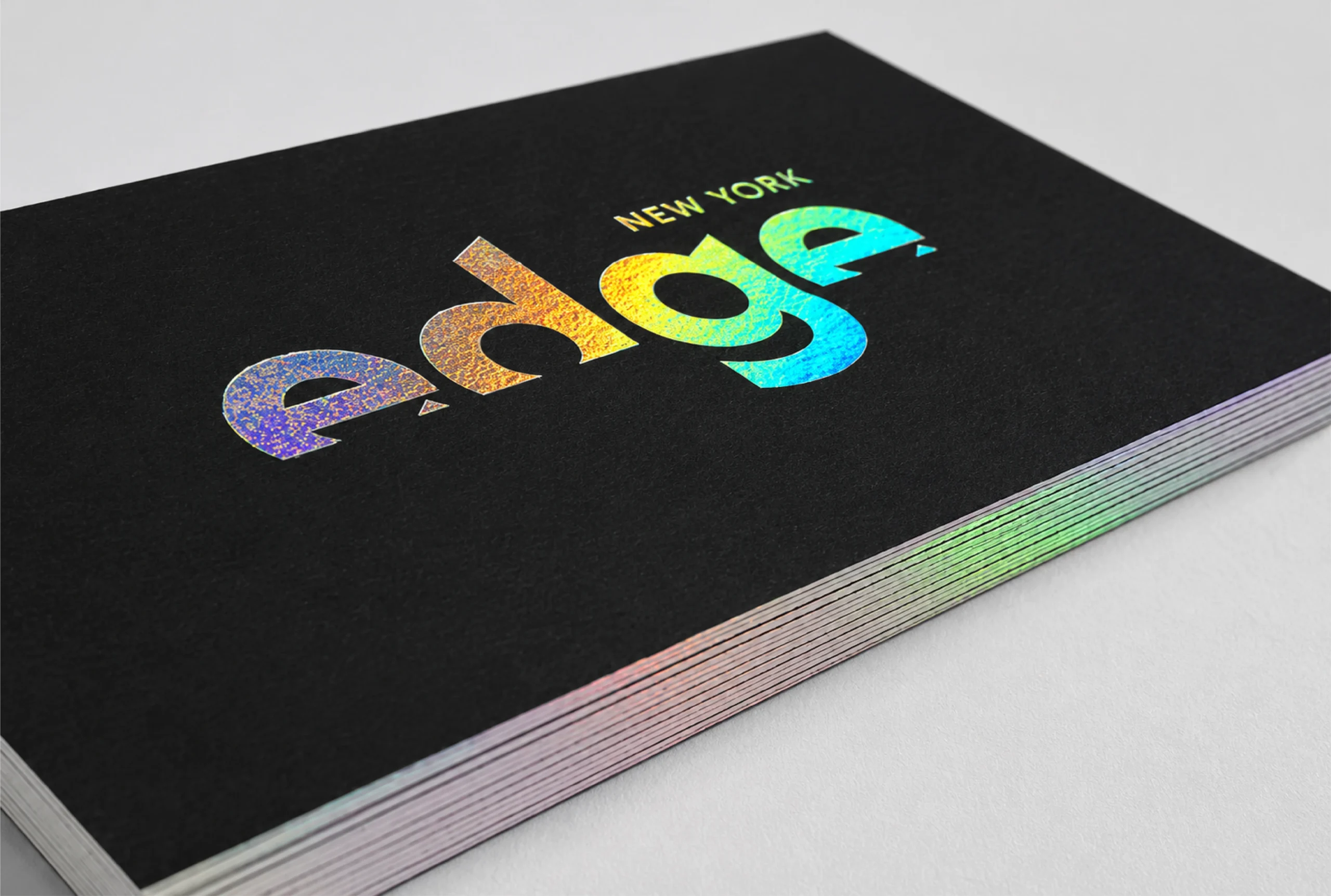
Holographic foil diffracts light and reveals the colors of the rainbow at various angles.
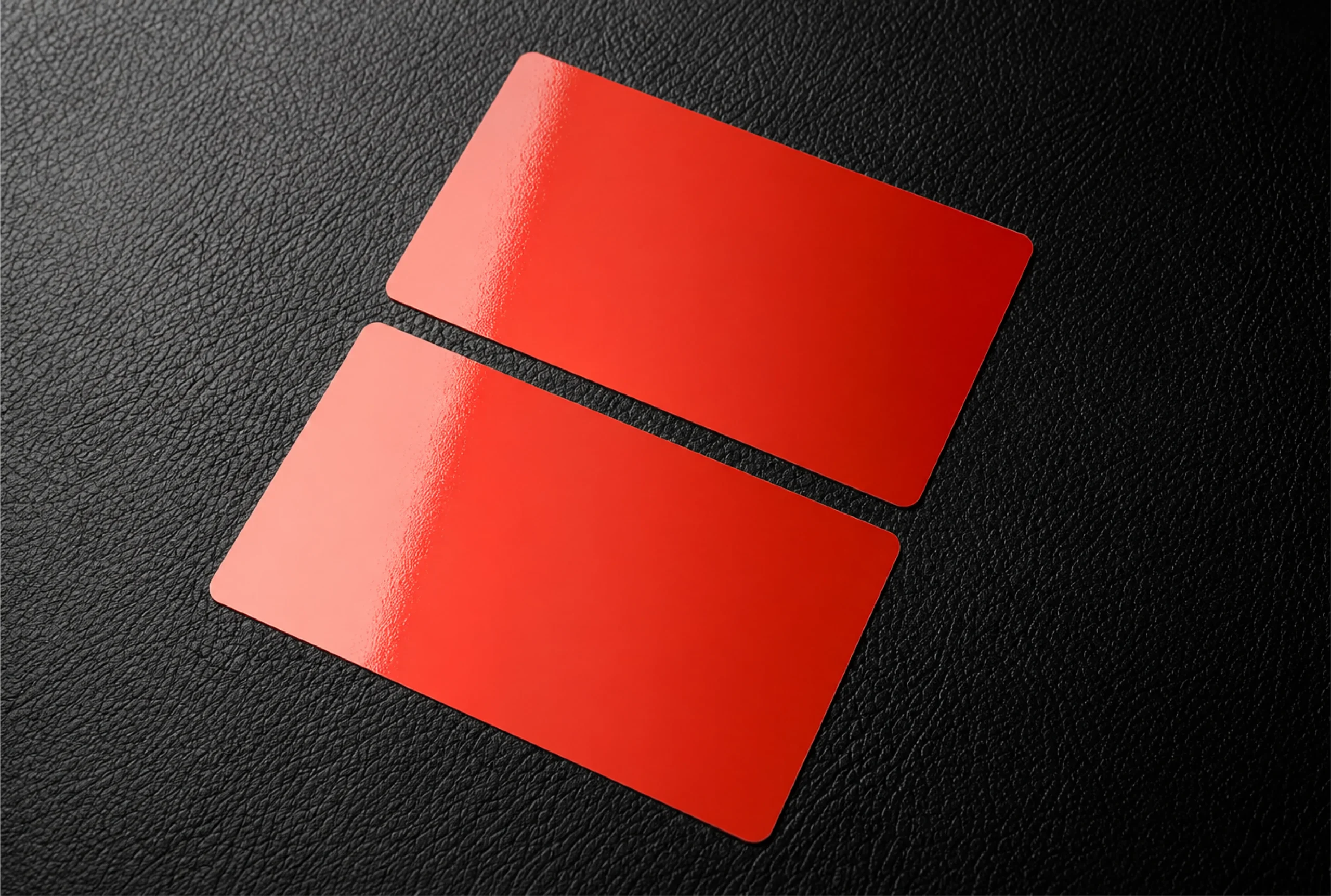
Our glossy finishing gives your packaging an extra layer of shine.
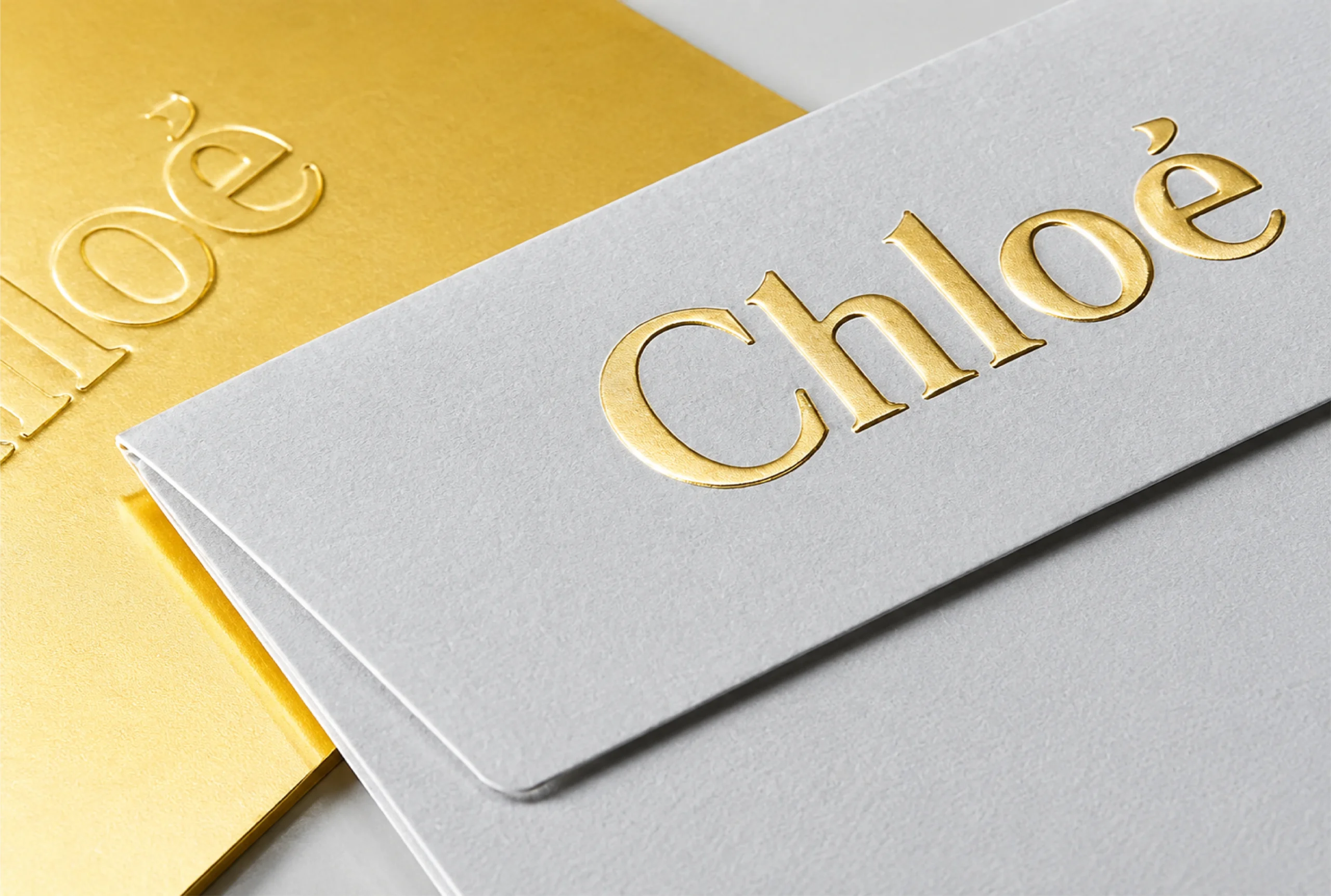
Decorate a wide range of your product packaging with our foil stamping.

With our embossing technique, we transfer the finest details of your product on packaging.
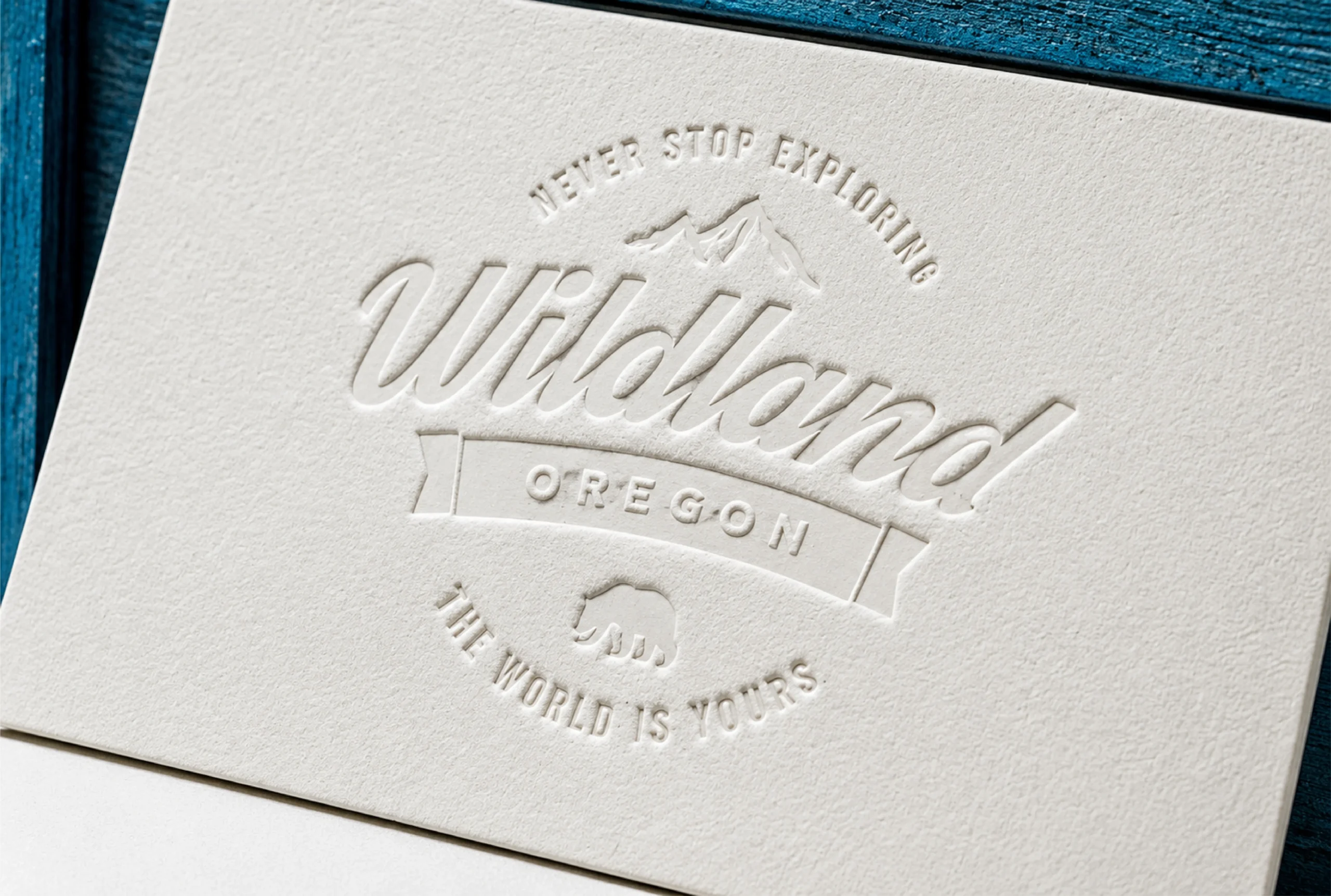
We use debossing technique to add unique graphics into your packaging.
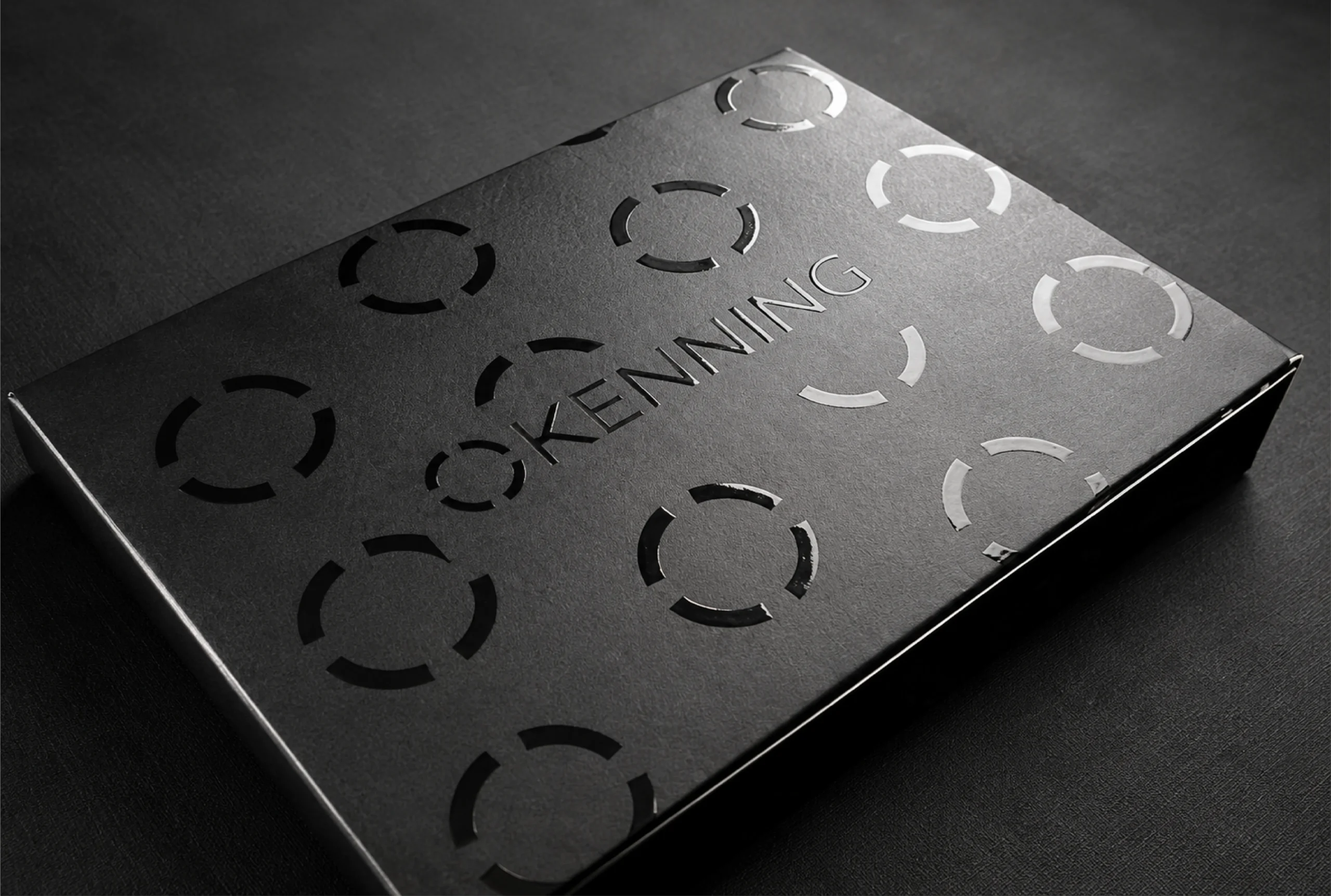
Our high-gloss UV coating gives light and shine to cure the printed material's varnish.
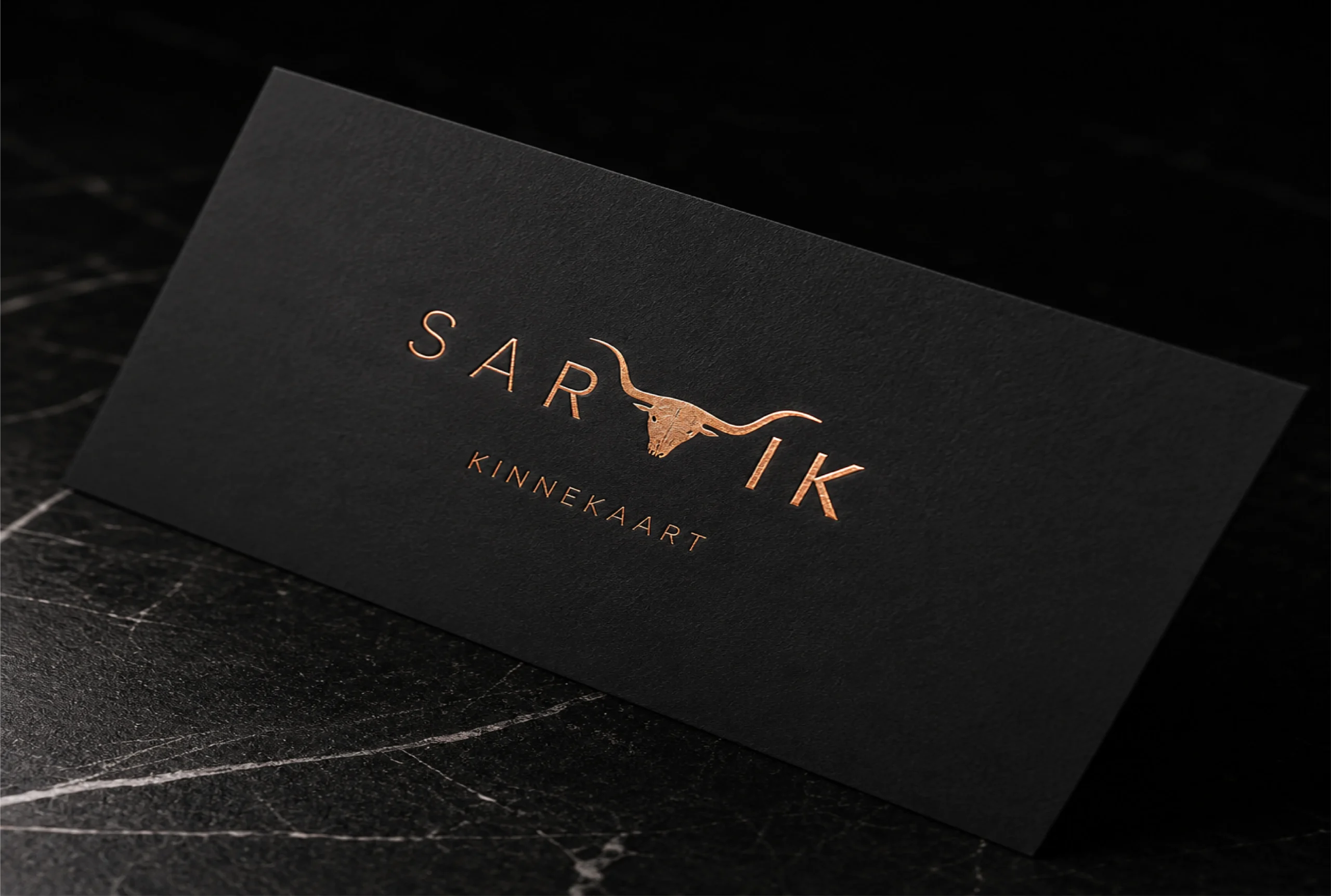
We add additional layer of protection with soft touch lamination from toner chipping.
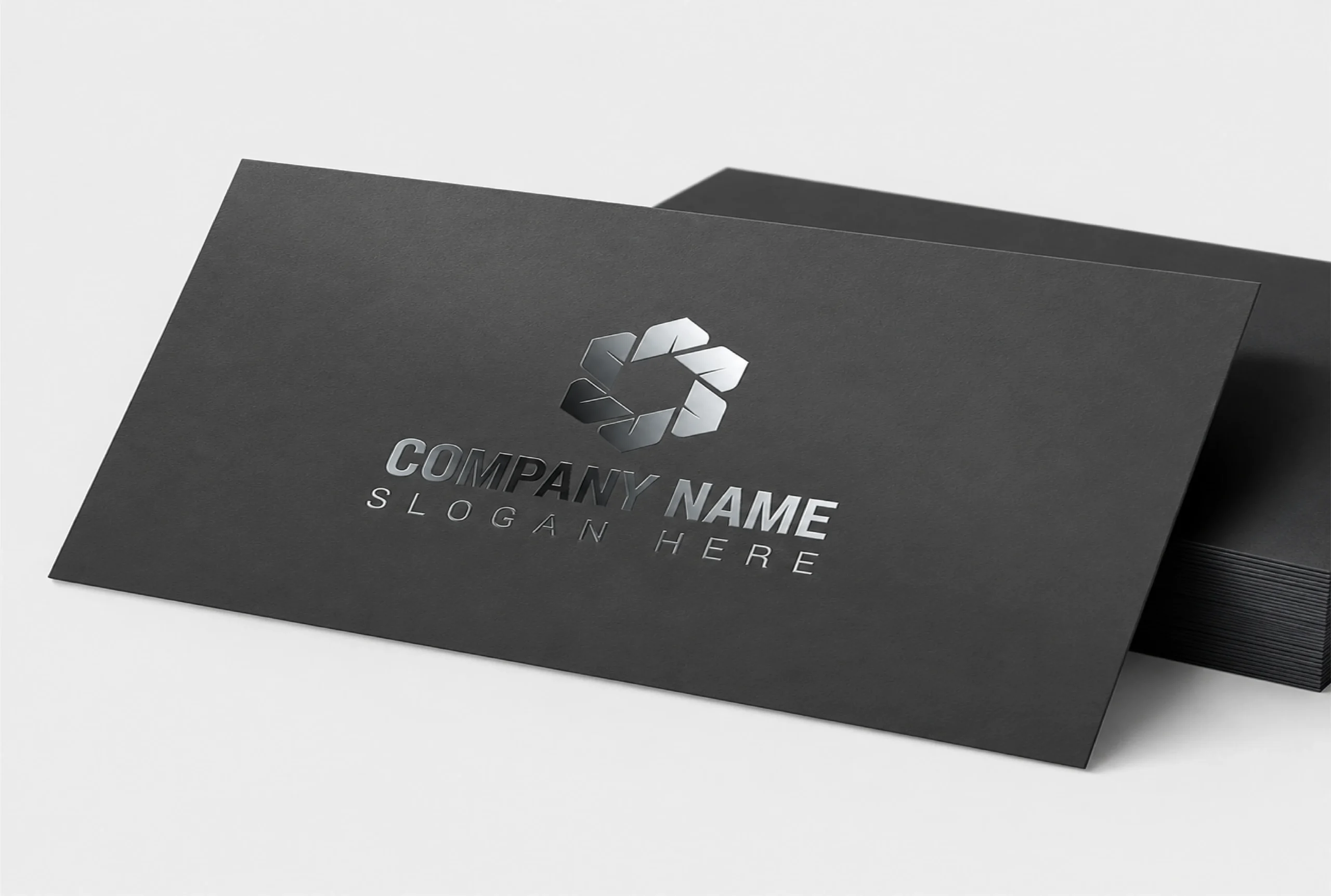
With our matte finish, fingerprints and smudges will now be less visible on the packaging.
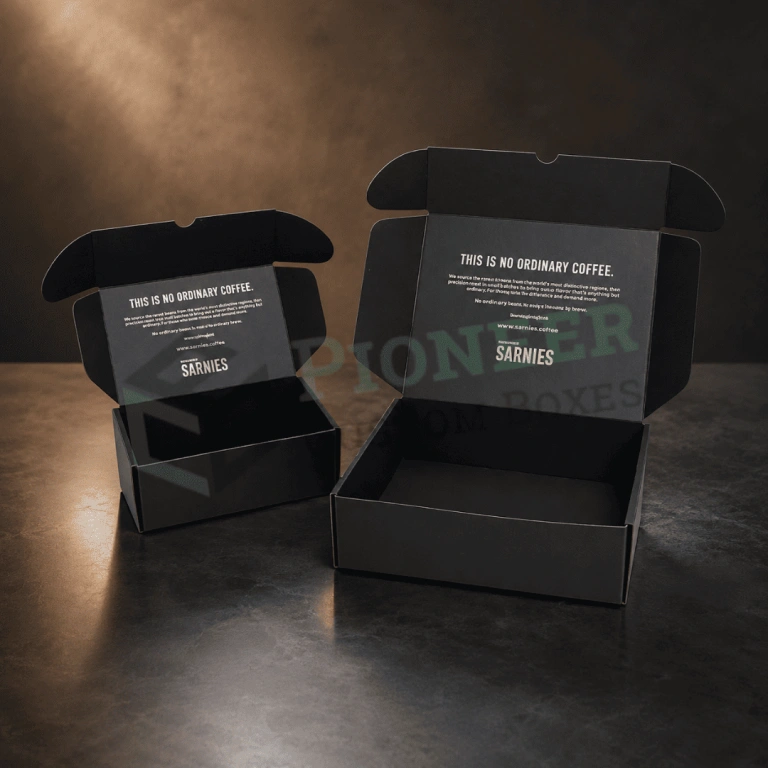
Custom Black Shipping Boxes from Pioneer Custom Boxes help ecommerce, subscription, gift, apparel, cosmetic, stationery, jewelry, candle, and retail brands ship products with stronger protection and a premium black presentation. Choose custom sizes, black mailer styles, corrugated board, E-flute, B-flute, inserts, inside printing, matte or gloss finishes, free design support, no MOQ, and free USA shipping.

Stop FBA damage and high dimensional weight charges. Our custom Amazon boxes are engineered for stacking, handling, and delivery. FBA compliant, logo-ready, and tested for real fulfillment center conditions. Get a free compliance check.
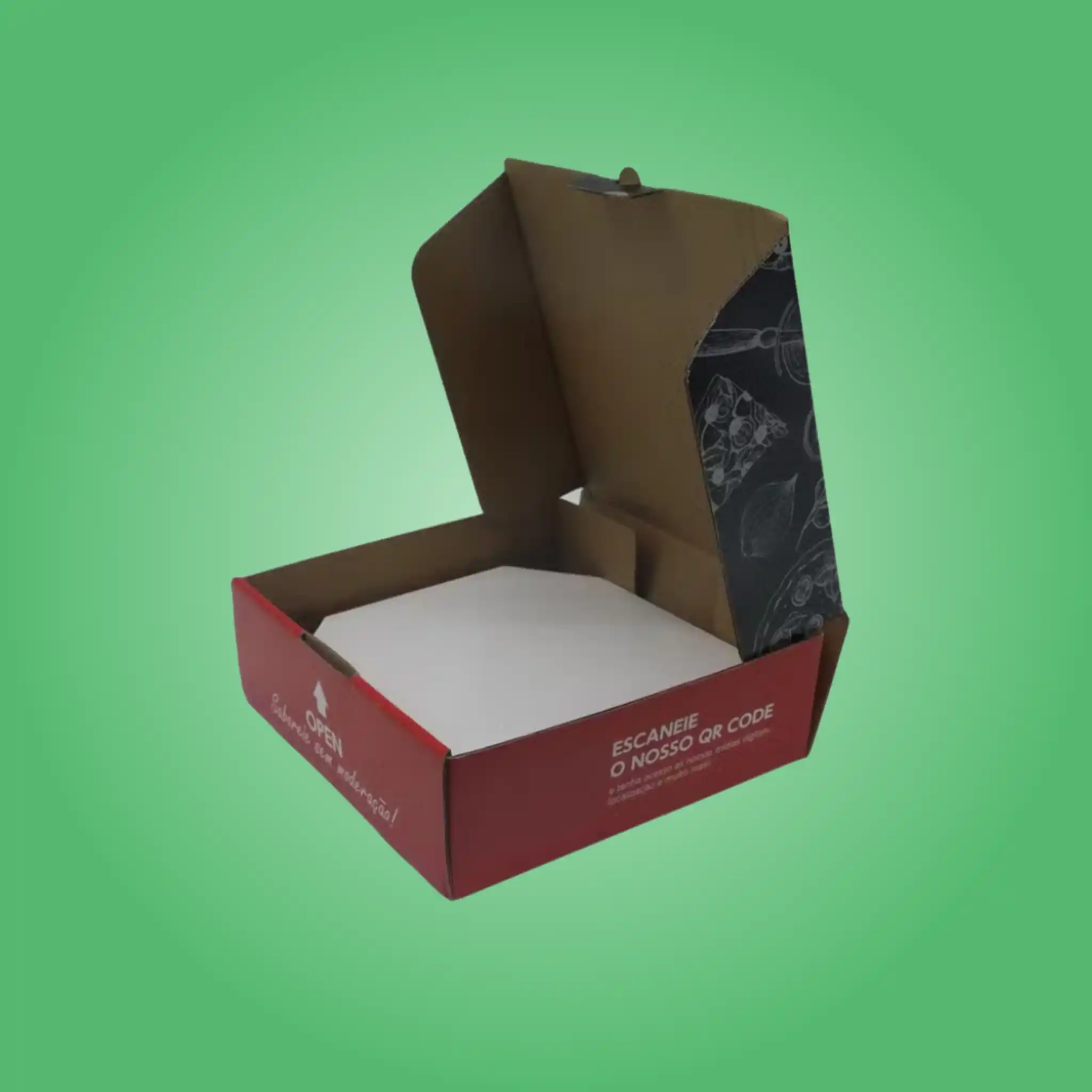
Custom takeout mailer boxes from Pioneer Custom Boxes help restaurants, ghost kitchens, fast casual chains, bakeries, caterers and meal kit brands deliver food in the condition it left the kitchen. Choose food grade SBS, kraft or corrugated with grease-resistant or barrier coatings, venting, dividers, handles, tamper seals, free design support, no MOQ and free USA shipping.
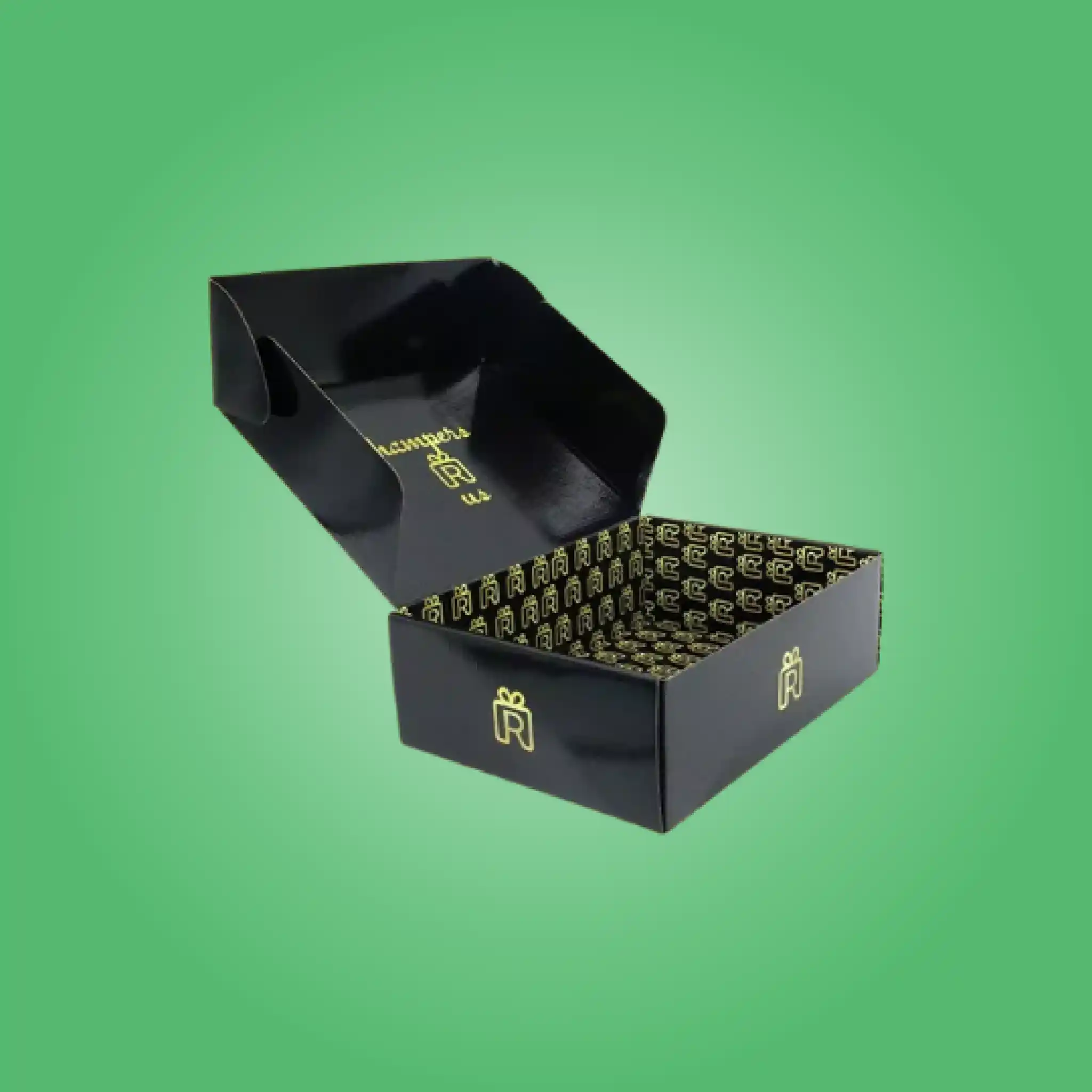
Custom shoulder mailer boxes from Pioneer Custom Boxes help jewelry, watch, fragrance, premium skincare, technology, spirits and collector brands present products in three-part rigid construction with a flush lid and a slow, controlled close. Choose 2mm to 3mm greyboard with printed, textured, soft touch or leatherette wraps, flocked cavities, molded cradles, foil, blind debossing, free design support, no MOQ and free USA shipping.