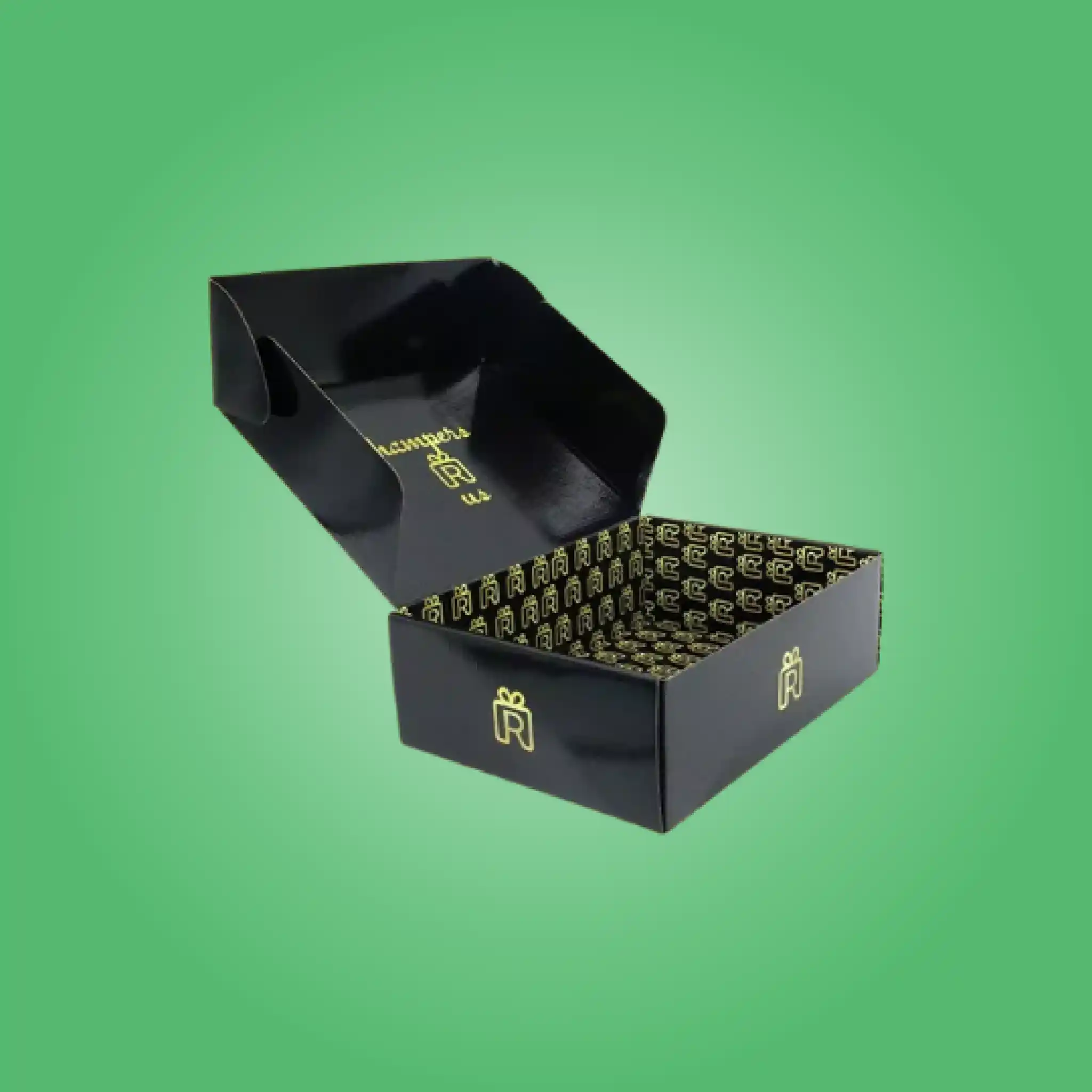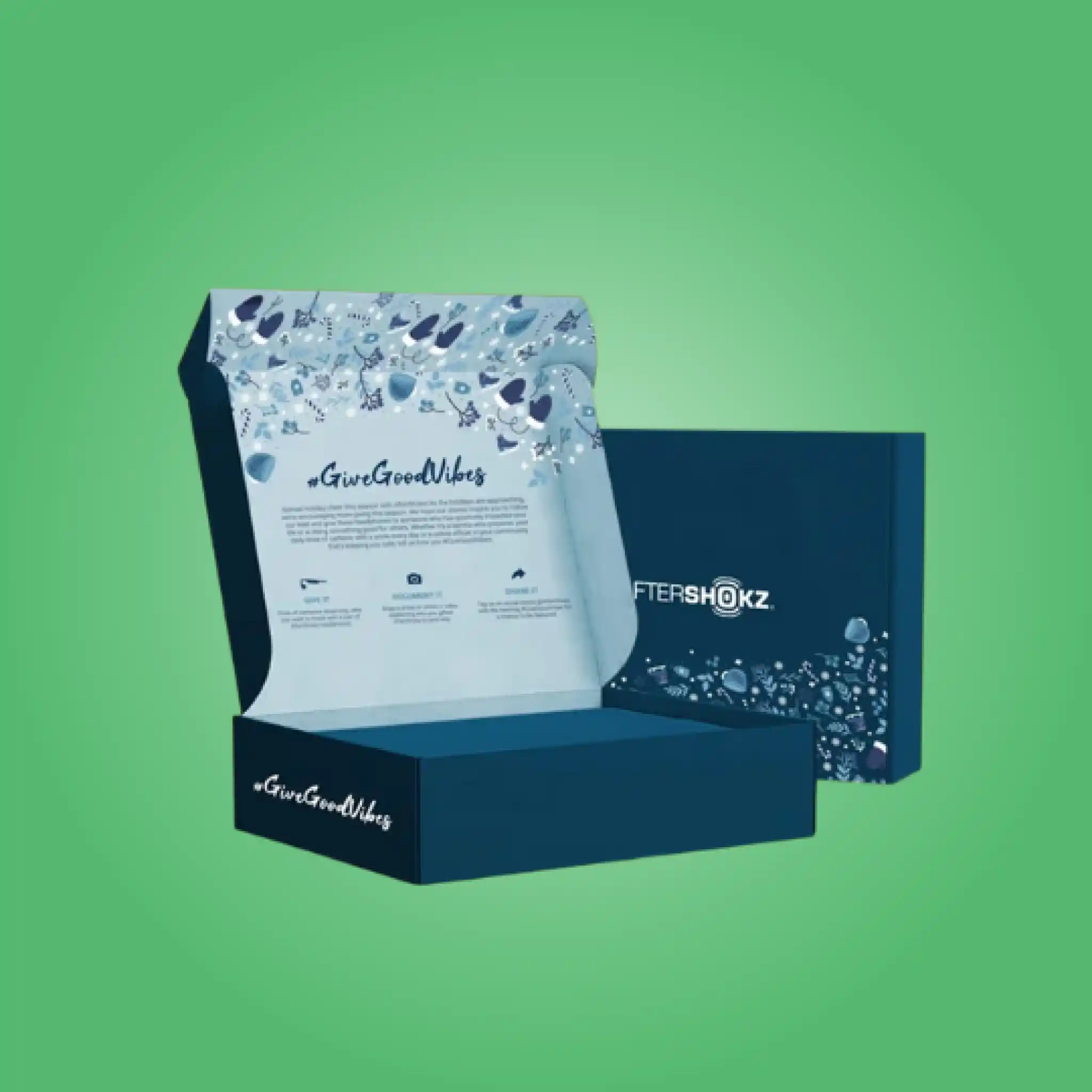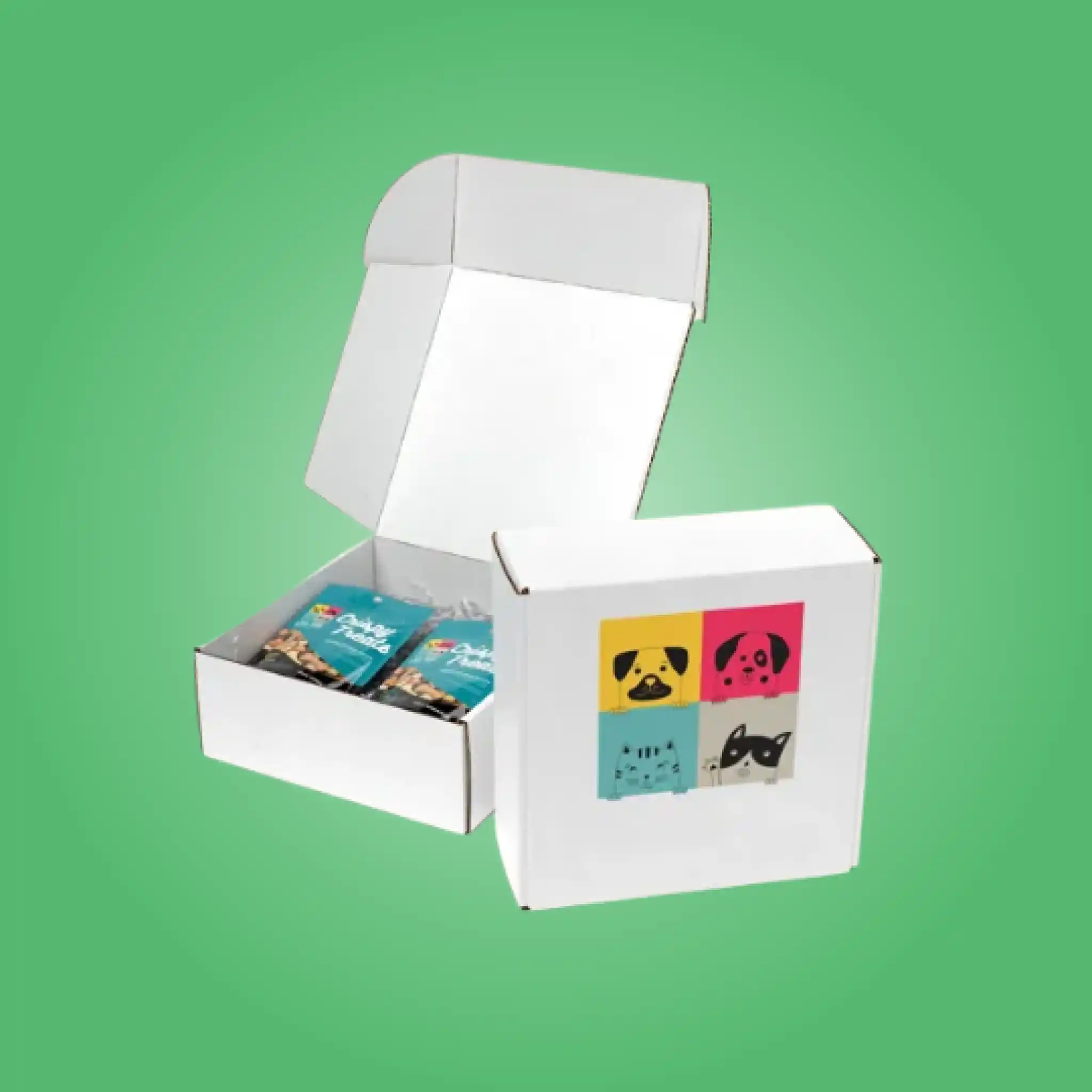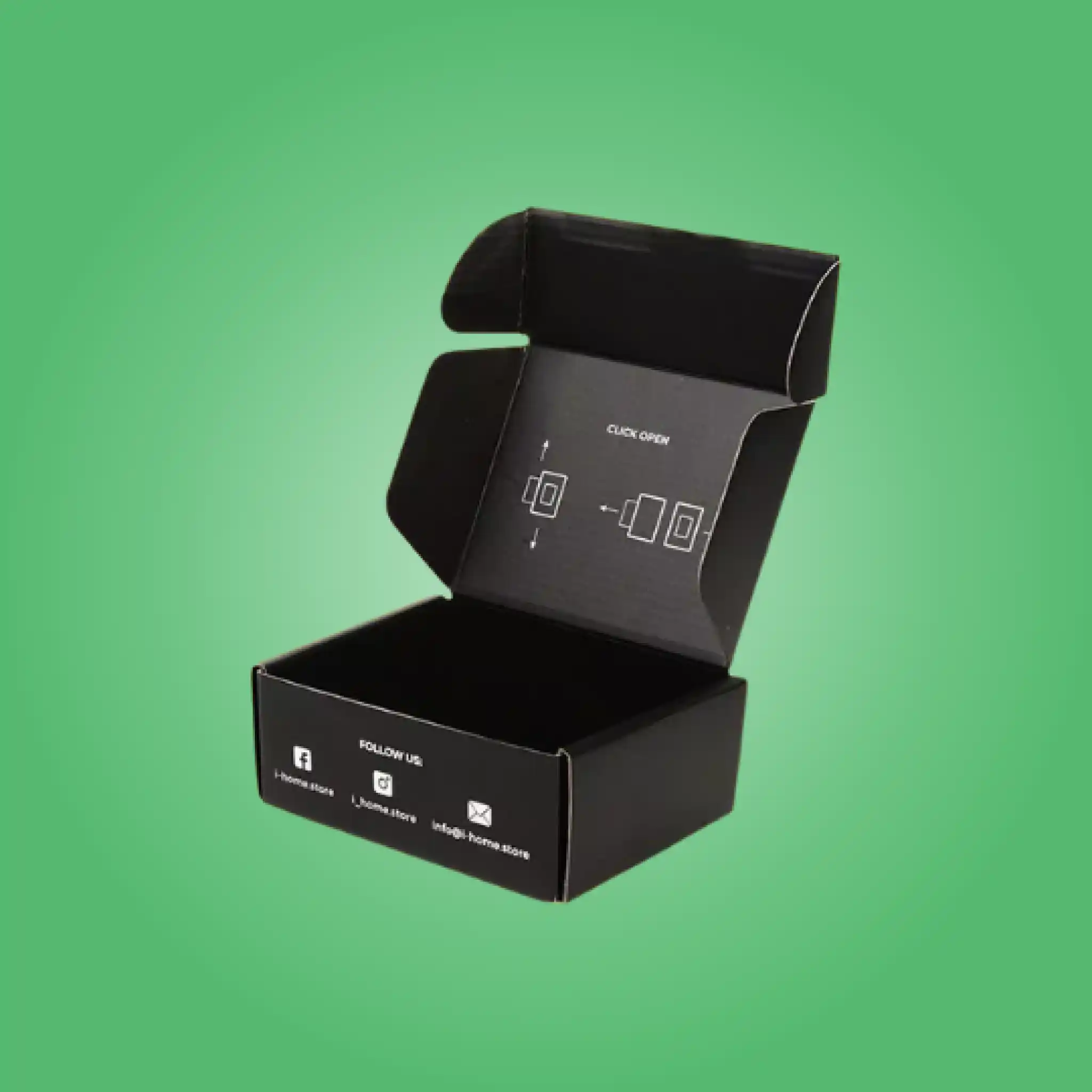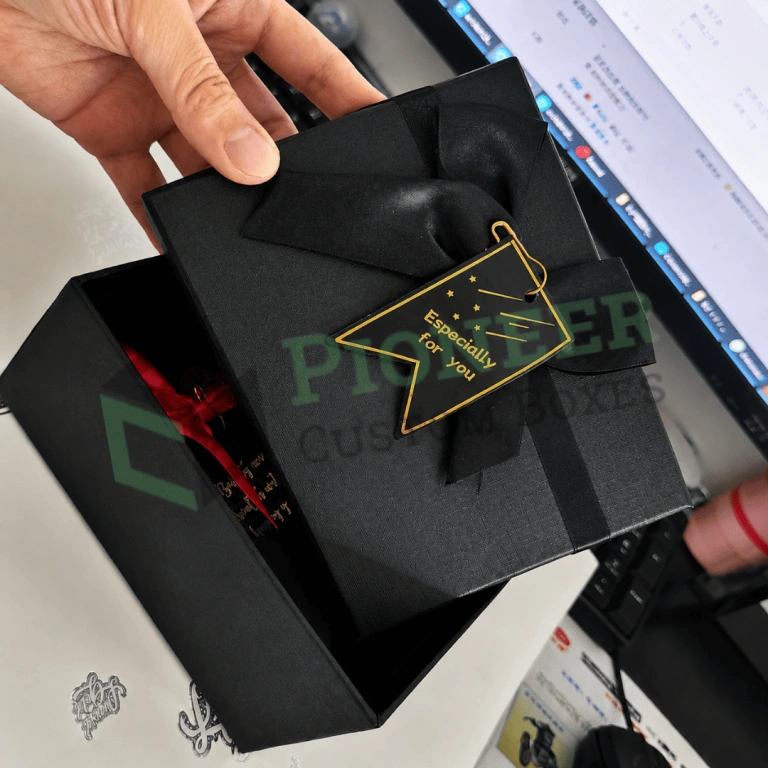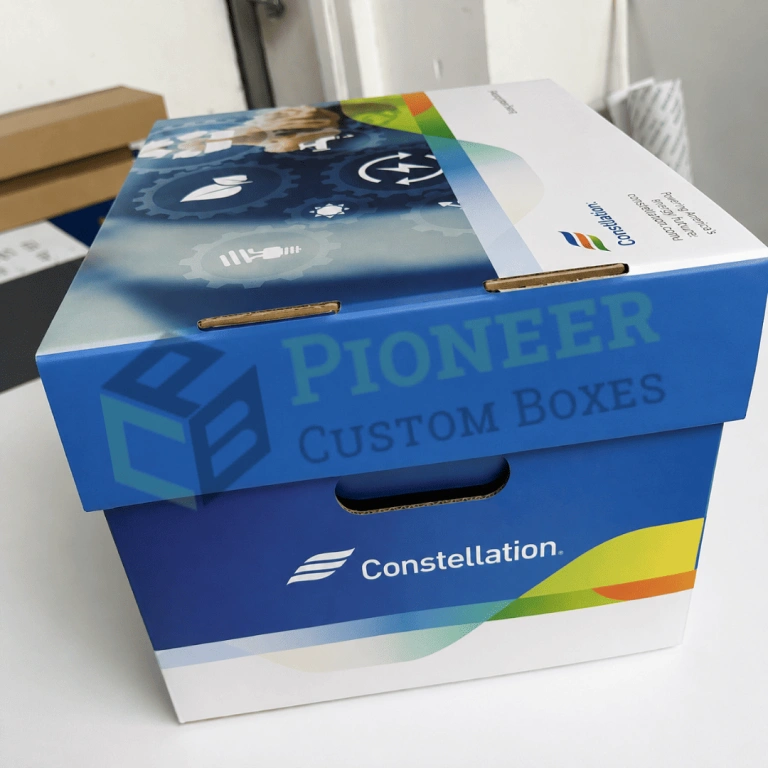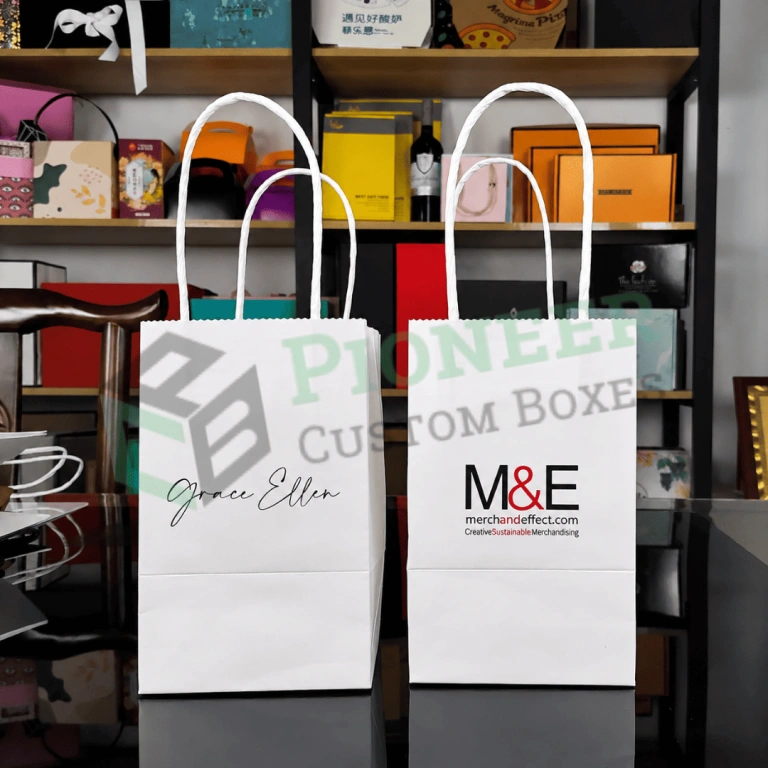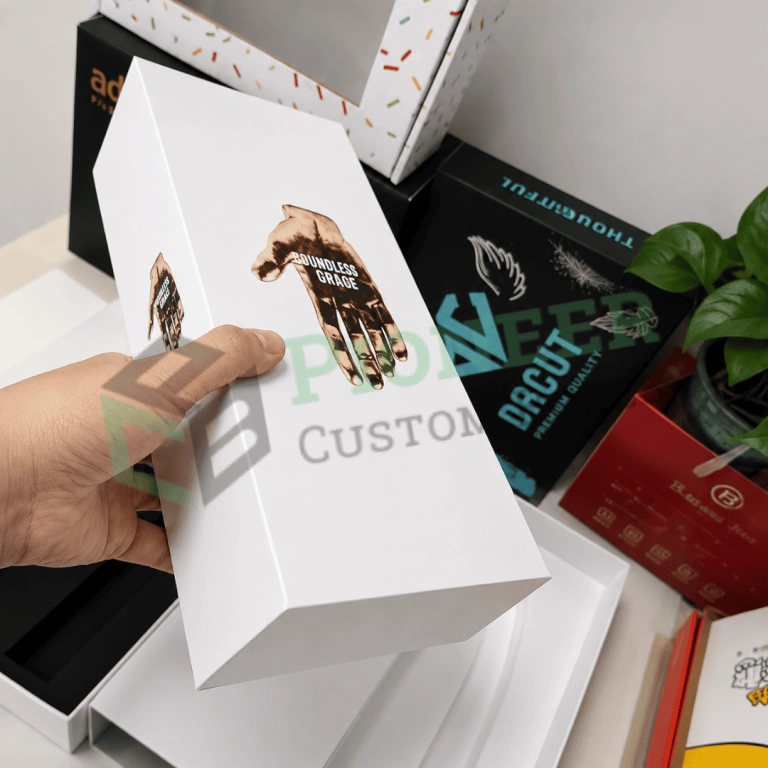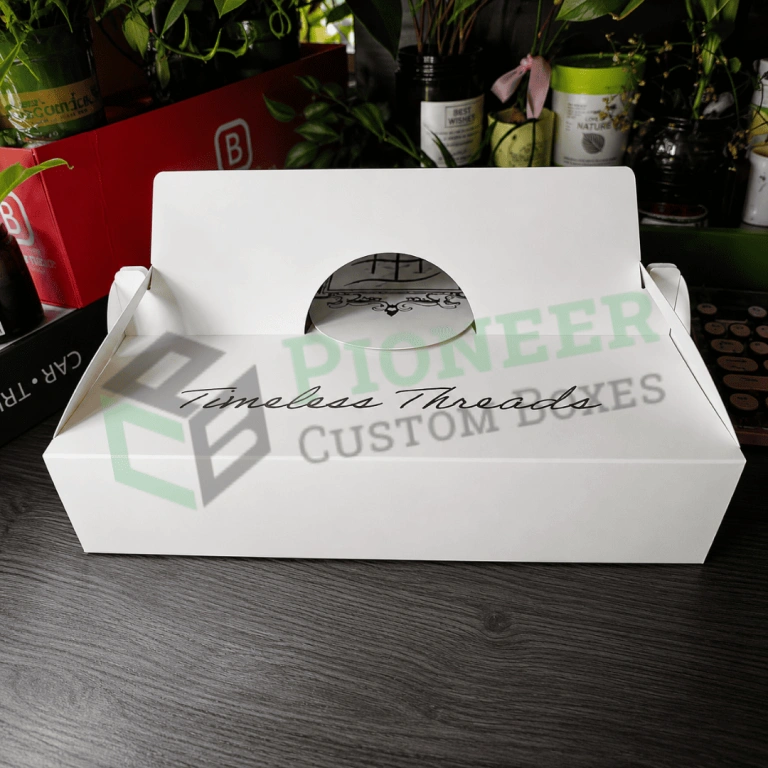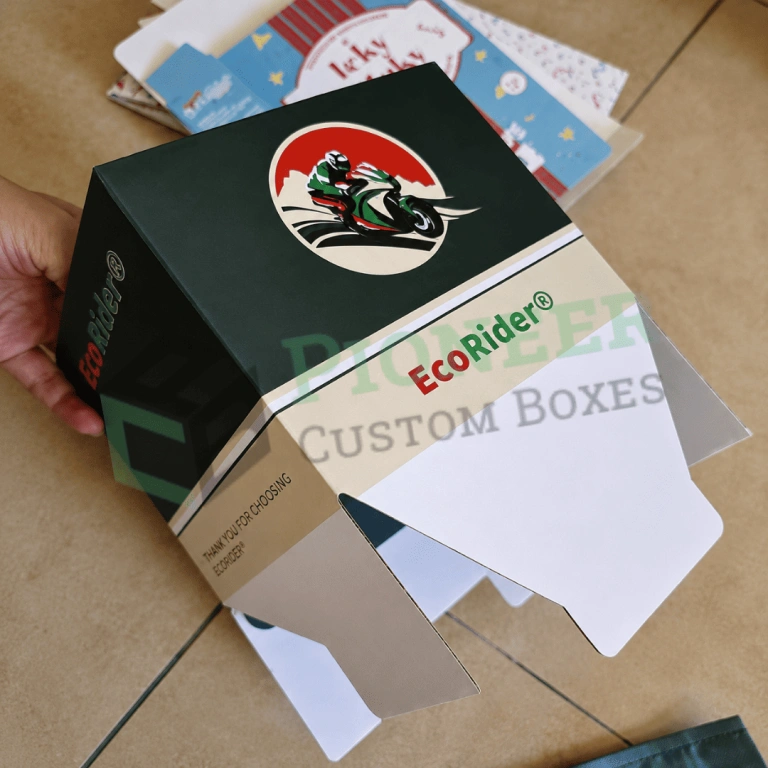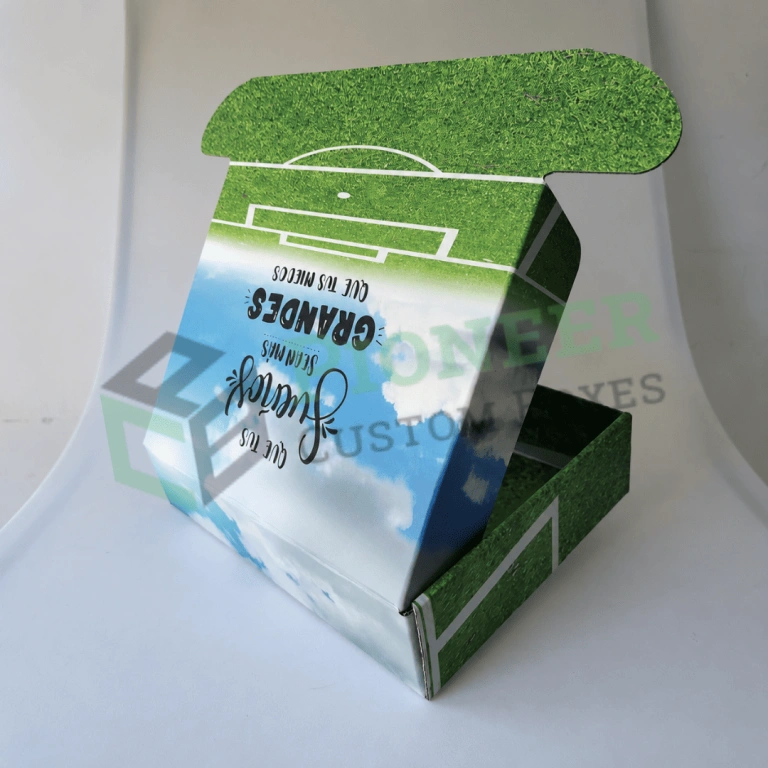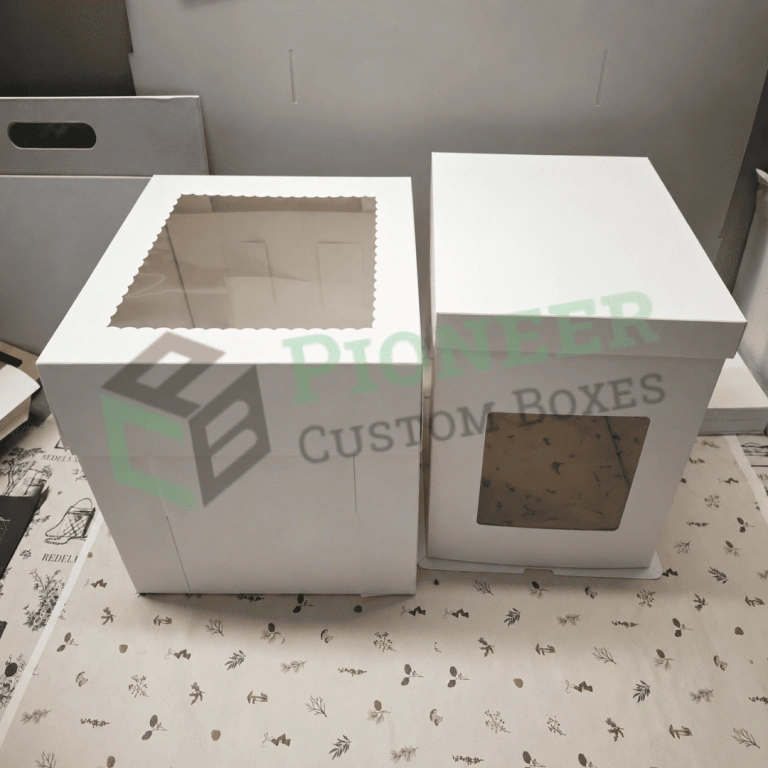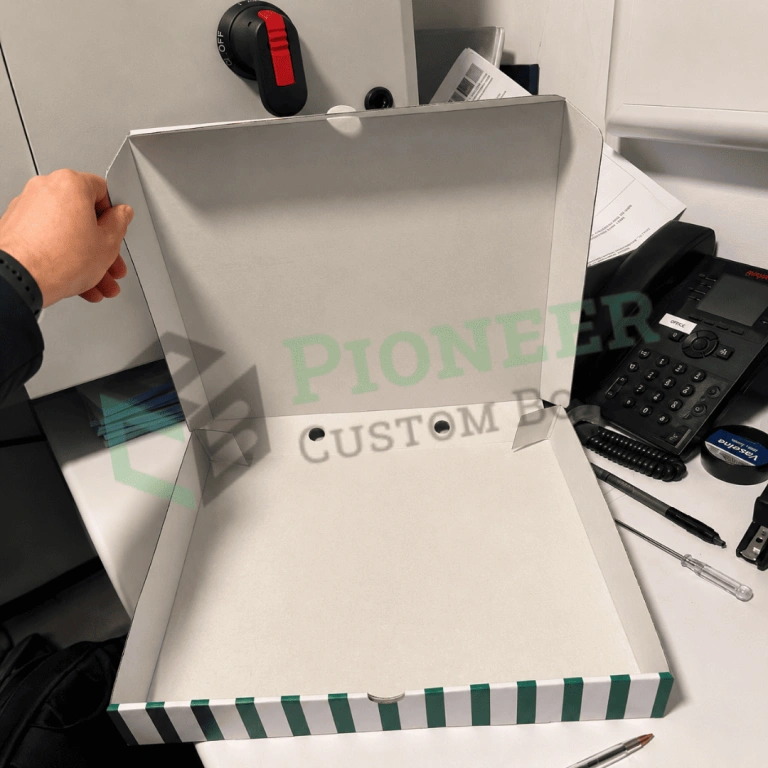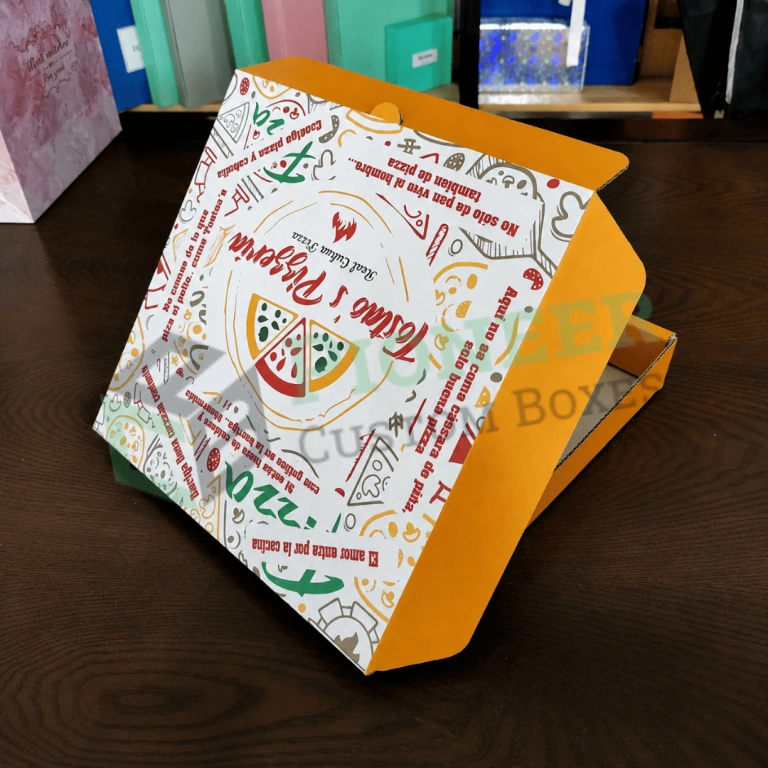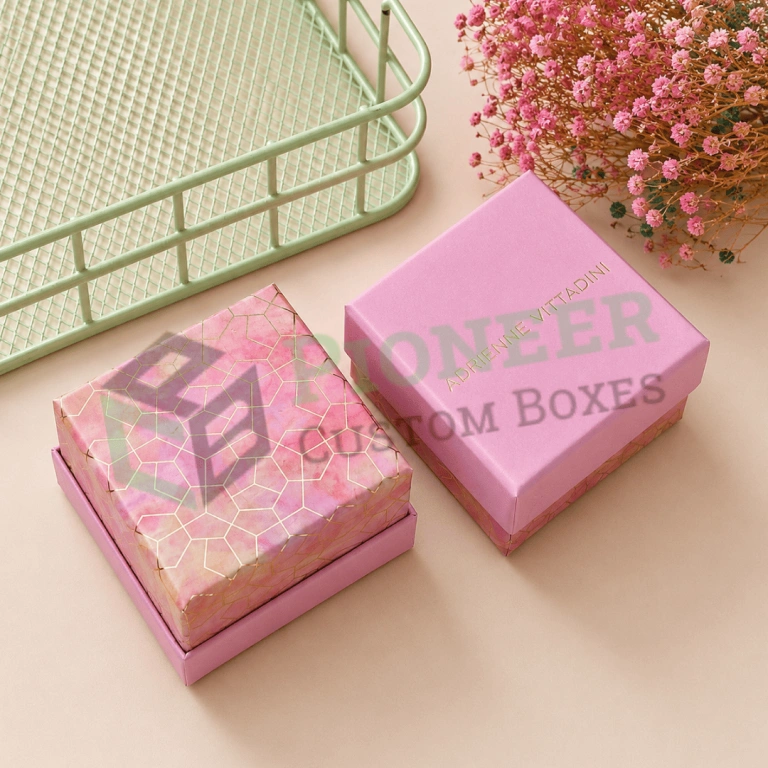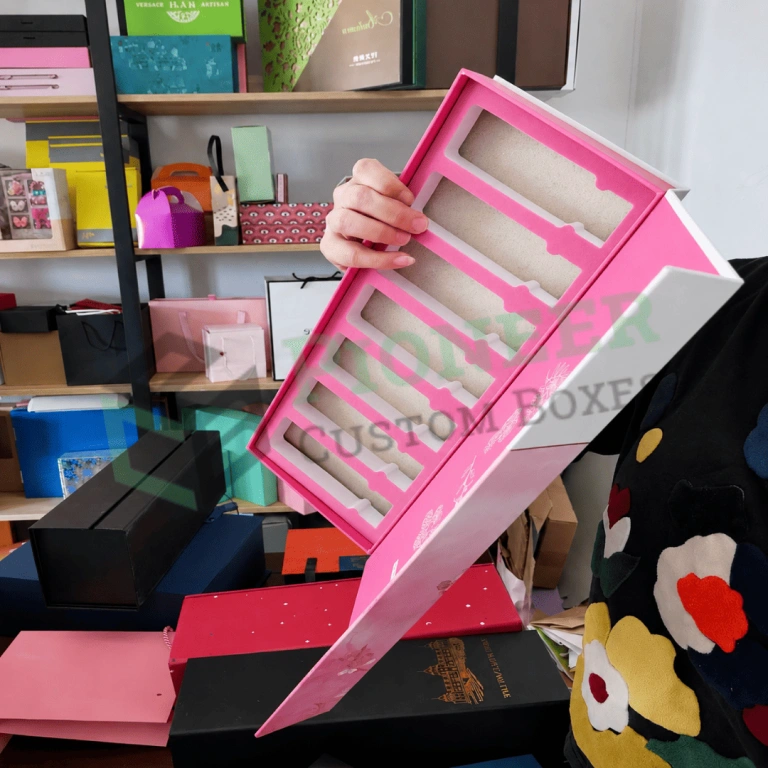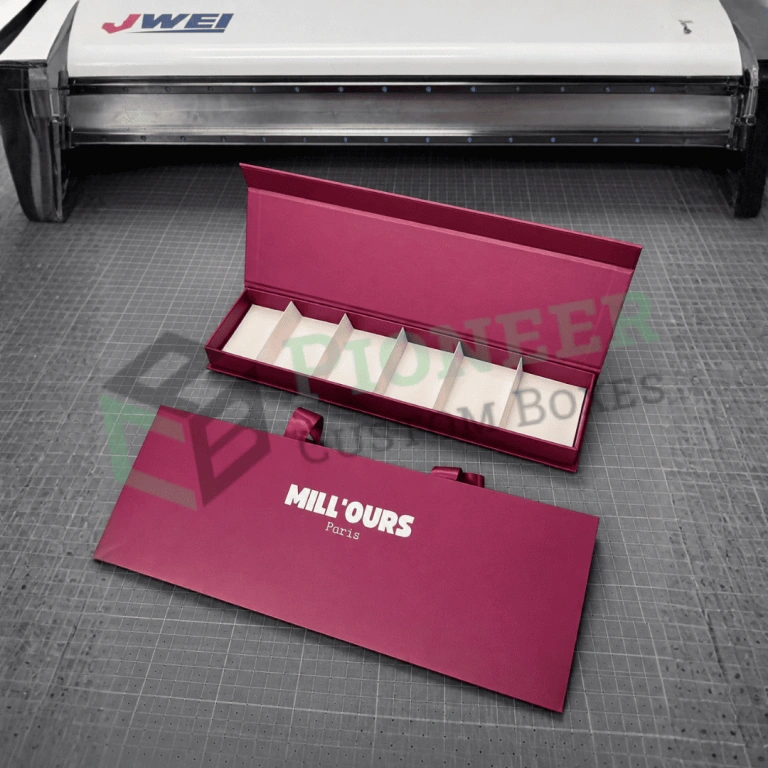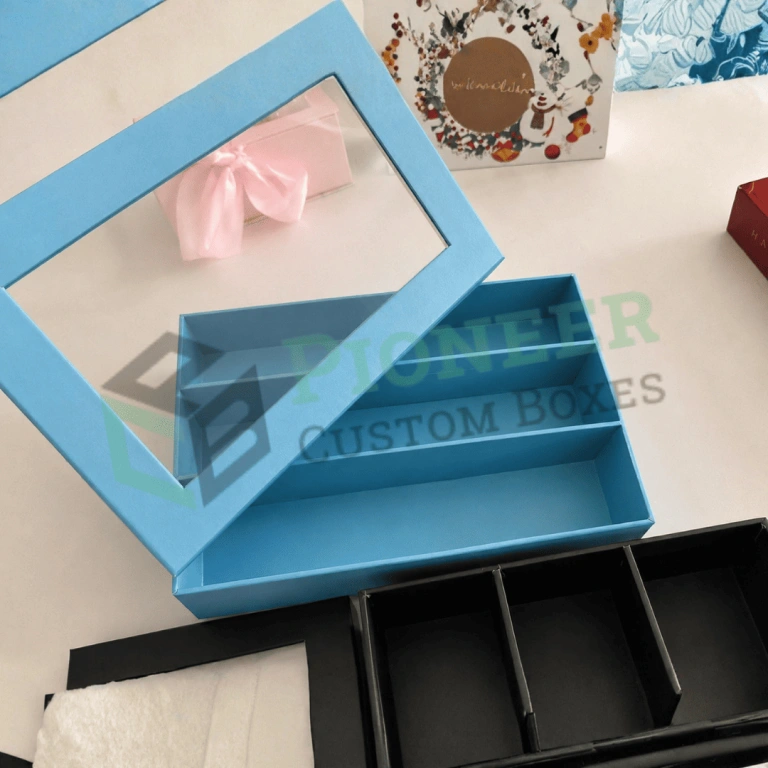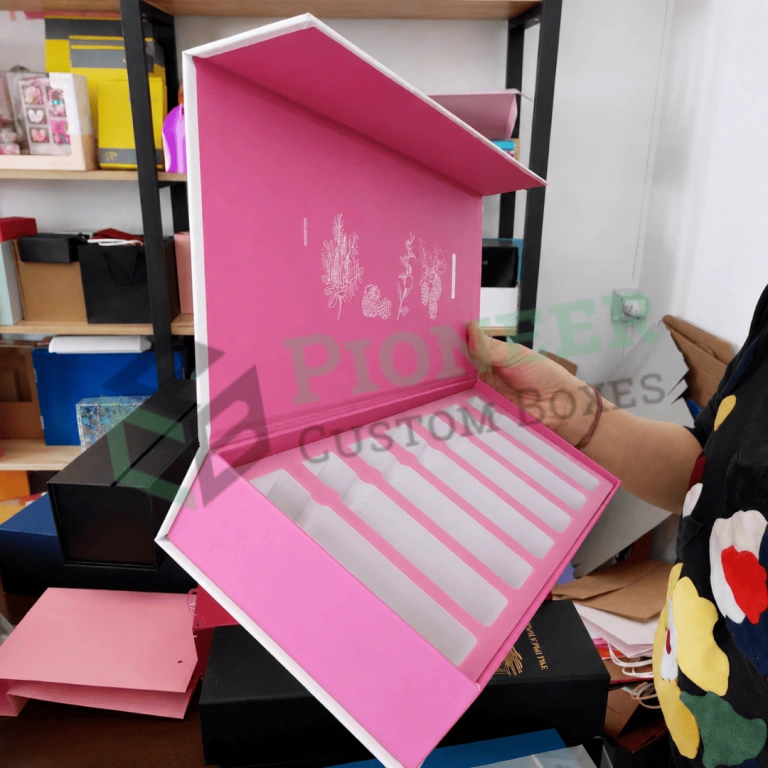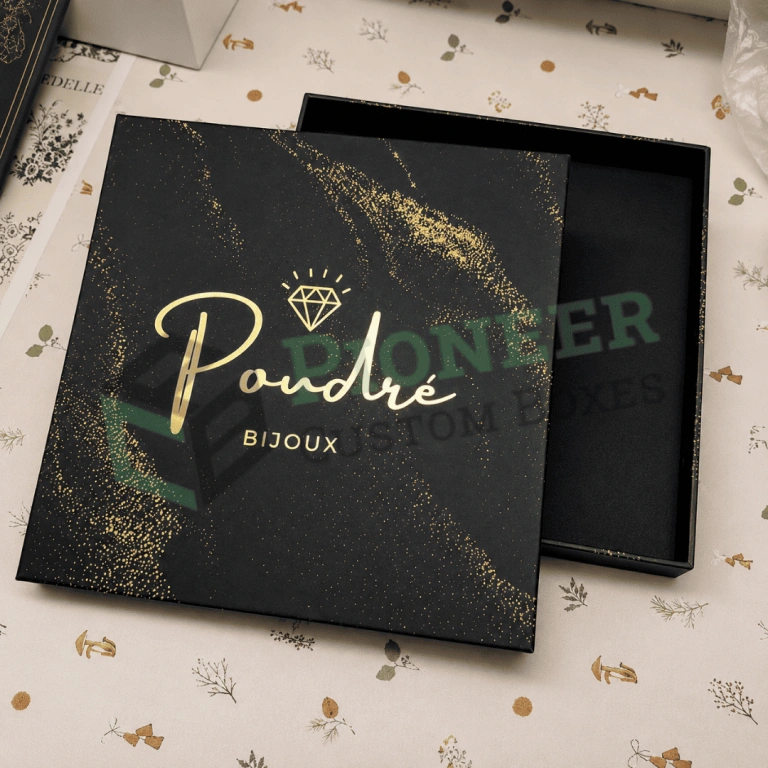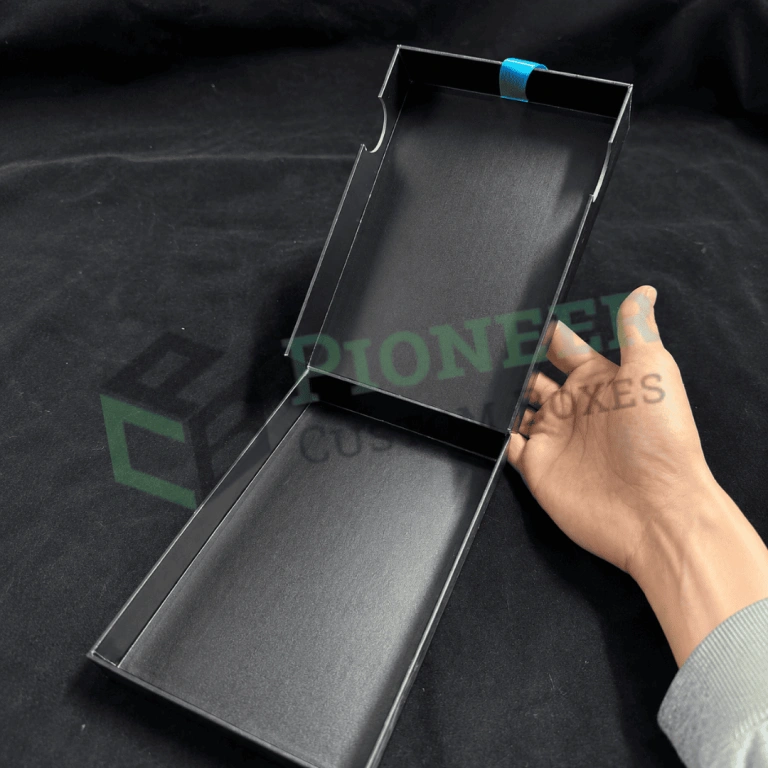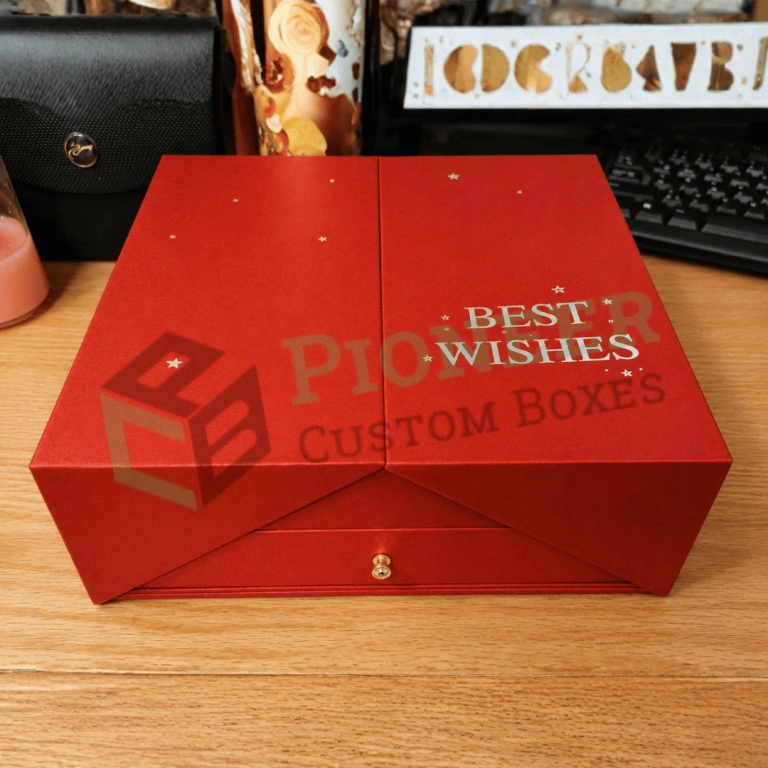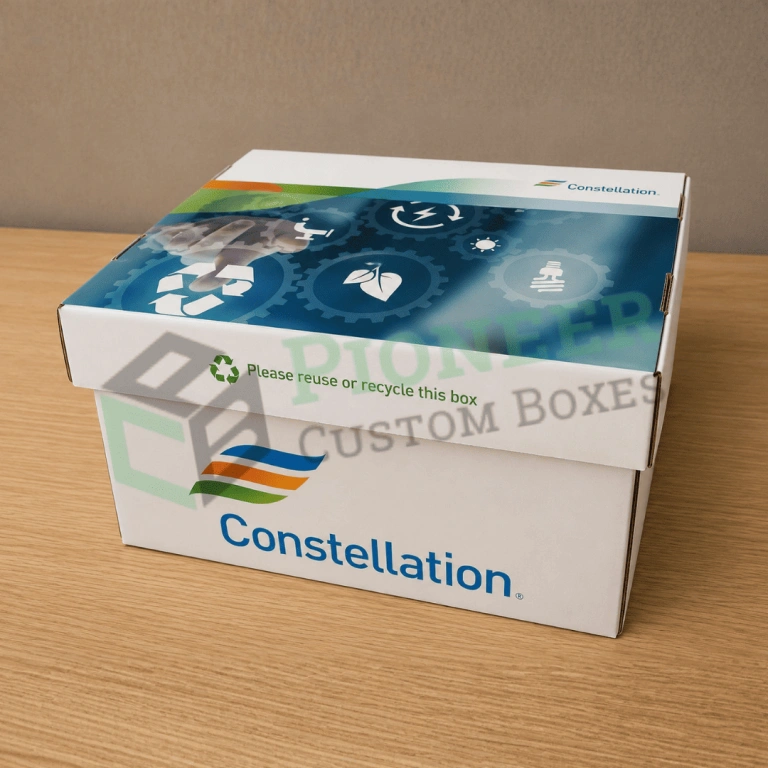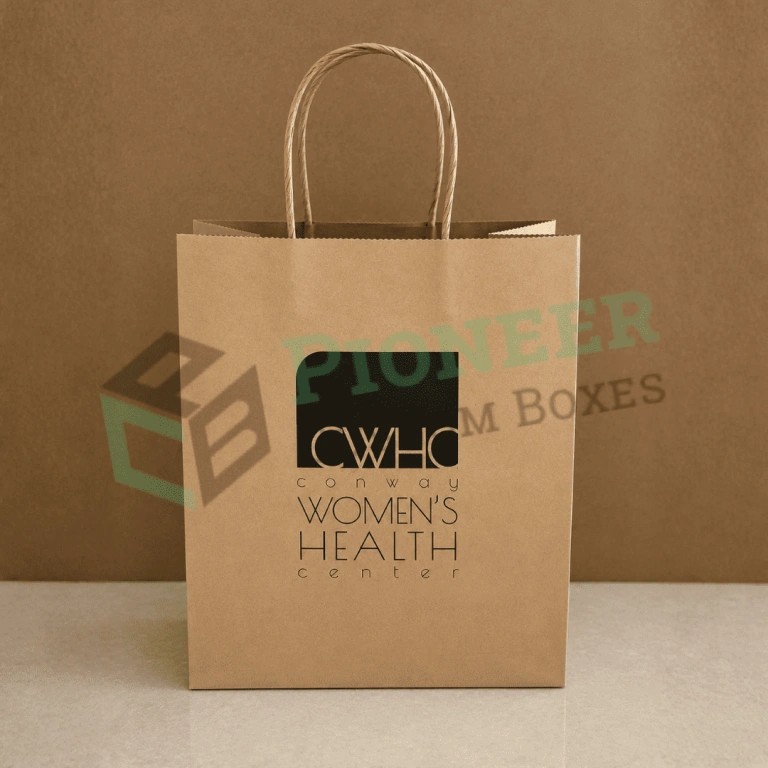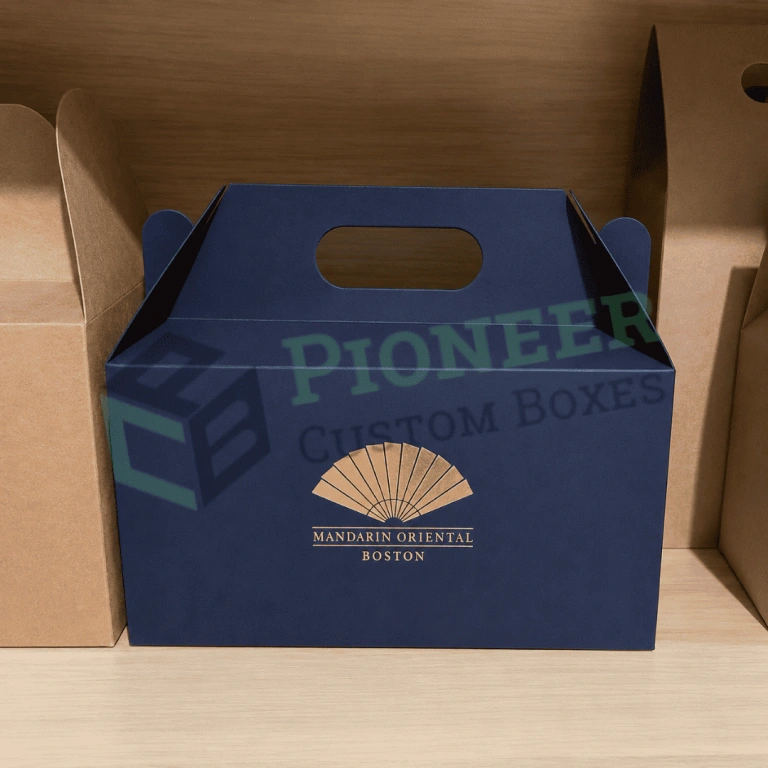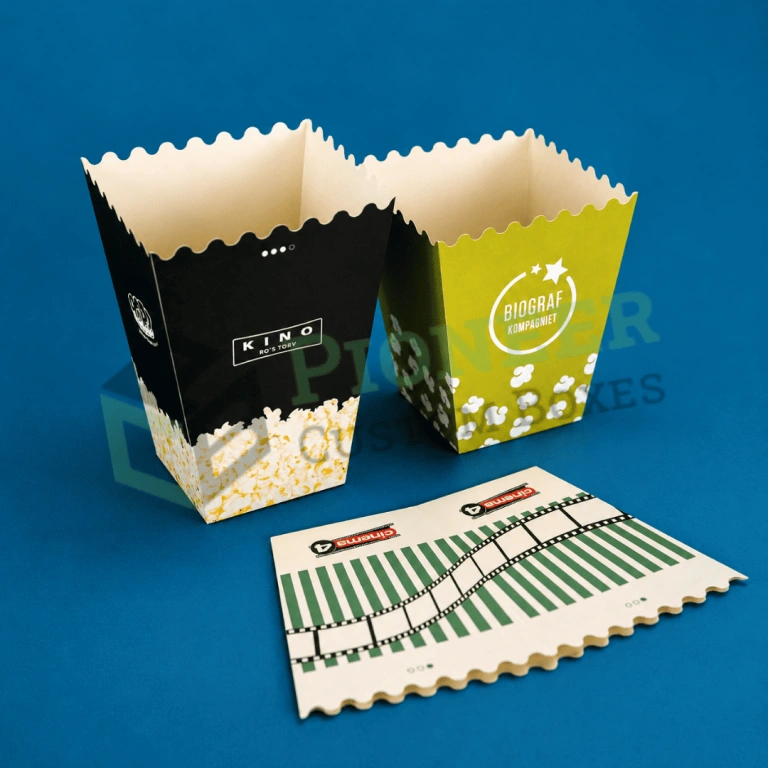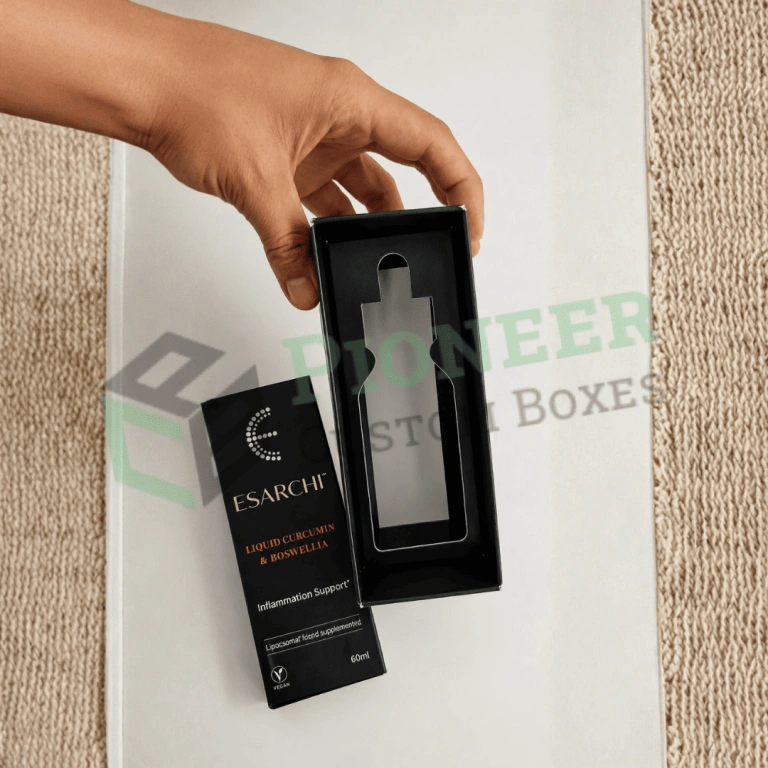
Custom shoulder mailer boxes from Pioneer Custom Boxes help jewelry, watch, fragrance, premium skincare, technology, spirits and collector brands present products in three-part rigid construction with a flush lid and a slow, controlled close. Choose 2mm to 3mm greyboard with printed, textured, soft touch or leatherette wraps, flocked cavities, molded cradles, foil, blind debossing, free design support, no MOQ and free USA shipping.
A shoulder box is built from three parts rather than two. An outer base, an inner base that sits inside it and rises slightly above the rim, and a lid that closes down against that raised inner edge. The raised edge is the shoulder, and it is what gives the format its name and its behavior.
What the shoulder produces is a flush profile and a controlled close. The lid does not slide loosely over the outside of the base, it seats against the shoulder with a precise fit, and air escaping from inside slows the final part of the movement. That slow, deliberate close is one of the most recognizable luxury packaging cues there is.
It also produces a clean exterior line. Because the lid meets the base edge to edge rather than overlapping it, the finished box reads as a single object with a seam rather than a container with a cap. That difference is subtle and it is exactly what customers register as expensive.
Pioneer Custom Boxes manufactures shoulder boxes in the United States with zero minimum order quantity, free dielines, free design support and free shipping nationwide. We wrap and assemble in house, because on this structure the fit tolerances are the product.
This is the most precisely engineered structure in paper packaging, and understanding why explains its cost.
The outer base is rigid greyboard, typically 2mm, wrapped in printed or textured paper. The inner base is a second rigid component sized to sit inside it with a controlled gap, projecting above the rim by a few millimeters. The lid is a third rigid component sized to fit down over that projection with a tolerance measured in fractions of a millimeter.
Three separate components means three assembly operations and three wraps, which is why a shoulder box costs more than a two-piece lid and base. It is also why the fit either feels precise or feels wrong, with very little middle ground.
The gap tolerance between the shoulder and the lid is the whole craft. Too tight and the lid binds, or air cannot escape and it will not seat fully. Too loose and the lid rattles and the slow-close effect disappears entirely. That tolerance shifts with board caliper, wrap thickness and even humidity, so it has to be set for your specific specification rather than to a standard number.
A magnetic closure can be added, though on a well-made shoulder box it is usually unnecessary. The friction fit of the shoulder holds the lid securely on its own, and adding magnets sometimes fights the air cushion that creates the slow close.
We produce a physical sample of every shoulder box before tooling, because this is a structure that cannot be evaluated any other way.
Buyers usually compare this against a two-piece lid and base or a magnetic closure box, and each comparison has a clear answer.
Against a standard two-piece lid and base, the shoulder box wins on fit and profile. A conventional lid slides over the outside of the base, so the box has a visible overlap and a looser fit. A shoulder box meets edge to edge with a precise seat. It costs more because of the third component.
Against a magnetic closure box, the two achieve a similar impression by different means. Magnets create a decisive snap, and a shoulder creates a slow, controlled seat. Neither is better in the abstract, and brands generally choose by what suits the product. Fragrance and jewelry tend toward shoulders, technology and gifting toward magnets.
Against a collapsible rigid box, the shoulder box is more premium and considerably less practical. It cannot be flat-packed, so it occupies real volume in transit and storage, which matters at ecommerce scale.
Against a litho laminated corrugated mailer, there is no real comparison on impression, and the mailer costs a fraction as much and ships alone safely. Where budget is the constraint, that is the honest recommendation.
| Structure | Fit and Profile | Ships Flat | Relative Cost |
|---|---|---|---|
| Shoulder box | Flush, precise, slow close | No | Highest |
| Two-piece lid and base | Overlapping lid, looser fit | No | High |
| Magnetic closure rigid | Decisive snap close | Collapsible versions do | High |
| Collapsible rigid | Good, folds flat | Yes | Moderate to high |
| Litho laminated mailer | Functional, prints well | Yes | Moderate |
We will tell you when a shoulder box is more structure than your price point needs. It is the most expensive paper packaging we make, and for many products a collapsible rigid box achieves ninety percent of the impression at half the cost.
Every box is built to your product. These formats show what we produce most often in this structure.
| Application | Typical Size (inches) | Board | Interior |
|---|---|---|---|
| Fine jewelry | 4 x 4 x 2 | 2mm greyboard | Flocked foam cavity |
| Watches | 5 x 5 x 3 | 2mm greyboard | Cushion insert |
| Fragrance, single bottle | 4 x 4 x 5 | 2mm greyboard | Molded cradle |
| Premium skincare, single item | 3.5 x 3.5 x 5 | 2mm greyboard | Fitted paperboard collar |
| Skincare or cosmetic set | 9 x 7 x 3 | 2mm greyboard | Multi-cavity tray |
| Premium confectionery | 8 x 8 x 2 | 2mm greyboard | Molded tray |
| Pen and small accessory | 7 x 3 x 1.5 | 2mm greyboard | Foam channel |
| Technology and devices | 10 x 7 x 3 | 2.5mm greyboard | Die-cut foam tray |
| Corporate gift set | 12 x 9 x 4 | 2.5mm greyboard | Fitted tray with wells |
| Spirits, single bottle | 13 x 4.5 x 4.5 | 3mm greyboard | Rigid cradle |
Because the shoulder tolerance is set for your specific board and wrap, we build a sample before tooling on every project rather than only on request.
A shoulder box is wrapped rather than printed directly, which opens up materials that could never run through a press.
The structural core. Dense chipboard cut and formed into the three components. 2mm suits most products, 2.5mm gives more substance for larger boxes, and 3mm suits heavy contents such as spirits. Thicker board also changes the shoulder tolerance, which we recalculate rather than carry over.
A litho-printed sheet applied over the greyboard. It gives full color reproduction with the detail and accuracy of offset printing, and it can carry lamination, spot UV and foil afterward. This is the route for any box carrying photography or complex artwork.
Uncoated textured stocks, linen finishes, felt-marked papers and colored uncoated sheets. These cannot be printed with photographic artwork and they achieve an impression printing cannot. A deep textured wrap with a single blind deboss is one of the most confident looks available in packaging.
Synthetic leather and bookcloth finishes for the highest price points. They wrap cleanly over rigid board, take foil beautifully and cost considerably more than paper. Reserved for jewelry, watches and collector packaging.
A printed sheet with soft touch film applied before wrapping. It produces the velvet surface that reads as premium immediately, and it is the most common finish on shoulder boxes across beauty and technology.
The inside of a shoulder box is visible when the lid comes off, and it is wrapped separately. It can match the exterior, contrast deliberately, or be flocked for a soft surface. Leaving it as bare greyboard undoes the whole structure, and it is the most common economizing mistake in this format.
Because the wrap is applied by hand over three components, wrap quality is the single largest differentiator between an excellent shoulder box and a poor one. Paper must turn every corner cleanly, meet without a visible seam and adhere without a bubble.
Finishing is applied to the wrap sheet before it goes onto the board, which gives more freedom than printing directly onto a formed box.
Metallic film pressed into the wrap under heat and pressure. On a shoulder box, foil on the lid and a matching mark on the base creates continuity across the seam that most brands overlook. A single hit is usually enough.
Raised or recessed detail with no ink. On a textured uncoated wrap this is exceptionally effective, and it costs less than foil. Because rigid board supports the impression fully, the depth achievable here exceeds anything possible on folding carton.
A velvet surface that resists fingerprints and provides the ideal background for foil. It is close to a default on premium shoulder boxes.
Matte reads as restrained and photographs without glare, gloss lifts color saturation. Both protect the wrap from handling, which matters on a box customers keep.
High-gloss varnish on selected areas of a matte wrap, creating contrast you can see and feel. It works particularly well on a repeated pattern across the lid.
The exposed board edge at the shoulder can be wrapped, painted or left visible as a deliberate detail. A contrasting painted edge is an unusual touch that costs little and is noticed by exactly the customers who care.
Restraint matters more here than in any other structure. The shoulder box already communicates expense through its fit and profile, and heavy decoration on top of that reads as insecure rather than luxurious.
Wrapped construction changes how color is managed, because the artwork is printed flat before it ever touches the box.
Wrap sheets are printed offset, which means you get the full quality of flat sheet printing: fine detail, smooth gradients, precise color and the ability to apply lamination and foil afterward. None of the limitations corrugated imposes apply here.
CMYK reproduces photography and gradients accurately on a coated wrap sheet. Its limitation matters in this category because luxury palettes frequently use deep or saturated colors sitting at the edge of what four inks can reach.
Pantone inks arrive pre-mixed and print identically on every run. Luxury brands should specify their core color in PMS without exception. Deep blacks, navies and burgundies in particular should be built as spot inks rather than four-color composites, because composites shift between runs in ways customers notice when boxes sit together.
RGB is a screen color space and cannot be printed. Renders and website imagery live in RGB, and conversion shifts saturated colors noticeably. We convert with proper profiles and show you a printed sample on the actual wrap stock before production.
Alignment across components is the consideration unique to this structure. A pattern that must continue from the lid across the shoulder onto the base has to be planned on all three wrap sheets together, with registration allowance for hand assembly. It is achievable and it needs to be designed deliberately rather than assumed.
A shoulder box is opened slowly, which means the customer looks at the interior for longer than in any other format.
| Element | What It Does | Best Suited To |
|---|---|---|
| Flocked foam cavity | Soft-surfaced hold for the product | Jewelry, watches, pens |
| Die-cut foam tray | Precise hold for devices and instruments | Technology and precision goods |
| Molded pulp cradle | Cradles curved shapes, recyclable | Fragrance bottles and ceramics |
| Fitted paperboard tray | Arranges a multi-item set | Cosmetic and gift sets |
| Wrapped inner base | Finished surface inside the box | Every shoulder box, always |
| Ribbon pull | Lifts the product out cleanly | Deep boxes and single hero items |
| Printed or flocked lid interior | Continues the brand on opening | Higher-value items |
| Certificate or card slot | Holds documentation neatly | Watches, jewelry, limited editions |
The inner base is the component brands try to economize on and the one that shows immediately. It sits directly in the customer eyeline when the lid comes off, and bare greyboard there contradicts everything the exterior communicated.
Depth deserves planning too. A shoulder box with excessive interior depth makes the product look small, while a shallow one that holds the item close to the opening presents it better. We size interior depth around presentation rather than only around fit.
A shoulder box is the least suitable structure in our range for shipping alone, and being direct about that saves clients money.
It cannot be flat-packed, so it arrives at your facility assembled and occupies several times the volume of a folding structure. That cost appears in inbound freight and again in warehouse space, and it is invisible on a unit price.
The lid is held by friction rather than a lock, so vibration and repeated handling in a parcel network can work it loose. The precise fit that makes the box feel expensive is the same property that makes it vulnerable to being shaken open.
Corner damage is the third issue. Rigid construction concentrates impact at the corners, and a scuffed corner on a soft touch surface is the first thing a customer notices.
The answer is an outer shipper, and we recommend it without exception for this structure. A plain corrugated box sized to hold the shoulder box without movement means the carrier never touches the box the customer sees. It costs more in materials and freight, and for a product at this price point it is the correct decision.
Where a brand wants a premium impression on a box that genuinely ships alone, a collapsible rigid or litho laminated mailer is the better structure, and we will recommend those instead rather than selling a shoulder box into an application it does not suit.
This is the most expensive paper structure we produce, and knowing where the cost sits helps you decide whether it is warranted.
Component count leads. Three rigid components mean three cuts, three wraps and three assembly operations, against two for a standard lid and base. That alone accounts for most of the difference.
Hand assembly is second. Rigid boxes are built and wrapped by hand, which means unit cost falls far more gently with volume than it does for folding cartons. Ordering ten thousand does not reduce unit price the way it would elsewhere.
The interior is third. A flocked cavity tooled to your exact product frequently costs more than the box itself on small runs. Wrap material, finishing and freight complete the picture.
| Cost Driver | Impact | How to Reduce It |
|---|---|---|
| Three-component construction | Highest | Two-piece lid and base if the fit matters less |
| Hand assembly | High, and volume helps little | Accept it, or move to collapsible rigid |
| Interior cavity type | High on small runs | Molded pulp or paperboard instead of flocked foam |
| Wrap material | Moderate to high | Printed paper instead of leatherette or fabric |
| Finishing passes | Moderate | Blind deboss on textured stock instead of layered finishes |
| Greyboard thickness | Moderate | 2mm suits most products convincingly |
| Shipping volume | High, often hidden | Only relevant if you can accept a different structure |
The most useful cost conversation we have with clients is whether the shoulder is doing enough work to justify itself. For a five hundred dollar watch it clearly is. For a forty dollar skincare product it usually is not, and a collapsible rigid box with soft touch and foil reaches a very similar impression for far less.
On a shoulder box the fit is the product, so inspection is largely a set of physical tolerance checks.
| Check | What We Verify | Why It Matters |
|---|---|---|
| Shoulder to lid tolerance | Lid seats fully with the intended resistance | Too tight binds, too loose rattles |
| Slow close behavior | Lid descends smoothly on the air cushion | This is the effect the structure exists for |
| Lid retention | Lid stays seated when the box is inverted | Friction fit must hold without a lock |
| Flush profile | Lid and base meet edge to edge all round | An uneven line is the classic defect |
| Wrap adhesion | Paper bond at corners, edges and turn-ins | Lifting wrap is the most common rigid fault |
| Seam alignment | Wrap seams meet cleanly on all components | A visible seam undoes the impression |
| Interior finish | Inner base fully wrapped, no bare board | The interior is in the eyeline on opening |
| Insert fit | The real product seated in the cavity | Movement contradicts the price point |
| Foil and deboss consistency | Even impression across the run | Uneven depth reads as a defect |
| Color across components | Lid, shoulder and base matched | Three wraps must read as one object |
We assemble and open a sample from every run more than once, because a fit that works on the first close and binds on the tenth is a fit that will fail with a customer. If anything falls outside tolerance, we remake it rather than ship it.
Fine jewelry and watch brands are the largest users. The slow close, the flush profile and a flocked cavity together produce exactly the ritual this category sells, and the retail price supports the packaging cost comfortably.
Fragrance houses use them for single bottles and gift sets. The structure protects glass well when fitted with a cradle, and the deliberate opening suits a product bought as a gift more often than for oneself.
Premium skincare and cosmetics use them for hero products and limited editions rather than across a range, since the cost only makes sense above a certain price point.
Technology and audio brands use them for premium devices, usually with die-cut foam and a staged interior, following the unboxing conventions the category established.
Spirits and fine wine producers use heavier greyboard versions with rigid cradles, where the box is frequently kept and reused.
Corporate and executive gifting programs use them where the packaging is a meaningful part of the gesture, and collector and limited edition products use them because the box is expected to be retained rather than discarded.
Across all of these, the common factor is a product whose price point supports the packaging and whose customer is expected to keep the box.
Rigid packaging attracts more scrutiny on waste than most, because the boxes are substantial and customers notice.
Greyboard is itself made largely from recycled fiber, which is a genuine advantage rather than a marketing one. Paper wraps and paperboard inserts recycle through standard programs where they are not laminated with film.
Film lamination is the main complication. Where recyclability matters, a matte varnish or an aqueous coating on the wrap preserves it, at some cost to the tactile quality. We will set out the trade-off honestly rather than assuming which way you want to go.
Flocked cavities are the hardest element to replace, since the soft surface is doing real work in jewelry and watch packaging. Molded pulp cradles are a viable alternative for many shapes, and a debossed paperboard cavity with a printed liner achieves part of the effect.
The strongest argument for this format environmentally is retention. A shoulder box is frequently kept and reused for years rather than discarded, which is a materially different outcome from packaging recycled after one use. Where that is true of your product, it is a legitimate point rather than a claim.
These errors recur, and on a structure this expensive each one wastes more than it saves.
Leaving the inner base unwrapped leads the list. It sits directly in the customer eyeline when the lid comes off, and bare greyboard there contradicts the entire exterior in one second.
Carrying a shoulder tolerance over from a previous specification is second and is specific to this structure. The gap shifts with board caliper and wrap thickness, so a tolerance that worked on a 2mm printed wrap will bind on a 2.5mm leatherette. It has to be recalculated each time.
Shipping without an outer box is third. Friction-held lids work loose in a parcel network and rigid corners scuff, and both failures land on a customer who paid a premium.
Specifying a shoulder box below the price point that justifies it is a quieter waste. A collapsible rigid box with soft touch and foil reaches a similar impression for far less, and we would rather tell you that than take the larger order.
Layering every finish on top of a structure that already communicates expense reads as insecure. Restraint outperforms accumulation here more than anywhere.
Finally, approving from a render. The slow close, the resistance of the fit and the weight in the hand are the entire proposition, and none of them exist on a screen.
A fragrance brand came to us with an existing shoulder box that had been produced elsewhere and was failing at final assembly. Roughly one lid in eight would not seat fully, and their team was forcing them.
The cause was a tolerance problem rather than a manufacturing defect. The specification had been developed on a printed paper wrap and then changed to a textured uncoated stock, which is thicker. Nobody had recalculated the shoulder gap, so the lid was fighting an extra fraction of a millimeter on all four sides.
We rebuilt the inner base with the shoulder reduced accordingly, kept the wrap and artwork exactly as they were, and produced samples across a humidity range to confirm the fit held in both dry and humid storage.
Lids seated cleanly on every unit, and the slow close returned, which their team had assumed was lost in the material change. The correction cost a new inner base tool and nothing else, because the problem was never the box or the wrap.
Ordering runs through four steps, and on this structure the sample stage is genuinely mandatory rather than recommended.
First, send your product and tell us your retail price point. That second piece of information matters, because it lets us tell you honestly whether a shoulder box is warranted or whether a simpler structure reaches the same impression.
Second, we return a free dieline and a written quote within one business day, usually alongside a collapsible rigid alternative so you can compare cost against impression directly.
Third, we produce a physical sample and you evaluate it by hand. Open it, close it repeatedly, load it with your product and hold it. Shoulder box samples take five to seven business days because the tolerance is set during that build.
Fourth, we produce and ship. Production runs twelve to eighteen business days depending on wrap material and finishing, since assembly is by hand. Shipping across the United States costs nothing, and we recommend an outer shipper for onward distribution.
Three things make this structure accessible to brands that are not yet large, and none carry a hidden charge.
Zero minimum order quantity means a brand launching a flagship product can order a hundred shoulder boxes rather than committing to volume. Note honestly that hand assembly means volume reduces unit cost less here than in other formats, so small runs are proportionally less penalized than you might expect.
Free design support covers structure selection, the shoulder tolerance calculation for your specific materials, the interior, wrap recommendations and artwork preparation. We will also tell you when a cheaper structure suits your price point better, which is advice most suppliers have no reason to offer.
Free shipping applies across the United States on every order. We manufacture domestically, so a wrap change or a tolerance adjustment after the first sample happens in days rather than weeks on an overseas cycle.
We are a direct manufacturer rather than a broker. We cut, wrap and assemble rigid boxes in house, which matters more on this structure than on any other we produce.
The shoulder tolerance is not a specification you can send to a third party and hope for. It is set during the build, by people who understand how a particular board and wrap behave together, and it has to be verified by hand on samples before a run commits.
Send us your product, your price point and the impression you are aiming for, and we will return a free dieline, a written quote and an honest recommendation on whether custom shoulder mailer boxes are the right structure for you. Order now, or get a free quote and we will show you the alternatives alongside it.
| Box Style | Custom Shoulder Mailer Boxes |
| Dimension (L + W + H) | All Custom Sizes & Shapes |
| Quantities | No Minimum Order Required |
| Paper Stock | 10pt to 28pt (60lb to 400lb) Eco-Friendly Kraft, E-flute Corrugated, Bux Board, Cardstock |
| Printing | No Printing, CMYK, CMYK + 1 PMS color, CMYK + 2 PMS colors |
| Finishing | Gloss Lamination, Matte Lamination, Gloss AQ, Gloss UV, Matte UV, Spot UV, Embossing, Foiling |
| Included Options | Die Cutting, Gluing, Scored, Perforation |
| Additional Options | Eco-Friendly, Recycled Boxes, Biodegradable |
| Proof | Flat View, 3D Mock-up, Physical Sampling (On request) |
| Turnaround | 4 – 8 Business Days, RUSH |
| Shipping | FLAT |
Every great product deserves packaging that turns heads. Here's how we make it happen — step by seamless step.
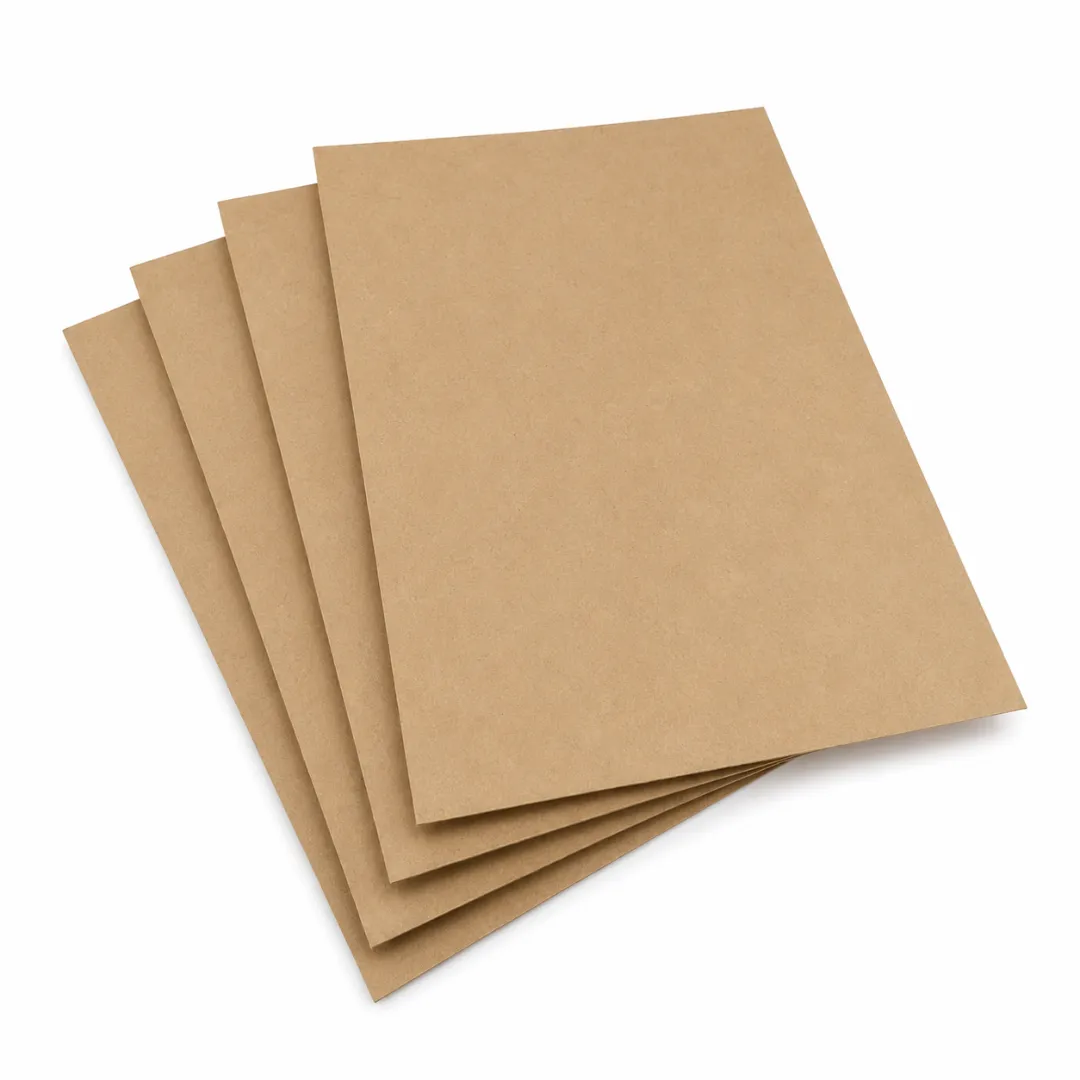
Kraft paper is a strong, durable and reliable material that is widely used across many different industries.
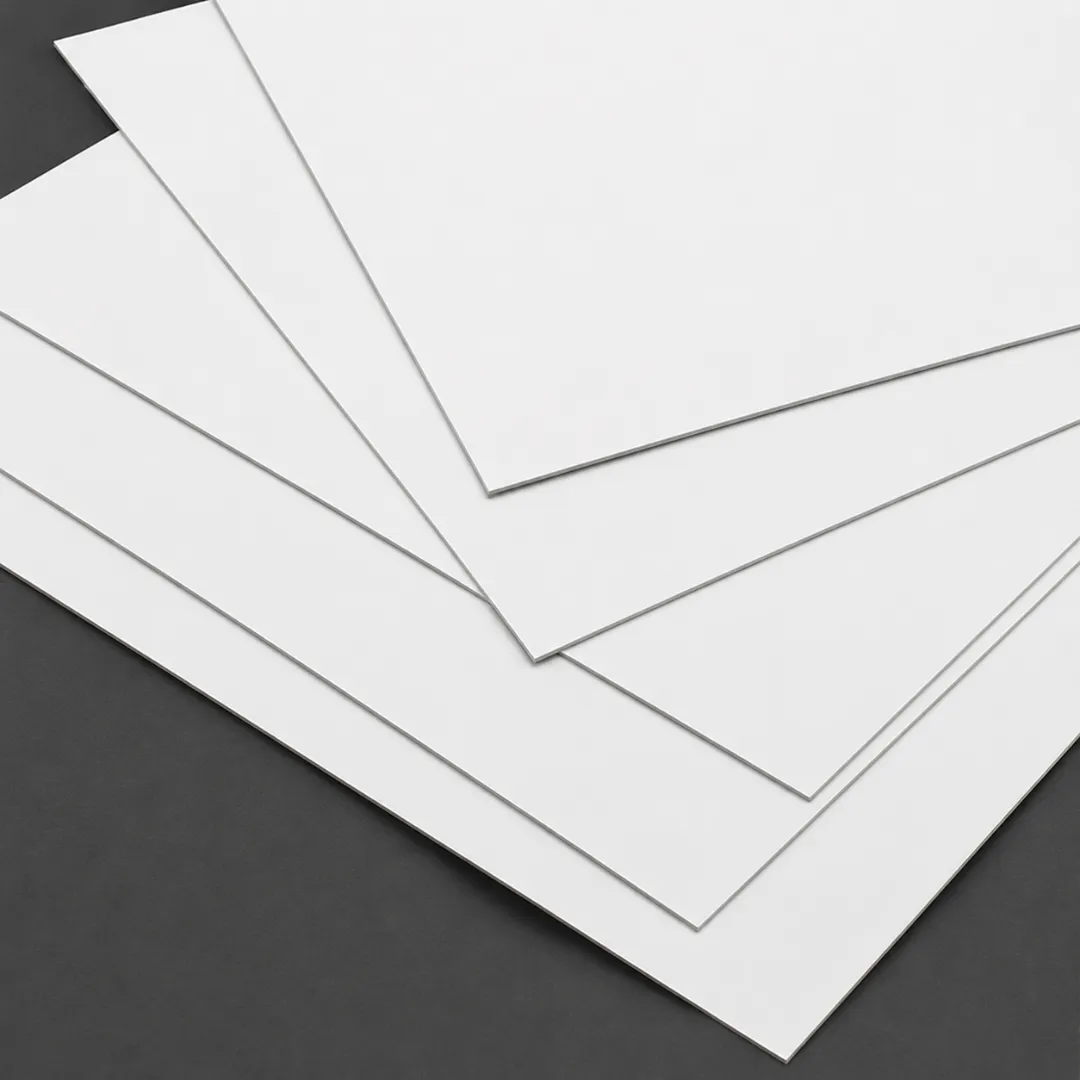
We use cardboard material with the least environmental impact and minimizes waste generation.
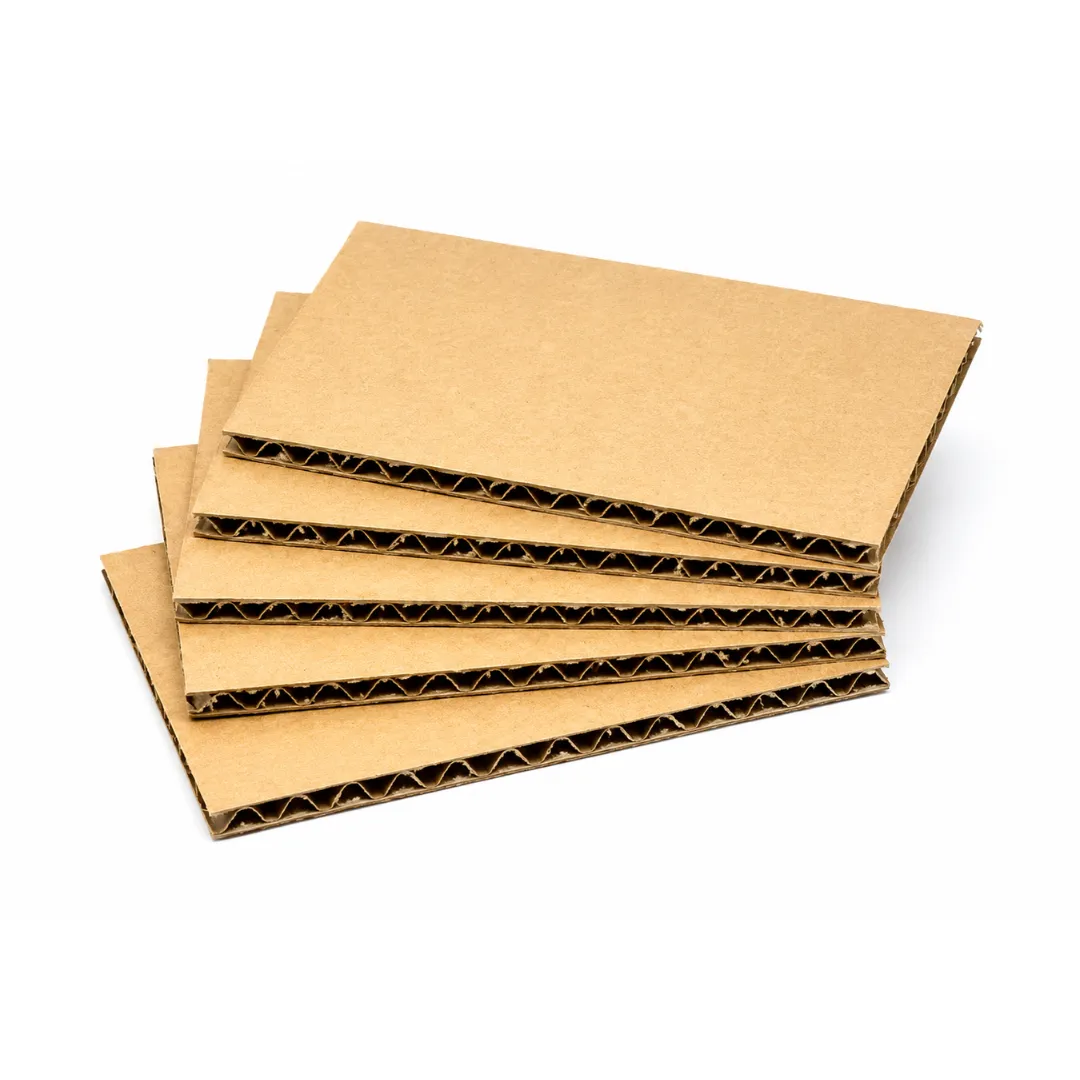
Corrugated material is easy to customize, cost effective and sustainable. It is also great for branding purposes.
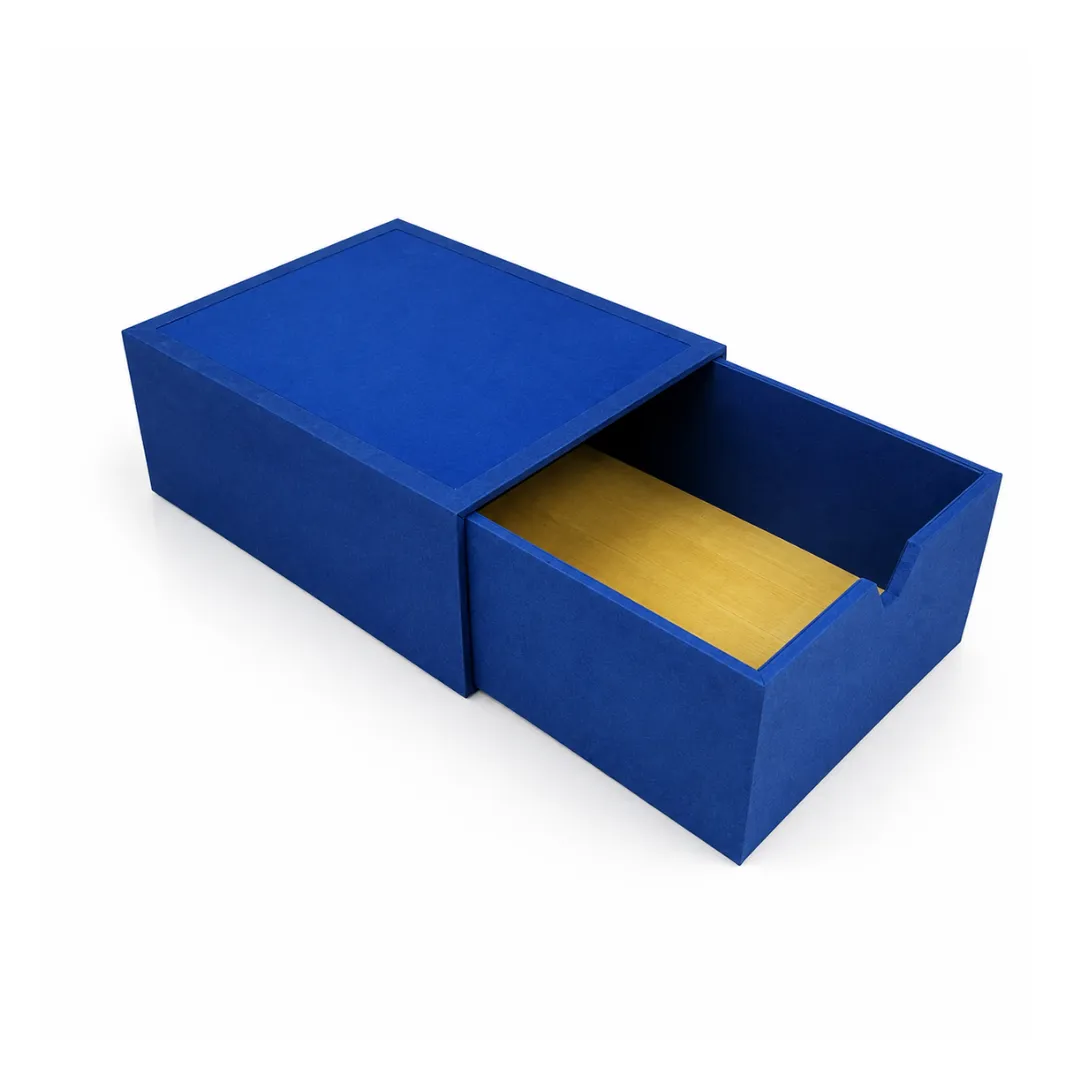
Rigid is highly protective, affordable and recyclable material. These boxes provide maximum protection.
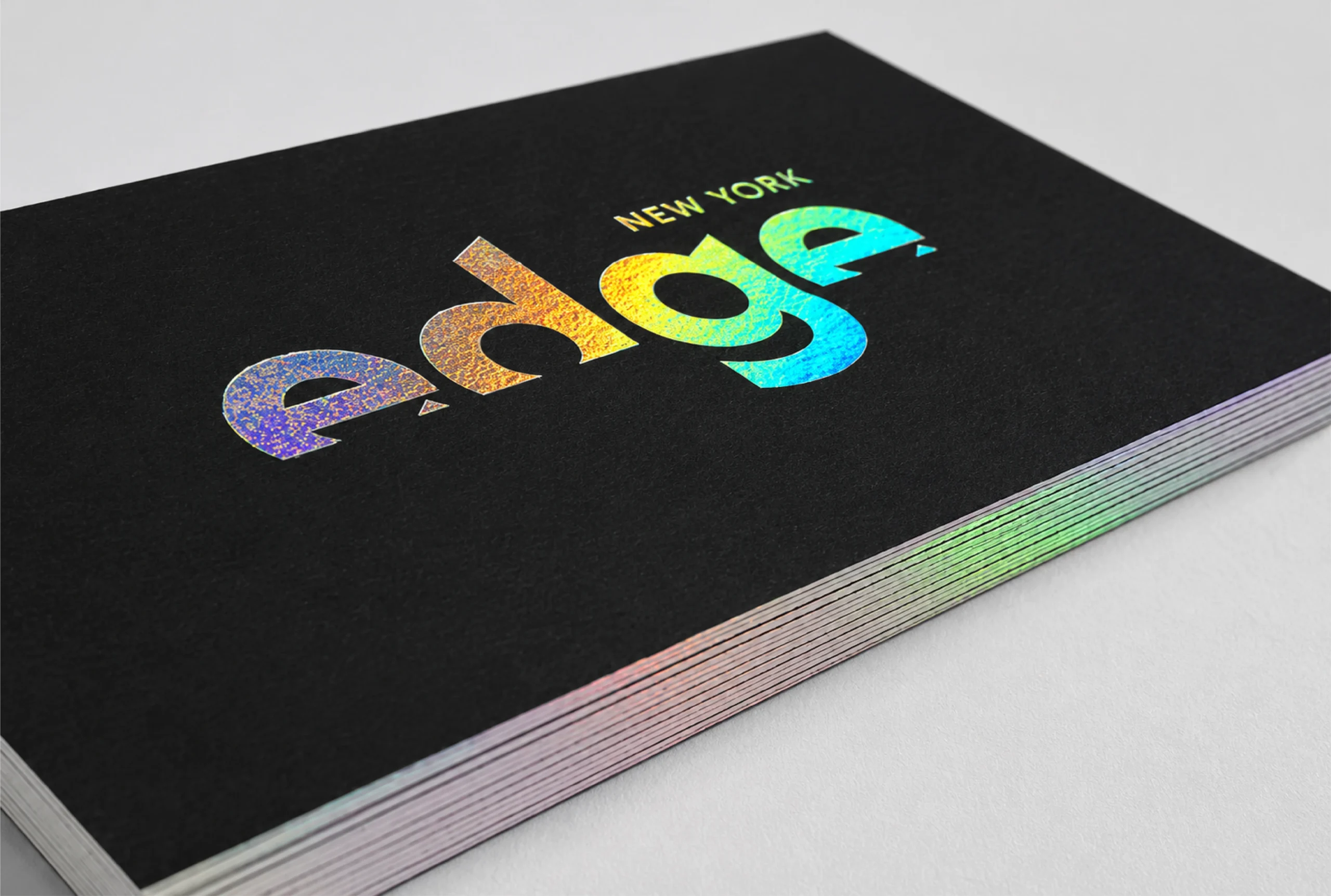
Holographic foil diffracts light and reveals the colors of the rainbow at various angles.
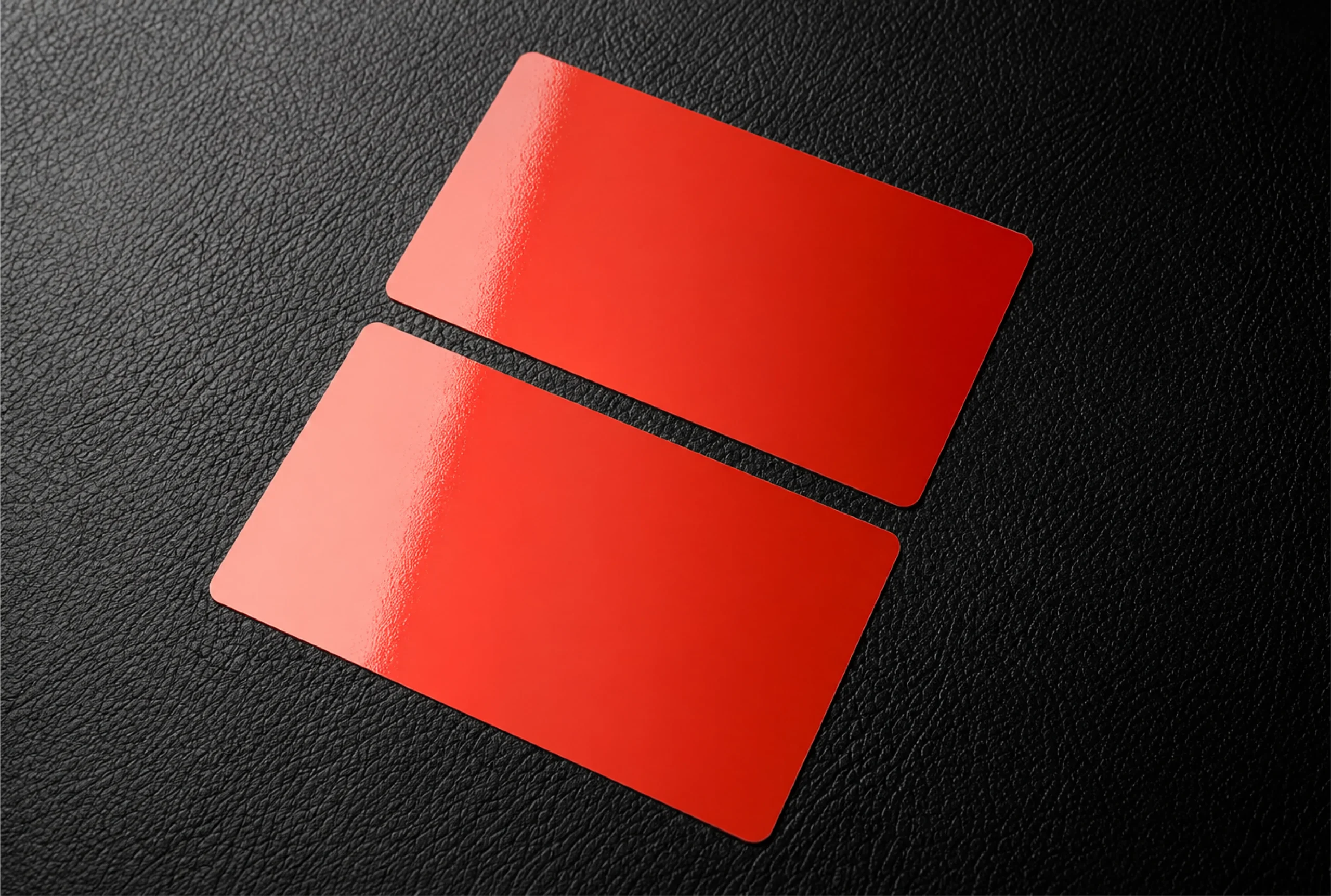
Our glossy finishing gives your packaging an extra layer of shine.
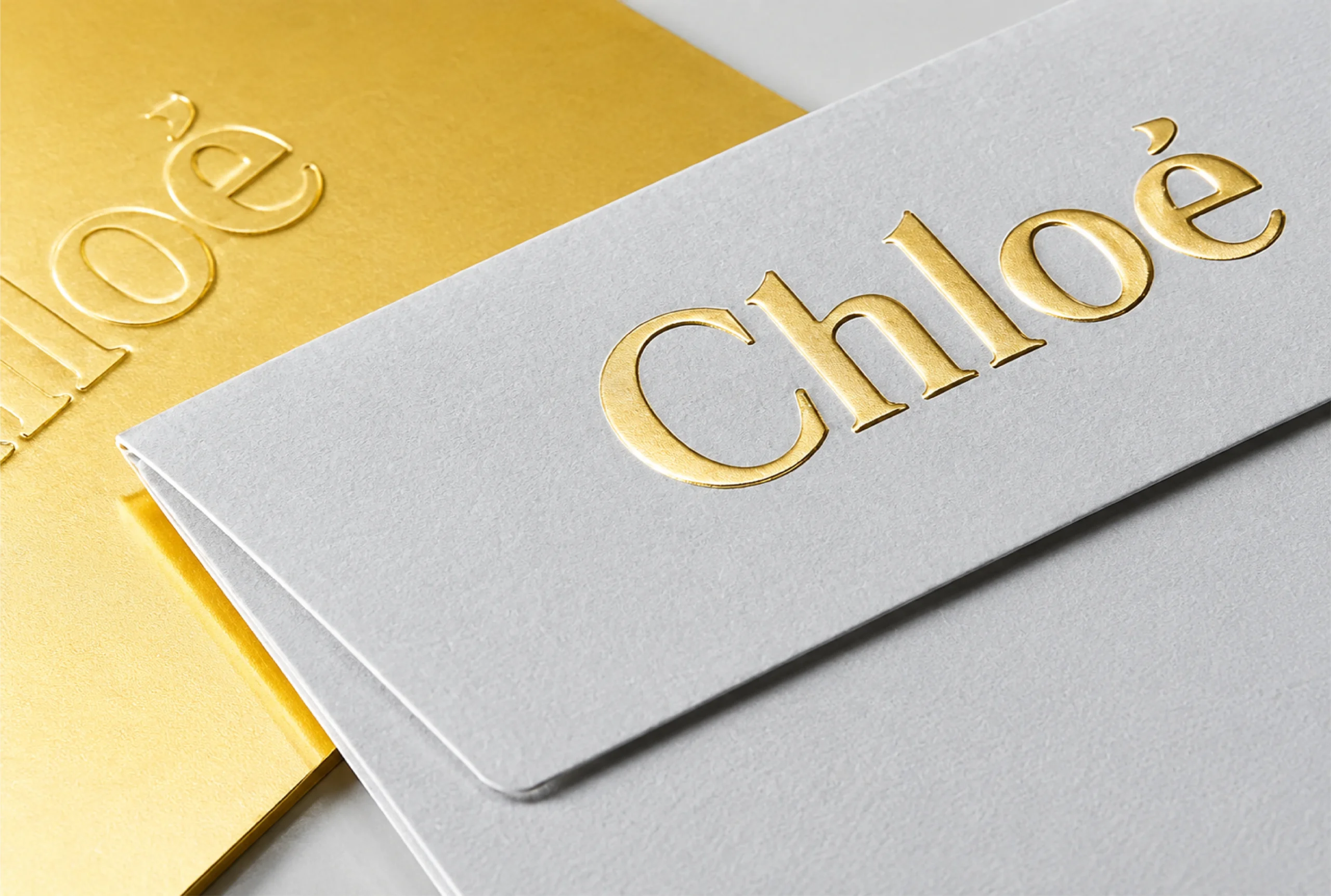
Decorate a wide range of your product packaging with our foil stamping.

With our embossing technique, we transfer the finest details of your product on packaging.
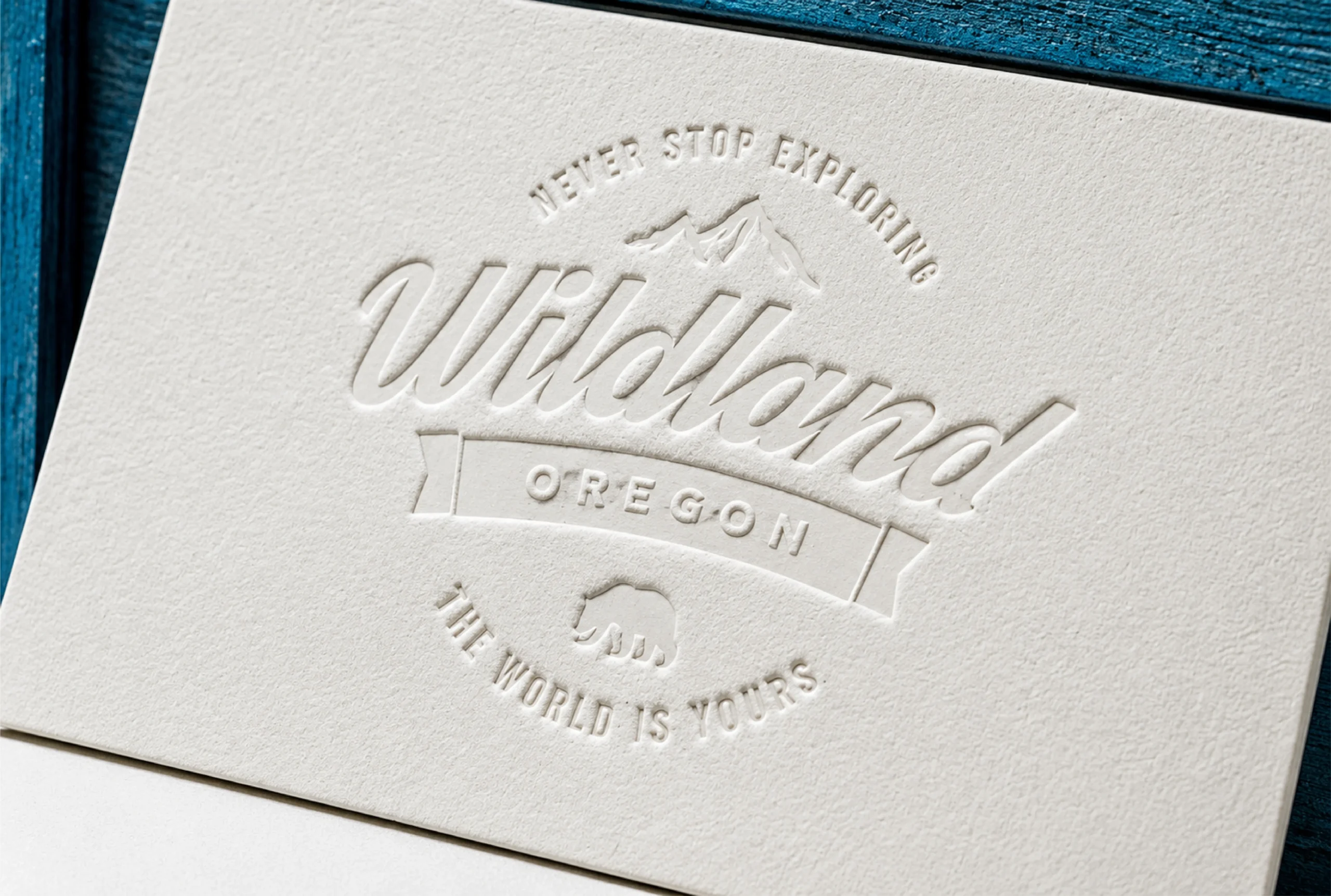
We use debossing technique to add unique graphics into your packaging.
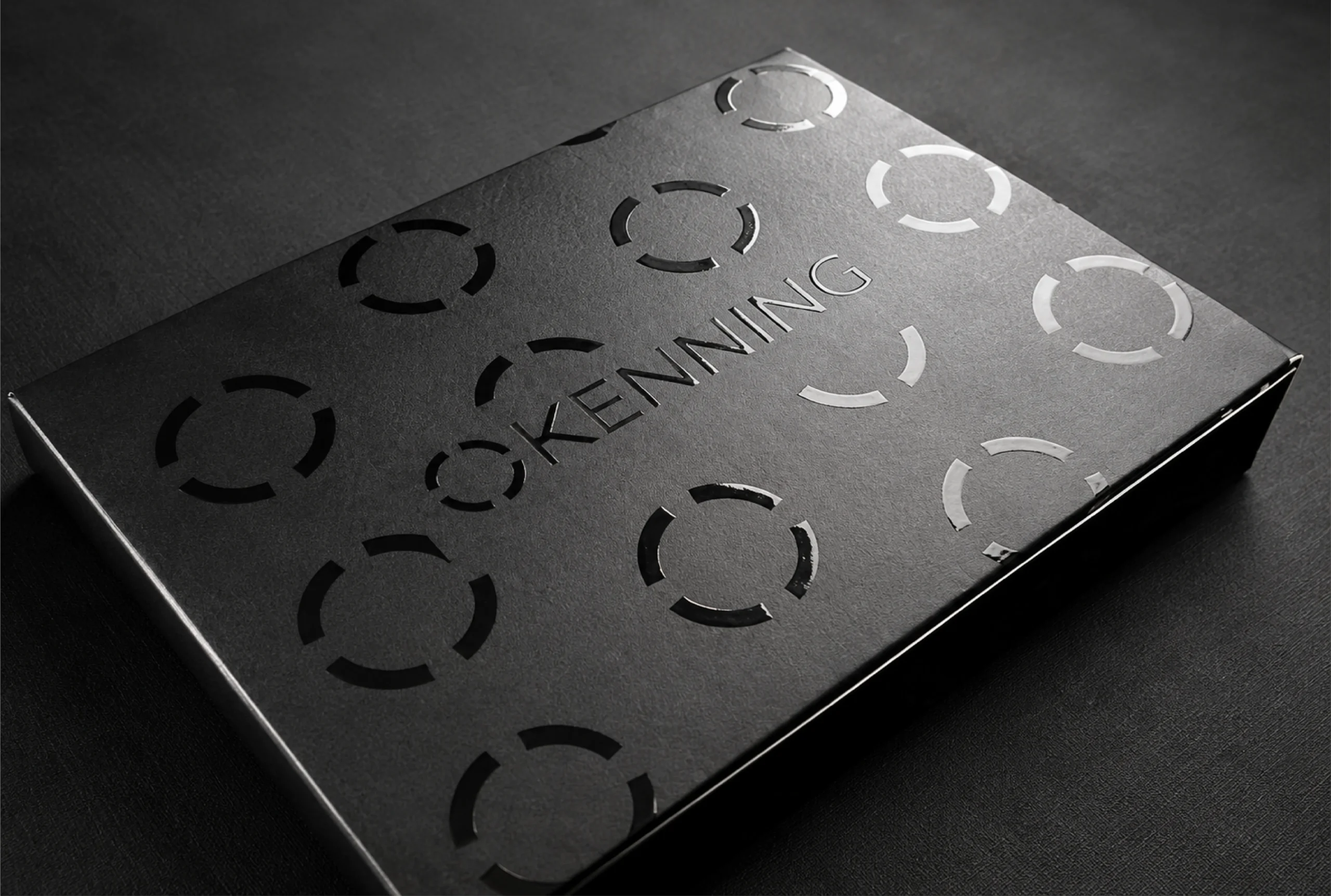
Our high-gloss UV coating gives light and shine to cure the printed material's varnish.
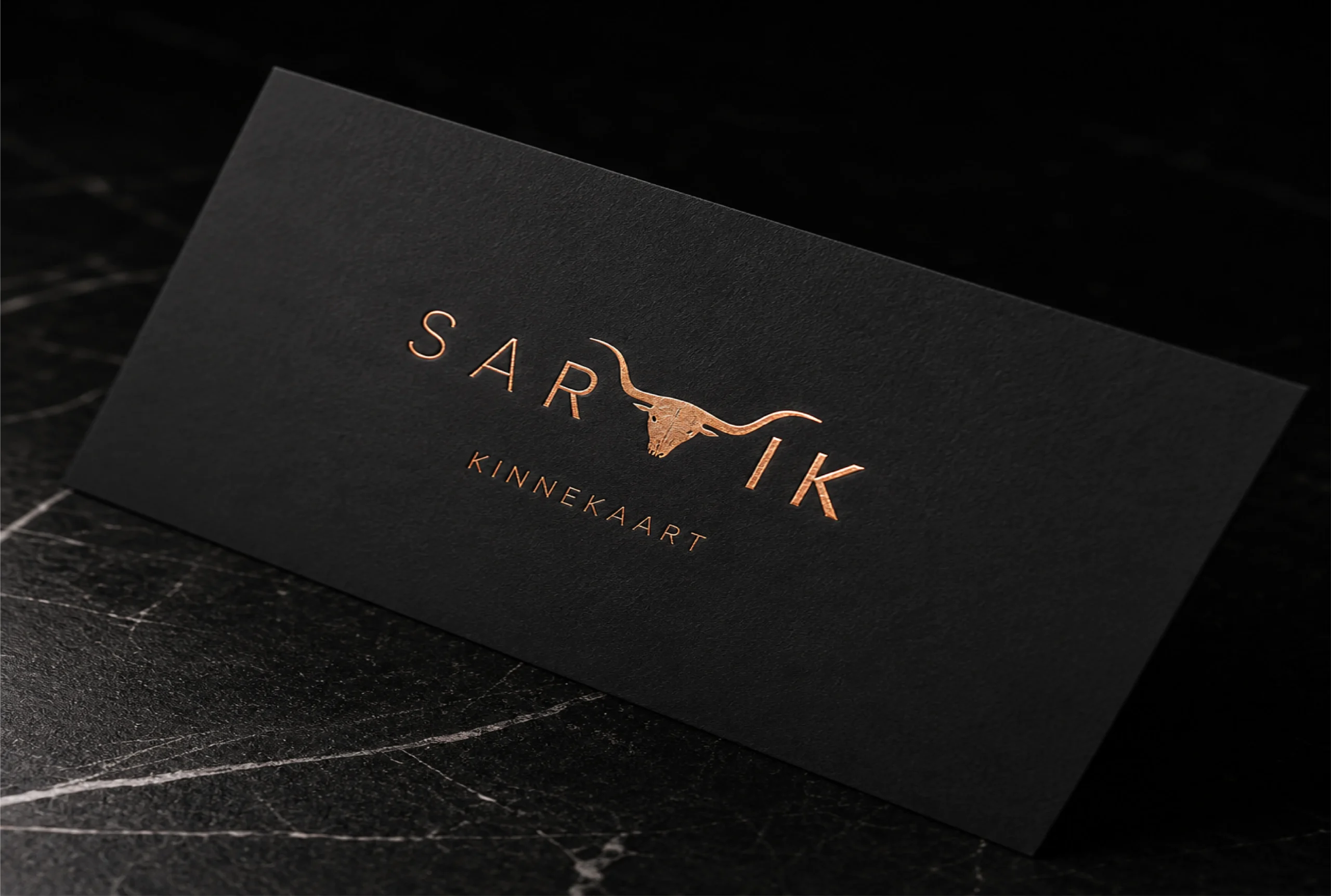
We add additional layer of protection with soft touch lamination from toner chipping.
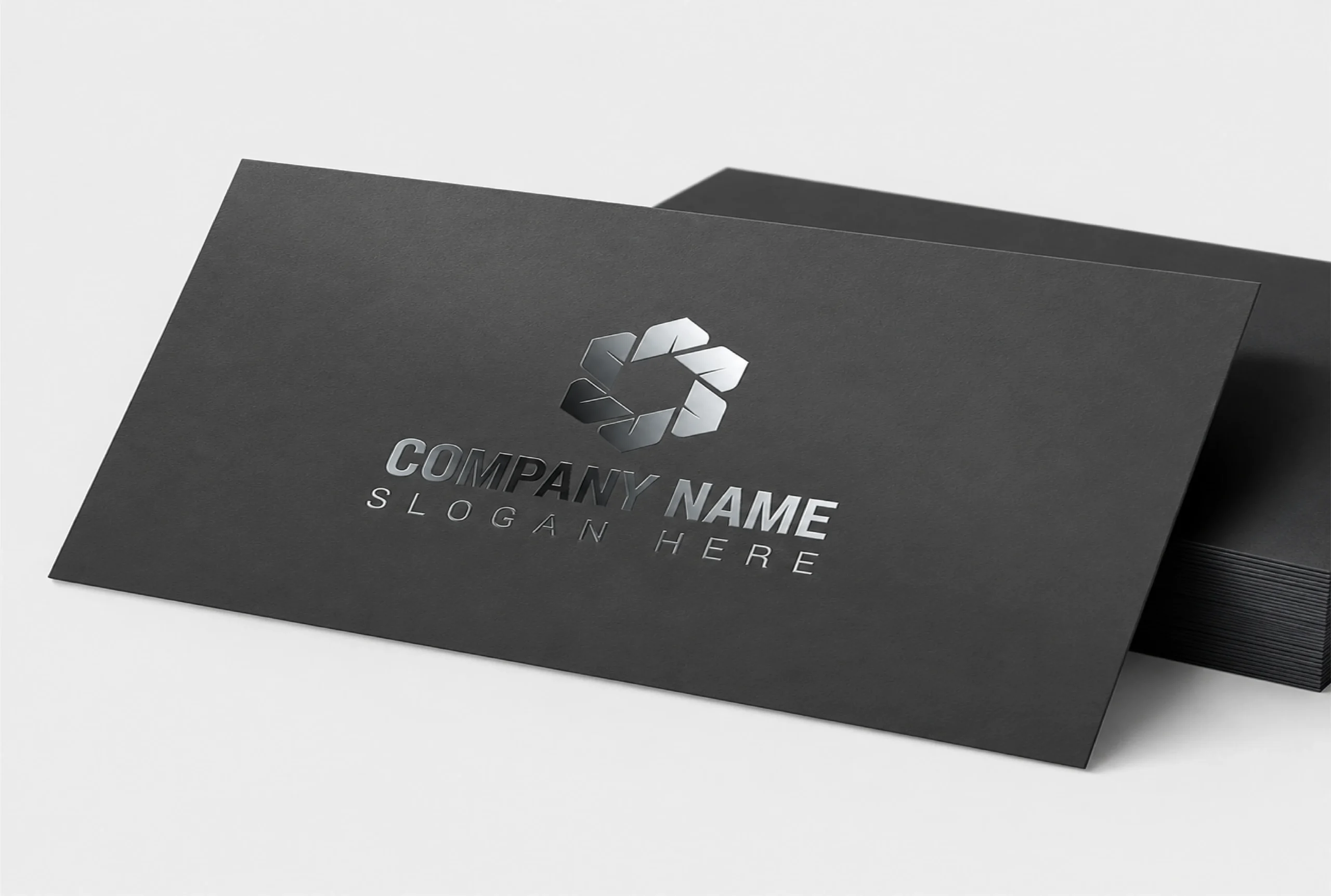
With our matte finish, fingerprints and smudges will now be less visible on the packaging.
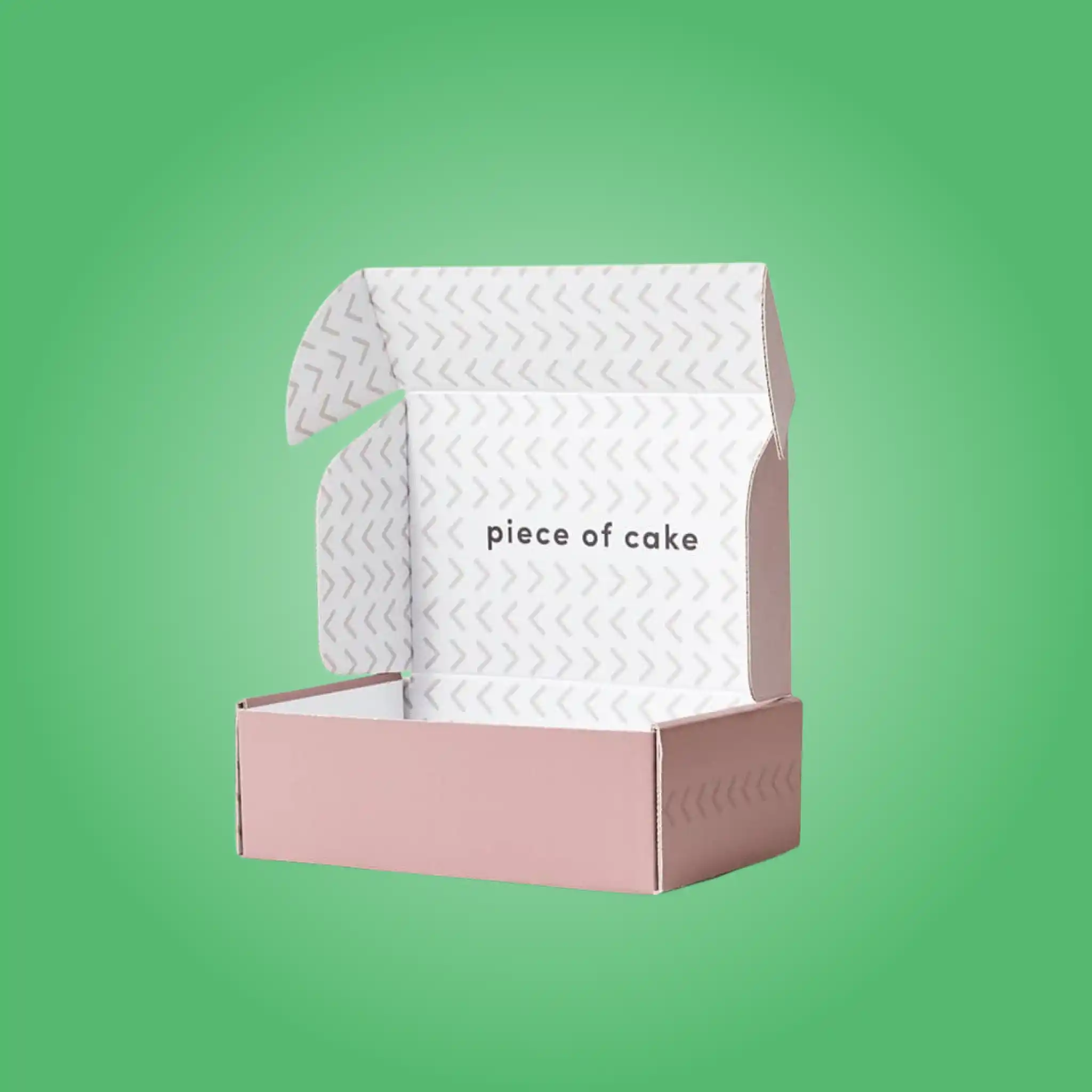
Custom ear lock mailer boxes with self-locking side flaps that secure without tape or adhesives. The interlocking design resists crushing and prevents opening during transit. Choose E-flute, B-flute, or C-flute based on product weight. ECT rated, custom printed, and available with inserts.
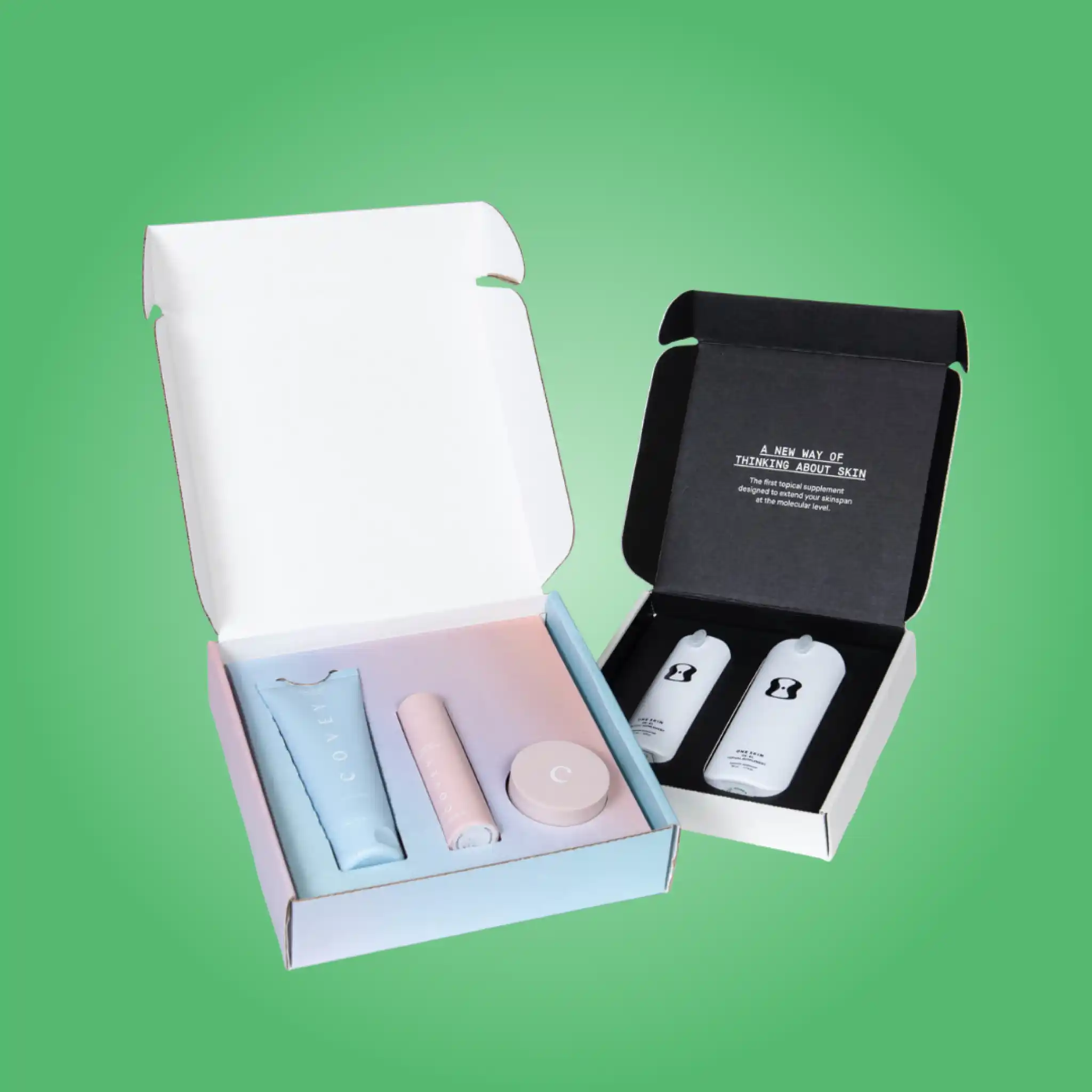
Custom mailer boxes with inserts from Pioneer Custom Boxes help cosmetic, glassware, candle, electronics, ceramics and subscription brands cut damage rates in transit. Choose die-cut corrugated trays, partitions, molded pulp cradles, paperboard platforms or foam, designed on one dieline with the box, with free design support, no MOQ and free USA shipping.

Custom shipping boxes from Pioneer Custom Boxes help ecommerce, subscription, wholesale, food, hardware and homeware brands ship products safely at a lower freight cost. Choose 32 to 51 ECT single or double wall corrugated, RSC, mailer, full overlap or telescope styles, partitions, pulp trays, flexo or litho printing, free design support, no MOQ and free USA shipping.
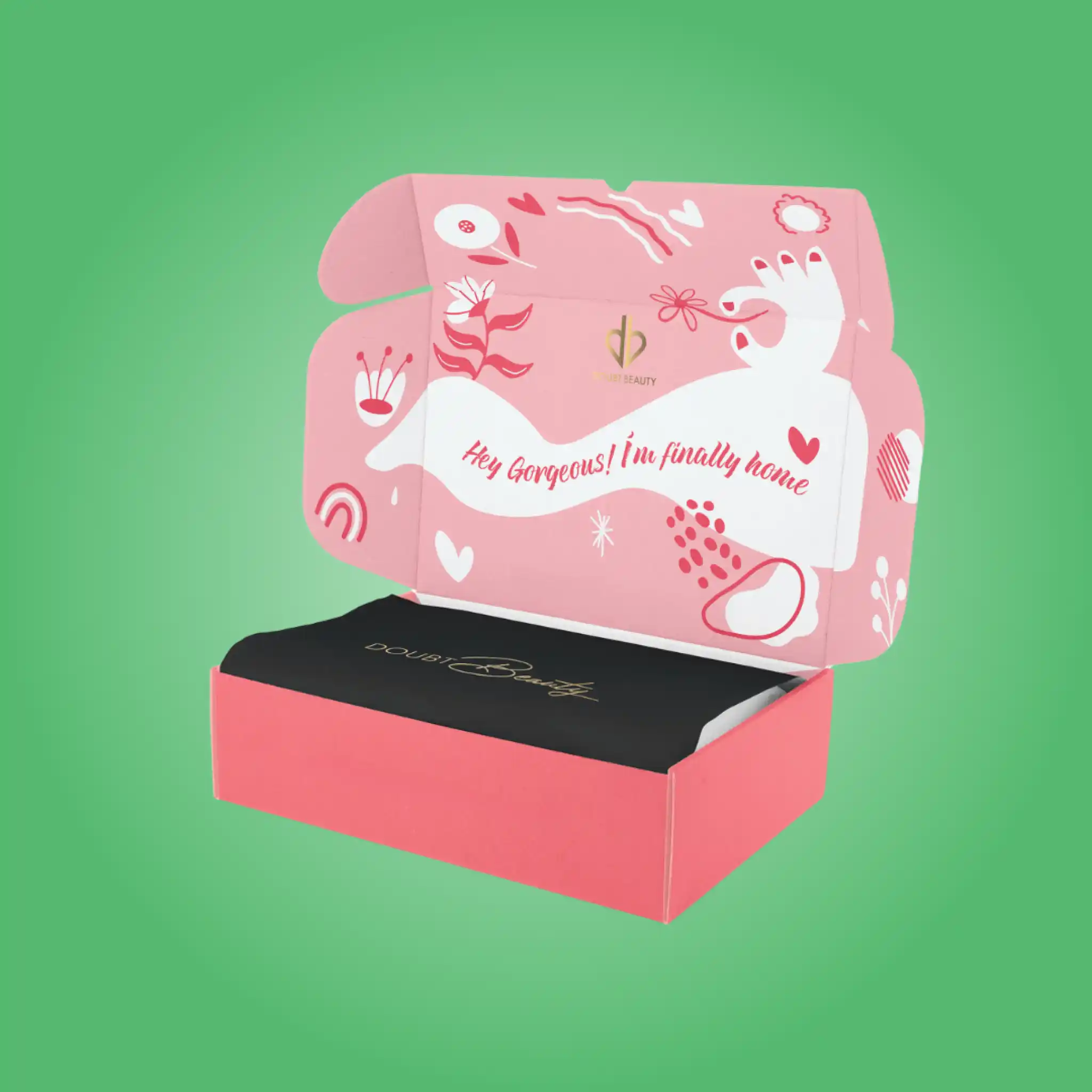
Custom subscription boxes from Pioneer Custom Boxes help beauty, snack, coffee, book, pet, wellness and lifestyle subscription brands ship a monthly experience that survives the parcel network. Choose E-flute or B-flute corrugated, white top or natural kraft liners, printed interiors, fitted trays, dividers, tear strips, free design support, no MOQ and free USA shipping.