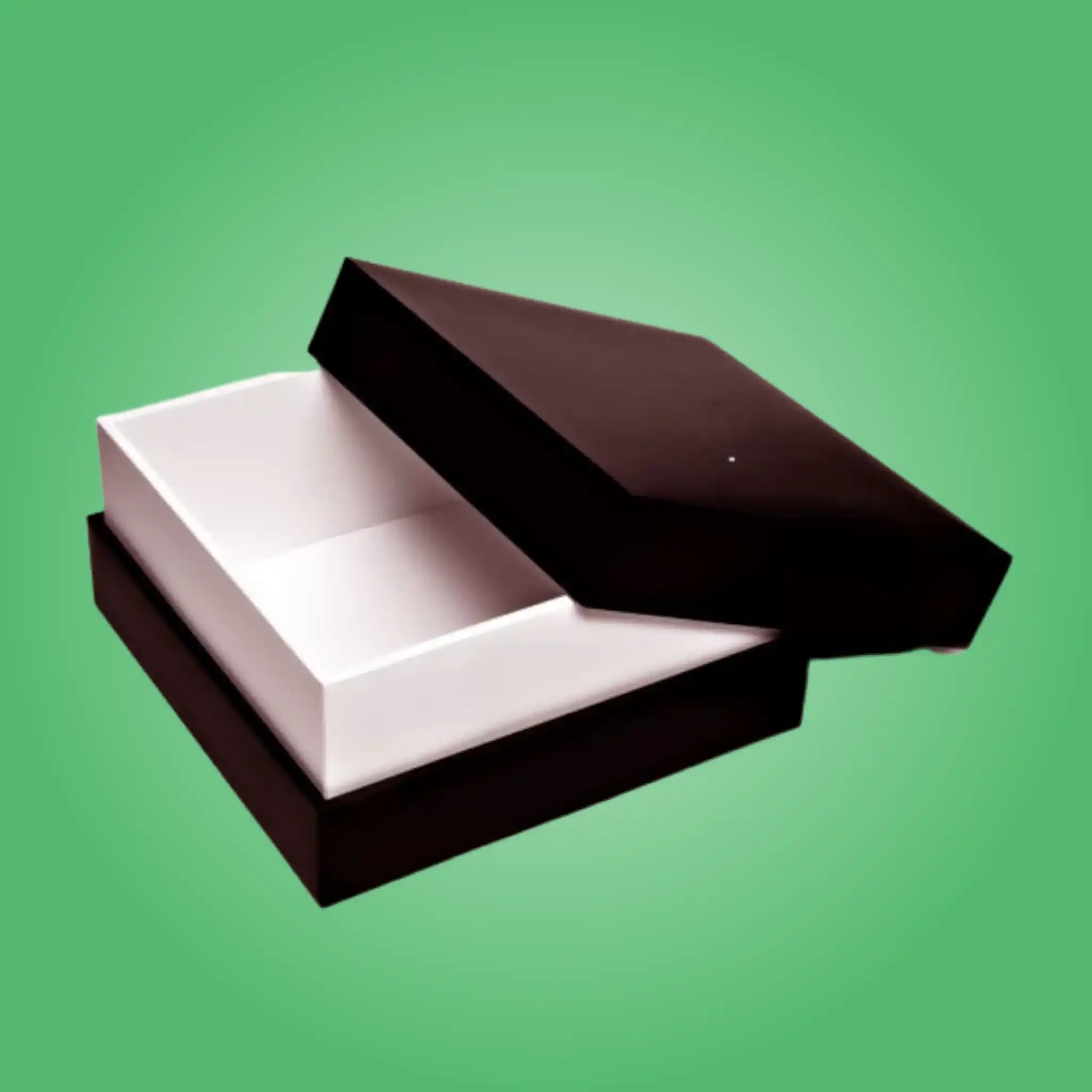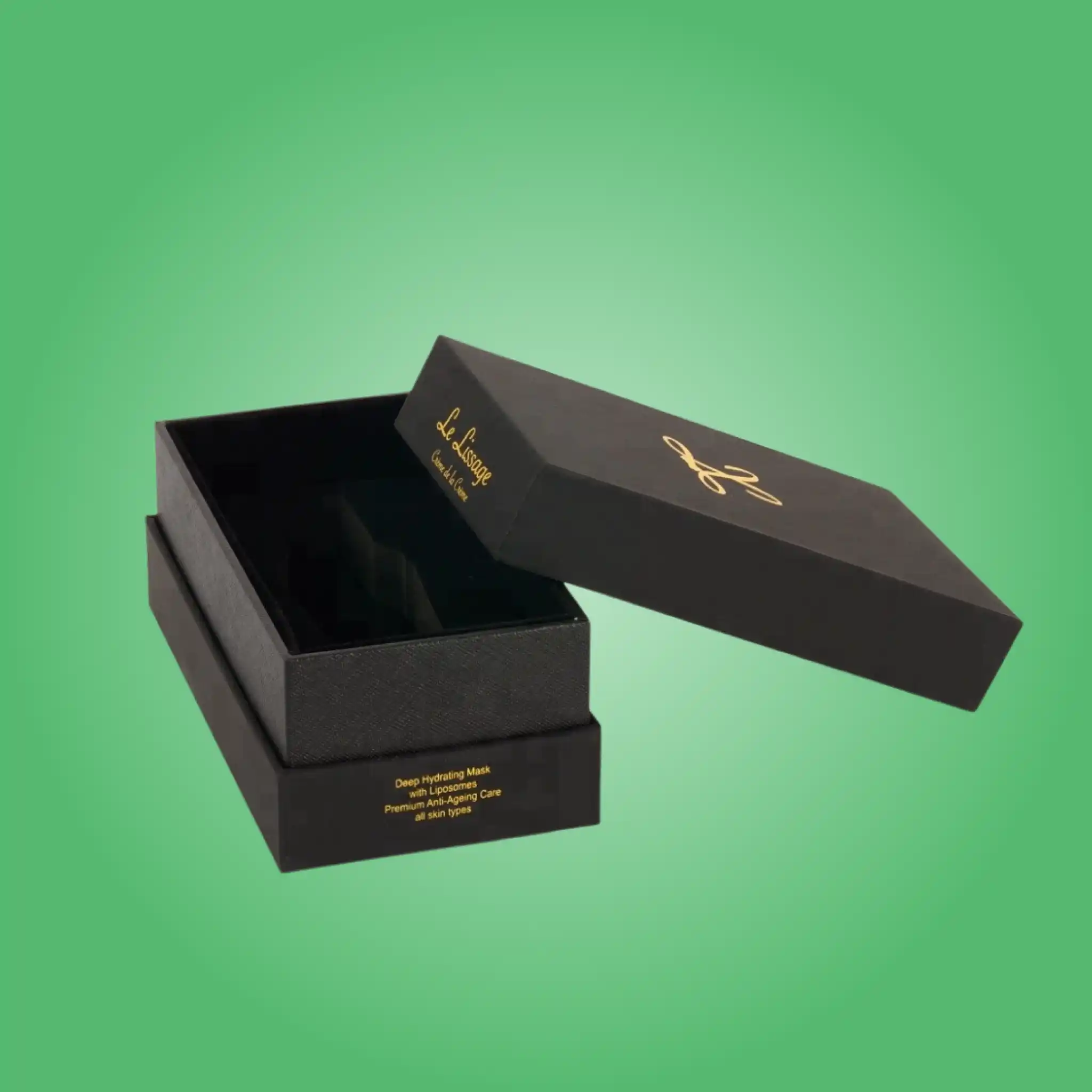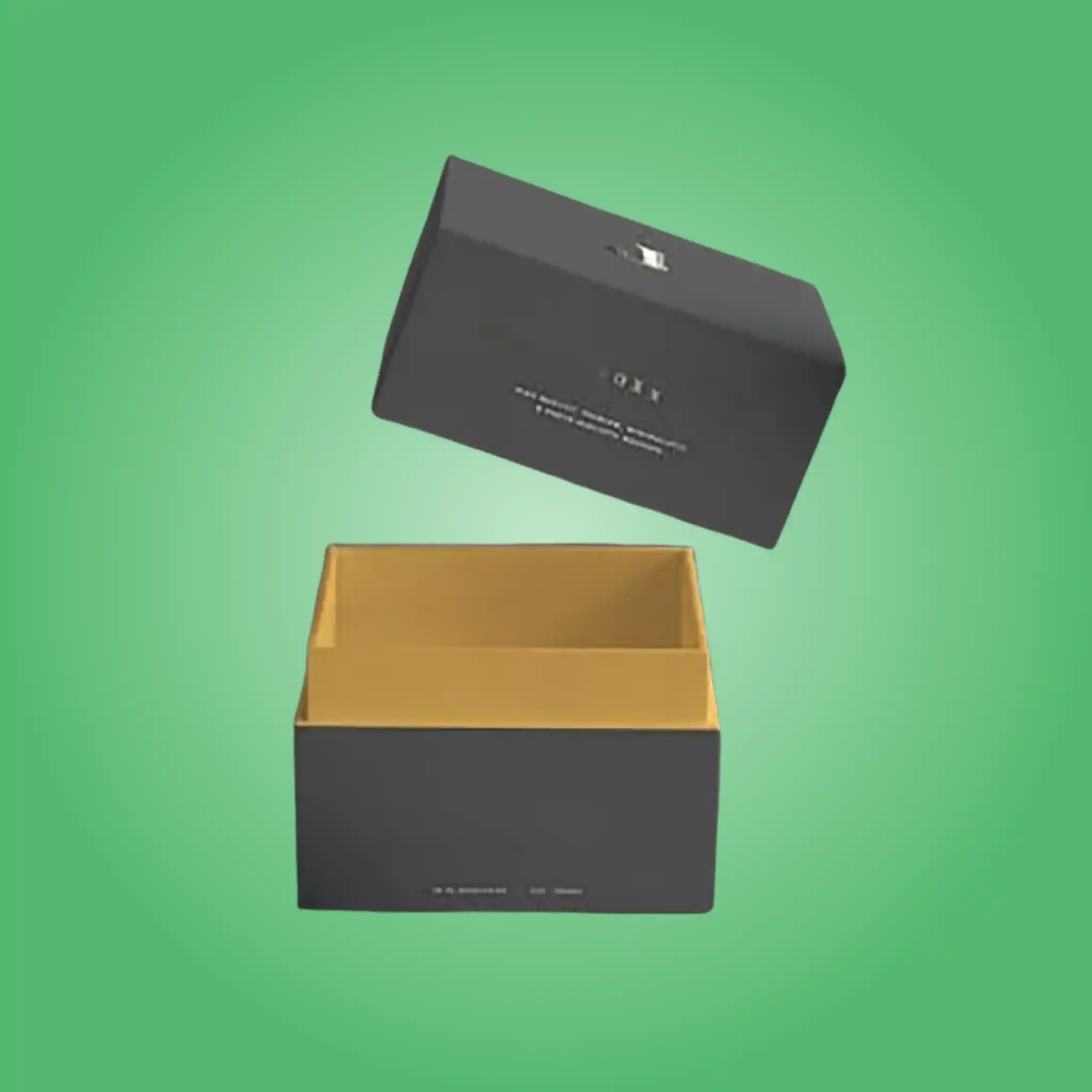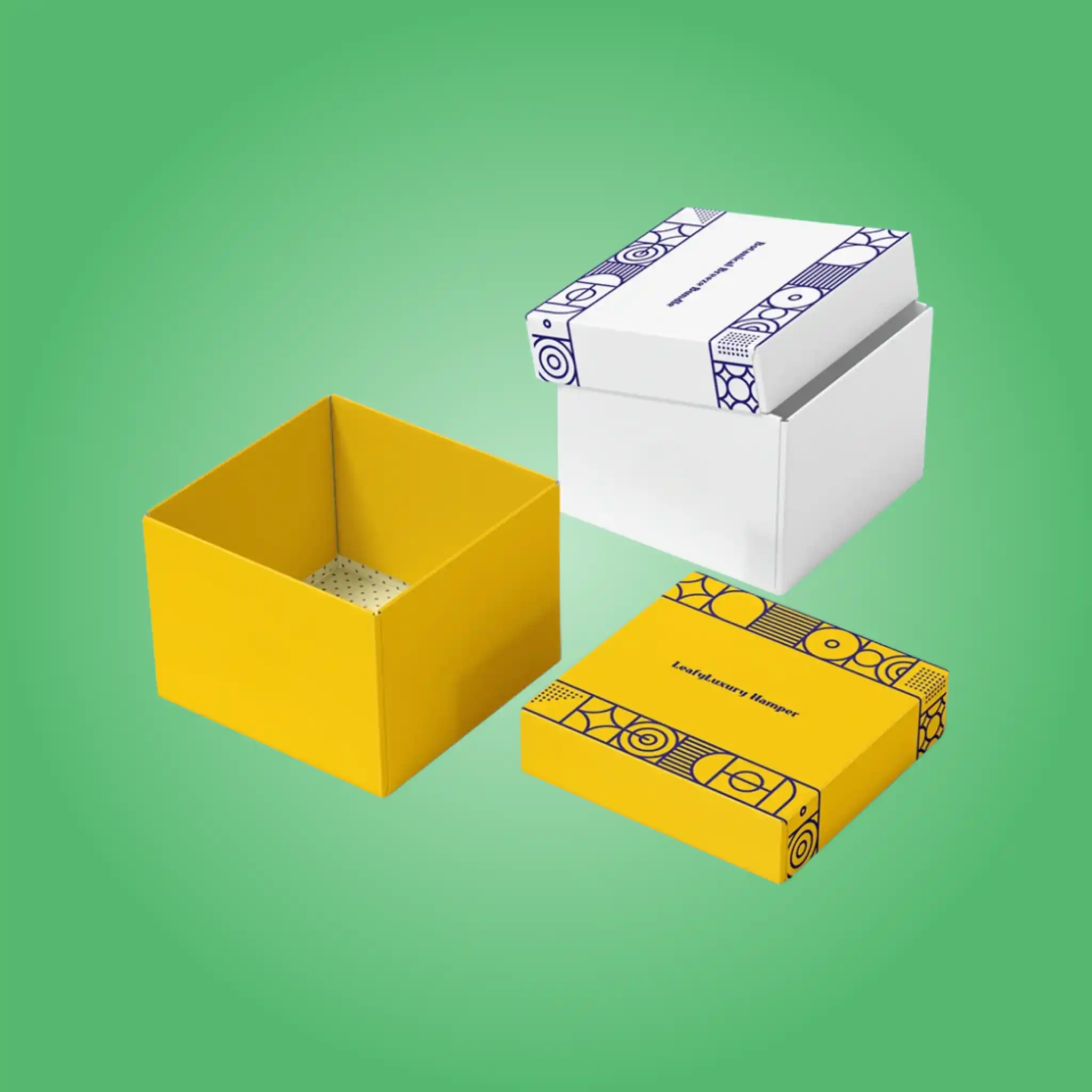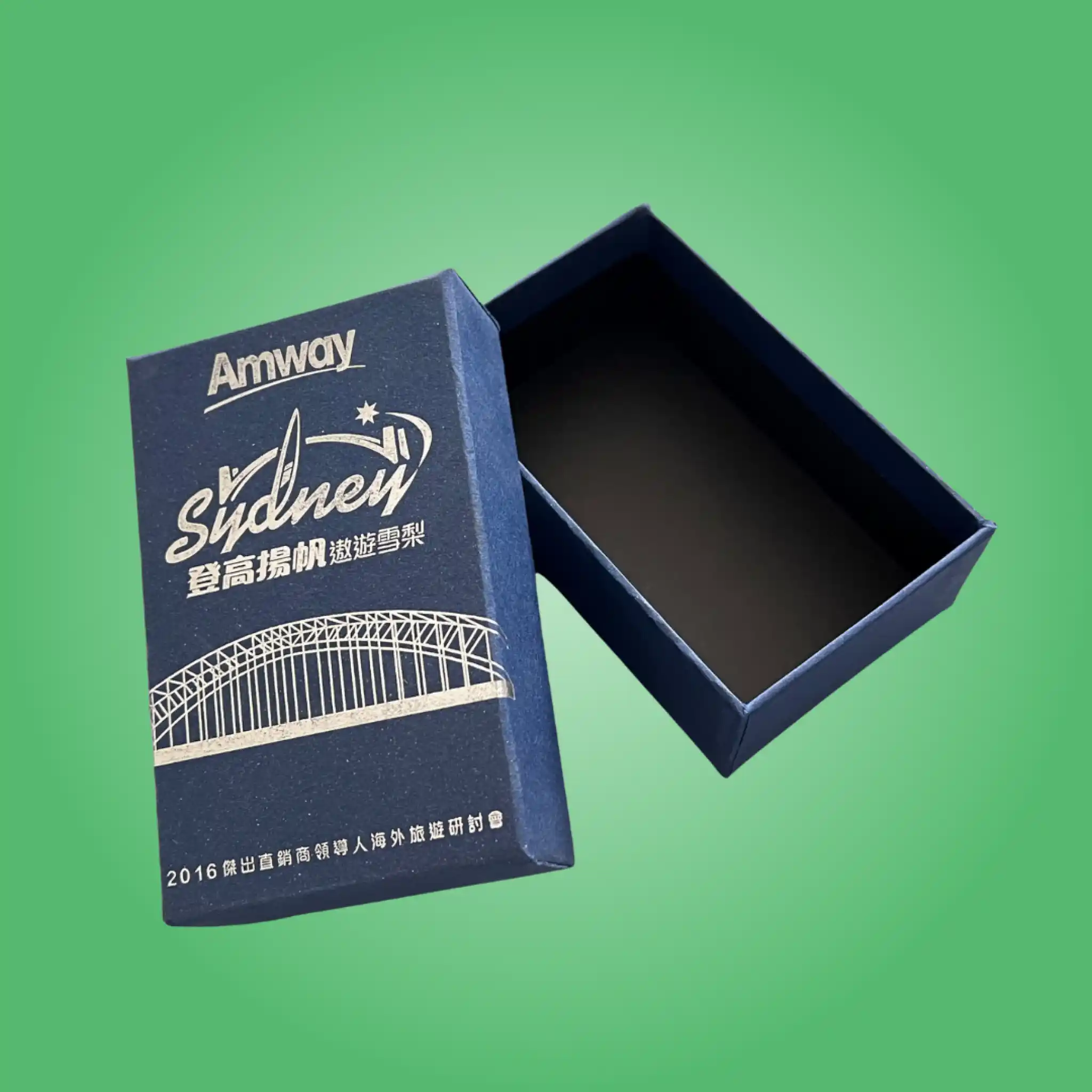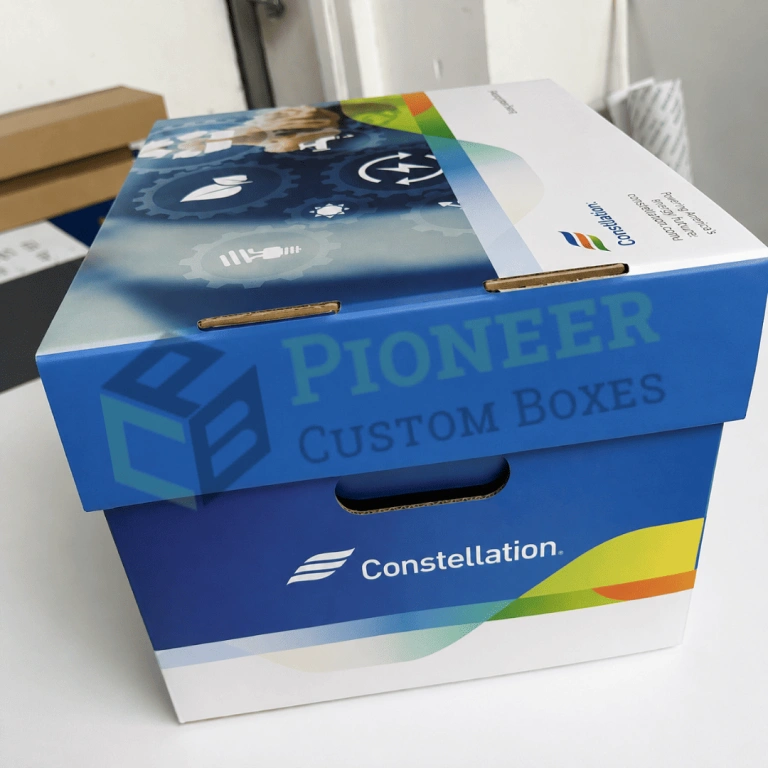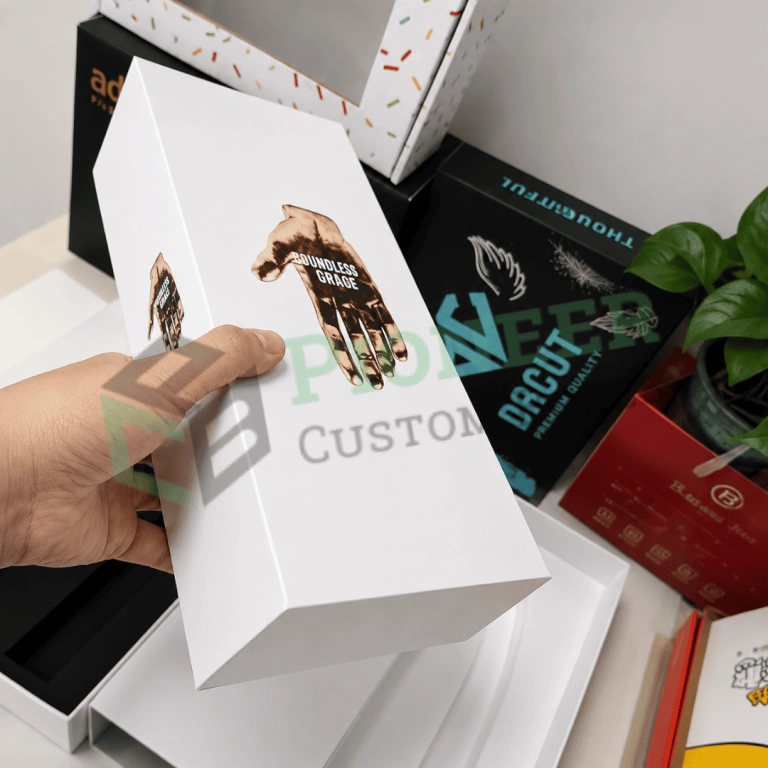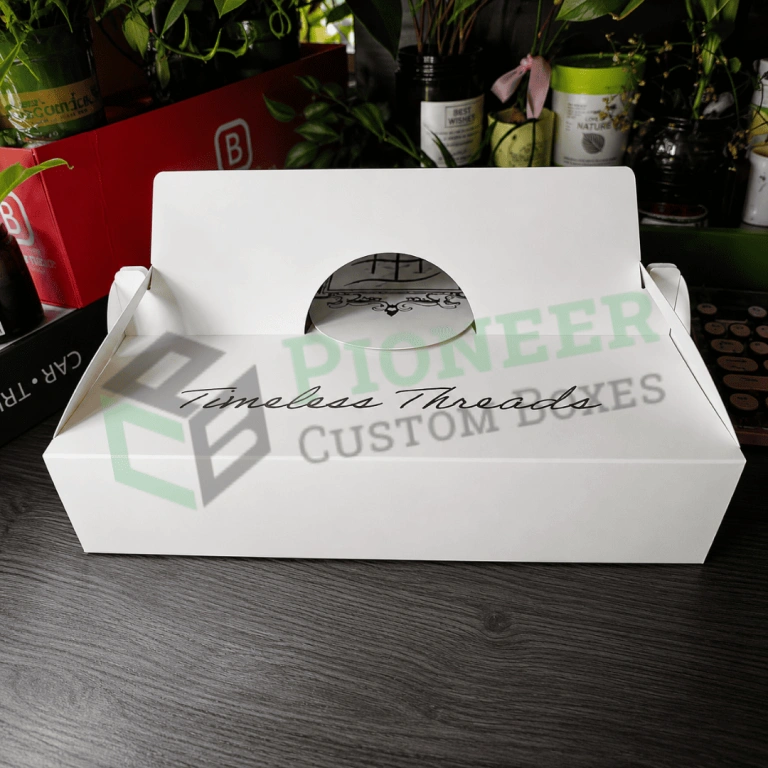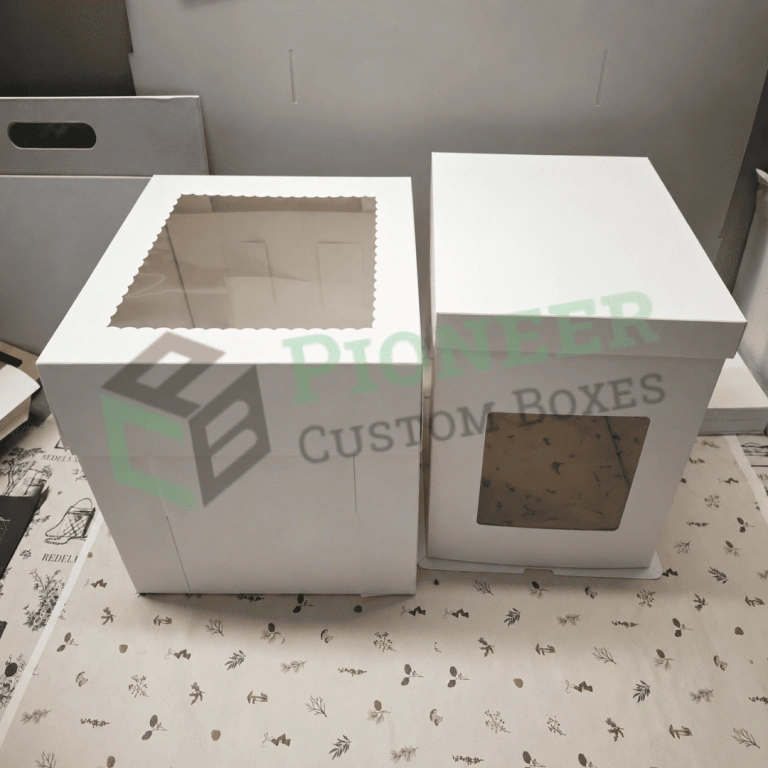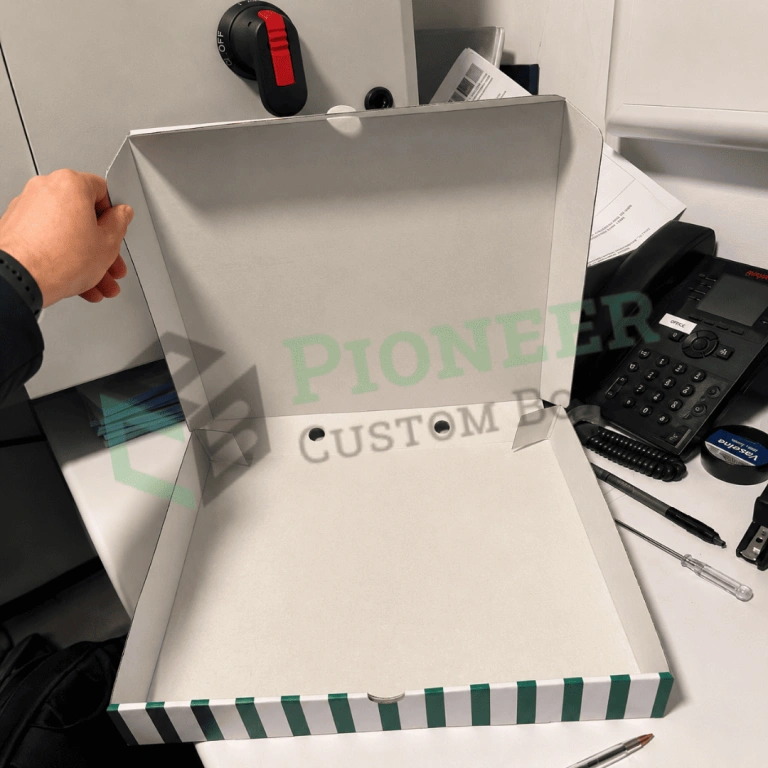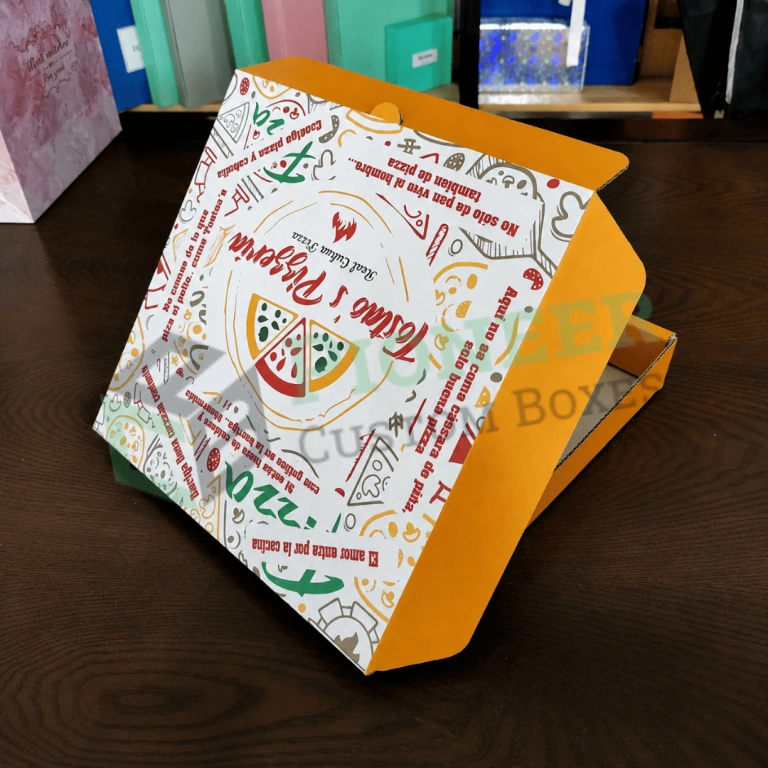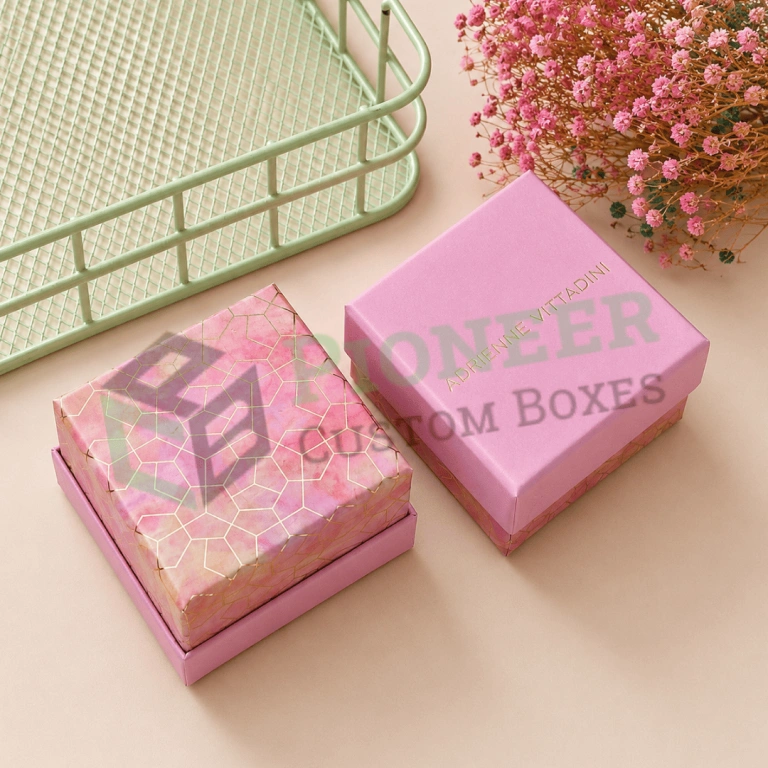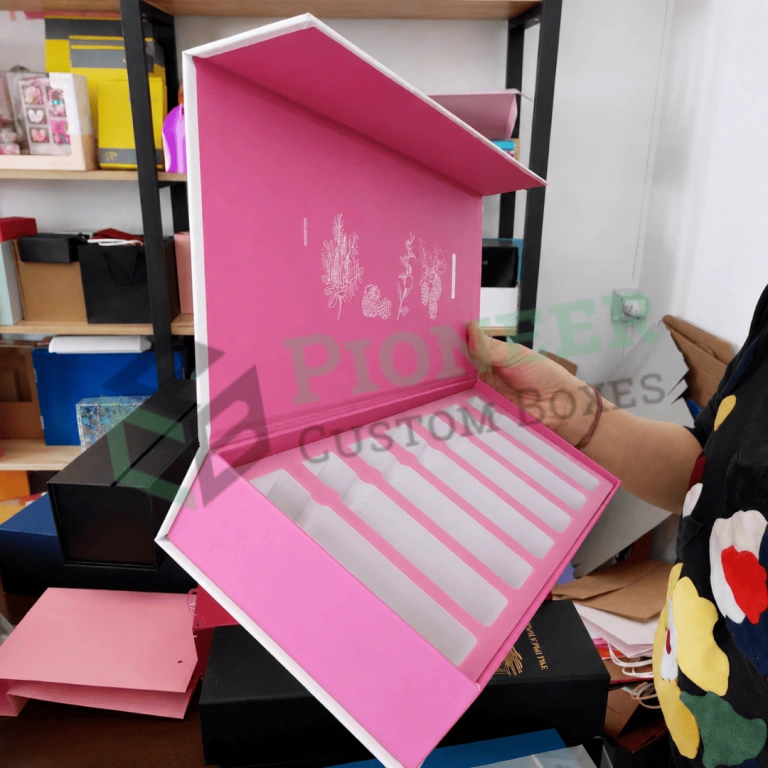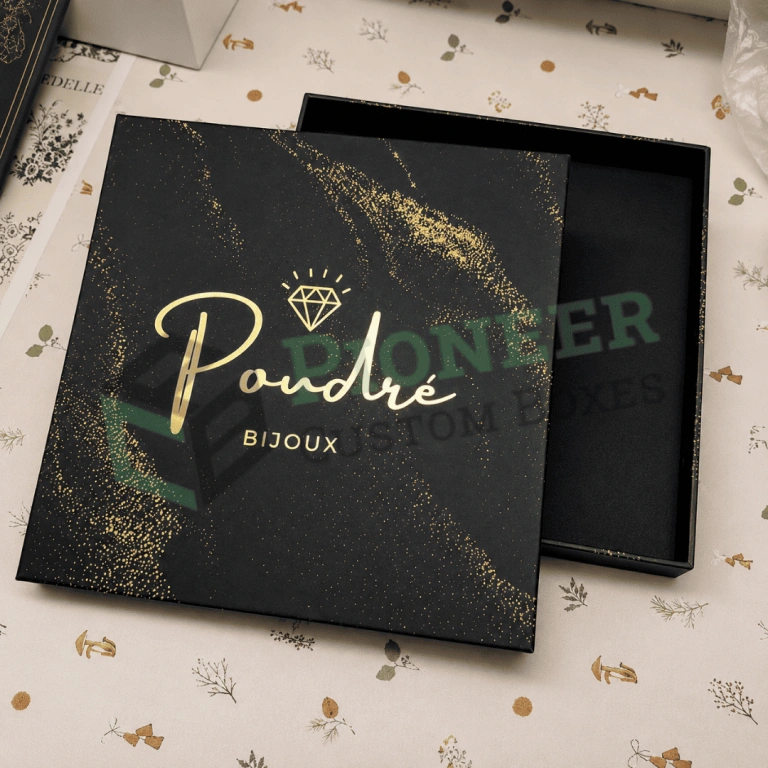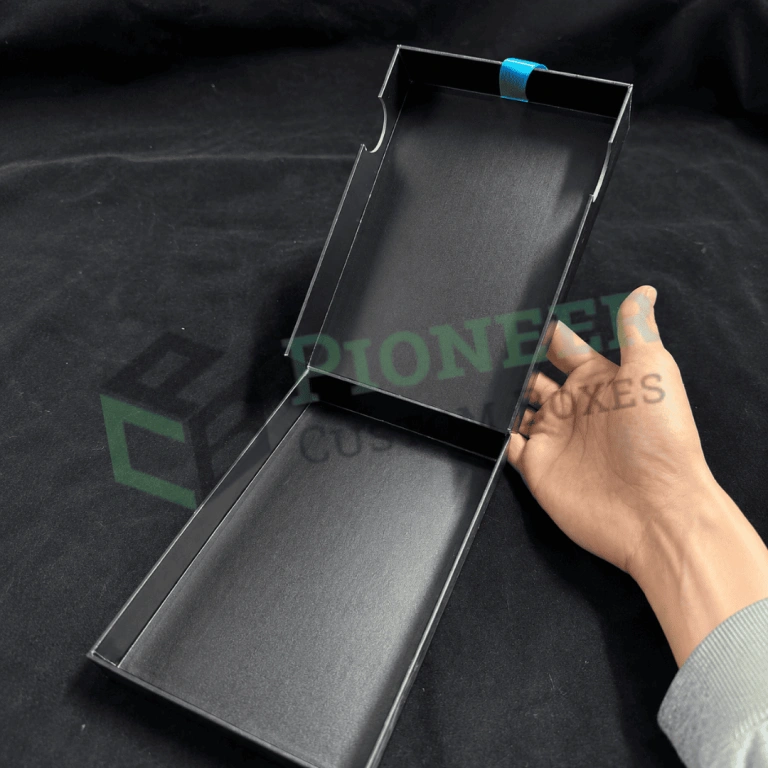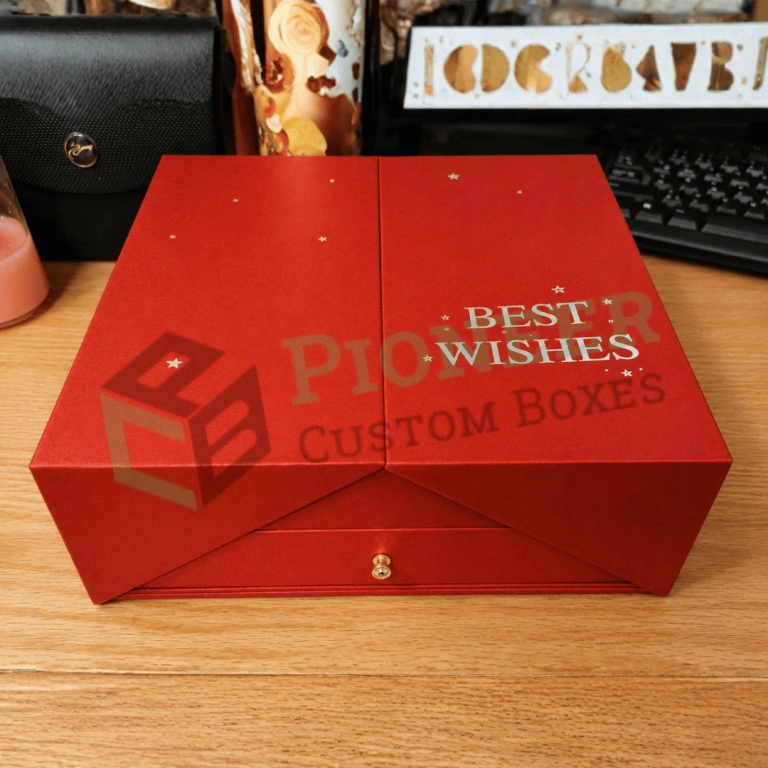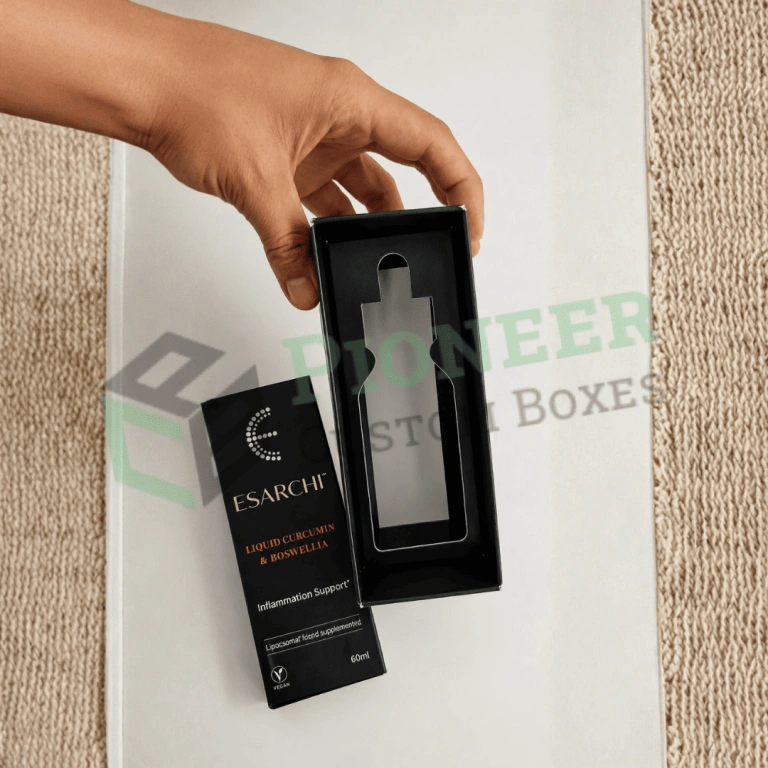
2 piece rigid boxes from Pioneer Custom Boxes give luxury brands, apparel labels, electronics companies, jewelers and gifting programs a separate base and lid in wrapped greyboard. Choose full telescope, shoulder, magnetic or collapsible builds in 1.5mm to 3mm board, with litho or specialty wraps, foil, fitted inserts, free design support, zero MOQ and free USA shipping.
Two-piece rigid boxes are non-collapsible boxes made from thick greyboard wrapped in printed paper, with a separate base and lid. Pioneer Custom Boxes manufactures them across the United States with zero minimum order quantity and free shipping.
This is the structure customers associate with expensive things. The weight in the hand, the resistance as the lid lifts and the slow controlled release of air all signal value before the product is even visible.
Those effects are engineered rather than accidental. Lid fit in particular is an air problem as much as a dimensional one, and getting it wrong produces either a lid that will not seat or one that slides off in a bag.
Freight is the constraint nobody mentions at quoting stage. Rigid boxes do not fold flat, so they ship assembled and you pay to transport the air inside them from our floor to yours.
That single fact changes the economics enough that it should influence the decision. A collapsible rigid structure ships flat and erects on your bench, and for many brands it is the better answer.
We manufacture two-piece rigid boxes for luxury brands, apparel, electronics, jewelry, cosmetics, spirits, corporate gifting and subscription brands. Furthermore we cut our own board, wrap in house and finish every order ourselves.
Order rigid boxes in any quantity you need. There is no minimum order, design support costs nothing, and shipping across the United States stays free on every order.
The two pieces can relate to each other in several ways, and each says something different to the customer.
The lid covers the entire depth of the base. It gives maximum protection and the strongest sense of enclosure, and it uses the most wrap paper of any style.
The lid covers only the upper portion, leaving a visible band of the base showing. Adding a contrasting shoulder is one of the most cost-effective ways to make a rigid box look deliberately designed.
An internal neck sits inside the base, and the lid seats onto it. The neck controls the fit precisely and gives the smooth, slow close that customers read as quality.
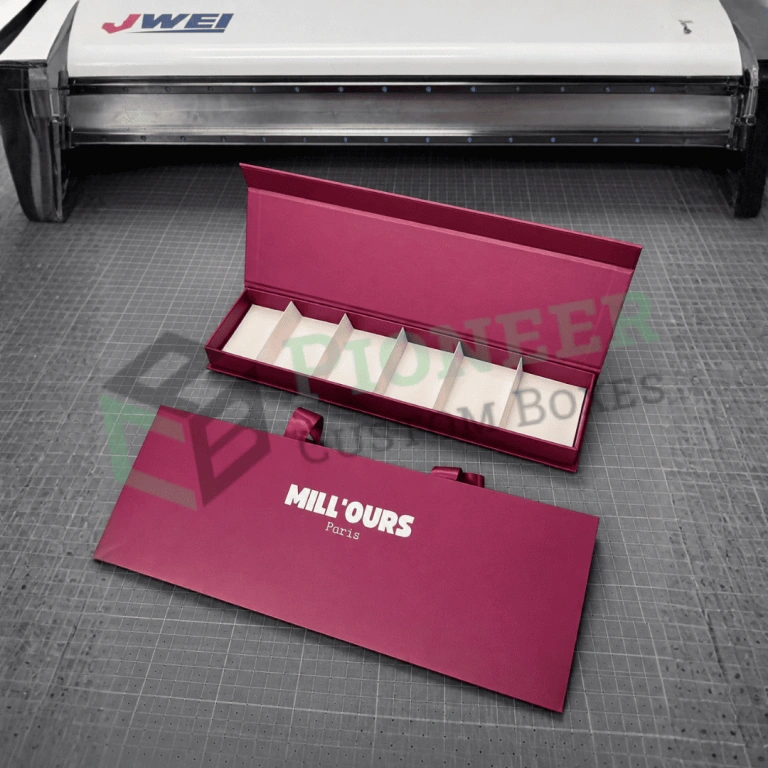
A hinged rigid box where lid and base are one piece joined by the wrap. It is technically not a two-piece box, though customers group them together, and it reopens cleanly so people keep it.
A rigid box built to fold flat for shipping and storage, erected by hand or by magnet. It costs more per unit and saves substantially on freight and warehouse space.
A rigid sleeve with a pull-out tray. The reveal is slower than a lift-off lid, which suits products where ritual matters more than immediacy.
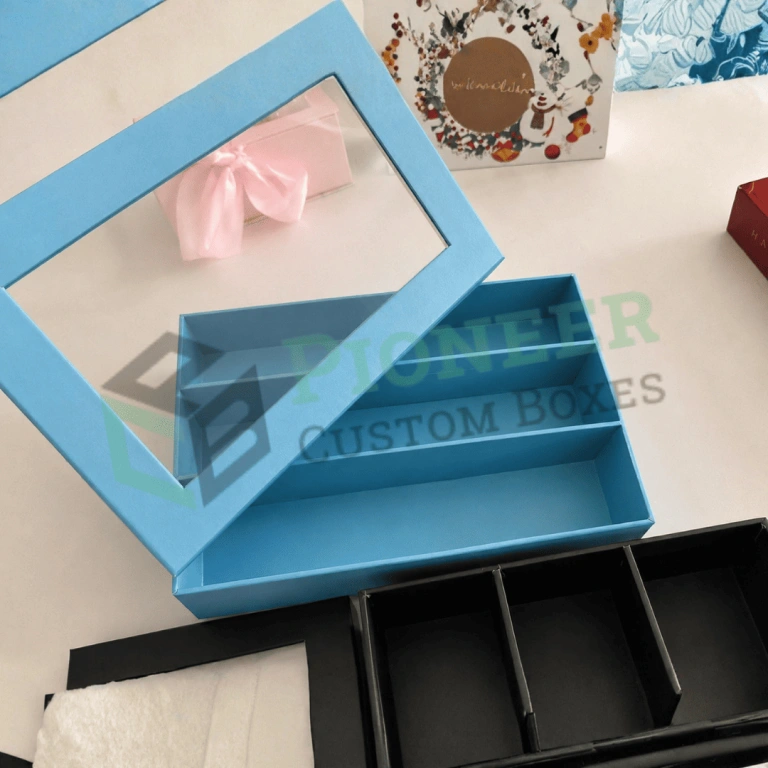
Any of the above with a die-cut aperture and film. It costs more than it appears to, because the wrap has to be cut and turned cleanly around the opening.
| Style | Lid Coverage | Ships Flat | Best For |
|---|---|---|---|
| Full telescope lid | Entire base depth | No | Maximum protection and enclosure |
| Partial telescope or shoulder | Upper portion only | No | Design-led looks at lower wrap cost |
| Lift-off lid with neck | Upper portion, seats on neck | No | Controlled fit and slow close |
| Magnetic closure | Hinged, single piece | Sometimes | Unboxing and reuse |
| Collapsible rigid | Varies by build | Yes | Brands paying real freight costs |
| Drawer and slide | Sleeve over a tray | No | Ritual and niche positioning |
| Rigid box with window | Any, with aperture | No | Products sold on appearance |
Send us the product and tell us how many you ship per month. The second number decides whether a collapsible structure saves you more than it costs.
Every box is built to your product. These sizes cover the rigid work we produce most often.
| Product | Typical Internal Size (inches) | Greyboard | Insert |
|---|---|---|---|
| Jewelry, ring or pendant | 3.5 x 3.5 x 1.5 | 1.5mm | Foam or flocked pad |
| Watch | 4.5 x 4.5 x 3 | 2mm | Foam cushion |
| Cosmetics single item | 3 x 3 x 4 | 1.5mm to 2mm | Paperboard cradle |
| Perfume 50ml to 100ml | 3 x 2.5 x 5 | 2mm | Fitted cradle |
| Electronics accessory | 6 x 4 x 2 | 2mm | Die-cut tray |
| Folded apparel, single garment | 12 x 9 x 2 | 2mm | Tissue, no insert |
| Folded apparel, two garments | 14 x 10 x 3 | 2mm to 2.5mm | Tissue, no insert |
| Spirits single bottle | 4 x 4 x 13 | 2.5mm | Fitted cradle or foam |
| Corporate gift set | 10 x 8 x 4 | 2mm | Multi-cavity tray |
| Subscription box | 9 x 7 x 3 | 2mm | Die-cut tray |
| Large hamper or presentation | 16 x 12 x 5 | 3mm | Fitted tray |
Greyboard thickness is chosen from the span rather than from the price tier. A large lid in thin board bows across its middle, which is the most visible defect a rigid box can have. The same rule governs the larger formats in our gift boxes range.
This is the part of rigid box engineering that separates a box that feels expensive from one that feels awkward, and it is rarely explained.
A two-piece rigid box is very nearly airtight when the lid seats. Pushing the lid down compresses the air inside, and that air has to escape somewhere for the lid to close fully.
Too tight and the air cannot escape fast enough. The lid stops short, springs back slightly, or requires a push that feels like forcing something. Customers read that as a defect rather than as quality.
Too loose and the opposite happens. The lid drops straight down with no resistance and slides off in a bag, which removes the entire effect the structure exists to create.
The target is a slow controlled descent, where the lid sinks under its own weight over a second or two. That is what people mean when they say a box feels expensive, and it is a tolerance question.
We control it with the neck height and the clearance between lid and base, typically working to fractions of a millimeter. A neck that is too tall makes the lid seat before the base is full, which looks like a manufacturing fault.
Wrap thickness enters the calculation too. The paper wrapped around both pieces adds real dimension, so a box calculated on bare greyboard alone comes out tight once wrapped.
Humidity affects it as well, which is why we condition samples rather than testing them straight off the line. A box that fits perfectly in a dry workshop can bind in a humid warehouse.
A rigid box is three materials working together, and each one is chosen separately.
The structural core, made from compressed recycled fiber. Thickness is chosen from the span rather than the price point, because a wide lid in thin board bows visibly. We run 1.5mm for small boxes, 2mm as the general standard and 2.5mm to 3mm for large apparel and presentation boxes.
An offset-printed sheet laminated over the greyboard. It allows full photographic quality and exact brand color, and it is what most retail rigid boxes use.
Uncoated, linen, felt-marked, colored and embossed stocks wrapped without printing. They carry an artisan or heritage character that printed wrap struggles to achieve, and they hide handling marks well.
Cloth or synthetic leather over the board, used for premium presentation and keepsake boxes. They cost considerably more and are genuinely kept by customers.
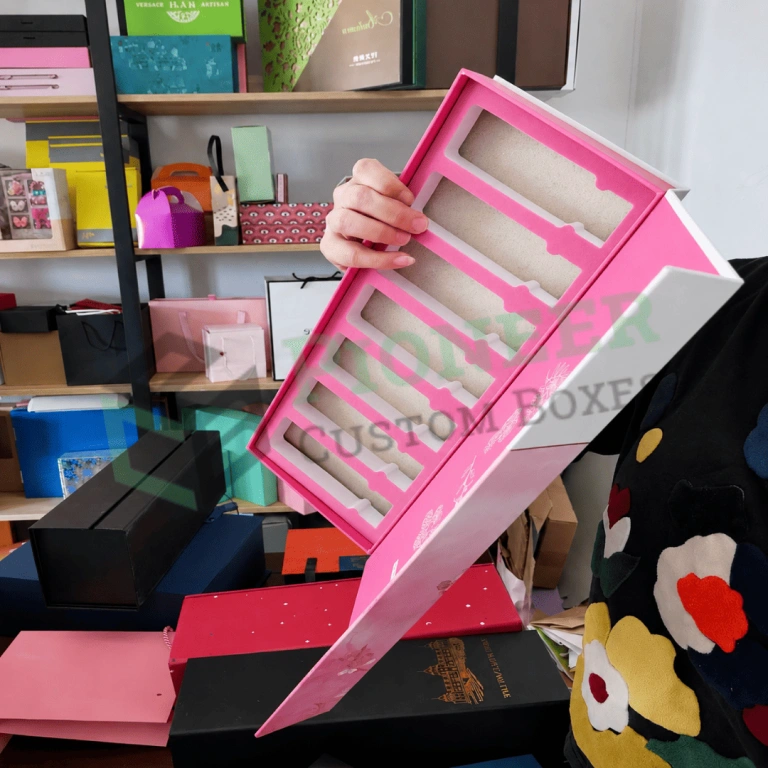
Cut or die-cut foam, sometimes fabric-wrapped, holding a product precisely. It gives the best protection and the most luxurious presentation, and it is not recyclable curbside.
A folded cavity tray in board, which holds most products just as securely as foam at lower cost and recycles with the box.
Formed recycled fiber cavities, plastic free and increasingly requested where a brand wants the presentation of foam without the material.
| Material | Typical Spec | Strengths | Watch For | Relative Cost |
|---|---|---|---|---|
| Greyboard 1.5mm | Small boxes to about 6 inches | Economical, adequate rigidity | Bows on larger spans | Lower |
| Greyboard 2mm | General standard | Right for most applications | Rarely wrong | Moderate |
| Greyboard 2.5mm to 3mm | Large apparel and presentation | Holds wide spans flat | Adds weight and freight | Higher |
| Printed litho wrap | Offset sheet over board | Full color, exact brand match | Edges can lift if turned poorly | Moderate |
| Specialty textured paper | Uncoated or embossed stock | Artisan character, hides marks | Limited color reproduction | Higher |
| Fabric or leatherette wrap | Cloth or synthetic | Keepsake quality | Cost and lead time | Highest |
| Foam insert | Cut or die-cut | Best protection and presentation | Not curbside recyclable | Higher |
| Die-cut paperboard tray | Folded board cavity | Recycles with the box | Less cushioning than foam | Lower |
| Molded pulp tray | Formed recycled fiber | Plastic free, good presentation | Tooling cost at low volumes | Moderate |
The wrap turn-in is where rigid box quality is actually judged. A poorly turned edge lifts within weeks and is the single most common defect customers notice, so we inspect turn-ins on every run.
Printing on a rigid box happens on the wrap sheet before it meets the board, which changes what each method can do.
The standard method. The wrap sheet is printed offset, then laminated to the greyboard and turned. It gives full photographic quality and exact brand color, and it is what almost all retail rigid boxes use.
Digital prints the wrap without plates, which suits short runs, seasonal variants and personalized work. It costs more per unit than offset and removes plate charges entirely.
Ink laid directly onto a textured or dark wrap, used where a specialty stock cannot pass through an offset press. It handles solid marks and logos rather than fine detail.
No printing at all, with the character coming from the stock itself and the branding from foil or emboss. On heritage and artisan positioning this frequently outperforms full color.
Finishing on a rigid box is applied to the wrap, and some effects work far better here than on folding cartons.
Hot foil on the wrap, and the single most effective premium cue available. A rigid box with one foil logo on a plain textured wrap reads as more expensive than a fully printed one.
Rigid construction suits embossing better than any other packaging, because the thick board behind the wrap supports a deep impression without distorting the panel.
A velvet film over the wrap. It is the finish most associated with premium electronics and cosmetics, and it complicates recycling.
A flat protective film that hides fingerprints and handling marks, which matters on a box customers pick up repeatedly in store.
High shine and deep color saturation, suited to bold and youth-oriented brands rather than restrained luxury.
Selective gloss on a matte field, effective behind a foil logo or across a subtle pattern.
A contrasting color visible at the lid edge and inside the turn-in. It is a small detail that signals deliberate design and costs very little.
The colored turn-in is worth knowing about. It is visible only when the lid lifts, which makes it a detail the customer discovers rather than one they are sold, and it costs very little to add.
Rigid boxes are usually the most premium item a brand produces, and color accuracy matters more here than anywhere else in a range.
CMYK builds every shade from cyan, magenta, yellow and black on the wrap sheet. It reproduces photography and gradients accurately and costs the least. Deep blacks and rich jewel tones drift most between runs, and those are exactly the colors luxury packaging uses.
Pantone inks arrive pre-mixed and print identically every run. A rigid box is often the flagship item in a range, so its color has to match the folding cartons and labels beside it. Spot ink is the only reliable way to hold that across years.
RGB is a screen color space and presses cannot print it. Rigid boxes are almost always approved from a screen mockup first, which is precisely where color expectations go wrong. We convert with proper profiles and show a printed wrap before the box is built.
A specific note on black, because rigid boxes use it constantly. A single-ink black prints flat and slightly weak across a large panel, so we build a rich black with supporting inks to get real depth.
Each option below either protects the product, improves the opening or reduces what the box costs to move.
| Feature | What It Does | Best Suited To |
|---|---|---|
| Fitted insert | Holds the product precisely in place | Every premium rigid box |
| Ribbon pull | Lifts the product from a deep box | Deep boxes and drawer styles |
| Magnetic closure | Snaps shut and reopens cleanly | Boxes customers will keep |
| Collapsible construction | Ships flat, erects on your bench | Brands paying real freight |
| Neck or shoulder | Controls lid fit precisely | Lift-off lid styles |
| Colored turn-in | Contrast visible when the lid lifts | Design-led brands |
| Die-cut window | Shows the product through the lid | Products sold on appearance |
| Printed interior wrap | Turns the inside into brand space | Unboxing-led brands |
| Foam or pulp cushioning | Protects fragile contents | Electronics, glass, spirits |
| Corrugated shipping outer | Protects rigid corners in transit | Anything shipped to a customer |
The shipping outer is not optional for direct to consumer. Rigid box corners damage before anything else, and a scuffed corner on a premium box gets returned rather than accepted.
This is the cost nobody quotes for, and on a large rigid box it can rival the price of the box itself.
Rigid boxes do not fold flat. They are built assembled and they ship assembled, which means every carton we send you is mostly air.
Carriers bill on dimensional weight, so you pay freight on that air at both ends. It arrives from us as volume, then it leaves you as volume again inside the shipper around it.
Warehouse space compounds it. A pallet of assembled rigid boxes holds a fraction of the units a pallet of flat folding cartons holds, so storage cost per box is several times higher.
Collapsible rigid construction is the answer where volumes justify it. The box ships flat, erects by hand or by magnet in a few seconds, and behaves like a standard rigid box once assembled.
The trade is unit price against freight and storage. Collapsible costs more per box and saves substantially on everything downstream, so the crossover depends on how many you ship and how far.
Carrier calculations are published, and carrier dimensional weight rules are the sensible place to check how your own shipments are billed before choosing a construction.
We will run the comparison for you as part of quoting. Tell us your monthly volume and where you ship from, and the arithmetic usually answers the question on its own.
Rigid boxes are the most expensive structure in packaging, so understanding what actually drives the number matters.
Greyboard thickness and box size lead together, because both scale material directly. A large apparel box in 3mm board uses a great deal more of everything than a small jewelry box in 1.5mm.
Wrap choice comes second. A printed litho wrap is the baseline, specialty textured stocks cost more, and fabric or leatherette costs several times more again.
Insert type ranks third and varies enormously. A die-cut paperboard tray is inexpensive, while fabric-wrapped foam cut to a complex shape can approach the cost of the box.
Finishing, construction and quantity follow, then the freight considerations above.
The overspend we correct most often is fabric-wrapped foam under a product a flocked paperboard cradle would present just as well, at a fraction of the cost.
Rigid boxes are judged on details that only appear in a physical sample, so we inspect the built box rather than the drawing.
Two-piece rigid boxes are judged almost entirely on how the lid behaves, so that is where most of our checking goes.
Lid fit is the defining property. A lid that drops too fast feels cheap and one that binds feels faulty, and the gap between those two outcomes is measured in fractions of a millimeter. We seat and lift every new sample repeatedly to confirm the air releases at the right rate.
Wrap quality gets inspected at the corners, because that is where a wrapped box fails first. Loose wrap lifts within weeks in a warm room, and a corner that is not fully turned shows as a pale line along the edge.
The base takes its full intended load for an extended period rather than a single test, since rigid boxes are chosen precisely for weight and a base that holds on day one can deform on a shelf by week three.
We check every fitment by inverting a loaded box and shaking it, because a product that moves inside a rigid base defeats the reason the format was specified. Finally we stack filled boxes as a warehouse would, and open each sample the way a customer will, since the lift of the lid is the moment this format is bought for.
We build and open every new rigid design with the real product inside before approving a run. Lid descent and insert grip are physical properties that no proof or rendering can show you.
Rigid construction serves several markets, and the priorities shift between them.
Luxury retail rewards material quality and restraint. Boxes are handled in store before purchase, so wrap texture, corner squareness and lid feel carry the impression.
Electronics uses rigid boxes for the unboxing sequence above all. The insert choreographs the order in which components appear, and that sequence is part of the product experience.
Apparel needs large flat boxes where board thickness matters most, because a wide lid in thin greyboard bows and the defect is immediately obvious.
Jewelry and watches rely almost entirely on the insert. The box is small and simple, and the foam or flocked cradle does the presentation work.
Corporate gifting concentrates volume into short seasonal peaks. Rigid lead times are longer than folding cartons, so programs need confirming by late summer rather than in autumn.
Subscription and direct to consumer brands should look hard at collapsible construction, because they pay freight in both directions and store inventory themselves.
Spirits and glassware need cushioning and a corrugated outer, since a rigid box alone does not protect glass through a parcel network.
Most brands using rigid boxes also run folding cartons alongside them, and the two have to match on color, which is where spot inks earn their cost.
Rigid boxes attract sustainability criticism more than any other packaging, and some of it is deserved while some is not.
The greyboard core is the good news. It is made almost entirely from recycled fiber, and EPA figures for paper and paperboard recovery show paper and board as the most recovered packaging material stream in the country.
Lamination is the real obstacle. Soft touch and gloss films over the wrap complicate recovery, and they are also the finishes premium brands are least willing to surrender. A matte coating achieves a similar hand feel and keeps the box cleanly recyclable.
Foam inserts are the other weak point, and the easier one to fix. A die-cut paperboard cradle or a molded pulp tray presents most products just as well and stays in one material stream.
Reuse is the argument rigid boxes win on, and brands undersell it. A well-made rigid box is kept and reused for years, which is a genuinely lower footprint than a carton discarded on opening.
Right-sizing still applies. Rigid boxes are frequently specified larger than the product needs because generosity feels premium, and that choice costs board, freight and warehouse space permanently.
Certified fiber is straightforward to supply across greyboard and wrap alike, and we document what your box contains rather than leaving you to assume it.
These errors repeat across brands at every scale, and each one is avoidable before tooling.
Calculating dimensions on bare greyboard is the classic. The wrap adds real thickness on every surface, and a box calculated without it comes out tight and the lid will not seat.
Specifying thin board on a large lid is second. It saves very little and produces a bowed panel, which is the most visible defect a rigid box can have.
Ignoring freight at the quoting stage is third and the most expensive over time. A cheap assembled rigid box can cost more in freight and storage across a year than a collapsible one would have.
Stacking finishes is a reliable way to spend money without gaining perceived value. The most expensive-looking rigid boxes usually carry one foil element on one good material.
Specifying fabric-wrapped foam by default adds cost that a flocked paperboard cradle would have saved, on products that do not need cushioning at all.
Shipping a rigid box without a corrugated outer produces corner damage, and a scuffed corner on a premium box is treated as a fault rather than as transit wear.
Finally, confirming seasonal gift programs in autumn. Rigid lead times are longer than folding cartons and capacity fills early, which no budget compresses.
A subscription brand came to us shipping around four thousand rigid boxes a month from a single warehouse.
Their box was a well-made 2mm two-piece with a printed wrap, and they were happy with it. What they had never examined was what it cost to move and store.
Assembled rigid boxes filled their storage racks at roughly a fifth the density of flat cartons, and they were paying inbound freight from us on that same volume before a single order shipped.
We rebuilt the same box as a collapsible rigid with a magnetic erect, keeping the wrap, the foil logo and the internal dimensions identical so the customer experience did not change at all.
Unit price rose by about eighteen percent. Inbound freight fell by roughly two thirds, their storage footprint dropped by a similar proportion, and the net position was clearly positive within the first quarter.
We manufacture domestically and ship free to every state, so launch dates and gifting deadlines hold.
Our rigid box customers include luxury retail brands, apparel labels, electronics companies, jewelers, cosmetics brands, spirits producers, corporate gifting programs and subscription businesses.
We produce for brands in New York, Los Angeles, San Francisco, Miami, Chicago, Dallas and Seattle, and we supply smaller labels across California, New York State, Florida, Texas, Nevada, Colorado and the Carolinas.
Freight distance genuinely changes the recommendation here. A brand shipping from a warehouse close to us may do better with standard assembled construction, while one shipping cross-country almost always benefits from collapsible.
Wherever you are, the terms stay identical. Zero minimum order quantity, free design support, free shipping and a written specification with every order.
Ordering runs through four steps and our team handles the technical work at each one.
First, send the product and tell us your monthly volume and where you ship from. The product decides the insert, and the volume decides whether collapsible construction is worth it.
Second, we return a free dieline and a written quote within one business day, with board thickness, wrap options and construction costed separately so you can see each decision.
Third, you approve a digital proof and we strongly recommend a physical sample. Lift the lid, invert the insert and look at the turn-ins, because those three things decide whether the box feels right.
Fourth, we produce and ship. Rigid production runs twelve to eighteen business days because wrapping and curing cannot be rushed, rush options exist, and shipping across the United States costs nothing.
Three commitments make rigid packaging workable for a first launch as well as a national rollout, and none carry a hidden charge.
Zero minimum order quantity means you order what you need. Rigid boxes are usually sold at high minimums elsewhere, and a small brand can order a genuine premium box without committing to thousands.
Free design support covers the dieline, board thickness specification, lid fit engineering, insert design and artwork preparation for the wrap. The freight comparison is part of that rather than an extra.
Free shipping applies across the United States on every order, rush production included. We manufacture domestically, so a holiday gifting program never waits in a customs queue.
We are a direct manufacturer rather than a broker. We cut our own board, wrap in house and finish every order ourselves, which is why we quote quickly and stand behind what leaves our floor.
On rigid boxes the deciding properties are tactile and dimensional at once. Lid descent, wrap turn-in quality, corner squareness and insert grip all have to be built and tested rather than specified on paper, and we test each with your product inside.
We will also tell you when a rigid box is the wrong answer. For some products a heavy folding carton with good finishing delivers most of the effect at a fraction of the cost and freight, and we would rather say so than sell you the expensive option.
Send us your product, your volumes and where you ship from, and we will return a free dieline and a written quote for two-piece rigid boxes within one business day. Order now, or get a free quote and we will run the collapsible comparison alongside it.
| Box Style | 2 Piece Rigid Boxes |
| Dimension (L + W + H) | All Custom Sizes & Shapes |
| Quantities | No Minimum Order Required |
| Paper Stock | 10pt to 28pt (60lb to 400lb) Eco-Friendly Kraft, E-flute Corrugated, Bux Board, Cardstock |
| Printing | No Printing, CMYK, CMYK + 1 PMS color, CMYK + 2 PMS colors |
| Finishing | Gloss Lamination, Matte Lamination, Gloss AQ, Gloss UV, Matte UV, Spot UV, Embossing, Foiling |
| Included Options | Die Cutting, Gluing, Scored, Perforation |
| Additional Options | Eco-Friendly, Recycled Boxes, Biodegradable |
| Proof | Flat View, 3D Mock-up, Physical Sampling (On request) |
| Turnaround | 4 – 8 Business Days, RUSH |
| Shipping | FLAT |
Every great product deserves packaging that turns heads. Here's how we make it happen — step by seamless step.
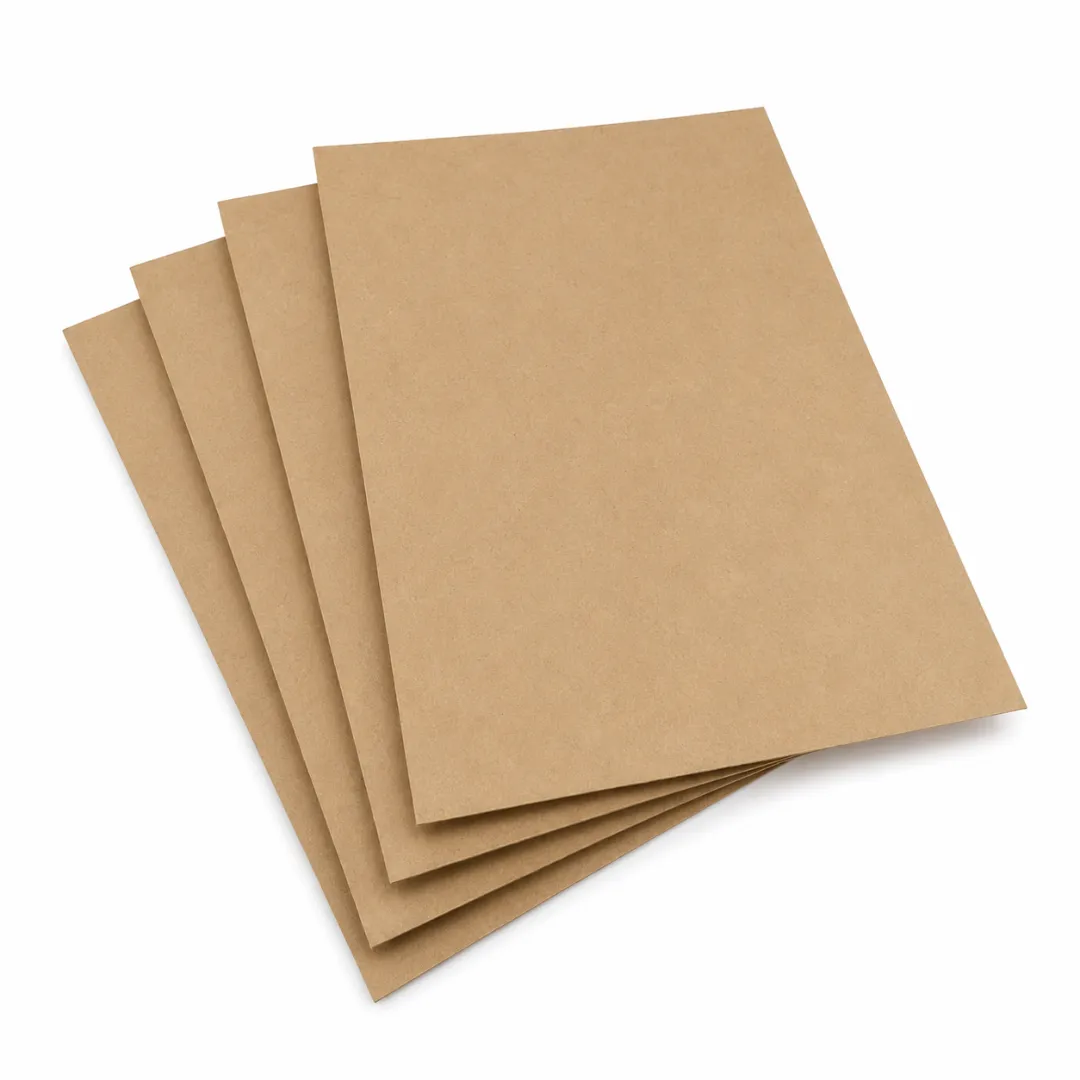
Kraft paper is a strong, durable and reliable material that is widely used across many different industries.
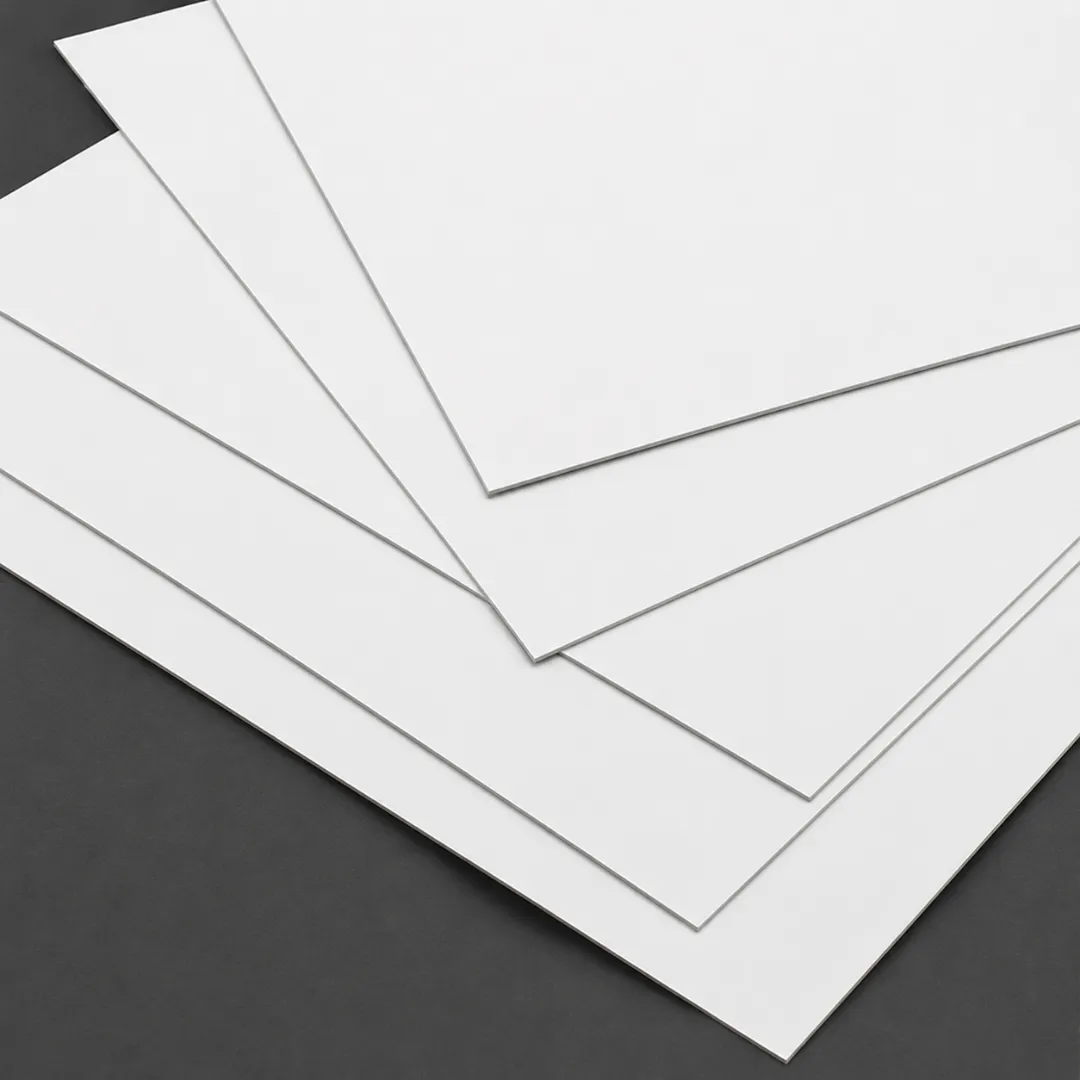
We use cardboard material with the least environmental impact and minimizes waste generation.
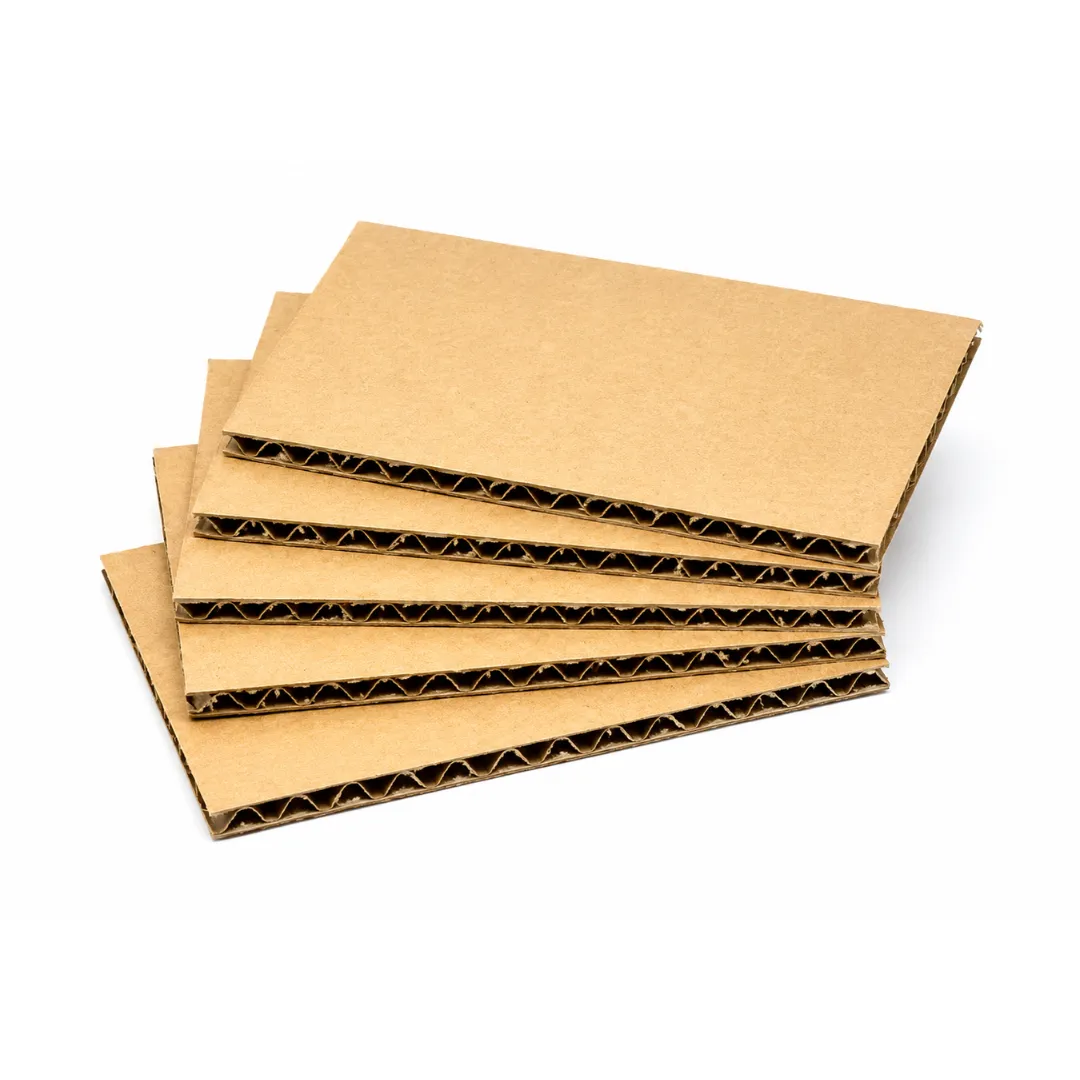
Corrugated material is easy to customize, cost effective and sustainable. It is also great for branding purposes.
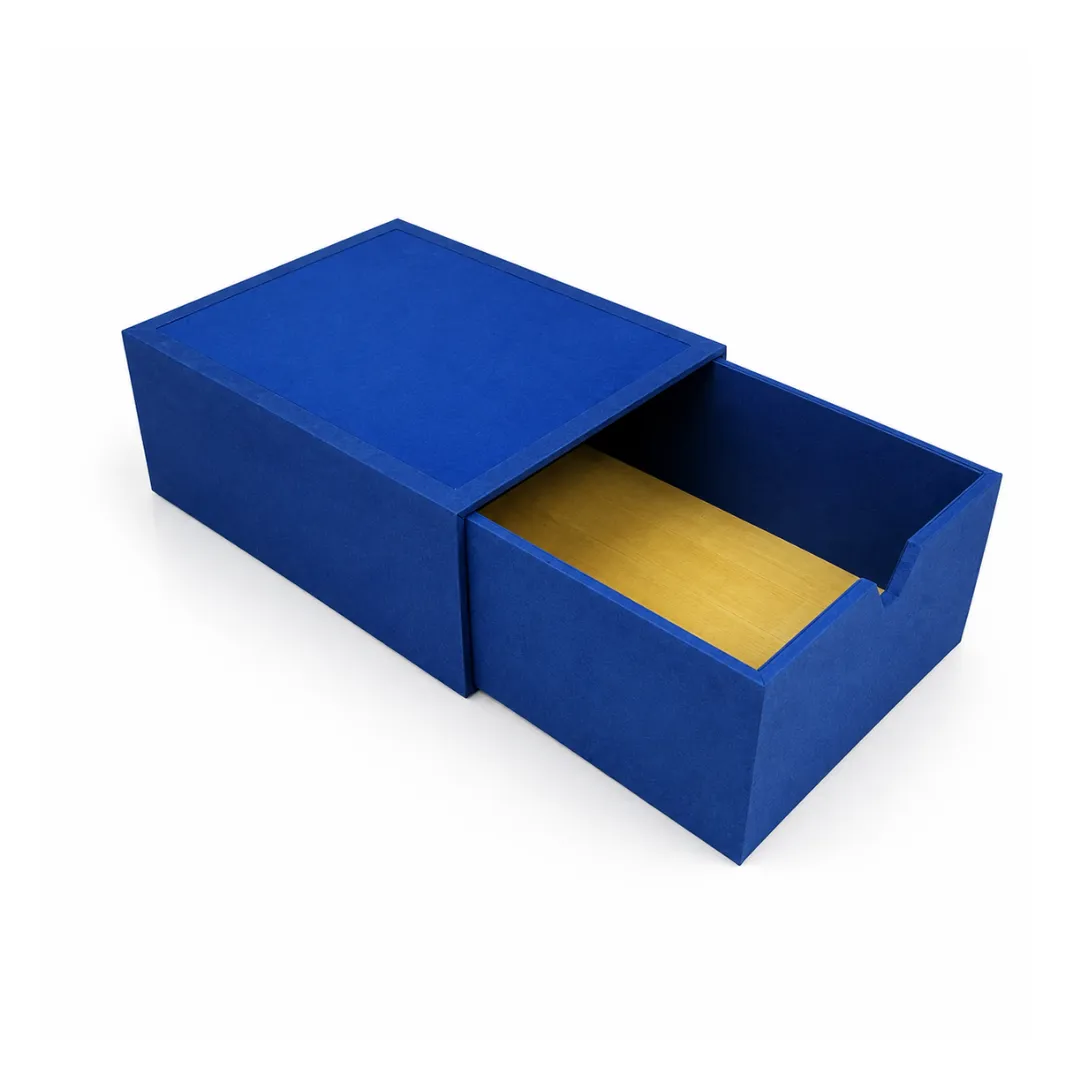
Rigid is highly protective, affordable and recyclable material. These boxes provide maximum protection.
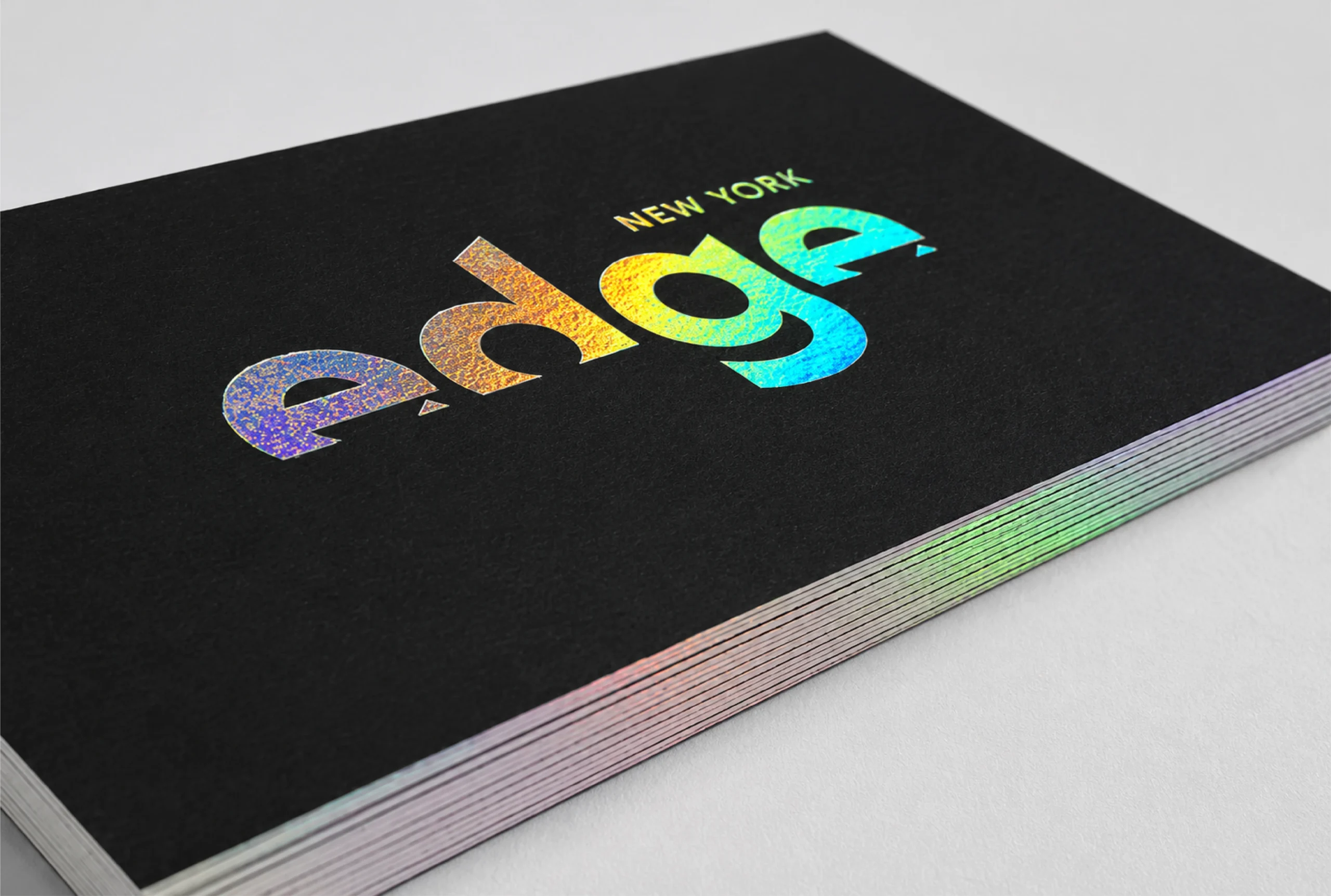
Holographic foil diffracts light and reveals the colors of the rainbow at various angles.
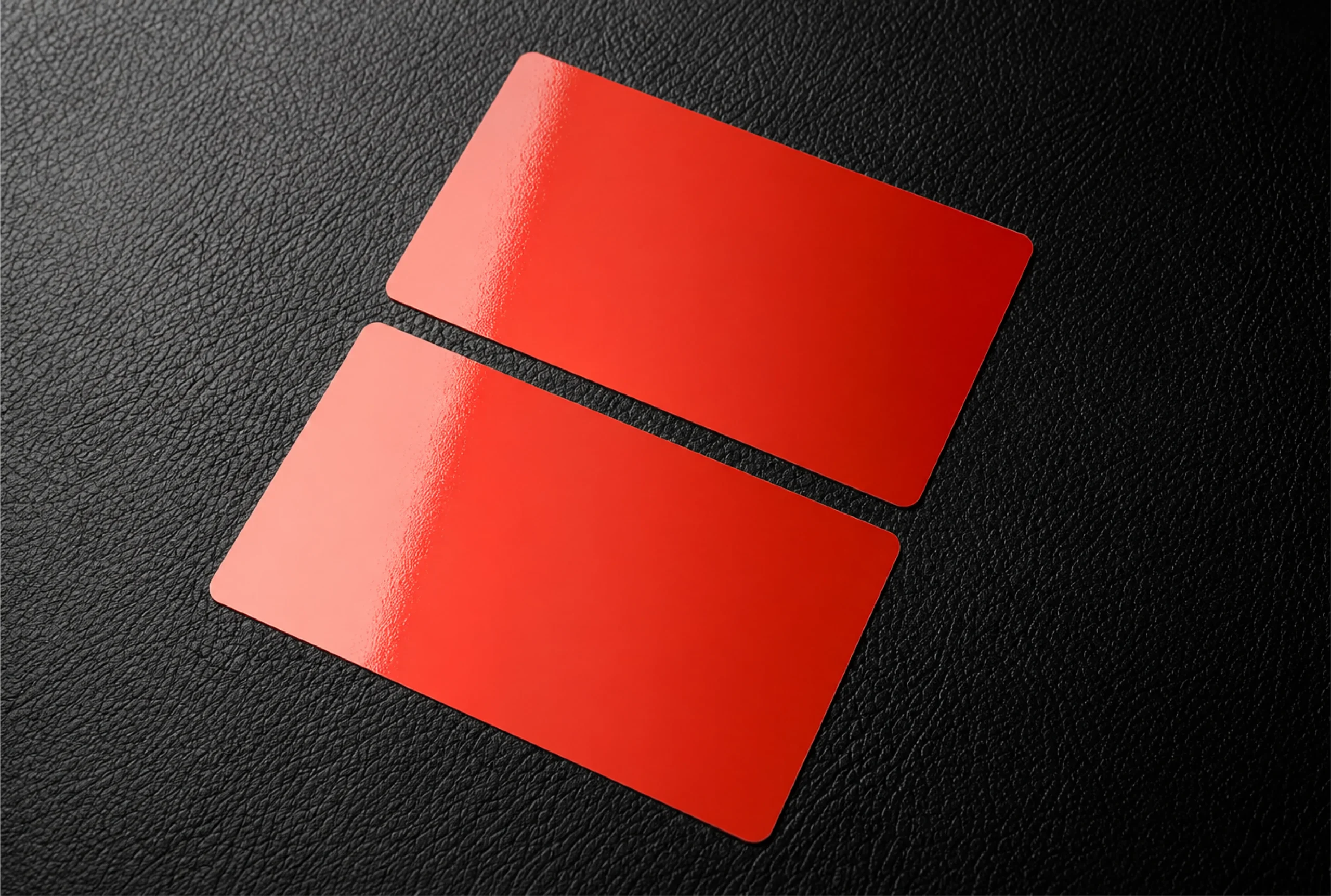
Our glossy finishing gives your packaging an extra layer of shine.
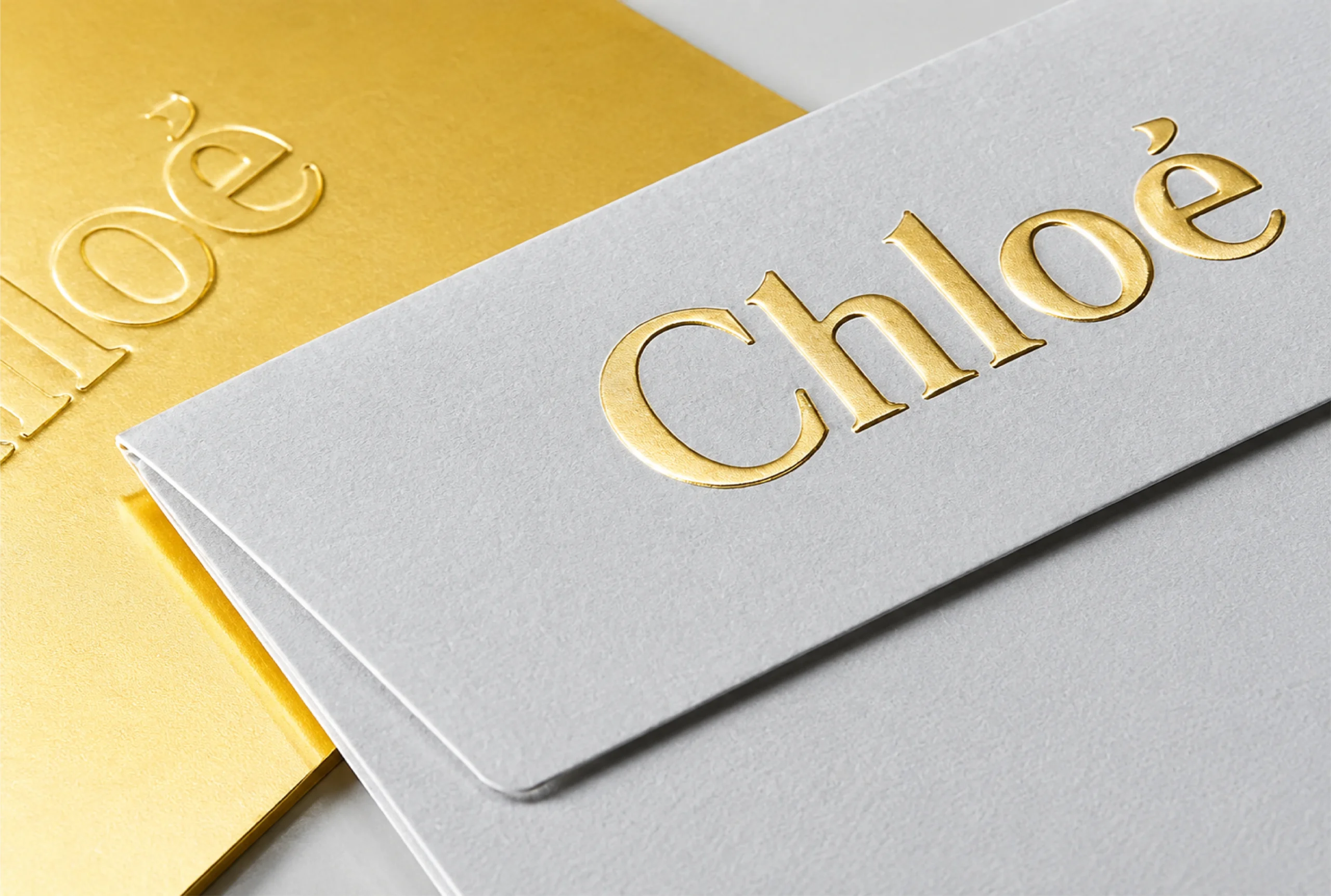
Decorate a wide range of your product packaging with our foil stamping.

With our embossing technique, we transfer the finest details of your product on packaging.
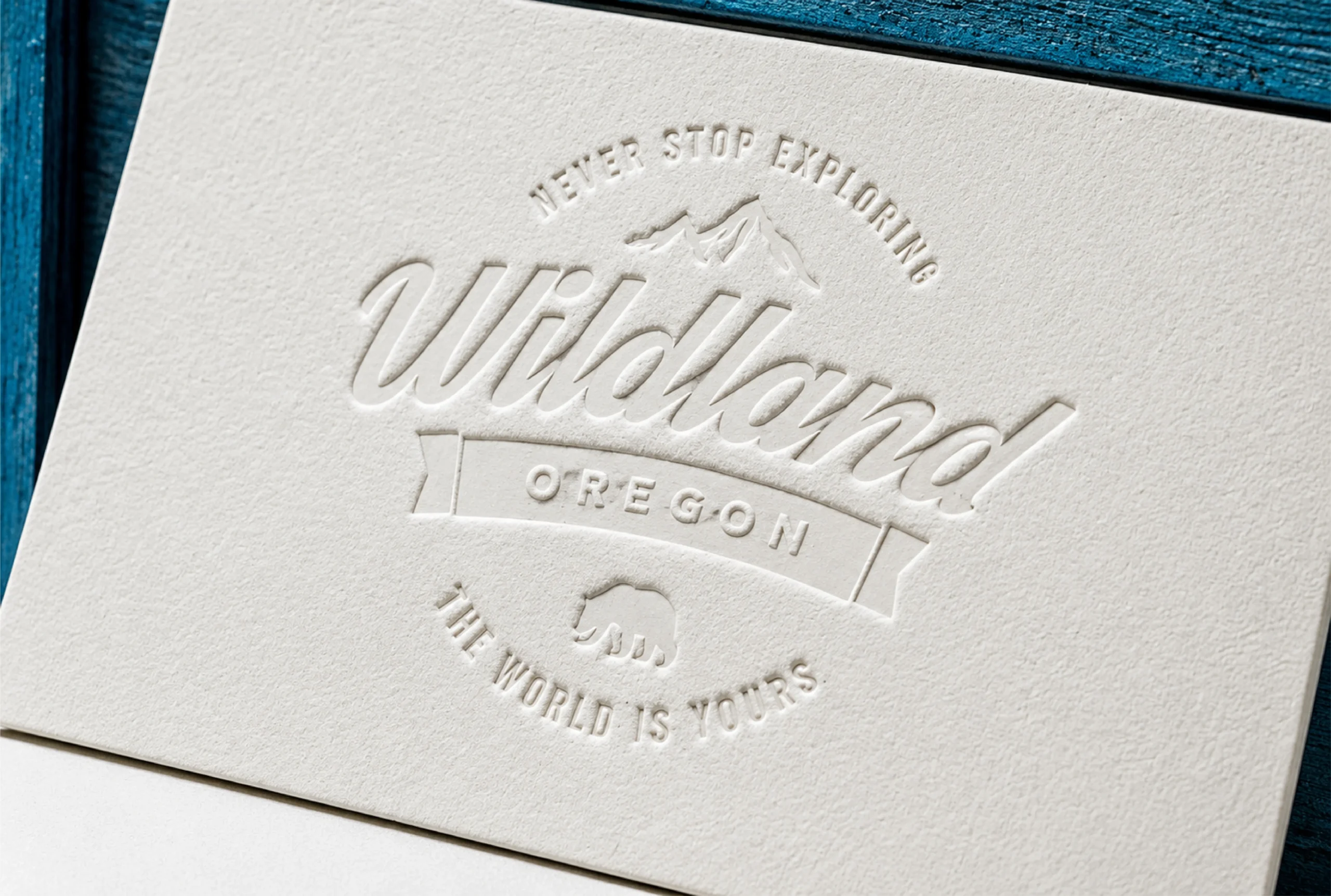
We use debossing technique to add unique graphics into your packaging.
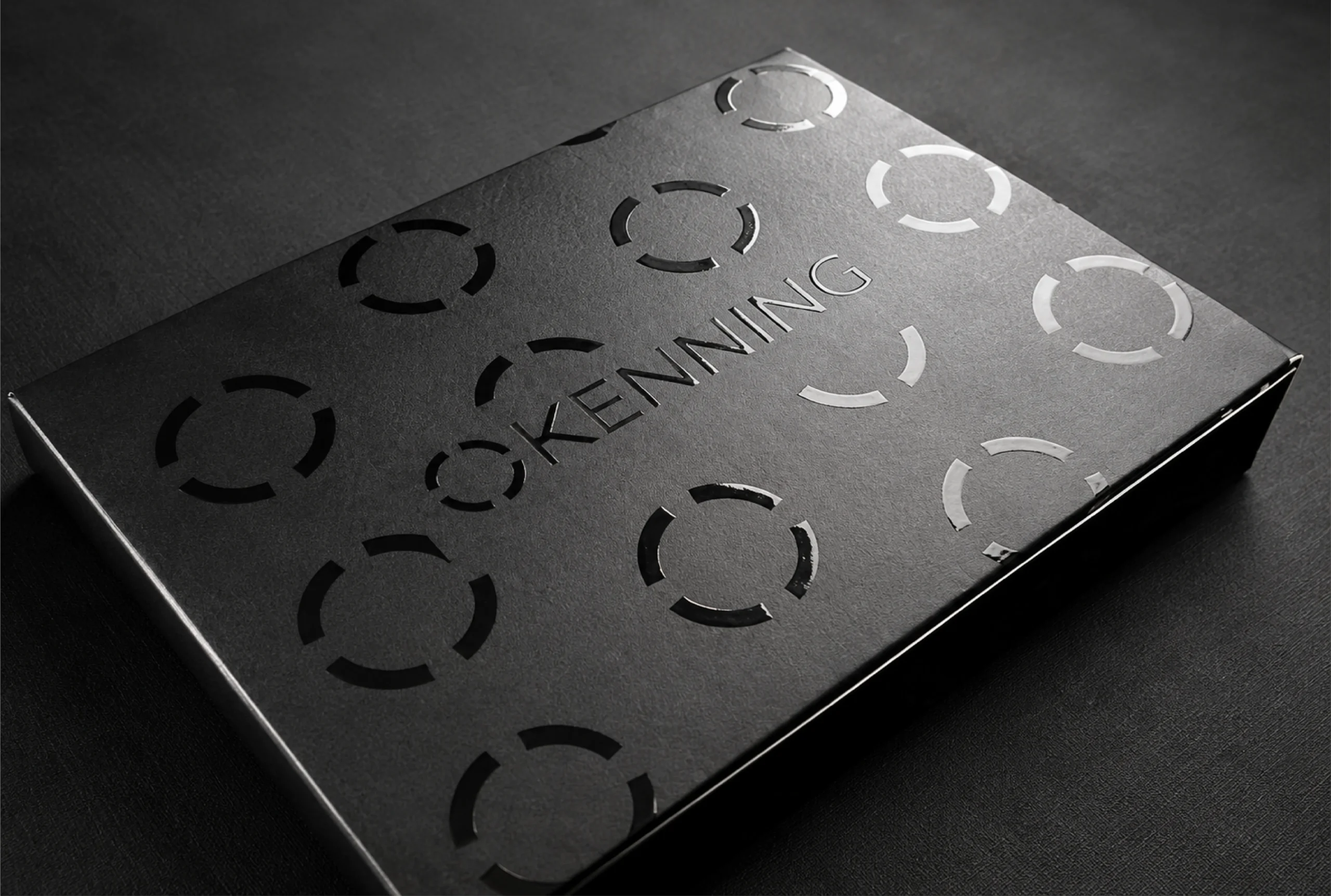
Our high-gloss UV coating gives light and shine to cure the printed material's varnish.
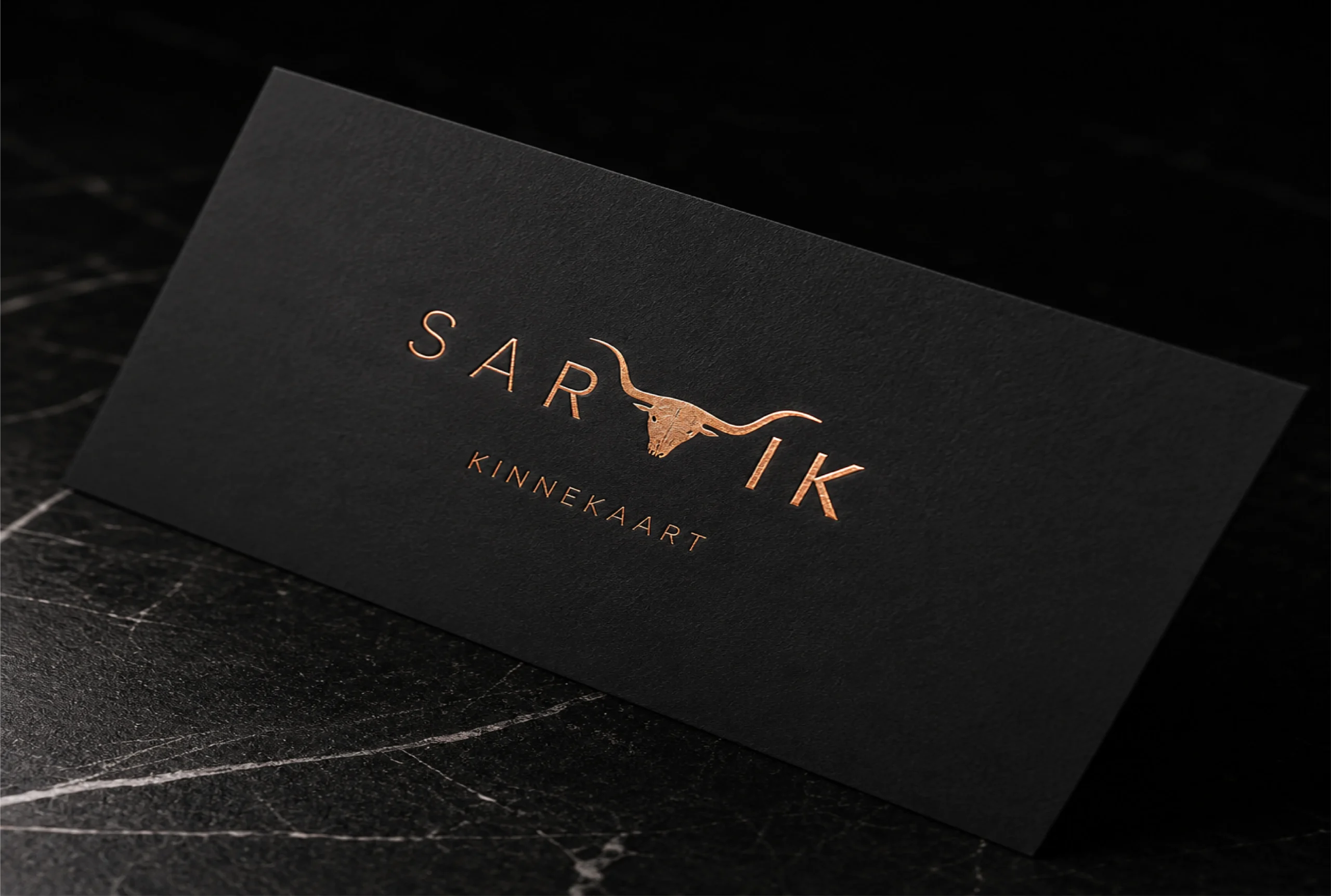
We add additional layer of protection with soft touch lamination from toner chipping.
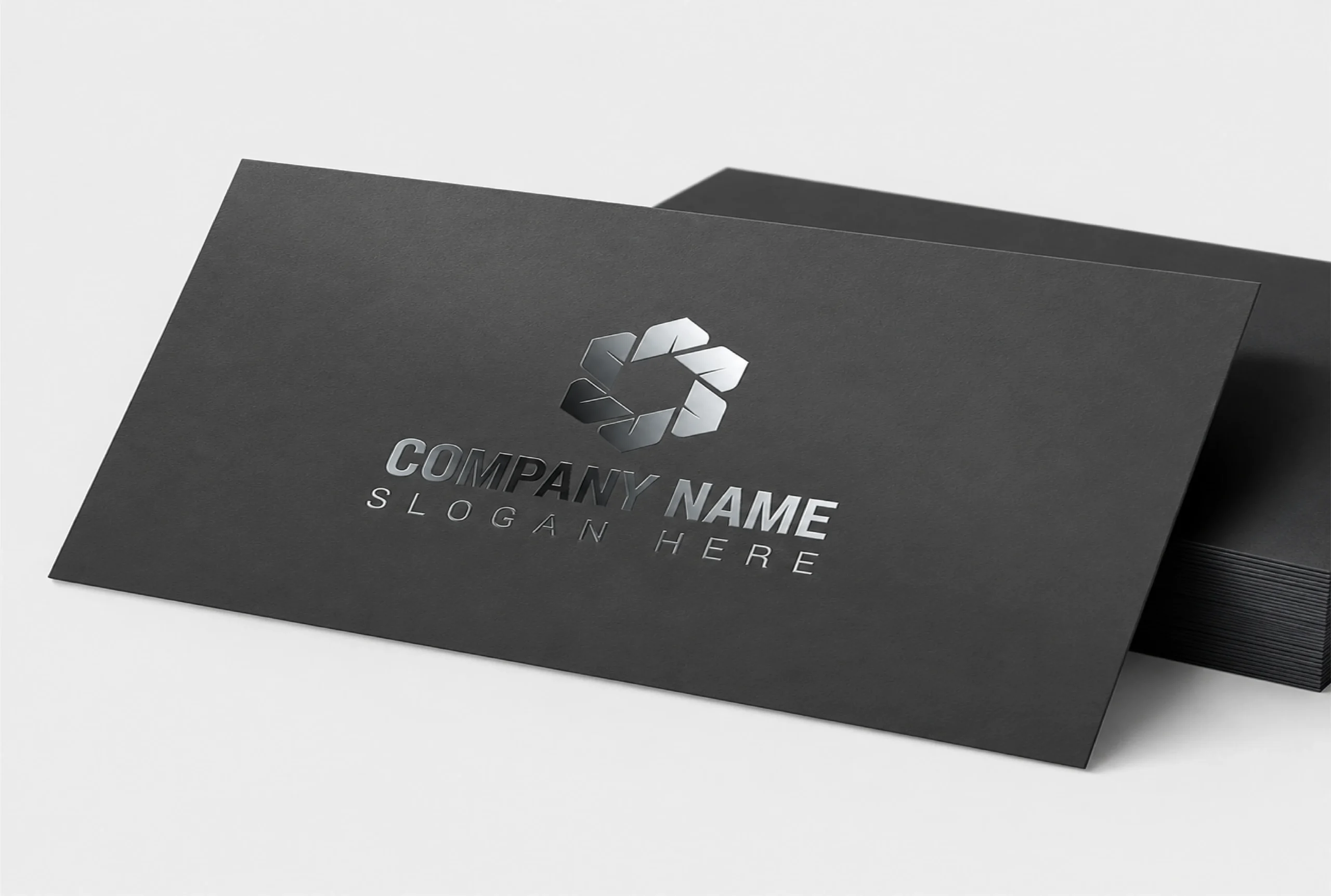
With our matte finish, fingerprints and smudges will now be less visible on the packaging.

Give your packaging a dazzling touch. Our custom foil boxes use brilliant metallic finishes that catch the eye. Stand out from the crowd with free design support and unbeatable wholesale pricing.
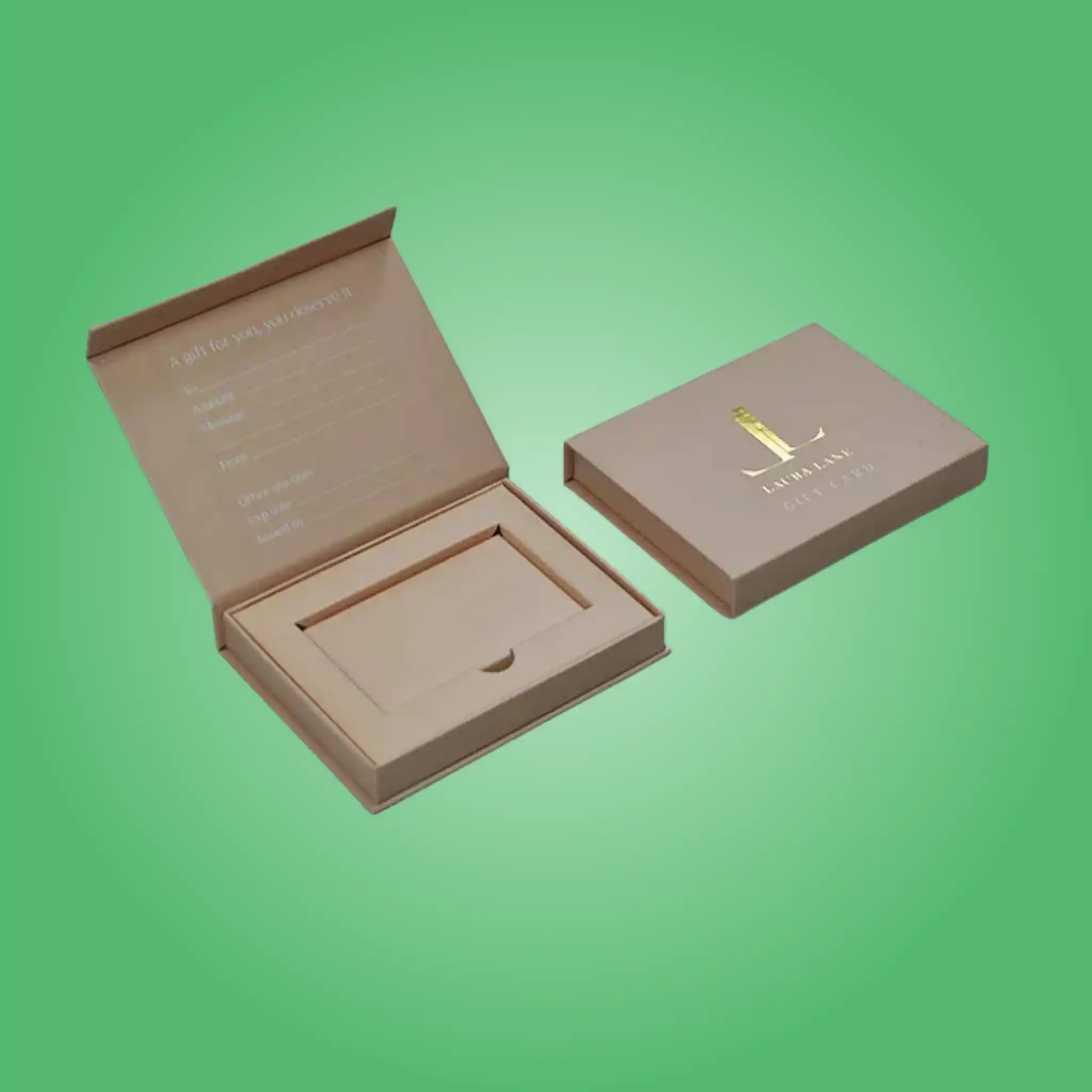
Present your items with curated flair. Our rigid boxes and custom inserts offer superior protection and a premium unboxing experience. We deliver quality materials and free shipping right to your door.
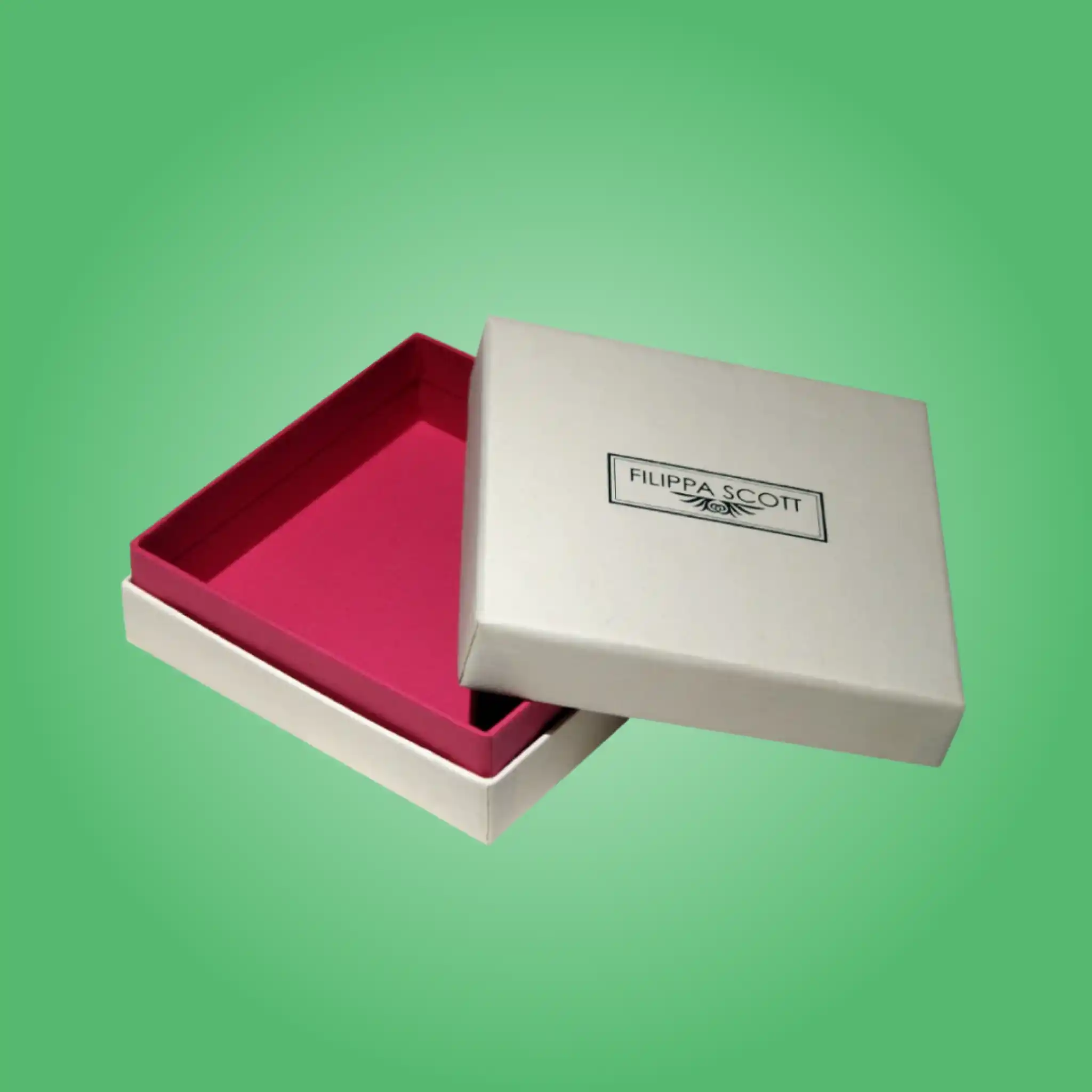
Classic and chic, these boxes are built to impress. A secure lid and high-end materials make them perfect for special items. We offer free design assistance and competitive pricing for any business size.
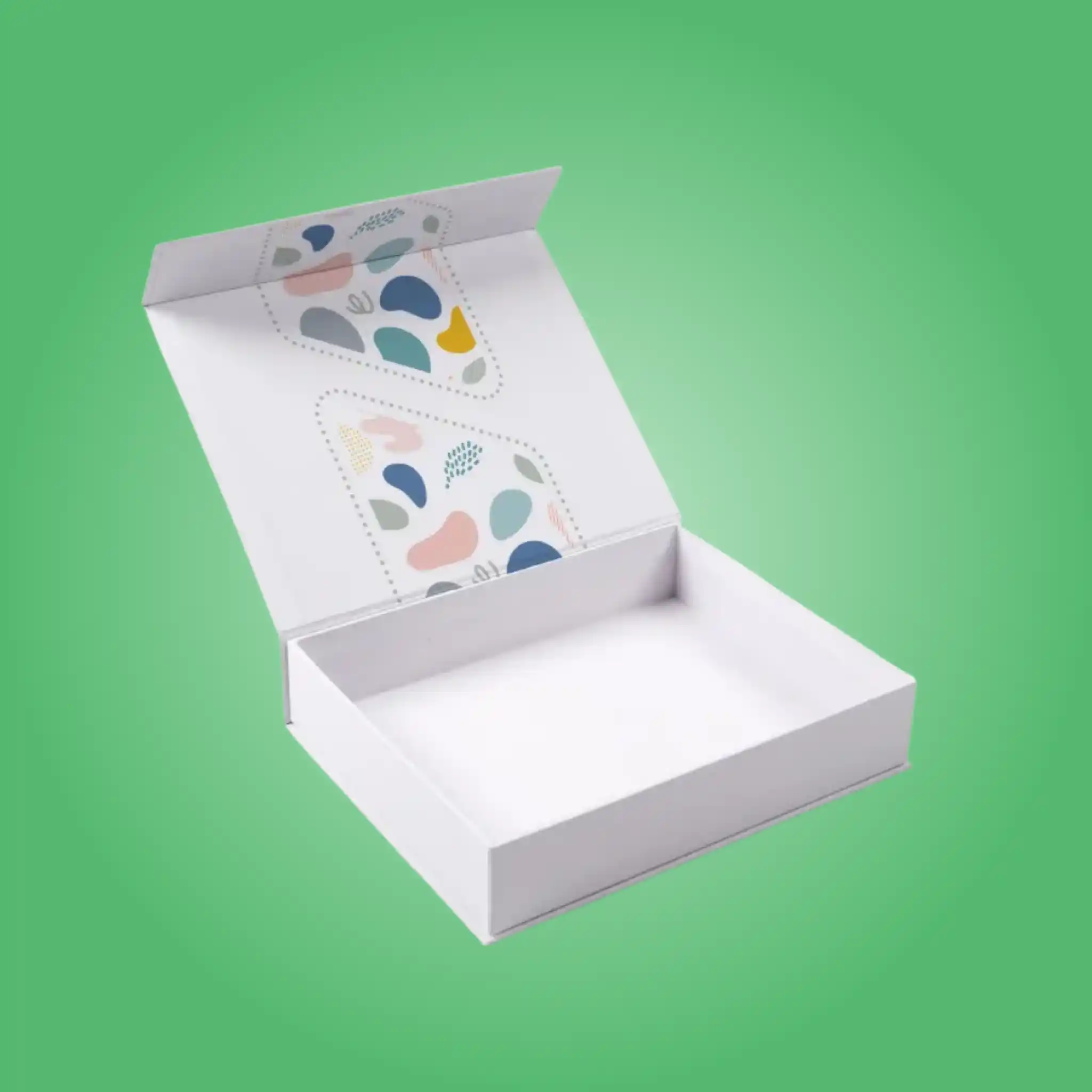
Built for strength and style, these boxes arrive fully assembled and ready to use. They provide superior protection for your most valuable products. We offer high-quality materials and fast delivery on every order.