Custom Shaped Boxes That Turn Packaging Into a Brand Experience
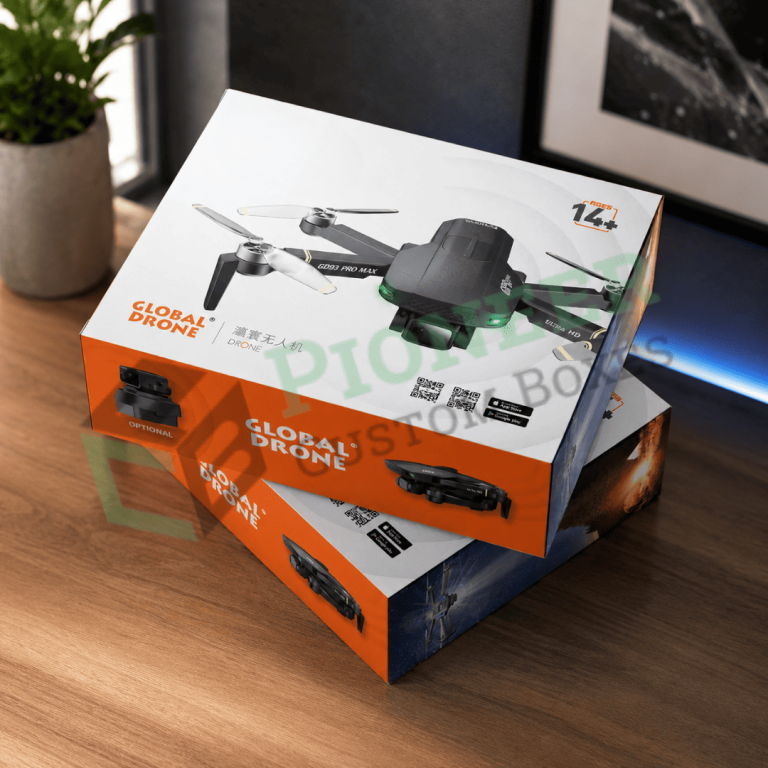
Custom shaped boxes transform ordinary packaging into a powerful brand statement. Instead of using traditional square or rectangular packaging, businesses can design boxes that match product shapes, brand themes, or promotional concepts. This type of packaging instantly attracts attention, improves shelf presence, and creates memorable unboxing experiences.
At Pioneer Custom Boxes, we manufacture custom shaped boxes designed for retail brands, e‑commerce companies, subscription products, and promotional packaging across the United States. Our packaging solutions combine strong structural engineering, premium printing, and flexible customization. Businesses benefit from zero minimum order quantity, free shipping across the USA, fast lead times, and free professional design services.
When brands want packaging that stands out from competitors, custom box shapes provide a creative and practical solution.
Why Custom Shaped Boxes Improve Product Presentation
Packaging plays a major role in how customers perceive a product before even opening it. Unique shapes capture attention immediately and create curiosity. When customers see a distinctive box structure, they are more likely to remember the brand.
Unlike standard cardboard boxes, custom shapes allow businesses to design packaging that matches the product or marketing concept. This approach improves visual appeal and enhances the unboxing experience.
Brands commonly use custom shaped boxes for:
Luxury retail brands use them to justify a higher price point. Promotional and gift packaging relies on them because an unusual shape gets kept rather than discarded. Cosmetic lines use them to separate a hero product from the rest of a range. Toy and novelty brands use them because the box becomes part of the play. Seasonal campaigns use them because a limited shape signals a limited moment.
By using creatively designed packaging, businesses can transform a simple shipping container into a memorable marketing tool.
Structural Engineering Behind Custom Box Shapes
Creating unique packaging shapes requires careful structural design. Packaging engineers develop dielines that allow cardboard boxes to fold into complex forms while maintaining strength and stability.
Most custom shaped boxes are manufactured using 300-400 GSM paperboard or corrugated cardboard depending on the product weight and shipping requirements.
Paperboard structures are commonly used for retail packaging where presentation is the priority. Corrugated boxes shipping structures are used when additional durability is required for transport and storage.
Proper structural engineering ensures that even unusual shapes maintain strength during stacking, shipping, and retail display.
Custom Cube Boxes for Symmetrical Packaging
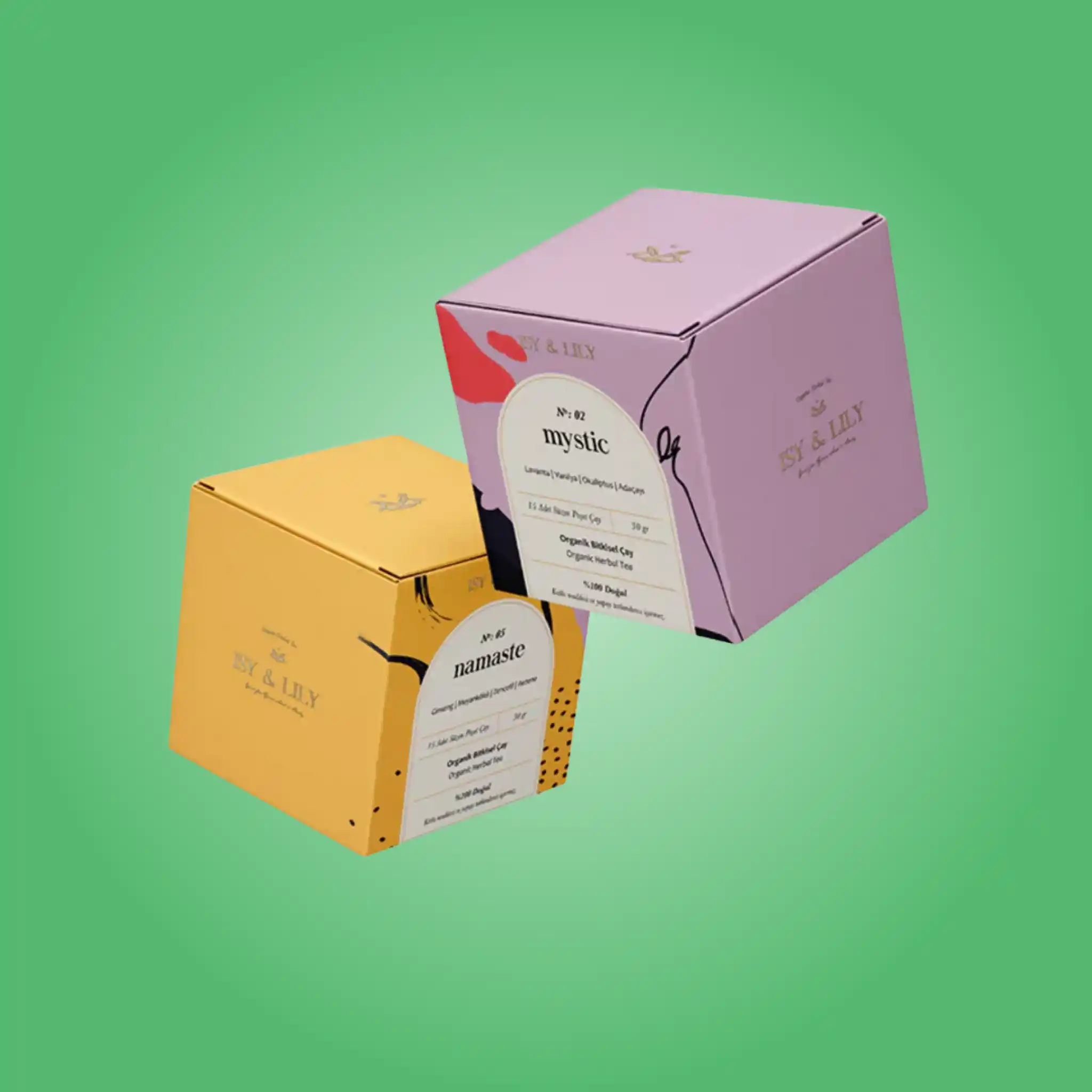
One popular packaging format is the cube structure. Businesses frequently use custom cube boxes when they want packaging that looks balanced and visually clean.
Cube packaging works especially well for candles, cosmetics, gift products, and specialty retail items. The equal dimensions of the box create a premium appearance and provide large printable surfaces for branding.
Because cube packaging is symmetrical, it is also easy to stack and display on retail shelves.
Dispenser Style Packaging for Product Accessibility
Some products require packaging that allows easy access while still protecting the contents. Businesses often use custom dispenser boxes for items such as tissues, cosmetic wipes, snack packs, or small retail products.
Dispenser boxes include openings that allow customers to remove products individually without damaging the packaging structure. These designs combine functionality with branding, making them popular for retail counters and consumer packaging.
Display Packaging for Retail Shelves
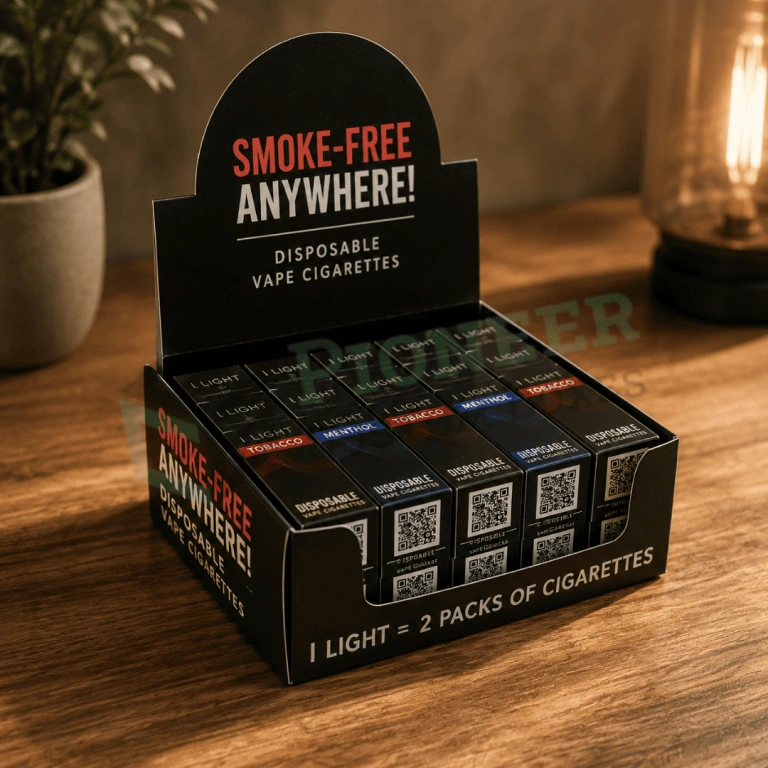
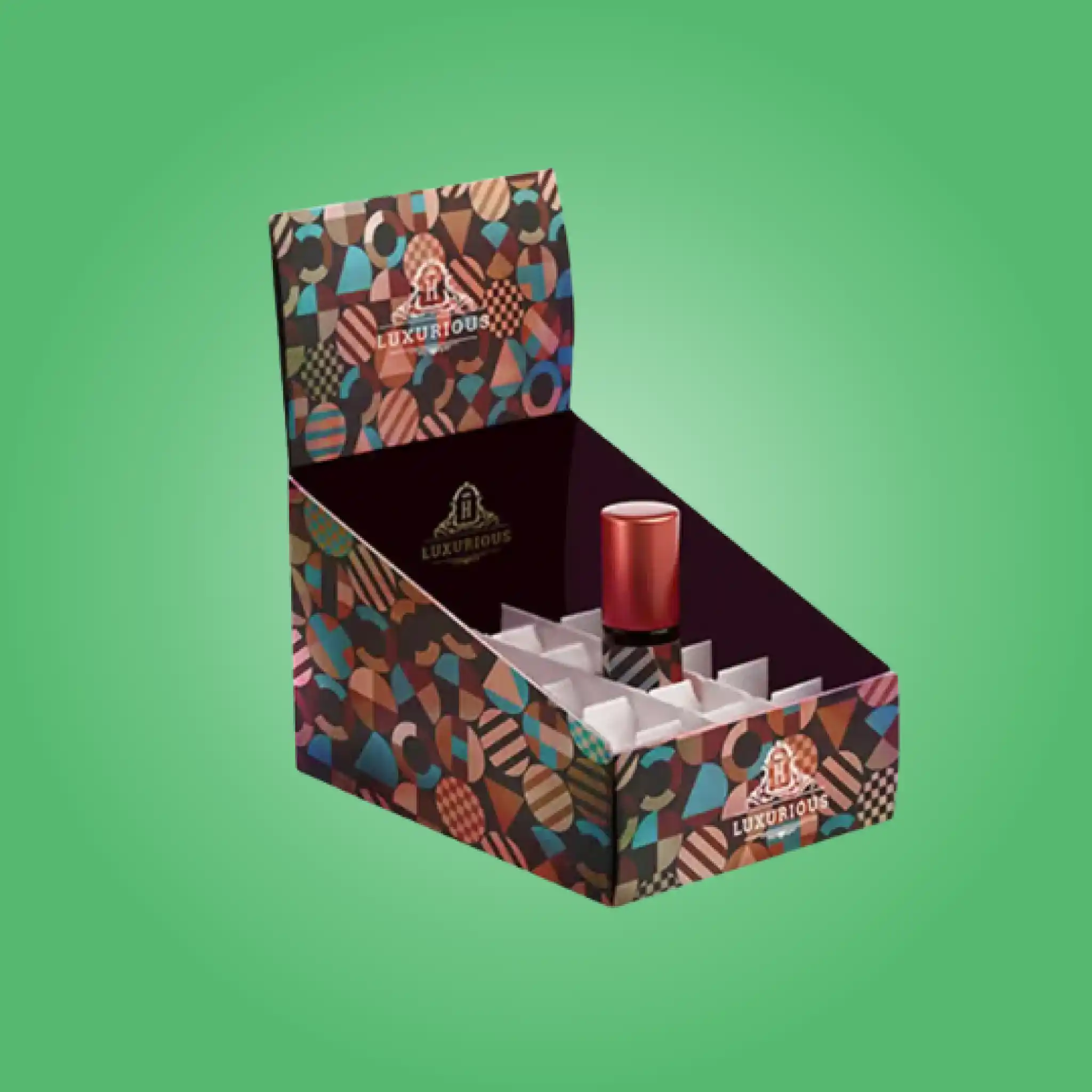
Retail environments require packaging that both protects products and presents them effectively. Brands frequently use custom display boxes that open into product stands for store shelves.
These packaging structures allow multiple items to be displayed neatly while maintaining brand graphics on the exterior. Display packaging is commonly used for cosmetics, snacks, small electronics, and promotional items.
Combining display functionality with unique box shapes can significantly improve product visibility in crowded retail environments.
Pyramid Boxes for Premium Gift Packaging
Creative geometric designs are often used for gift packaging and promotional campaigns. One distinctive example is custom pyramid boxes, which use triangular structures to create a striking presentation.
Pyramid packaging is frequently used for luxury gift items, wedding favors, jewelry packaging, and promotional giveaways. The unusual shape immediately captures attention and enhances perceived product value.
Although pyramid boxes appear simple, their structure requires precise die‑cutting and folding to maintain stability.
How Die Cutting and Tooling Create a Shape
Every shaped box begins as a flat sheet and a steel rule die. Understanding that process explains both what is possible and what a shape costs.
A steel rule die is a plywood board with sharpened steel blades set into cut channels. Cutting blades trim the outline, creasing rules press folds without cutting through, and perforating rules create tear lines. The die presses your flat sheet once, and every panel, tab, window and fold appears in a single stroke. That single stroke is why die cutting scales beautifully once the tooling exists.
Tooling is a one-time cost. A new shape needs a new die, and that die belongs to your specification permanently. Reorders reuse it at no further tooling charge, which is why the second run of a shaped box costs noticeably less per unit than the first. We store dies indefinitely for our clients.
Complexity drives tooling price more than size does. Gentle curves cut cleanly, while tight interior angles, narrow tabs and intricate cut-outs demand more blades and more careful setup. We often adjust a radius by a fraction of an inch during dieline review, and that small change can lower both tooling cost and scrap rate without altering how the box looks.
Material yield matters just as much. Shapes nest on a press sheet like puzzle pieces, and a design that nests efficiently uses less board per box. Our structural team tests nesting arrangements before quoting, so you pay for the shape rather than for wasted board around it.
| Tooling Factor |
Effect on Cost |
What We Do About It |
| Number of cutting blades |
Higher tooling price |
Simplify decorative cuts that add nothing |
| Tight interior angles |
Higher scrap and slower run |
Adjust radii slightly during dieline review |
| Sheet nesting efficiency |
Direct material cost |
Test layouts before quoting |
| Window apertures |
Extra patching step |
Combine windows into one aperture where possible |
| Glue tab geometry |
Assembly reliability |
Design tabs for consistent bonding |
| Reorder tooling |
None after first run |
We store your die permanently |
Materials Used for Custom Shaped Boxes
The choice of material influences both durability and printing quality. Businesses can choose from several packaging materials depending on the product and brand positioning.
Paperboard
Paperboard is widely used for retail packaging because it provides a smooth surface for printing and finishing. It supports high‑resolution graphics and vibrant colors.
Corrugated Cardboard
Corrugated cardboard boxes provide additional structural strength for shipping applications. These cardboard boxes are commonly used when packaging must withstand transportation and warehouse storage.
Kraft Paperboard
Kraft materials are popular among eco‑conscious brands. It offers durability while communicating sustainability through its natural appearance.
Choosing the right material ensures the packaging performs well while maintaining visual appeal.
Printing Options for Custom Shaped Packaging
High‑quality printing is essential for turning packaging into a branding asset. Our production facilities support multiple printing methods depending on the order size and design complexity.
Offset printing is typically used for large production runs because it produces sharp graphics and consistent colors. Digital printing allows shorter production runs and rapid design adjustments.
We support multiple color systems including CMYK and Pantone matching to ensure brand colors remain consistent across packaging orders.
Matte and gloss lamination protect the printed surface, foil stamping adds metallic contrast, spot UV creates selective shine, and embossing or debossing adds texture you feel before you see. We explain each of these in detail further down this page.
These finishing techniques help brands highlight logos, product names, and design elements.
Offset Printing
Offset transfers ink from metal plates through a rubber blanket onto the sheet. It produces the sharpest detail and the most consistent color across long runs, which suits retail shaped packaging where many boxes sit together on a shelf. Plate setup carries an upfront cost, so offset becomes economical once quantities pass roughly one thousand units.
Digital Printing
Digital prints straight from your file without plates, so setup cost disappears entirely. That makes short runs, prototypes and limited editions genuinely affordable. Digital also supports variable data, meaning each box in a run can carry different artwork, a different name or a different code. For shaped packaging in particular, digital lets brands test several concepts before committing to one.
Flexographic Printing
Flexo prints from flexible plates and handles corrugated stock well. Shaped corrugated displays and shipping structures often use flexo, since it covers large simple graphics economically on a fluted surface.
Color Systems for Custom Shaped Packaging
Shaped boxes present color across curved and angled panels, so predictable color matters more here than on a flat carton. The three systems below each serve a distinct purpose.
CMYK
CMYK builds every color from cyan, magenta, yellow and black. It reproduces photographs and gradients well and costs the least, because four inks cover the entire image. Very vivid or metallic shades sit outside its range, so brands with a signature color usually pair CMYK with a spot ink.
PMS Spot Colors
Pantone inks arrive pre-mixed, so a specified shade prints identically on every run and on every material. Shaped boxes often combine board types across a range, and a spot color keeps your brand consistent across all of them. We match against a physical draw-down before each press run and keep your references on file permanently.
RGB
RGB describes screen color and cannot be printed directly. Your website and product renders live in RGB, and those values need conversion before production. Bright screen colors frequently shift during that conversion, so we handle it and show you the printed result before the full run. Supply artwork in CMYK or with Pantone references whenever you can.
Finishing Options for Shaped Boxes
Finishing turns a die-cut shape into something customers keep. Each option runs as a separate pass, so we price them individually and you keep only what earns its place.
Matte and Gloss Lamination
Lamination protects printed panels from scuffing, which matters more on shaped boxes because their edges and corners take handling from unusual angles. Matte film reads as understated and premium, while gloss lifts color saturation and appetite appeal.
Foil Stamping
Hot foil presses metallic film into the board under heat and pressure. On an angled or curved panel, foil catches light as the customer turns the box, which is exactly the effect shaped packaging exists to create. A single foil hit on the logo costs a fraction of full-panel coverage.
Spot UV Coating
Spot UV applies gloss varnish to selected areas only. Against matte lamination it creates contrast you can see and feel. Keep it clear of barcodes, since gloss interferes with scanning.
Embossing and Debossing
Embossing raises an area, debossing presses it in. Both add texture that customers notice through touch, and both work particularly well on the flat panel of an otherwise sculptural box.
Soft Touch Lamination
Soft touch gives a velvet surface that resists fingerprints and feels far more expensive than it costs. Luxury and gift shapes use it most often.
We can combine finishes, though restraint usually reads better. A shaped box already commands attention, so one strong finish generally outperforms three competing ones.
Customization Options for Unique Packaging Designs
One of the main advantages of custom shaped packaging is flexibility. Businesses can design boxes that match their products perfectly.
We build unique shapes around your exact product dimensions, print brand logos and campaign graphics across every panel, cut windows where product visibility drives the sale, and fit magnetic closures or specialty opening mechanisms where the reveal matters. Each of these is priced separately in your quote, so you see exactly what every decision costs.
By combining structural creativity with professional printing, brands can create packaging that leaves a strong impression on customers.
Wholesale Production with Zero MOQ in the USA
At Pioneer Custom Boxes, we support both startups and large retail brands. Businesses can order small quantities thanks to our zero minimum order quantity policy.
As production needs grow, we scale manufacturing while maintaining consistent quality. Our facilities produce thousands of custom boxes with precise die‑cutting and professional printing.
We also provide free shipping across the United States, including major commercial regions such as California, Texas, Florida, New York, and Illinois.
Free Design Services for Custom Box Structures
Designing unique packaging shapes requires expert structural planning. Our packaging designers provide free design assistance to help businesses create packaging that is both functional and visually impressive.
Our team develops dielines, adjusts dimensions, and prepares print‑ready artwork to ensure every box structure performs correctly during production.
Popular Custom Box Shapes and Typical Sizes
These formats cover most of what we produce, and each solves a different presentation problem. Every one is cut to your exact dimensions rather than to a stock size.
| Shape |
Typical Size (inches) |
Best For |
Why It Works |
| Cube box |
4 x 4 x 4 |
Candles, mugs, gift sets |
Symmetrical and easy to stack |
| Pyramid box |
5 x 5 x 6 |
Luxury gifts, favors |
Unusual silhouette draws the eye |
| Hexagon box |
6 x 5 x 3 |
Cosmetics, jewelry |
Six panels for storytelling |
| Pillow box |
6 x 4 x 1 |
Accessories, samples |
Ships flat, assembles instantly |
| Heart and novelty shapes |
7 x 7 x 2 |
Seasonal and gifting |
Instantly recognizable on shelf |
| Dispenser box |
9 x 4 x 3 |
Bars, wipes, small goods |
Tear opening for repeat access |
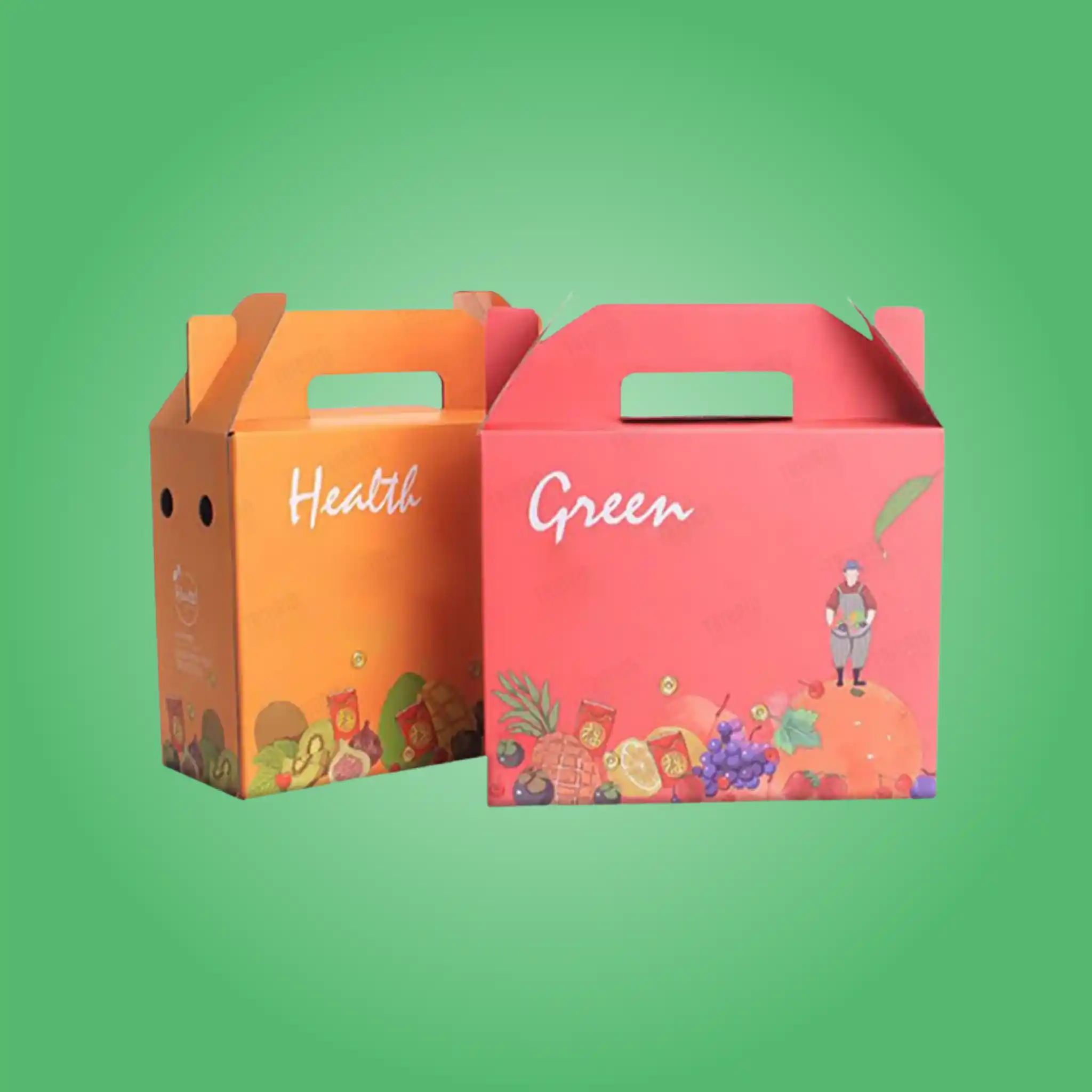
| House and gable box |
7 x 5 x 8 |
Food gifts, retail sets |
Integrated handle |
| Display box with header |
12 x 8 x 4 |
Counter merchandising |
Vertical header for branding |
| Sleeve and tray |
8 x 5 x 2 |
Premium electronics, kits |
Slow reveal on opening |
| Custom silhouette |
Any |
Brand-defining products |
Shape becomes the trademark |
Send us your product measurements and a rough sketch, and we return a free dieline of the shape within one business day.
What Actually Drives the Cost of a Shaped Box
Shaped packaging quotes vary widely, and buyers often cannot see why. The variables below account for nearly all of the difference.
Tooling leads on the first order. A new die must be cut, and complexity decides its price. That cost disappears on every reorder, so a shape that looks expensive initially often becomes very economical once volume builds. We tell you the tooling figure separately in every quote rather than burying it in the unit price.
Material yield comes second and is easy to overlook. An efficient shape nests tightly on a press sheet, while an awkward one leaves board as waste. Adjusting a dimension by half an inch sometimes fits an extra box on every sheet, and that saving repeats forever.
Assembly is third. Some shapes ship flat and pop open in a second, while others need hand assembly or gluing at multiple points. If your team packs by hand, assembly time is a genuine labor cost we help you avoid. Finishing and quantity finish the list, and both behave as they do across all packaging.
| Cost Driver |
Impact |
How to Reduce It |
| Die tooling complexity |
Highest on first order |
Simplify cuts that add no visual value |
| Sheet nesting efficiency |
High |
Adjust dimensions slightly to fit more per sheet |
| Assembly method |
High for hand-glued shapes |
Choose auto-lock or flat-pack structures |
| Material and caliper |
Moderate |
Match board weight to the actual product |
| Finishing passes |
Moderate |
One strong finish rather than three competing |
| Order quantity |
Moderate |
Reorders skip tooling entirely |
Shipping Shaped Boxes Without Losing the Shape
An unusual silhouette is an asset on a shelf and a liability in a parcel network. Planning for that difference protects both the product and the impression the box makes.
Shaped boxes rarely tile neatly inside a shipping carton, so voids appear around them. Those voids let the box shift, and shifting crushes corners. We design an outer shipper with an insert that holds the shape in position, which removes the movement entirely rather than filling space with loose material.
Angled panels concentrate force at points rather than spreading it along edges. A pyramid apex and a hexagon corner both take impact badly, so we specify heavier board or a protective cap at those points when a box ships direct to consumers. For retail distribution, the shipping case does that job instead, and the shaped box travels protected inside it.
Dimensional weight deserves a separate look. Carriers bill on volume as well as actual weight, and shaped boxes often occupy more volume than their contents justify. Where ecommerce is your main channel, we design the shape to sit inside a standard shipper size rather than a fraction above it. That single decision can cut shipping cost meaningfully on every order.
Flat-pack structures solve much of this at once. A shape that ships flat and assembles on arrival occupies almost no volume in transit, and it removes crush risk entirely. We recommend flat-pack designs whenever your team assembles boxes in house.
Quality Checks Before Your Shaped Order Ships
Shaped packaging shows defects more readily than a plain carton, because the eye follows its lines. Every order passes a documented check before leaving our floor.
| Check |
What We Verify |
Why It Matters |
| Die registration |
Cuts align with printed artwork |
Misregistration is obvious on a shape |
| Fold and score quality |
Clean folds with no cracking |
Cracked scores expose white board |
| Assembly test |
A sample built by hand from the run |
Confirms tabs and locks work as designed |
| Product fit |
Your item seated inside the finished box |
Shapes leave less tolerance than cartons |
| Panel alignment |
Edges meet squarely when closed |
Gaps read as poor quality immediately |
| Color match |
Pantone against a physical draw-down |
Color must hold across angled panels |
| Foil and coating adhesion |
Tape test on treated areas |
Lifting finish ruins premium positioning |
| Window film bond |
Adhesion and clarity where fitted |
Peeling film looks cheap at once |
| Barcode readability |
Scan test on a flat matte area |
Curved or glossy areas fail scanning |
If anything fails, we remake it rather than ship it.
Choosing the Right Shaped Box: A Decision Guide
Start from the job the box must do. Presentation, protection and shipping pull in different directions, and the right shape balances all three.
| If Your Goal Is |
Choose This Approach |
Material |
Watch Out For |
| Standing out on a retail shelf |
Hexagon or custom silhouette |
18pt SBS |
Shelf depth and facing width |
| Premium gifting |
Pyramid or rigid sleeve and tray |
Rigid or 24pt |
Assembly time per unit |
| Ecommerce direct shipping |
Flat-pack shape in an outer shipper |
E-flute plus 18pt |
Dimensional weight thresholds |
| Counter merchandising |
Display box with header |
B-flute corrugated |
Header stability when full |
| Repeat product access |
Dispenser box with tear line |
18pt SBS |
Tear line strength over time |
| Event and seasonal campaigns |
Novelty silhouette |
16pt to 18pt |
Tooling cost against a short season |
| Subscription unboxing |
Sleeve and tray reveal |
E-flute with printed interior |
Reassembly by the customer |
| Sampling and promotions |
Pillow box |
14pt to 16pt |
Product weight limits |
When two rows apply, choose the sturdier structure. A shaped box that arrives dented undoes the exact impression it was built to create.
How to Order Custom Shaped Boxes, Step by Step
Ordering runs through four steps, and our structural team carries the technical load in each one.
First, share your product dimensions and the effect you want. A sketch, a competitor photograph or even a verbal description gives us enough to start. Second, we return a free dieline and a written quote within one business day, with tooling shown as its own line so nothing is hidden.
Third, you approve a digital proof, and we strongly recommend a physical sample for shaped work. A shape reads completely differently in your hands than on a screen, and holding one settles questions about proportion that no render can answer. Fourth, we produce and ship free across the United States, with standard production at eight to twelve business days and rush at four to six.
Zero minimum order quantity applies throughout, so you can prove a shape on a small run before scaling it.
Reorders, Tooling Storage and Version Control
The first order of a shaped box carries tooling. Every order afterward does not, and that changes the economics permanently.
We store your die, dieline, board specification, Pantone references and print files indefinitely. Reorders run straight against that stored tooling, so your shape is identical every time and your unit cost drops. Brands often start with a small proving run, then reorder at volume once the shape earns its place.
When artwork changes for a season or a campaign, we keep the same die and change only the plates. That gives you a fresh look at a fraction of the original cost, and your customers still recognize the silhouette. We version each artwork change with a date, so you always know which run shipped when.
Custom Shaped Boxes for Brands Across the United States
We manufacture domestically and ship free to every state, so a shaped box never waits at a port while your launch date passes.
Cosmetic and wellness brands in Los Angeles and Miami order hexagon and sleeve structures with soft touch finishes. New York and Chicago retailers request display shapes with printed headers for counter placement. Craft producers across Texas, Colorado and the Pacific Northwest lean toward kraft pillow boxes and simple geometric forms. Toy and novelty companies order the most adventurous silhouettes, and they reorder often because a shape that works becomes part of the brand.
Domestic tooling matters more than most buyers expect. When a die needs a small adjustment after the first sample, we make it in days rather than waiting weeks on an overseas revision cycle.
A Real Example: A Shape That Paid for Its Own Tooling
A specialty tea company approached us with a plain tuck carton and flat sales. Their product was excellent, yet nothing on the shelf suggested it.
We designed a hexagonal carton with six printed panels, one for each origin story, and a small window revealing the leaf. Tooling cost roughly the same as two weeks of their previous packaging spend. The nesting layout allowed nine boxes per press sheet rather than the eight an earlier draft achieved, which lowered material cost by about seven percent.
Their retail partner increased facings within two months, and the brand reported that customers began photographing the box. The tooling paid for itself inside the first reorder, and every run since has carried no tooling charge at all.
Sustainability and Shaped Packaging
Shaped boxes can be more sustainable than plain ones, which surprises people. A box built to fit a product precisely uses less board and needs less void fill than an oversized rectangle around the same item.
We produce shapes in recycled kraft, in recyclable SBS and in corrugated, all of which move through standard curbside programs. Water-based coatings keep board recyclable where plastic lamination would not, and soy-based inks are available on request.
Where a shape needs an insert, molded pulp usually replaces foam without losing protection, and it recycles alongside the box. We show both options as physical samples, because that comparison decides the question faster than any specification sheet.
Inserts and Interior Structure for Shaped Boxes
The outside sells the product. The inside decides whether the product survives and whether the opening feels considered.
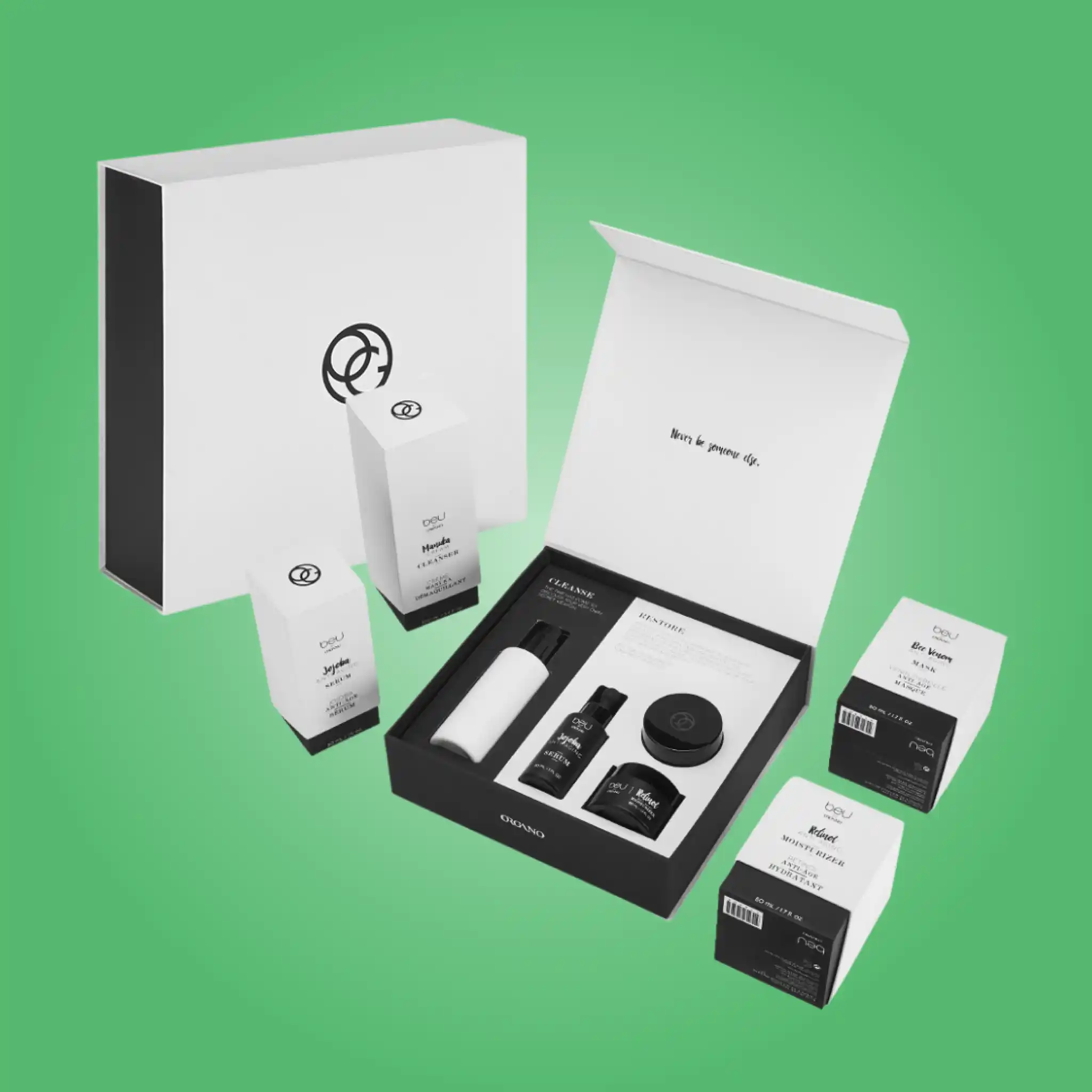
Shaped boxes create interior spaces that a rectangular insert cannot fill, so inserts here are cut to the same geometry as the box. A hexagon needs a hexagonal tray, and a pyramid needs a base platform that holds the item below the sloping walls. We cut inserts from the dieline itself, which guarantees they match rather than approximately fit.
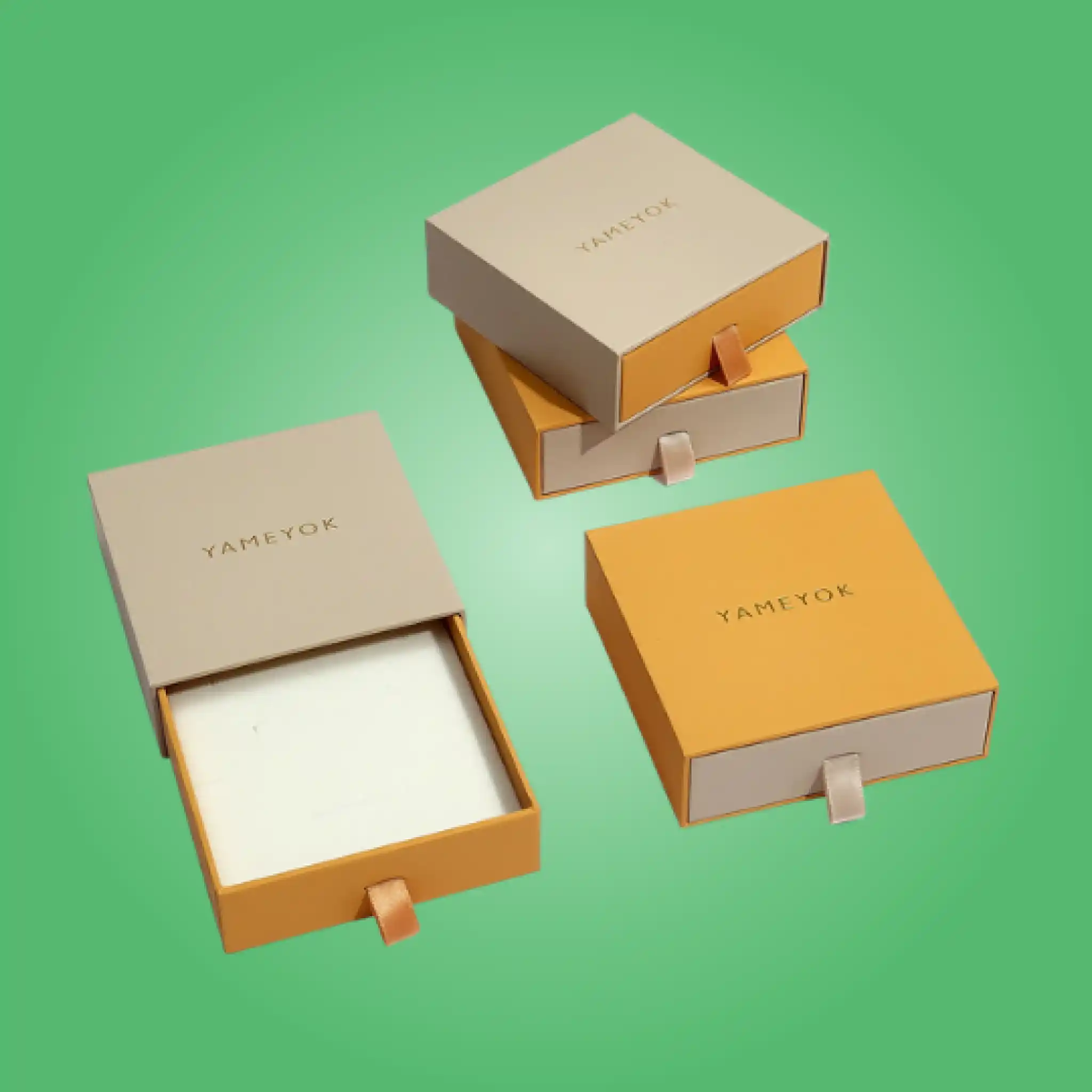
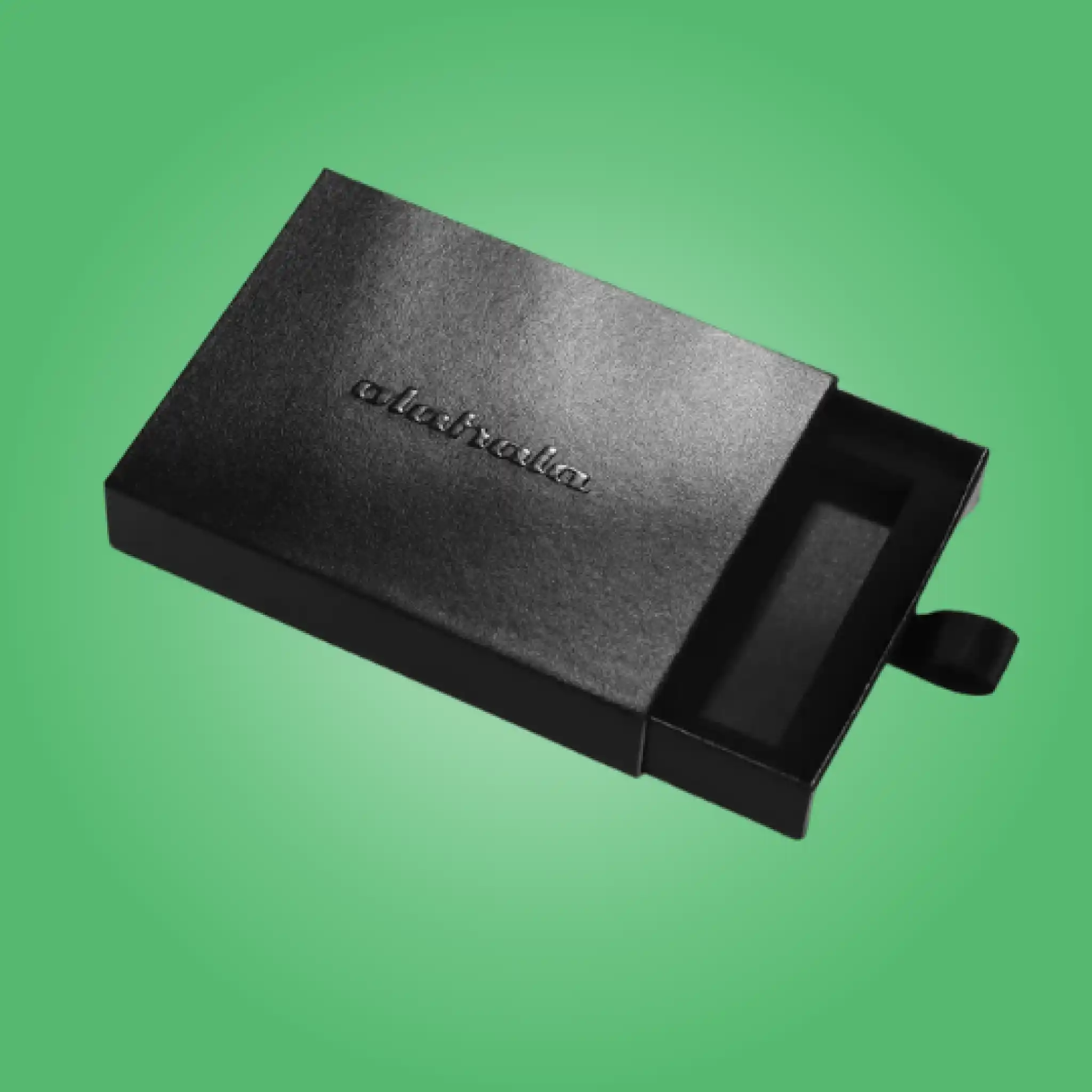
Paperboard inserts cost the least and suit light items. Folded card platforms hold a product upright, and slotted cards keep chains, cables and small accessories from tangling. Molded pulp handles heavier and more irregular items, cradles curved shapes well, and recycles alongside the outer box. Die-cut foam gives the tightest hold for fragile pieces, and flocked foam adds a soft surface where the product touches it.
The reveal deserves as much thought as the protection. A tray that lifts smoothly, a ribbon pull that raises the item, or a printed message under the product all extend the opening moment by a few seconds. Those seconds are what customers photograph and share.
Send us the product itself or its exact dimensions, and we build the insert into the same dieline so both parts arrive matched.
Shaped Packaging Mistakes That Cost Money
The same errors recur in this category, and each one is avoidable before tooling is cut.
Designing the shape before measuring the product leads the list. A silhouette drawn for visual effect often leaves too little clearance, and the fix arrives after tooling exists. Measure first, then shape around what you measured.
Ignoring the shelf is the second error. A striking box that exceeds a retailer shelf depth or facing width simply does not get placed. We check your target retail dimensions during dieline review, because that conversation is far cheaper before the die than after.
Over-complicating the cut is third. Every extra blade adds tooling cost and scrap, and many decorative cuts disappear visually once artwork is applied. We show you which cuts are carrying the design and which are only adding expense.
Approving a shape from a flat render is the most common regret of all. Proportions read differently in three dimensions, and a physical sample removes that risk entirely for a very small cost.
Lead Times and Production Planning
Shaped boxes carry one extra step compared with plain cartons, and planning for it prevents most delays.
Tooling takes two to four business days on a first order, and it happens once. Standard production then runs eight to twelve business days, and rush production runs four to six. Reorders skip tooling entirely, so a repeat run moves faster than the first from the moment you approve it.
Physical samples add roughly three to five business days, and we recommend building that time into any launch plan involving a new shape. Approving a sample before a full run has saved our clients from reprints many times over.
Shipping across the United States is free and included in every quote, and we send tracking as soon as your order leaves our floor.
Industries That Rely on Custom Shaped Packaging
Some categories treat an unusual box as decoration. Others treat it as a competitive tool, and those are the industries we work with most.
Beauty and personal care leads. Shelves in that category are dense, products are similar in size, and a distinctive silhouette does what a larger advertising budget would otherwise have to. Hexagonal and sleeve structures dominate here, usually with soft touch lamination and a foil mark.
Confectionery and specialty food follow closely. Gift purchasing drives much of that market, and a shape signals gift intent before anyone reads a word. Pyramid and house structures with windows perform particularly well.
Consumer electronics and accessories use shaped packaging differently, favoring sleeve and tray reveals that stage the product rather than novelty outlines. The goal there is a controlled opening sequence rather than shelf disruption.
Toys, novelty and promotional products take the most creative approach, because the box frequently becomes part of the product experience. Cannabis and wellness brands increasingly commission shapes too, though panel space for required text has to be planned first.
Subscription businesses form the fastest growing group. Their box is the only physical touchpoint they have with a customer, so shape, printed interior and reveal all carry real commercial weight.
Whatever your category, tell us what the box must achieve commercially and we will design toward that rather than toward decoration alone.
Working With Our Structural Design Team
Free design support is not a discount offer here. It is how a shaped box gets built correctly the first time.
Our structural designers work in packaging CAD, and they build your shape as a three dimensional model before any steel is bent. That model shows how panels meet, where stress concentrates, and whether a fold will crack under the caliper you chose. Problems that would appear on press instead appear on a screen, where fixing them costs nothing.
We also produce a plotted sample from that model, cut on a digital table rather than a die. You hold the exact shape in your hands within days, and you can put your actual product inside it. Only after that do we cut tooling, which means the die you pay for is the die you already approved.
Your designer receives a layered print-ready template with fold lines, bleed areas, safety margins and glue tabs clearly marked. Nothing is left to interpretation, and nothing arrives at press needing a judgment call.
None of this carries a charge. Send us your product dimensions and we will start today.
Create Memorable Packaging with Custom Shaped Boxes
Distinctive packaging helps brands stand out in competitive markets. Custom shaped boxes combine creativity with functionality, allowing businesses to design packaging that reflects their brand identity.
With zero minimum order quantity, professional design services, scalable production, and free shipping across the USA, Pioneer Custom Boxes makes it easy for businesses to upgrade their packaging strategy.
Request your free quote today.
Share your product dimensions and design ideas, and our packaging specialists will help you create custom shaped boxes that attract customers and strengthen your brand.