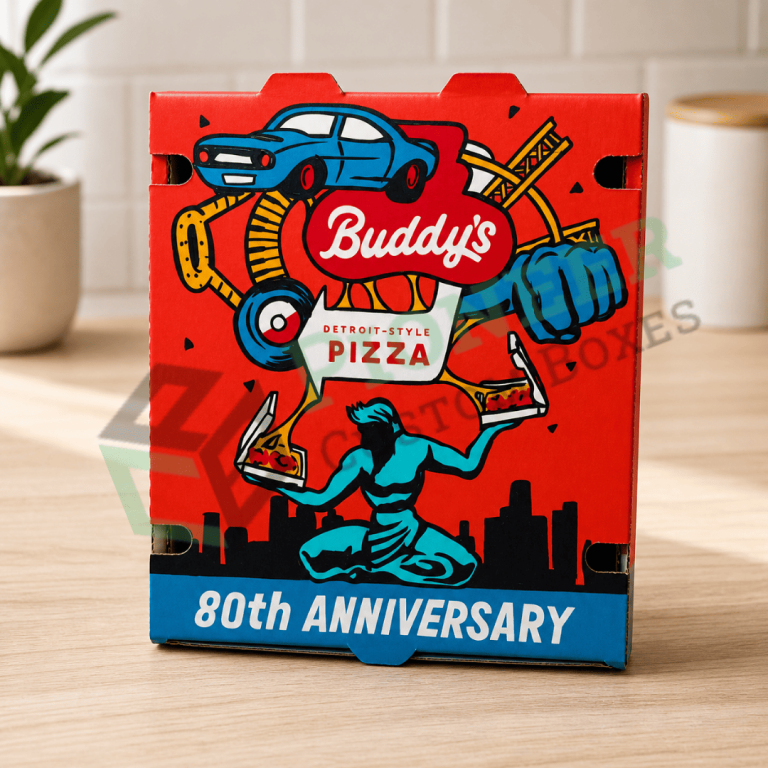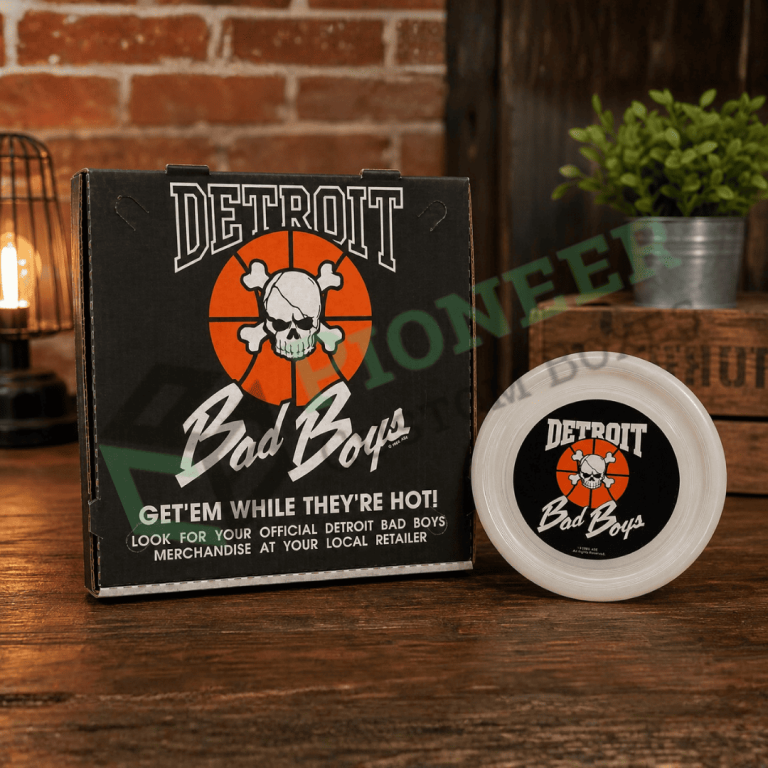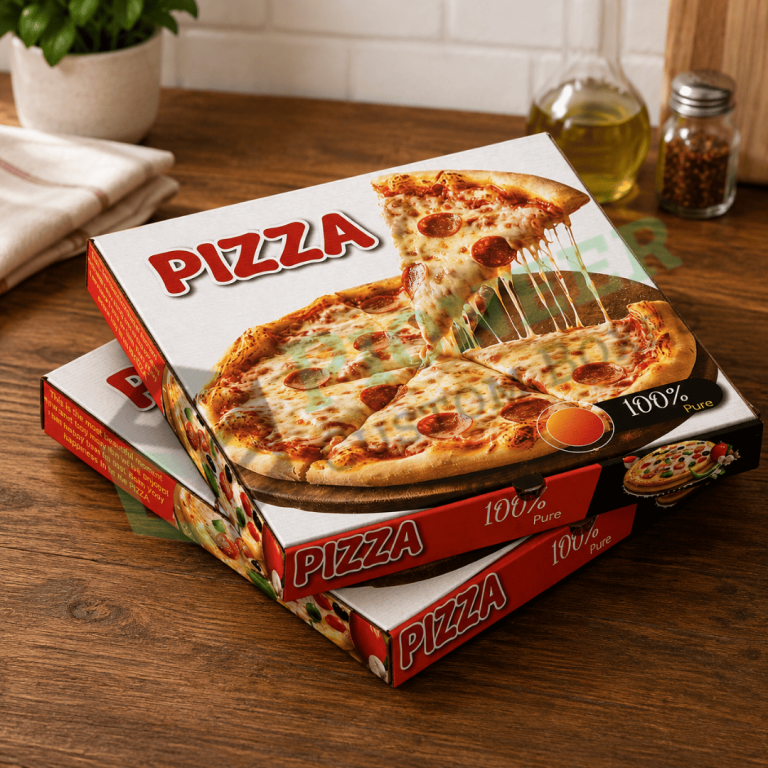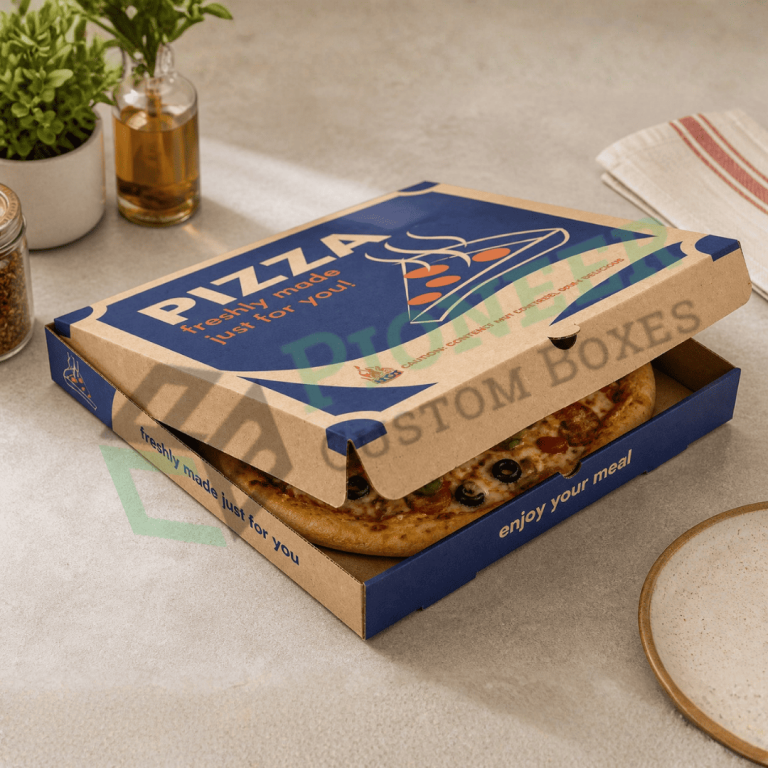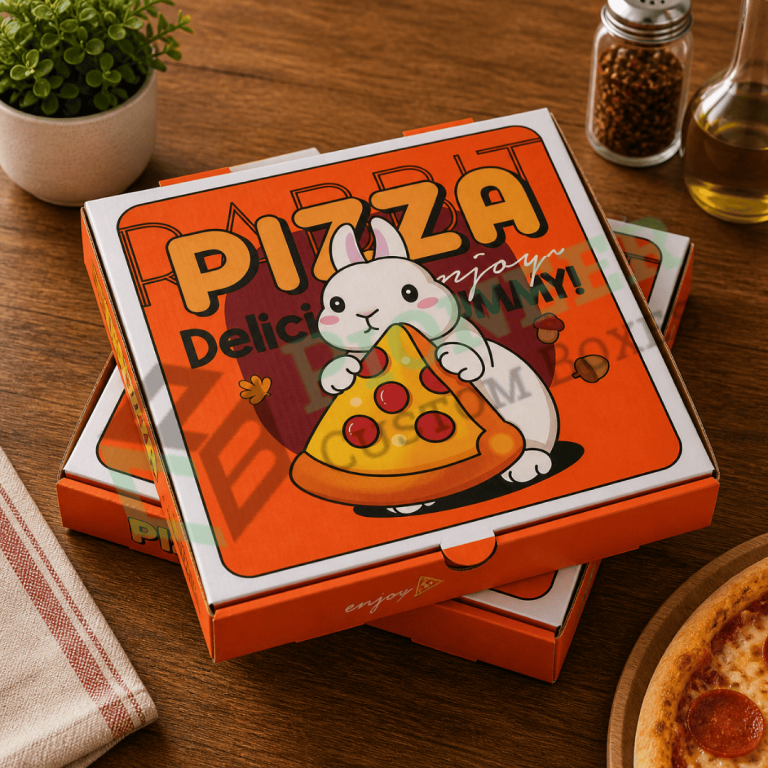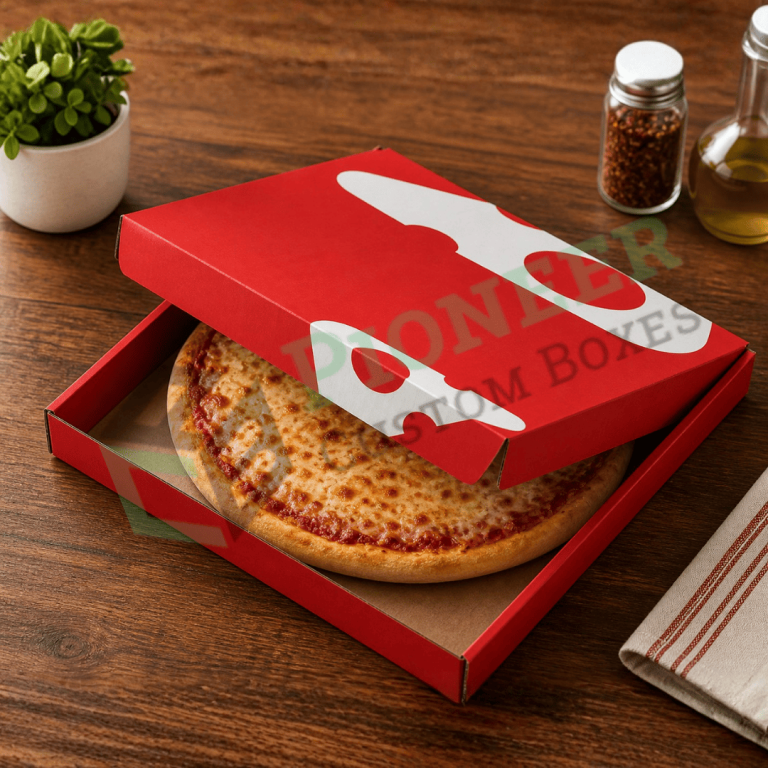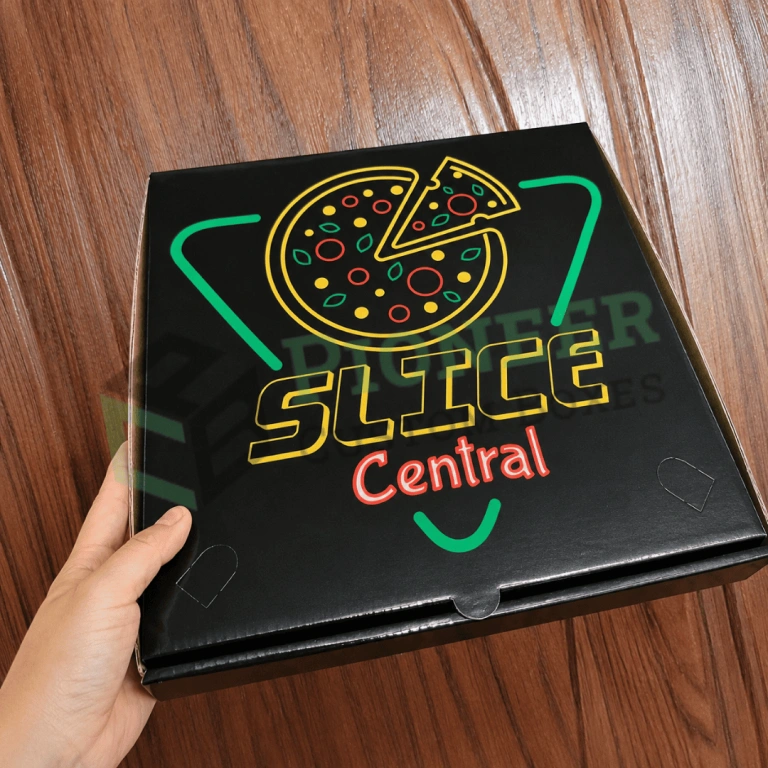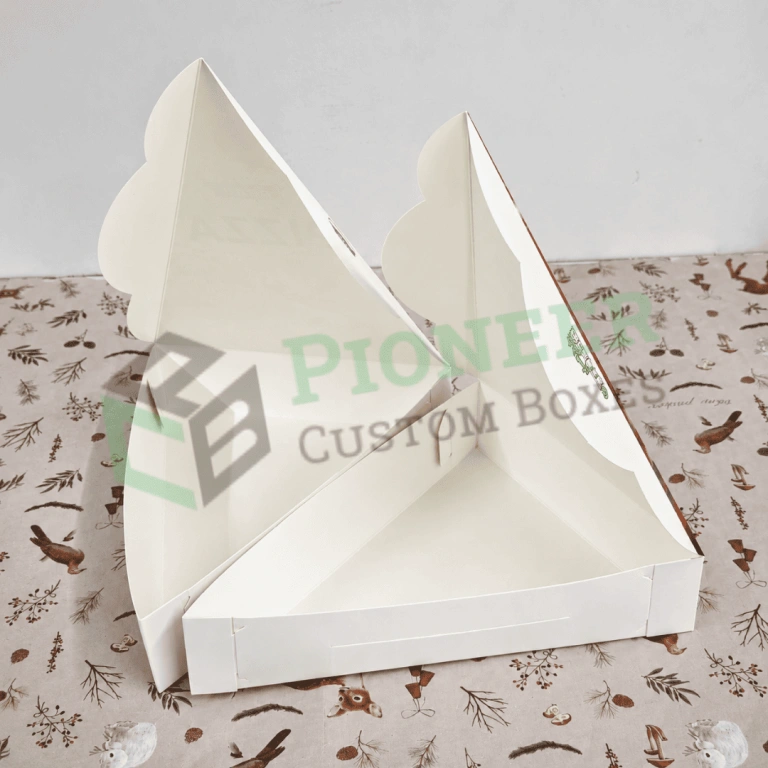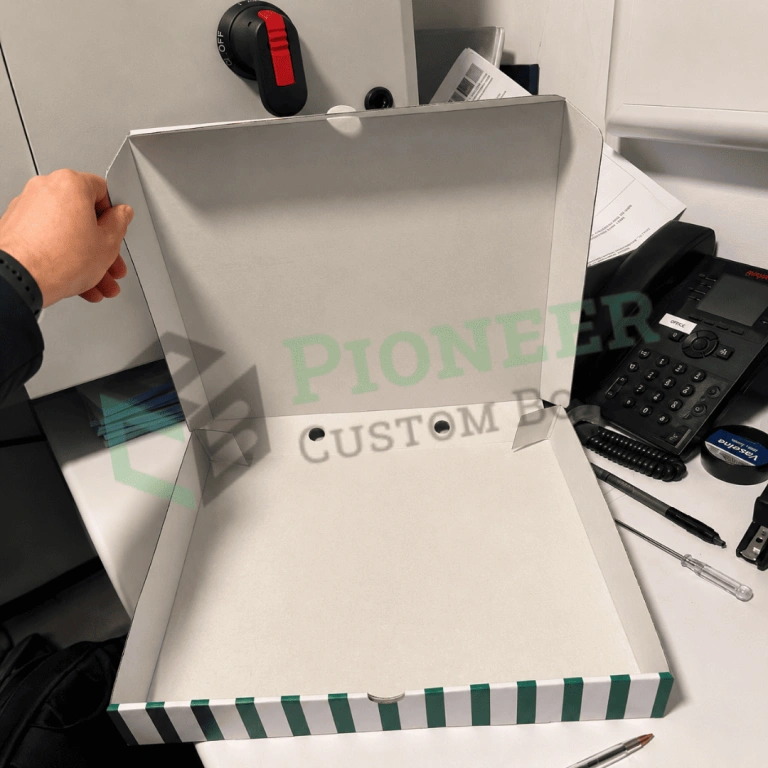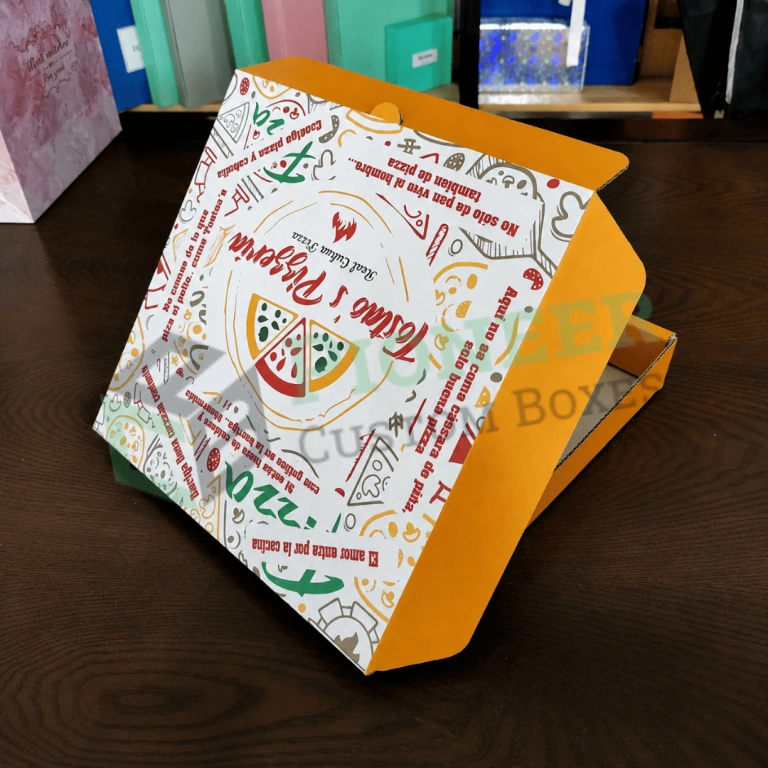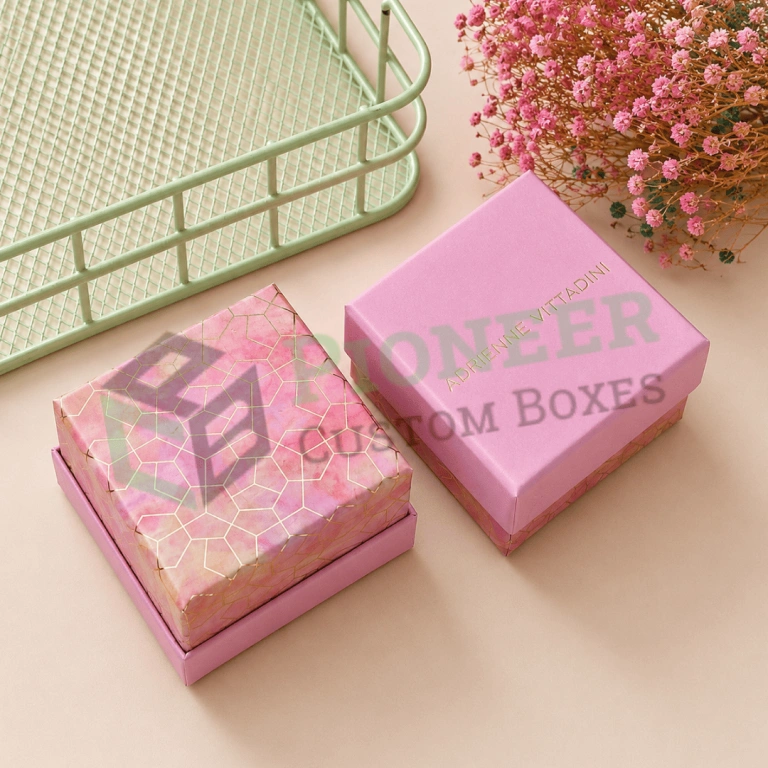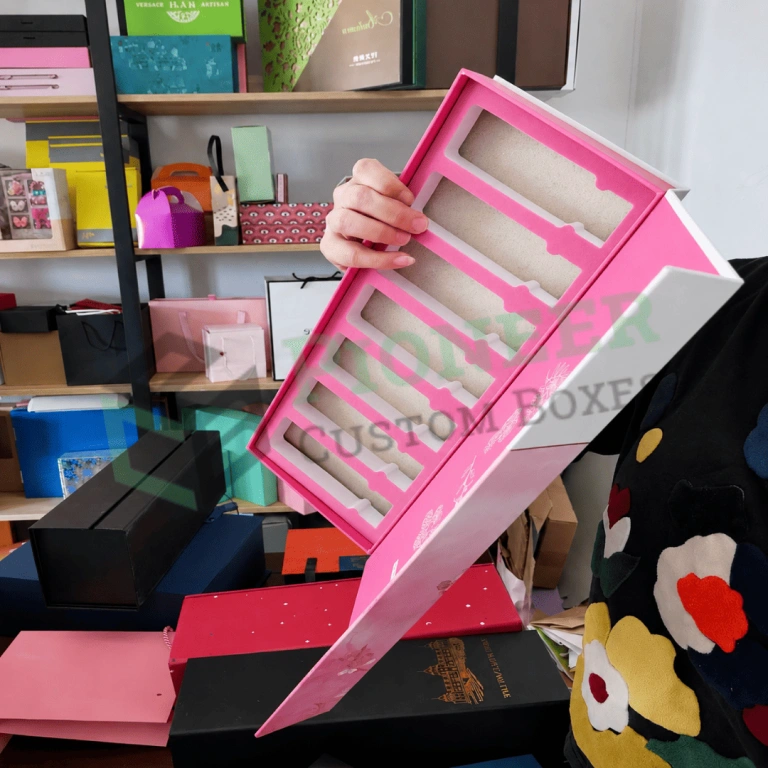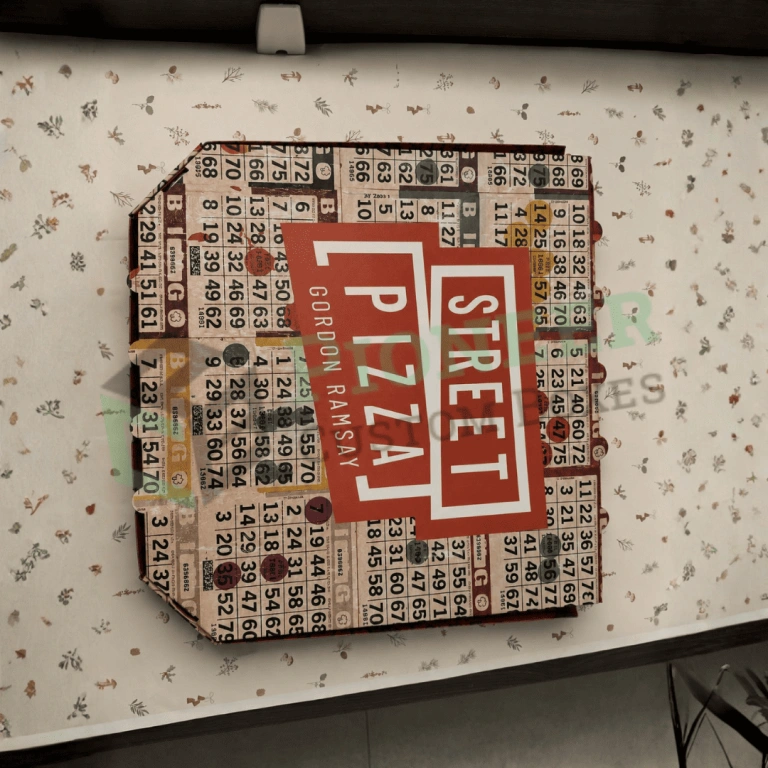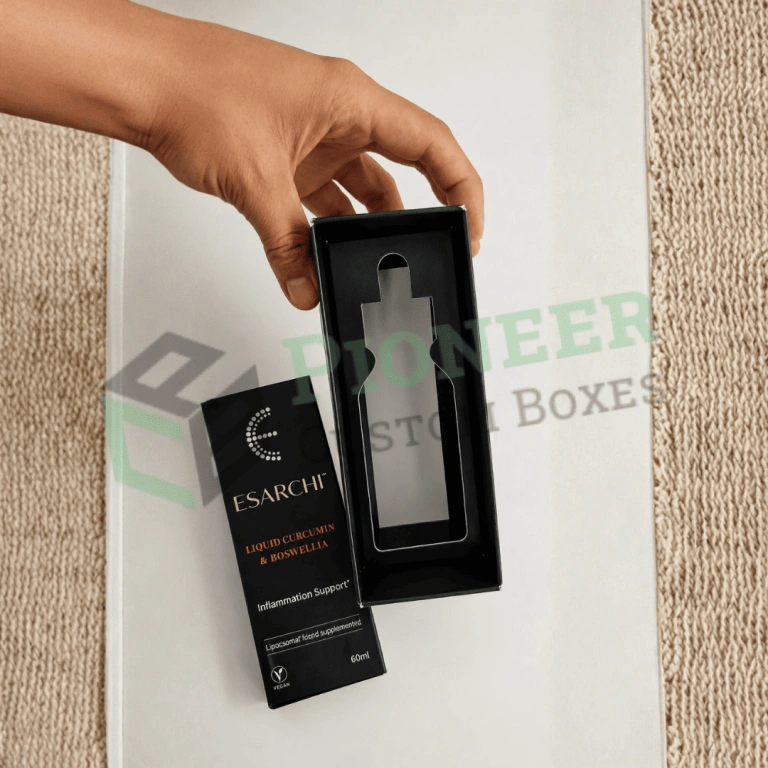
Personalized pizza boxes from Pioneer Custom Boxes put your own logo, artwork and message on every delivery instead of generic wholesaler stock. Choose standard corrugated, kraft, slice, deep dish, two-piece or event boxes in B-flute, double wall or white top board, with corner venting, PFAS-free grease barriers, variable data printing, free design support, zero MOQ and free USA shipping.
Personalized pizza boxes carry your own artwork, your own colors and your own message rather than a wholesaler generic. Pioneer Custom Boxes manufactures them across the United States with zero minimum order quantity and free shipping.
Most independent pizzerias still buy plain white or generic red-checked stock. That box travels to a customer home, sits on a table for an hour and gets photographed, and it says nothing about who made the pizza.
Personalization changes that entirely, and it no longer requires a chain-sized order. Digital printing carries no plate charge, so a single location can print its own box in the quantity it actually uses.
The opportunity runs wider than logos. Personalized boxes carry a wedding date, a team crest, a franchise location address, a seasonal promotion or a QR code linking straight to a reorder page.
None of that works if the box fails the pizza though. A personalized box still has to vent steam, resist grease and hold a fourteen inch pie without sagging, and we engineer for that first.
We produce personalized pizza boxes for independent pizzerias, regional chains, franchises, ghost kitchens, food trucks, event caterers, breweries and grocery deli counters. Moreover we cut our own dies and run our own presses, so the structure is ours rather than a stock blank with your logo stamped on it.
Order personalized pizza packaging in any quantity you need. There is no minimum order, design support costs nothing, and shipping across the United States stays free on every order. Searching for personalized pizza boxes near me usually returns brokers, and we are the factory those brokers buy from.
Structure follows the pie size, the service model and how far the order travels. Personalization applies across all of them.
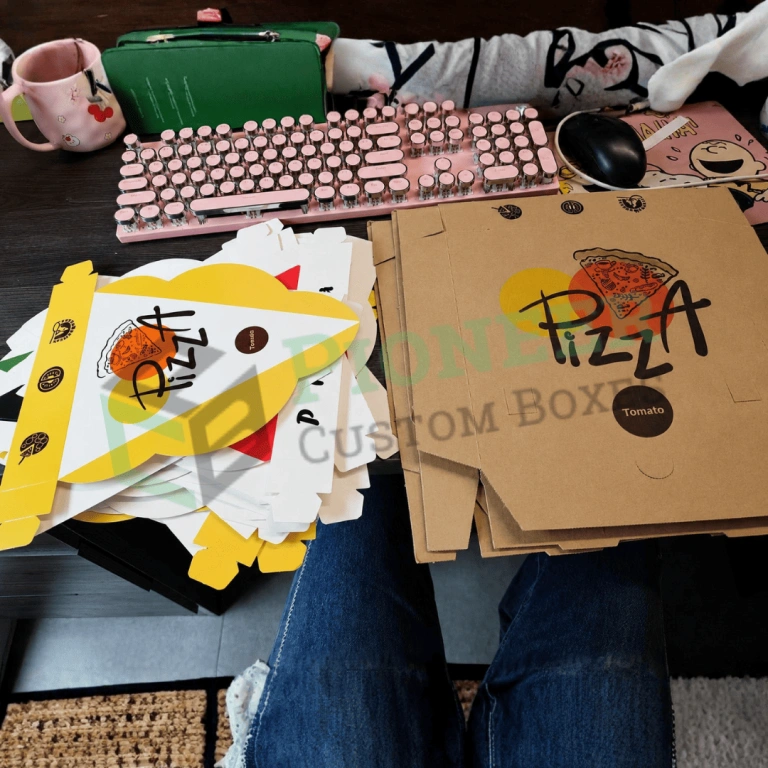
The familiar one-piece B-flute box folded from a single blank. It is the workhorse for delivery and carryout, it stacks well and it takes a full-color printed lid without any structural change.
The same structure on natural brown board. It suits artisan, wood-fired and craft positioning, and a single-color logo on kraft reads as more considered than full-color artwork on white.
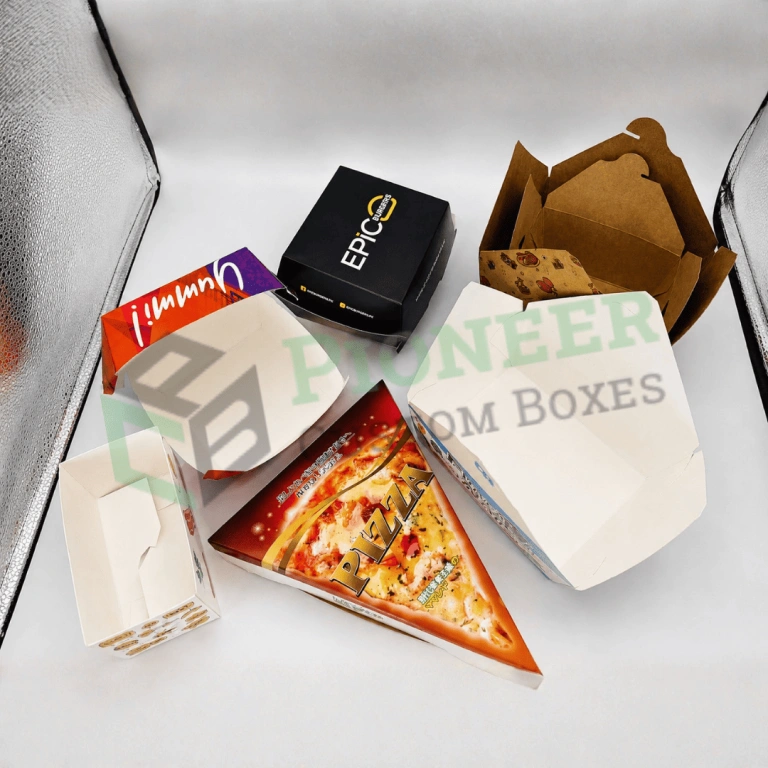
A wedge or half-round box for single slices and half pies. Counter service and late-night trade run on these, and the printed panel is small enough that a strong logo does all the work.
A small square box for six to eight inch pies. Lunch specials and kids menus use them heavily, and they are an inexpensive way to test a personalized design before committing across the range.
A taller box built for a thicker pie. Height clearance decides everything here, because a lid touching a deep dish surface drags cheese across the board.
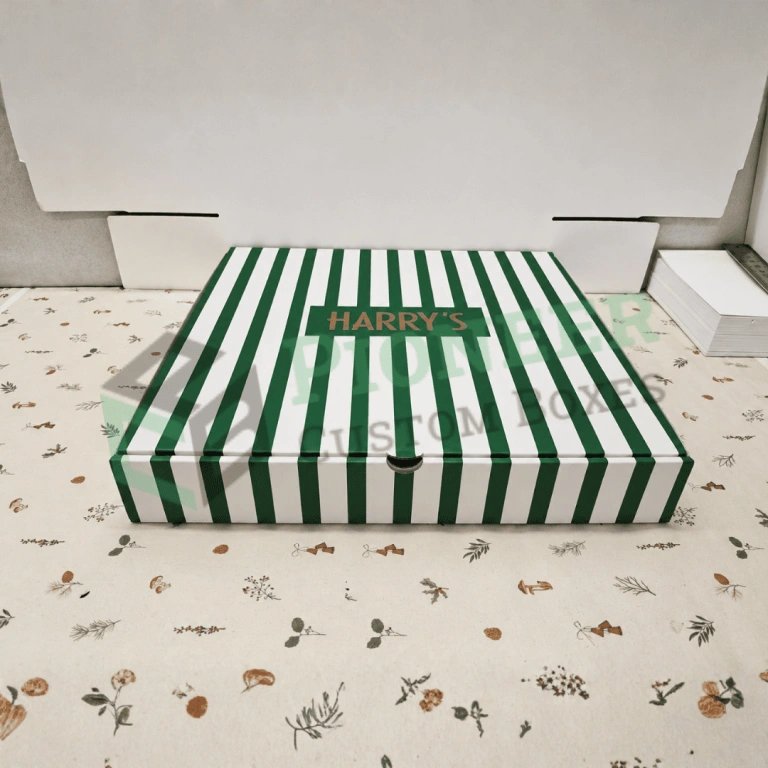
A separate lid over a base, used for premium and presentation work. It prints beautifully across the full lid and it suits catering, brewery collaborations and gift pizzas.
A printed corrugated box built for retail freezer space or parcel shipping. Grocery deli programs and direct-to-consumer pizza brands both use this format.
A short-run personalized box carrying a name, date or message. Weddings, birthdays, corporate events and sports nights all order these, usually in quantities a traditional supplier will not accept.
| Box Format | Pie Size | Primary Use | Why Personalize It |
|---|---|---|---|
| Standard corrugated | 10 to 18 inch | Delivery and carryout | Travels to homes and gets photographed |
| Kraft pizza box | 10 to 18 inch | Artisan and wood-fired | Craft positioning at lower ink cost |
| Slice and half box | Slice or half pie | Counter and late night | High volume, strong logo recognition |
| Personal and mini | 6 to 9 inch | Lunch and kids menus | Low-cost way to test a design |
| Deep dish and pan | Any, taller build | Deep dish specialists | Height clearance plus brand presence |
| Two-piece lid and base | 12 to 18 inch | Premium and catering | Full lid print, presentation quality |
| Pizza mailer | Frozen and take-and-bake | Grocery and direct sales | Retail shelf and freezer branding |
| Event and celebration | Any | Weddings and events | Short runs a wholesaler will not print |
Send us your pie size and your busiest service type. Delivery, counter and events pull the specification in different directions, and we build around the one that carries your volume.
Every die is cut to your pie and your build height. These formats cover the pizza packaging we produce most often.
| Pie or Format | Typical Box Size (inches) | Board | Venting |
|---|---|---|---|
| 6 inch personal | 7 x 7 x 1.75 | B-flute or 18pt | Side vents |
| 8 inch mini | 9 x 9 x 1.75 | B-flute | Side vents |
| 10 inch small | 11 x 11 x 1.75 | B-flute | Side vents |
| 12 inch medium | 13 x 13 x 1.75 | B-flute | Side vents |
| 14 inch large | 15 x 15 x 2 | B-flute | Side and corner vents |
| 16 inch extra large | 17 x 17 x 2 | B-flute or double wall | Side and corner vents |
| 18 inch party size | 19 x 19 x 2 | Double wall | Full venting |
| Deep dish, 12 inch | 13 x 13 x 3 | B-flute | Side vents, extra height |
| Single slice wedge | 9 x 7 x 1.75 | E-flute or 18pt | Minimal |
| Half pizza box | 15 x 8.5 x 2 | B-flute | Side vents |
| Take-and-bake mailer | 13 x 13 x 2.5 | B-flute printed | Sealed for freezer |
Measure the pie you actually cut rather than the menu size. A fourteen inch pizza stretched slightly past its peel will not sit flat in a fifteen inch box, and the crust edge curls against the wall.
This is the technical heart of the category, and it explains every complaint a pizzeria hears about its packaging.
Steam is the first problem and it moves fast. A pizza leaves the oven above two hundred degrees and releases moisture continuously, and a sealed box condenses that straight back onto the crust.
Soggy crust is therefore a packaging failure rather than a kitchen one. Corner and side vents let the steam escape while the flutes keep the base insulated, which is the balance every pizza box has to strike.
Over-venting causes the opposite complaint. A heavily perforated box drops the pizza below serving temperature during a twenty-minute delivery run, and cold pizza draws worse reviews than soft crust.
Grease is the second problem and it is a materials question. Oil from cheese and pepperoni wicks into untreated fiber within minutes, and the translucent patch appears right where the printed logo sits.
Grease-resistant treatments solve it without lining the box in plastic. The barrier works within the fiber, so the box still recovers through paper recycling rather than being pulled out of the stream.
Lid sag is the third problem and it is purely structural. A large pie is heavy, and a lid spanning seventeen inches without adequate flute strength drops onto the cheese during carry.
Flute selection decides that outcome. B-flute handles most sizes comfortably, while sixteen and eighteen inch boxes benefit from a heavier grade because the unsupported span grows faster than the pie diameter suggests.
Stacking compounds it. Delivery drivers stack three or four boxes, so the bottom box carries real load, and a board that holds one pizza fine can buckle under a stack of four.
Board selection balances heat retention, grease resistance and the span strength a large pie demands.
The industry standard for pizza and our default. The flute profile gives enough span strength for a fourteen inch pie, it insulates well enough to hold serving temperature and it prints cleanly with flexo or litho lamination.
A finer flute with a smoother print surface. It suits slice boxes, personal pizzas and any format where print quality matters more than span strength.
Two flute layers for sixteen and eighteen inch pies and for stacked delivery runs. The extra layer stops lid sag on wide spans and carries a stack of four without buckling.
Natural brown liner on the same flute structures. It costs less than bleached liner, it reads as artisan and craft, and a single-color logo on kraft often looks more considered than full-color on white.
A bleached outer liner over a kraft flute. It gives a bright, clean print surface for full-color artwork while keeping corrugated strength and cost.
Treated liners that stop oil migrating into the board. We specify these on the inner face rather than lining the box in plastic, so the barrier works without blocking recycling.
Grease resistance achieved without per- and polyfluoroalkyl substances. The food contact market has moved decisively here, and every barrier we supply for pizza is PFAS-free.
Available across every grade above. Food service buyers increasingly ask for sourcing documentation, so we document what your board contains under recognized Forest Stewardship Council chain of custody rather than leaving you to assume it.
| Material | Typical Grade | Span Strength | Print Quality | Best For |
|---|---|---|---|---|
| B-flute corrugated | 32 ECT | Good to 14 inch | Good | Most delivery and carryout boxes |
| E-flute corrugated | 32 ECT | Moderate | Excellent | Slice boxes and personal pizzas |
| Double wall | 44 ECT and above | Excellent | Good | 16 to 18 inch and stacked delivery |
| Kraft corrugated | 32 ECT | Good | Moderate | Artisan and craft positioning |
| White top corrugated | 32 ECT | Good | Excellent | Full-color personalized artwork |
| Grease-resistant liner | Any of the above | As per base | As per base | Every pizza box inner face |
| PFAS-free barrier | Any of the above | As per base | As per base | All food contact work |
| FSC-certified stock | Any of the above | As per base | As per base | Documented sustainable sourcing |
One note specific to personalization. Kraft liner shifts every printed color warmer, so artwork approved on a white sample will look noticeably different on brown board. We proof on your actual stock.
Personalization is the whole point here, so print method decides what is actually possible at your volume.
Digital is what makes genuine personalization affordable. There are no plates, so there is no cost penalty for changing artwork, and a single location can order the quantity it actually uses rather than a pallet.
Digital presses can change content between individual boxes. A wedding date, a guest name, a table number, a franchise address or a unique promotional code can print inline rather than being stickered afterward.
Flexo prints directly onto corrugated and dominates at chain volume. It reproduces bold logos and solid color economically, and it is the right answer once a design settles and quantities climb.
An offset-printed sheet laminated onto corrugated board. It delivers full retail print quality on a pizza box, and premium, catering and retail freezer formats use it where the artwork has to look exceptional.
One ink on brown board. It is the cheapest personalization available and frequently the most effective, because a clean logo on kraft signals craft far better than four-color artwork does.
A practical note on testing a design. Print a small digital run first, watch how customers react, then move the settled artwork to flexo once the volume justifies plates.
Finish here works for function first. A pizza box is handled hot, carried in a bag and opened with greasy fingers.
Not decorative, and the most important specification on the box. The barrier sits within the fiber, stops oil reaching the printed panel and keeps the artwork clean through the whole journey.
A flat, low-glare coating that hides fingerprints and handling marks. It suits artisan positioning and photographs well when a customer posts the box, which happens more often than most operators realize.
A water-based protective layer applied inline. It seals the print surface, resists scuffing through delivery and stays compatible with paper recycling streams.
High shine with deep color saturation. It makes a full-color lid design carry across a room, though it shows grease marks faster than matte does.
No decorative finish beyond the grease barrier. It reads as honest and unprocessed, which is exactly what wood-fired and Neapolitan brands usually want.
Ink systems selected for food contact suitability. We use them as standard on pizza work, and they print as strongly as conventional systems do.
We avoid plastic lamination on pizza boxes entirely. It resists grease well and removes the box from paper recycling, which is a poor trade on a package this visible and this numerous.
Personalized artwork only works if the color you approve is the color that arrives, and three systems govern that.
CMYK builds every shade from cyan, magenta, yellow and black. It reproduces photography, illustrated artwork and gradients accurately, and it costs the least. The deep reds and greens pizza branding relies on sit at the edge of what CMYK holds consistently.
Pantone inks arrive pre-mixed and print identically every time. A pizzeria brand usually lives on one or two signature colors, and spot ink is the only way to hold them across reorders and across different board liners.
RGB is a screen color space and no press prints it directly. Delivery app listings, your website and social posts all live in RGB, and conversion shifts color noticeably. We convert with proper profiles and show the printed result on your actual board first.
One point specific to corrugated. Kraft liner warms every color and white top liner keeps it neutral, so the same artwork genuinely prints as two different designs. Choose the liner before approving the color.
Each option below either protects the pizza, speeds up service or does brand work that a plain box cannot.
| Feature | What It Does | Best Suited To |
|---|---|---|
| Corner and side venting | Releases steam without cooling the base | Every delivery pizza box |
| Grease-resistant liner | Stops oil reaching the printed panel | Every pizza box |
| Extra lid height | Clears deep dish and heavily topped pies | Deep dish and pan specialists |
| Reinforced lid span | Stops sag on wide boxes | 16 and 18 inch pies |
| Stacking lugs | Keeps stacked boxes from sliding | Delivery runs and catering |
| Printed inner lid | Brand message revealed on opening | Independents building recognition |
| QR code panel | Links to reorder, loyalty or reviews | Direct ordering and feedback |
| Order ticket panel | Blank area for a name or ticket sticker | High-volume delivery kitchens |
| Tamper-evident seal | Shows the order was never opened | Delivery apps and ghost kitchens |
| Variable data personalization | Name, date or code per box | Weddings, events and promotions |
| Cardboard pizza saver | Holds the lid clear of the cheese | Long delivery runs |
| Freezer-ready print | Survives condensation on a retail shelf | Take-and-bake and grocery deli |
Choose deliberately rather than comprehensively. Most pizza boxes need venting, a grease barrier, adequate lid height and one strong printed element, and very little beyond that returns its cost.
A pizza box is direct food contact packaging, so the materials carry obligations that decorative packaging never does.
Everything touching the pizza has to be suitable for that purpose. Board, liners, adhesives and inks are all in scope, and a supplier saying food safe is not the same as documented suitability.
The federal framework sits in the food additive regulations, and 21 CFR 176.170 covers components of paper and paperboard in contact with fatty foods. Pizza is squarely a fatty food, which is exactly why it matters here.
Grease-proofing chemistry is where this category changed most. Traditional treatments often relied on PFAS, and those have been removed from the food contact market, so every barrier we supply is PFAS-free.
Several states now restrict PFAS in food packaging independently of federal action. A brand operating across state lines should build to the strictest market it serves rather than managing separate specifications.
Ink systems follow the same logic. We use soy and water-based inks and keep print off the inner face wherever the pizza sits directly against the board.
Recycled content needs care on the food contact side. Recycled fiber is excellent for the outer liner, and the inner face touching the food should be specified deliberately rather than assumed.
Environmental wording carries its own exposure. Compostable is a specific technical claim depending on facilities your customer may not have, and recyclable is undermined entirely by a plastic lamination.
We supply food contact documentation with every order and specify PFAS-free barriers as standard. We manufacture packaging rather than provide legal advice, so confirm your state obligations formally.
Volume is high and margin per unit is thin, so small specification choices compound into real money across a year.
Print method leads once quantity settles. Digital costs more per box and nothing in setup, while flexo costs almost nothing per box and carries plate charges. The crossover usually sits somewhere between three and five thousand units.
Board grade comes second. Moving from B-flute to double wall is a genuine step in cost, and it earns that only on sixteen inch pies and heavily stacked delivery runs.
Number of colors matters more on corrugated than most operators expect. A single-color logo on kraft costs a fraction of four-color artwork on white top liner, and it frequently looks better.
Number of sizes is the quiet cost. Six pie sizes on six dies is expensive, whereas consolidating to four covers most menus without customers noticing.
Venting, grease barriers and adequate lid height cost very little and prevent the complaints that cost real money. These are the wrong places to economize.
Freight matters too, because pizza boxes ship flat but bulky. Ordering in fuller loads reduces cost per box noticeably, which is one reason we consolidate reorders across sizes.
Consolidating across your wider range helps too. Operators buying pizza boxes alongside the rest of their food boxes usually secure better pricing on both, because the runs share stock and setup.
The saving we recommend most often is a single-color design on kraft. It cuts ink cost sharply, it suits artisan positioning and independents consistently report it looks more expensive than their old full-color box.
Heat, grease, wide spans and stacking mean we test these boxes with real pizza rather than visually.
We test pizza boxes with a real hot pie rather than an empty sample, because corrugated behaves differently once heat and steam reach it. Board that feels stiff on a bench softens measurably once a fourteen inch pizza has been sitting in it for ten minutes.
Lid sag is the first thing we measure. A loaded box goes onto a flat surface and we check the span across the middle, since a lid that drops onto the cheese ruins the presentation the kitchen worked for. Sixteen and eighteen inch boxes get this check under a stack of four, because delivery drivers never carry one box at a time.
Venting balance decides the crust. We close a filled box for twenty minutes, then assess the base for sogginess and take an internal temperature reading. Those two results pull in opposite directions, and the right specification is the one that lets steam out without dropping the pizza below serving temperature.
Grease resistance gets tested against cheese and pepperoni oil rather than a standard reagent, and we check the printed panel afterward for the translucent staining that lands exactly where a logo usually sits.
We also fold every new box by hand and time it. A structure that takes three seconds longer costs a busy Friday night real money, and a box that fights staff during a rush gets folded badly or abandoned.
We fold every new pizza box by hand and time it. A structure that takes three seconds longer costs a busy Friday night real money across a year of service.
Pizza reaches customers through several routes, and personalization pays back differently in each.
Delivery is where a printed box works hardest. It travels to a home, sits on a table through a meal and frequently ends up photographed, which is advertising a plain white box simply throws away.
Carryout rewards recognition at the counter. A stack of branded boxes behind the till reads as an established business rather than a franchise reseller, and customers notice that without being told.
Ghost kitchens sit at the extreme. The box is the only physical brand contact the customer ever has, so print quality carries the entire brand impression by itself.
Events and catering are where short-run personalization shines. A wedding date, a company logo or a team crest on the lid turns catering pizza into part of the occasion.
Breweries, bars and collaborations use co-branded boxes to good effect. Two logos on one lid costs the same as one and reaches both audiences.
Grocery deli and take-and-bake programs need retail-quality print and freezer durability. The box competes on a shelf rather than arriving at a door.
Franchise groups gain from variable data. One shared structure and artwork with a different address and phone number per location removes the usual tooling penalty entirely.
Standardizing early pays off for operators with a broader menu. Matching your pizza boxes to the rest of your takeout packaging keeps board grades and print consistent, and it simplifies reordering considerably.
Most operators serve at least three of these at once. The workable answer is one vented structure per pie size with print varied by channel, rather than separate packaging per route.
Pizza boxes are consumed in enormous volume and discarded within an hour, so material choices carry real weight.
Corrugated recovers well through existing programs, and EPA figures for paper and paperboard recovery show paper and paperboard as the most recovered packaging stream in the country.
Grease is the honest complication. A heavily soiled box is harder to recycle, and many programs now accept pizza boxes anyway because the fiber value outweighs the residue. Local rules still vary.
The decisive specification is the barrier. A plastic lamination resists grease and removes the box from paper recycling entirely, while a modern PFAS-free treatment works within the fiber and keeps recovery intact.
Right-sizing matters more than it appears. An oversized box uses more board across hundreds of thousands of units, and it lets the pie slide during delivery, which damages the product as well as wasting material.
Ink coverage is a genuine lever too. A single-color design uses far less ink than full flood coverage, costs less and is easier on the recycling stream.
We recommend accurate claims over ambitious ones. Compostable depends on facilities many customers cannot access, and overstating it invites criticism a food brand does not need.
These errors repeat across pizza operators of every size, and each one is avoidable before a die is cut.
Buying generic stock is the largest missed opportunity rather than a fault. Every delivery box is an advertisement that reaches a customer home, and a plain white lid throws that away entirely.
Sealing the box completely is the most common structural error. It feels protective and it steams the crust soft, which customers blame on the kitchen rather than the packaging.
Over-venting is the opposite error and just as damaging. A heavily perforated box drops the pizza below serving temperature, and cold pizza draws worse reviews than a soft crust.
Under-specifying board on large pies causes lid sag. A seventeen inch span needs more than a standard flute, and a lid resting on the cheese ruins the presentation the kitchen worked for.
Skipping the grease barrier to save a fraction of a cent costs far more in perception. The stain appears exactly where the logo sits, which is the worst possible place.
Approving artwork on a white proof and printing on kraft is a recurring surprise. Brown liner warms every color, and the difference is large enough to look like a printing error.
Finally, ordering six sizes because the menu lists six. Four dies cover most pizza menus, and the saving funds better board on the sizes that actually need it.
An independent pizzeria approached us using plain white stock boxes bought from a food service wholesaler.
Their volume was about nine hundred boxes a month, which every traditional printer had told them was far too small for custom printing. They had accepted that as fact for six years.
We moved them to digital printing on kraft with a single-color logo, one shared design across three pie sizes, and a printed inner lid carrying their reorder QR code.
Tooling was the only structural change. We consolidated their four ordered sizes down to three dies, which covered the same menu and reduced their per-unit cost enough to absorb most of the printing.
We also added corner venting, which their generic box had lacked entirely, and specified a grease-resistant inner liner.
Their box cost rose by roughly four cents. Direct orders through the QR code grew steadily over the following months, and soggy-crust complaints in their delivery reviews stopped appearing.
We manufacture domestically and ship free to every state, so kitchens never run short and nothing waits at a port.
Our pizza customers include independent pizzerias, regional chains, franchise groups, ghost kitchens, food trucks, breweries, event caterers and grocery deli programs.
We supply operators in New York, Chicago, Detroit, Philadelphia, Los Angeles, Phoenix, Austin and Boston, and we serve smaller pizzerias across New Jersey, Connecticut, Ohio, Michigan, Texas, Florida and the Carolinas.
Regional style genuinely changes the specification. A Detroit style pan pie needs more lid height than a New York slice box, and a Neapolitan crust releases moisture faster than a thicker base does.
Climate matters too. Humid Gulf Coast summers slow evaporation, so a venting pattern that keeps crust crisp in Denver will not behave the same way in Houston.
Wherever you trade, the terms stay identical. Zero minimum order quantity, free design support, free shipping and a written specification with every order.
Ordering runs through four steps, and our team handles the technical work at each one.
First, tell us your pie sizes, your busiest service type and roughly how many boxes you use in a month. Send artwork if you have it, and say so plainly if you do not.
Second, we return a free dieline and a written quote within one business day. Digital and flexo are costed separately, so you can see exactly where the crossover sits for your volume.
Third, you approve a digital proof and we recommend a physical sample. Load it with a real hot pizza, close it for twenty minutes and check the crust before you commit to a run.
Fourth, we produce and ship. Standard production runs eight to twelve business days, rush production runs four to six, and shipping anywhere in the United States costs nothing.
Three commitments make personalized pizza packaging workable for a single location as well as a franchise group, and none carry a hidden charge.
Zero minimum order quantity means you order what you need. Digital printing carries no plate cost, so a pizzeria using nine hundred boxes a month can print its own rather than settling for generic stock.
Free design support covers the dieline, venting layout, lid clearance and artwork preparation. If you have no artwork at all, our team can build a clean logo design from your existing signage or menu.
Free shipping applies across the United States on every order, rush production included. We manufacture domestically, so a new location opening never waits in a customs queue.
We are a direct manufacturer rather than a broker. We cut our own dies, run our own presses and finish every order in house, which is why we quote quickly and stand behind what leaves our floor.
On pizza packaging the deciding properties are physical. Venting balance, grease resistance, lid span and fold speed all have to be tested rather than claimed, and we test them with a real hot pizza before approving a run.
You also get the food contact paperwork. Every order ships with a specification naming the board, the liner, the barrier and the ink system, so your own food safety records stay accurate under inspection.
Send us your pie sizes, your monthly volume and your artwork, and we will return a free dieline and a written quote for personalized pizza boxes within one business day. Order now, or get a free quote and we will show you what your own box would actually cost.
| Box Style | Personalized Pizza Boxes |
| Dimension (L + W + H) | All Custom Sizes & Shapes |
| Quantities | No Minimum Order Required |
| Paper Stock | 10pt to 28pt (60lb to 400lb) Eco-Friendly Kraft, E-flute Corrugated, Bux Board, Cardstock |
| Printing | No Printing, CMYK, CMYK + 1 PMS color, CMYK + 2 PMS colors |
| Finishing | Gloss Lamination, Matte Lamination, Gloss AQ, Gloss UV, Matte UV, Spot UV, Embossing, Foiling |
| Included Options | Die Cutting, Gluing, Scored, Perforation |
| Additional Options | Eco-Friendly, Recycled Boxes, Biodegradable |
| Proof | Flat View, 3D Mock-up, Physical Sampling (On request) |
| Turnaround | 4 – 8 Business Days, RUSH |
| Shipping | FLAT |
Every great product deserves packaging that turns heads. Here's how we make it happen — step by seamless step.
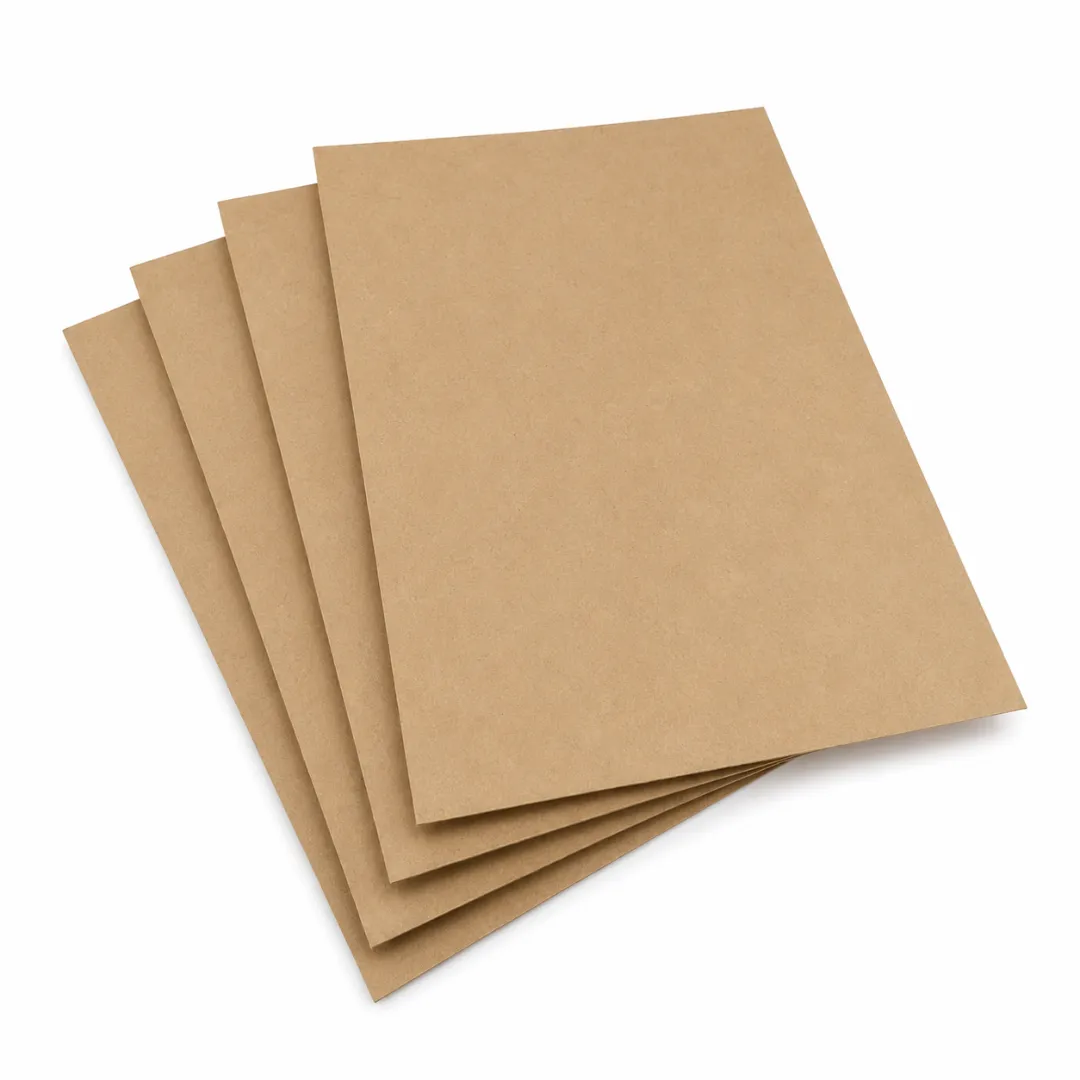
Kraft paper is a strong, durable and reliable material that is widely used across many different industries.
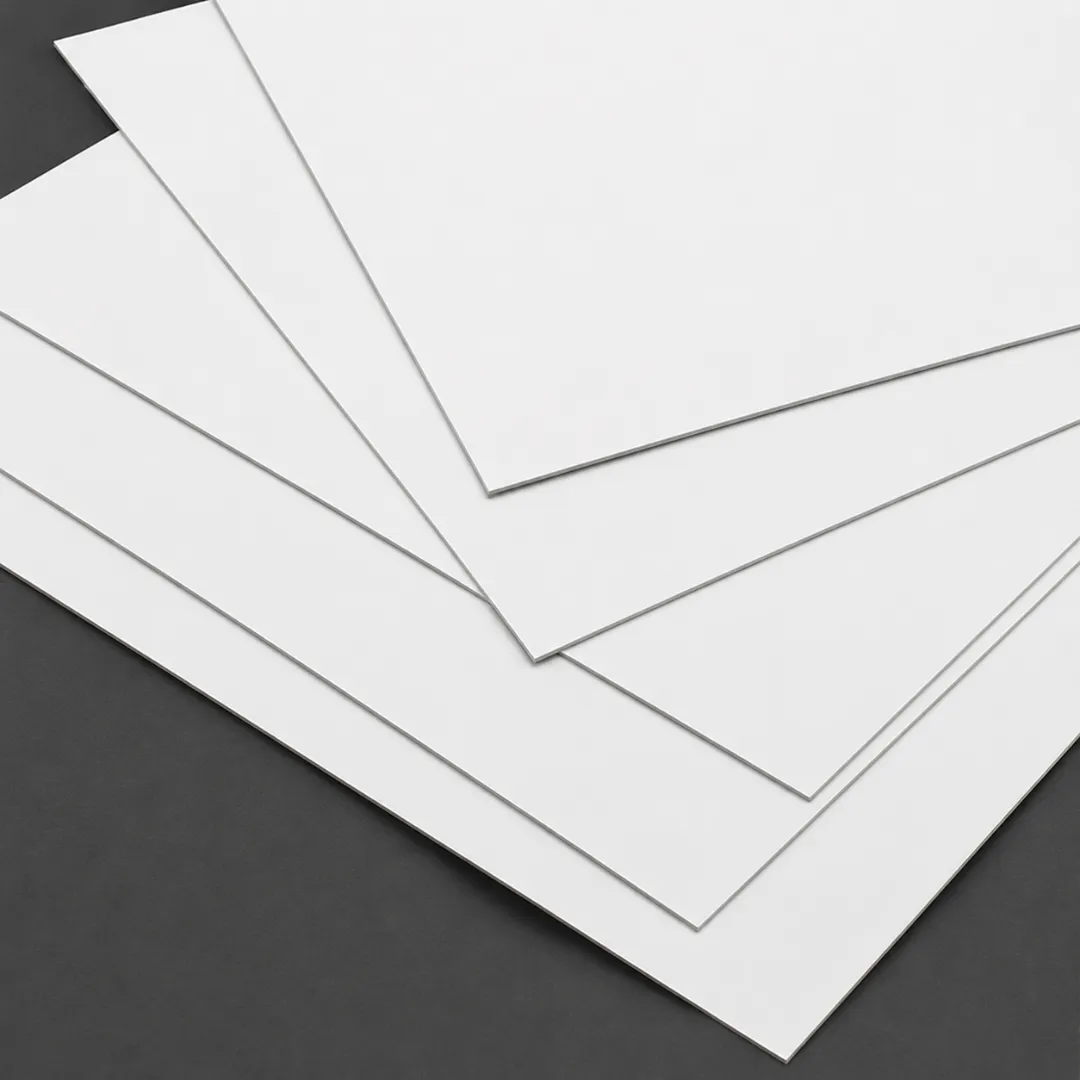
We use cardboard material with the least environmental impact and minimizes waste generation.
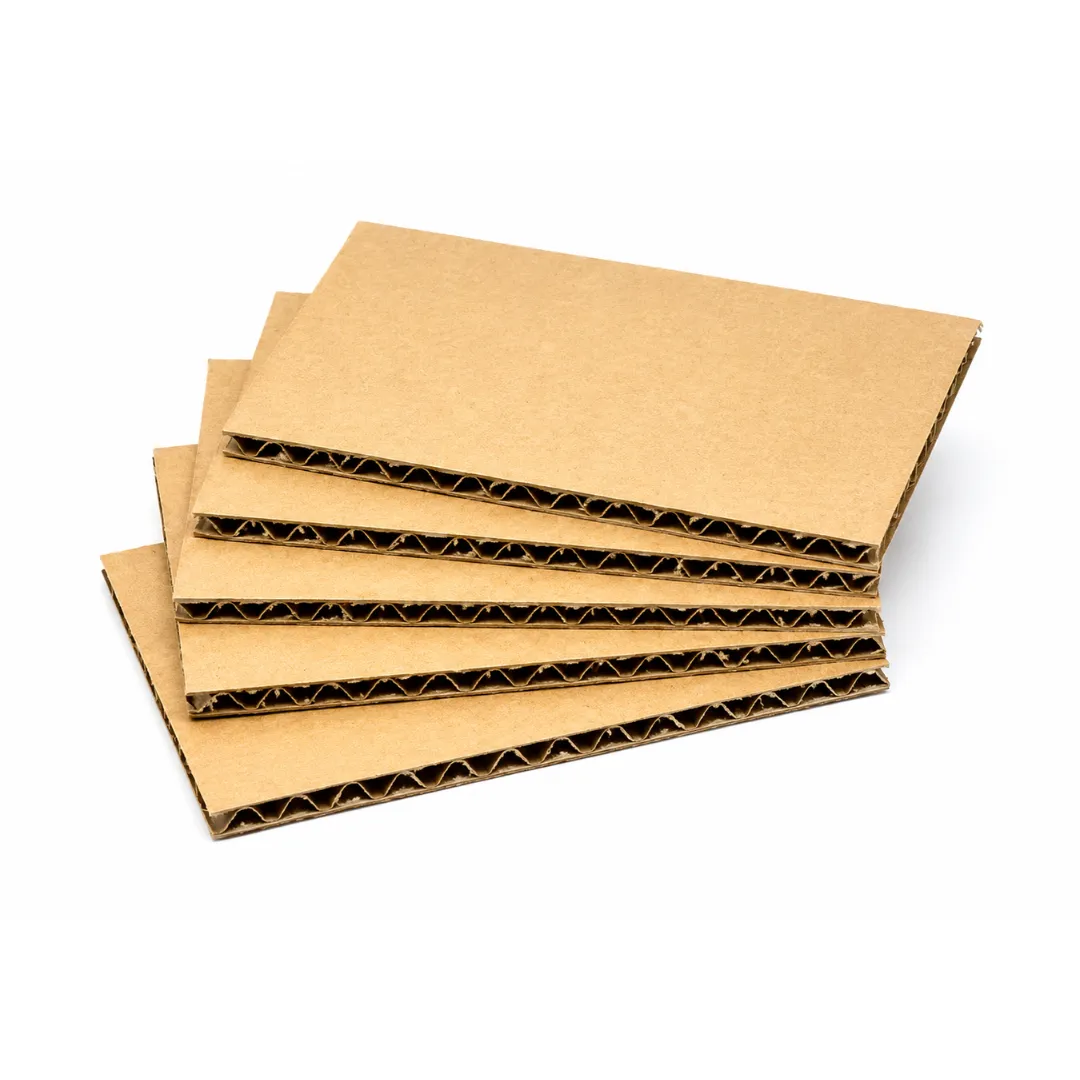
Corrugated material is easy to customize, cost effective and sustainable. It is also great for branding purposes.
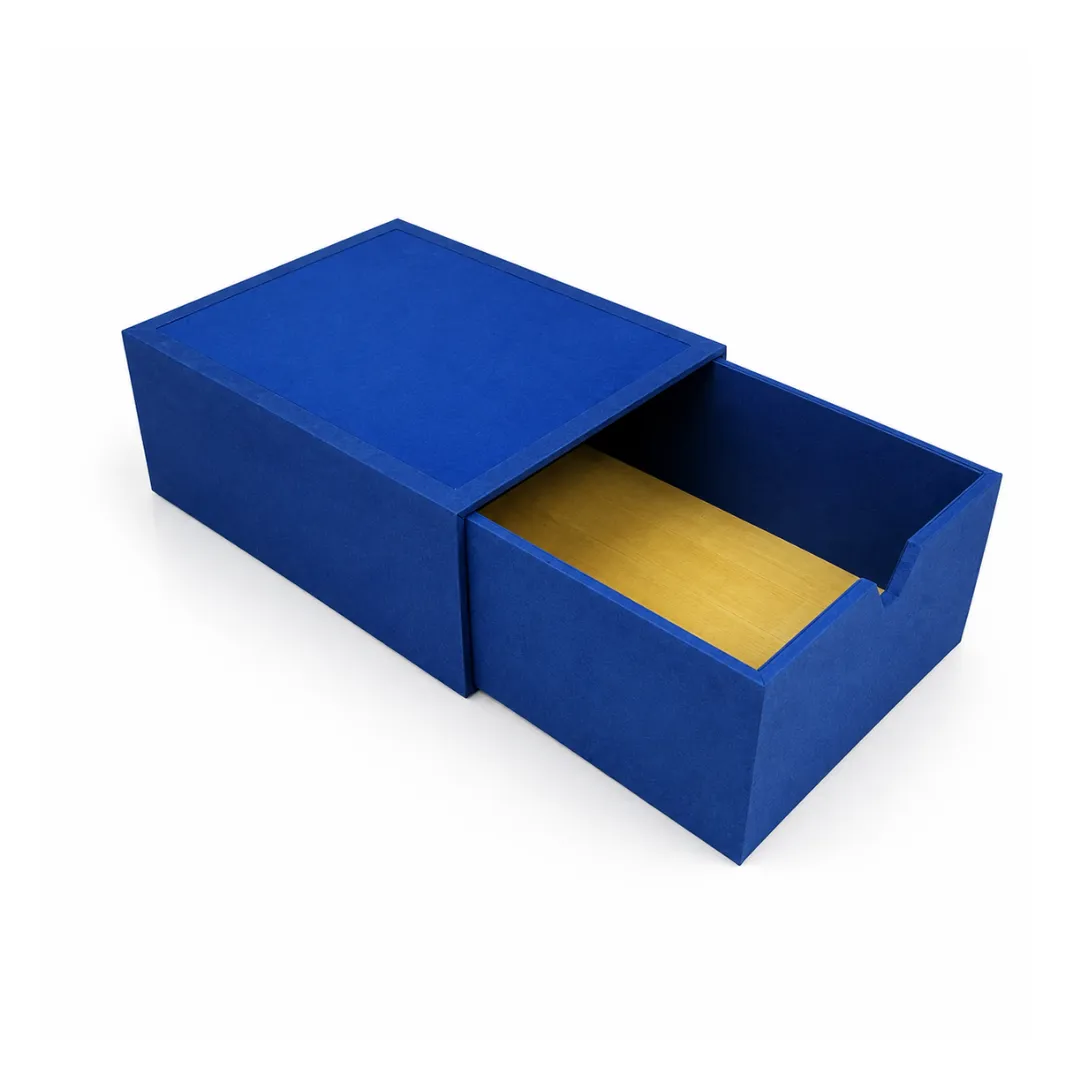
Rigid is highly protective, affordable and recyclable material. These boxes provide maximum protection.
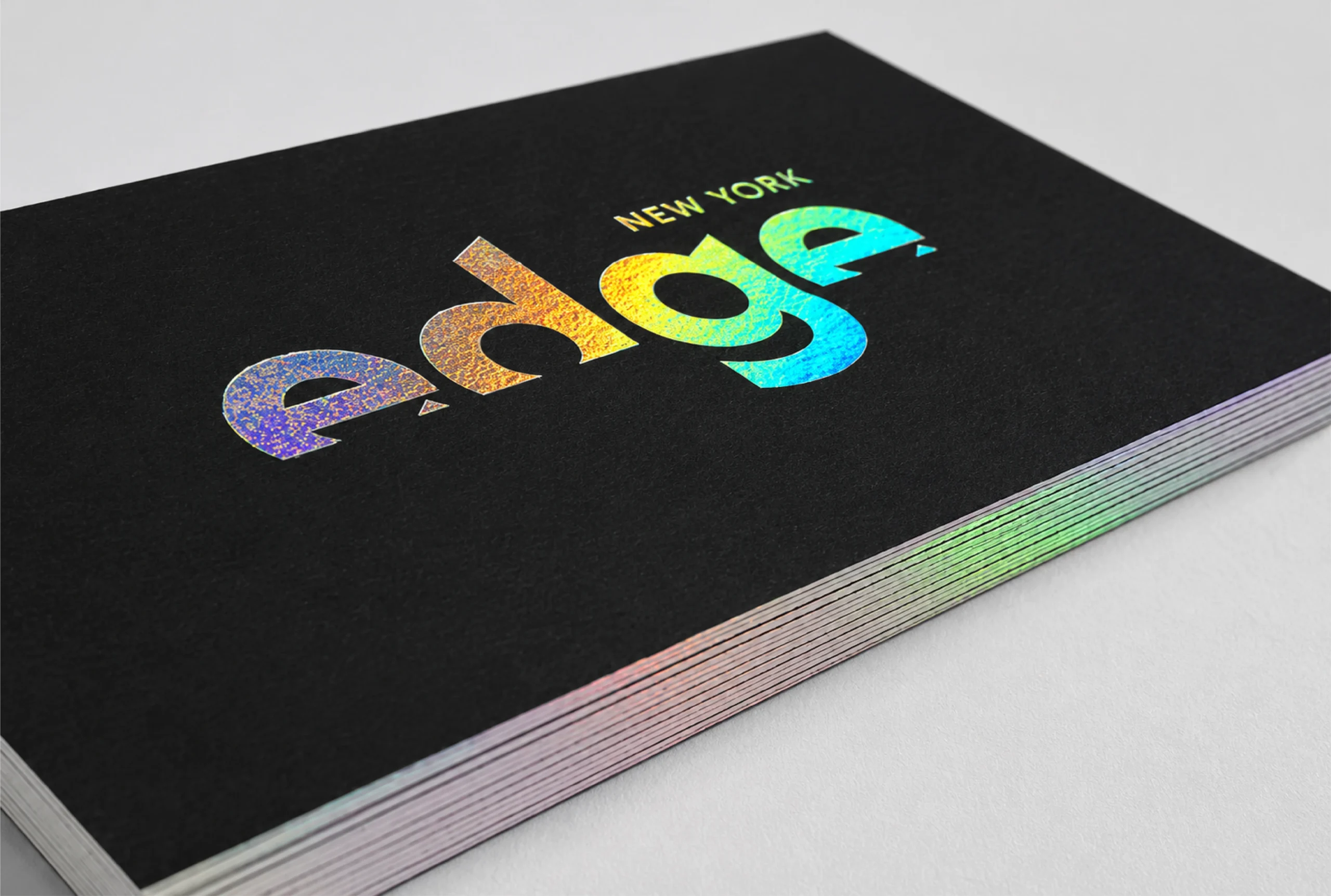
Holographic foil diffracts light and reveals the colors of the rainbow at various angles.
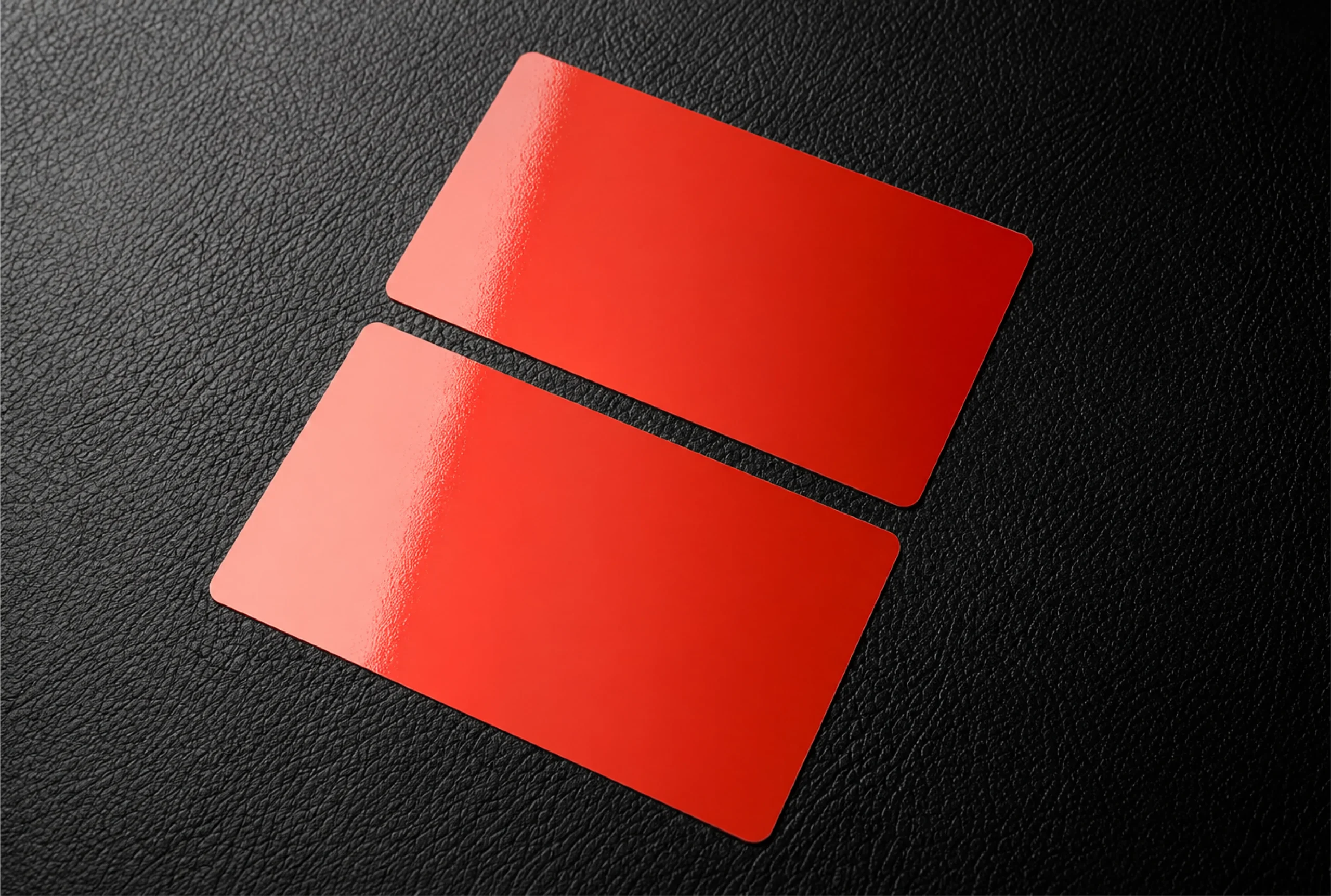
Our glossy finishing gives your packaging an extra layer of shine.
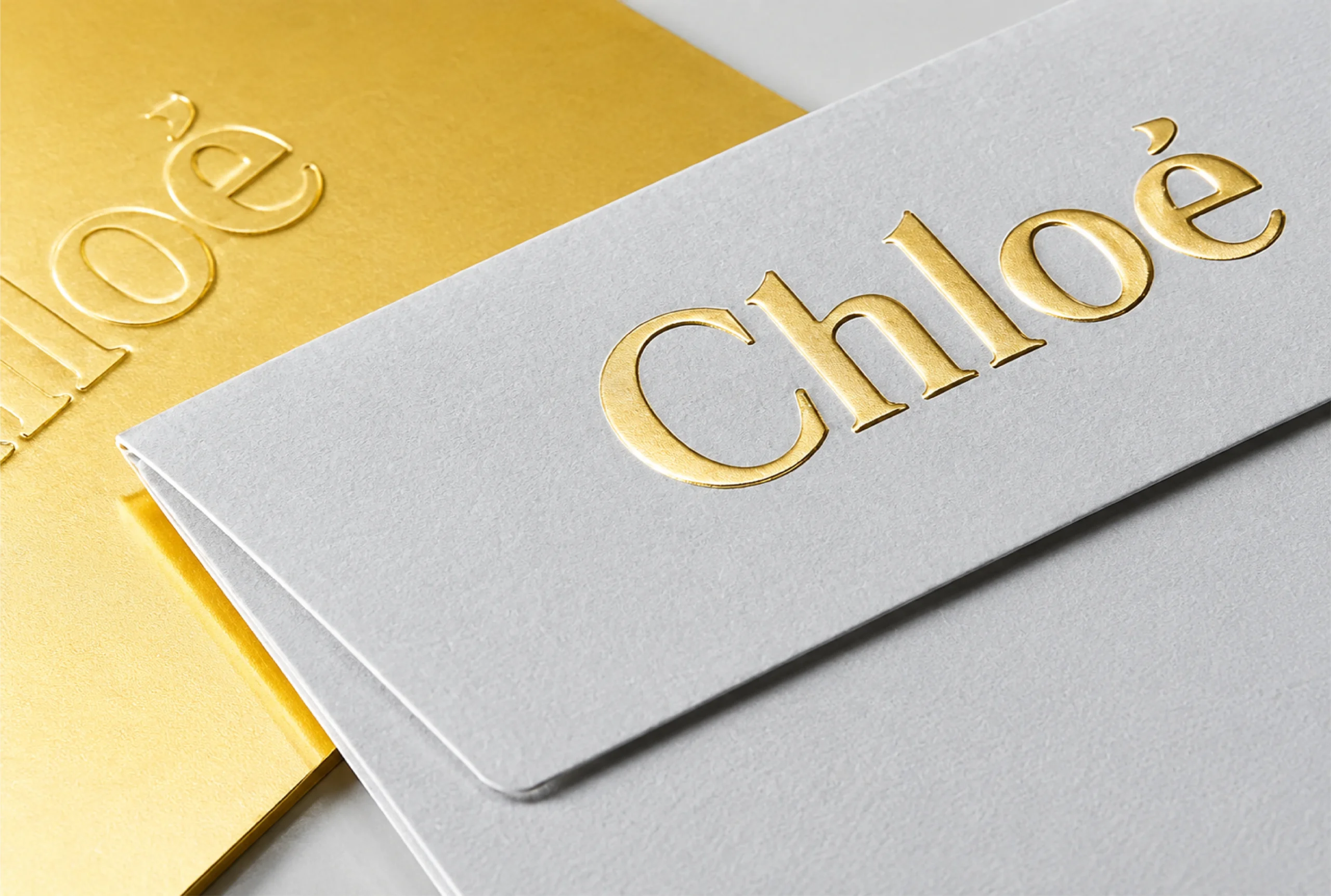
Decorate a wide range of your product packaging with our foil stamping.

With our embossing technique, we transfer the finest details of your product on packaging.
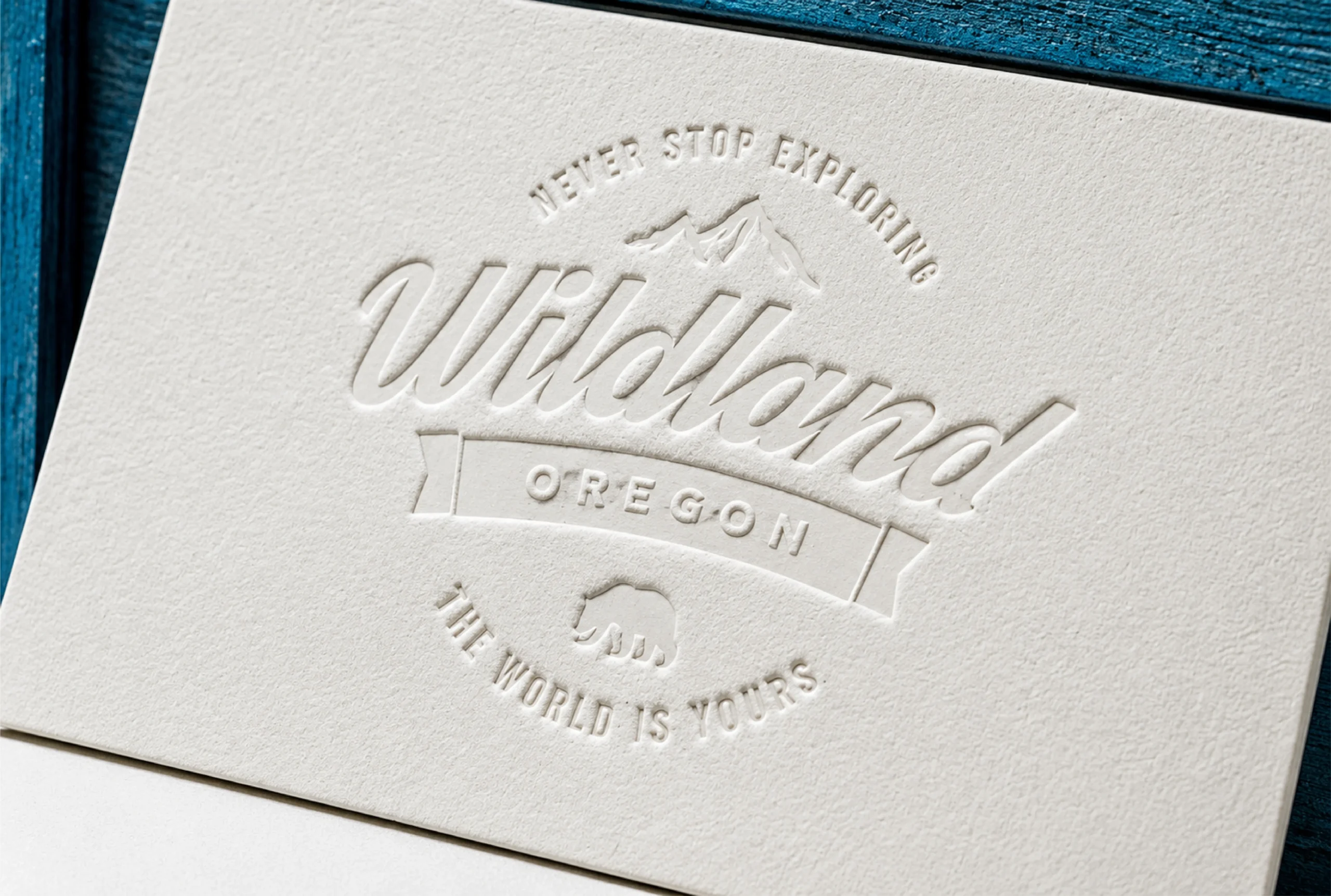
We use debossing technique to add unique graphics into your packaging.
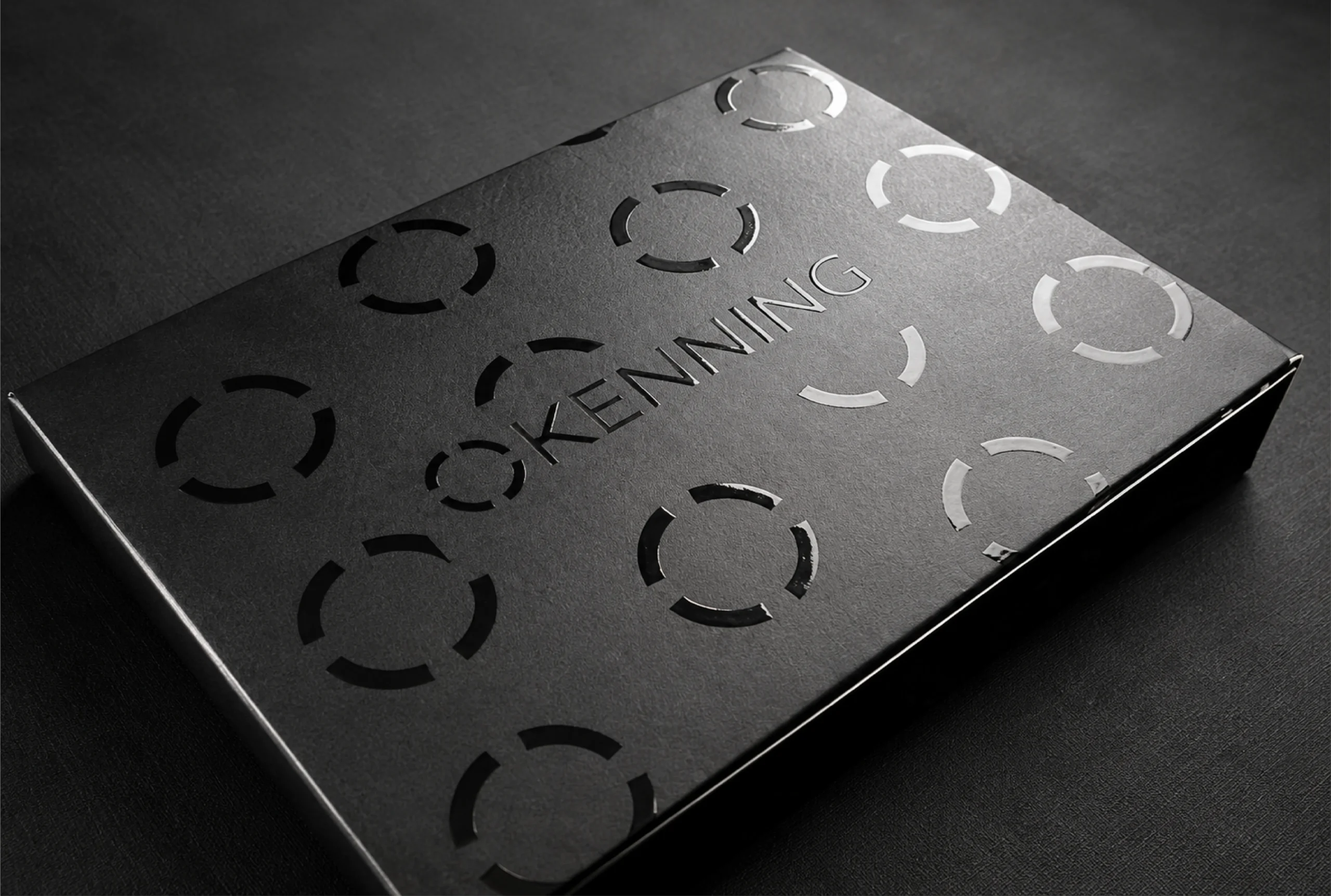
Our high-gloss UV coating gives light and shine to cure the printed material's varnish.
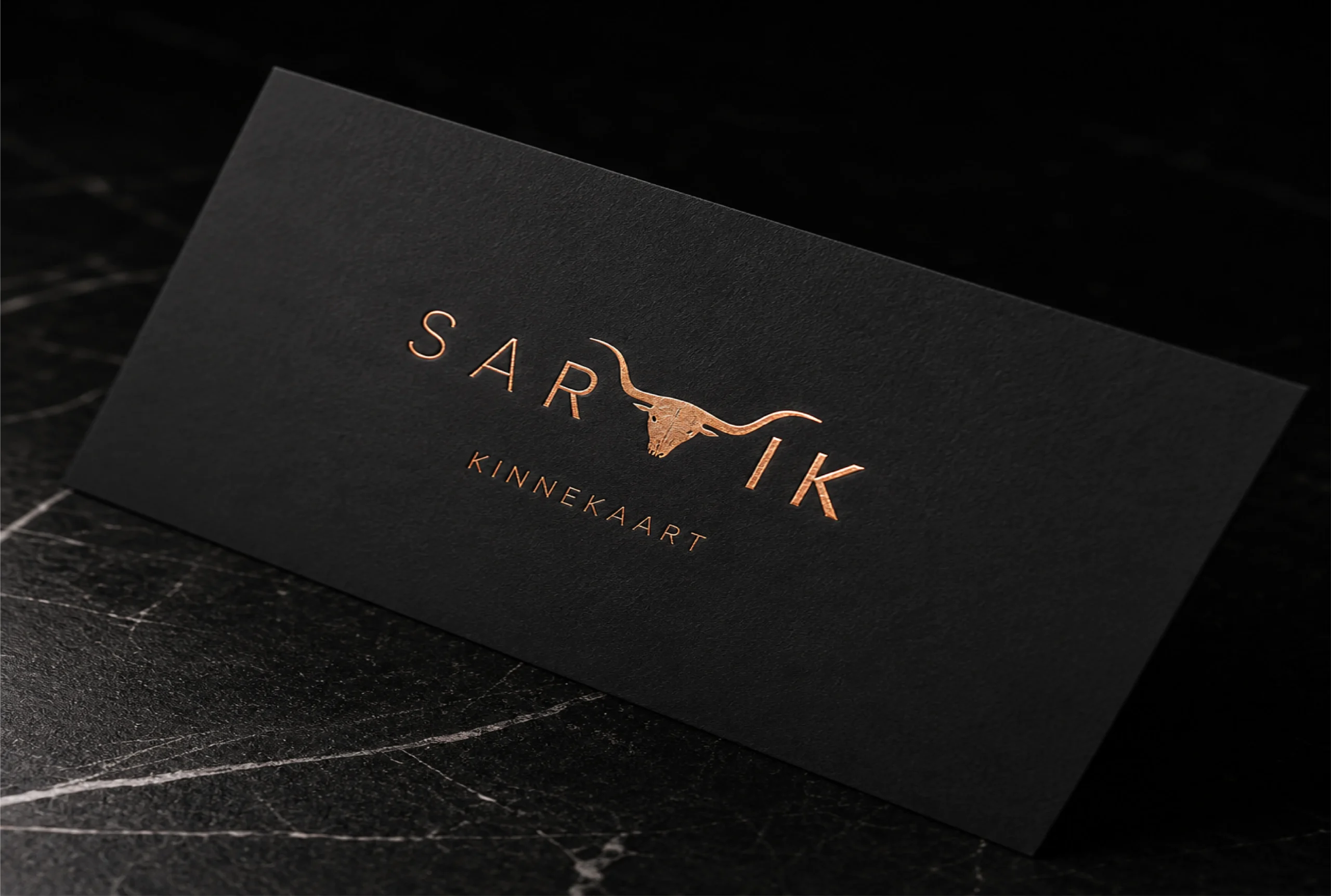
We add additional layer of protection with soft touch lamination from toner chipping.
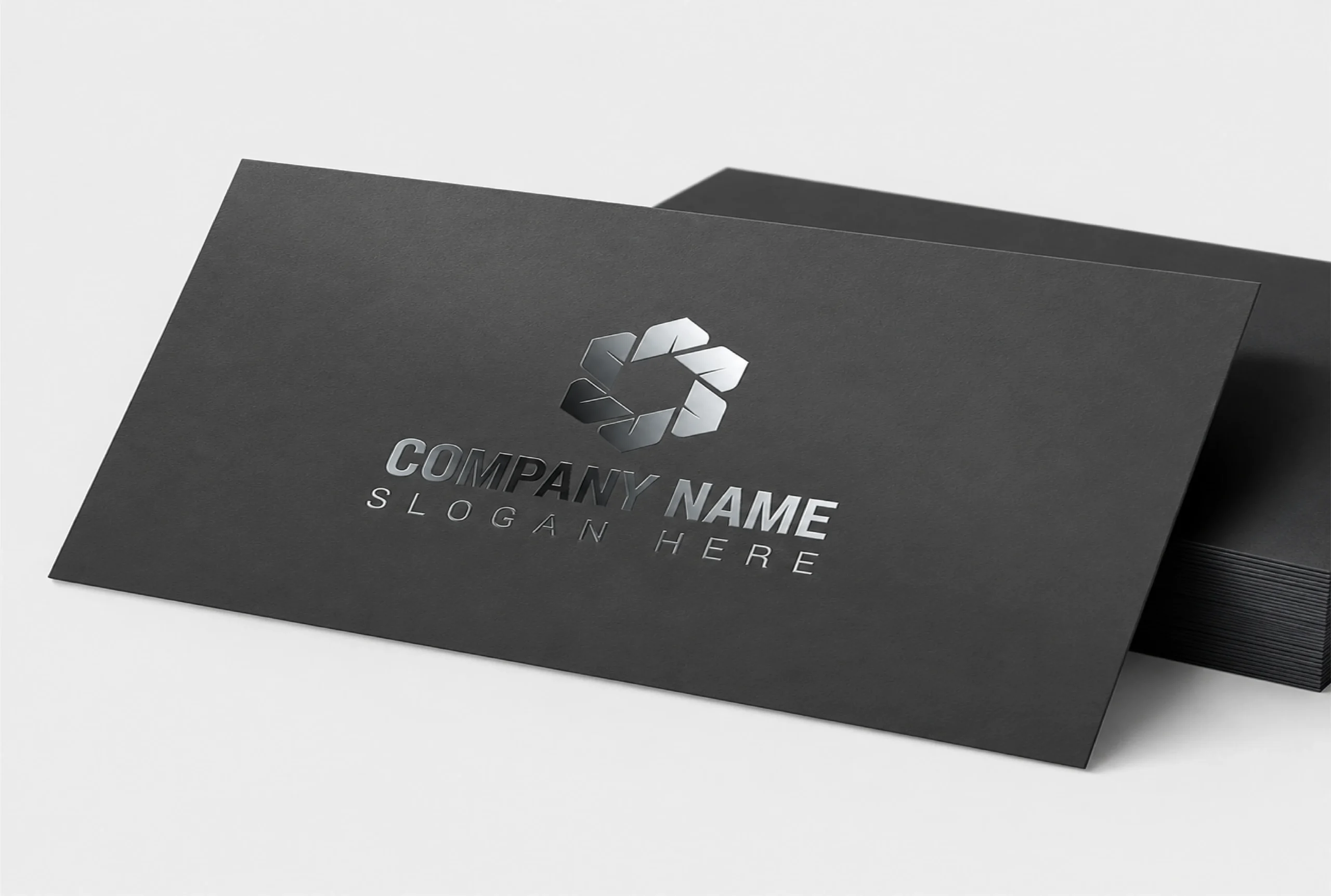
With our matte finish, fingerprints and smudges will now be less visible on the packaging.

Pioneer Custom Boxes provides custom corrugated pizza boxes that keep every pizza hot, fresh, and flawlessly branded. Our durable, food-grade, and eco-friendly packaging helps U.S. pizzerias stand out with quality that customers notice. From design to delivery, we turn every box into a bold expression of your brand.
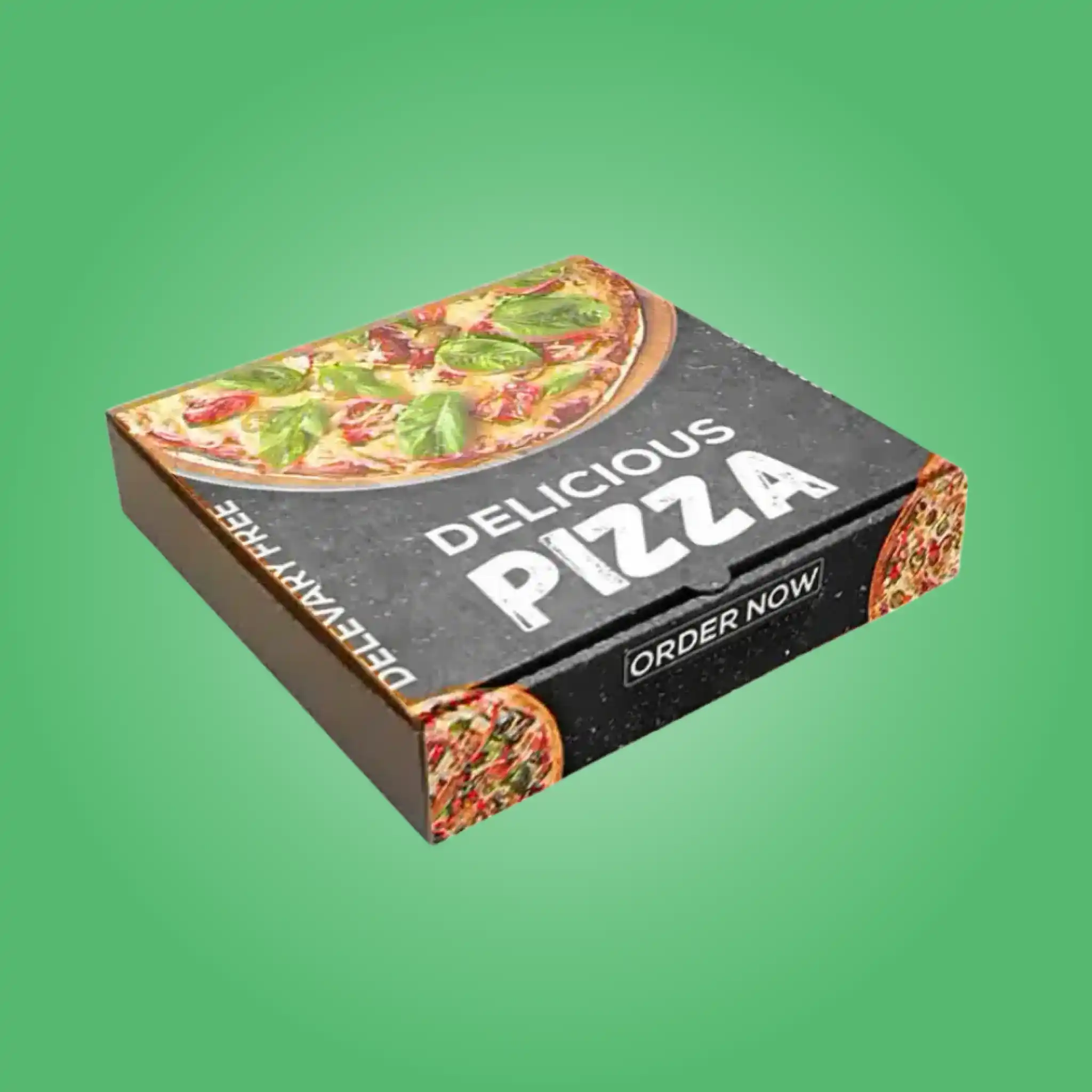
Pioneer Custom Boxes provides custom disposable pizza boxes that redefine convenience and quality. Designed for single use but built to impress, these eco-friendly, food-safe boxes keep pizzas hot, fresh, and perfectly branded. Trusted by U.S. pizzerias nationwide, our packaging turns every delivery into a statement of sustainability and style.
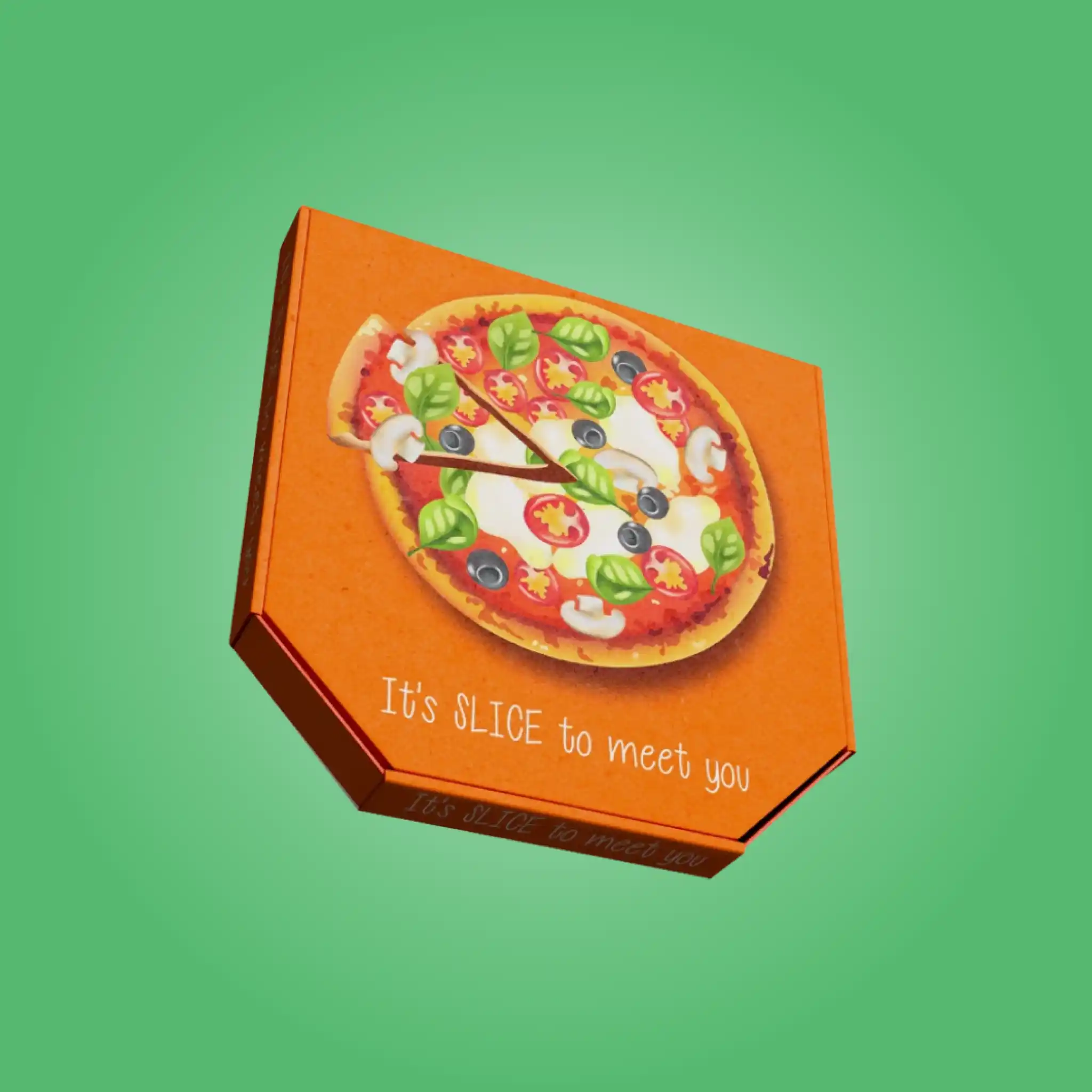
Pioneer Custom Boxes makes durable, deep-dish-ready custom Sicilian pizza boxes that combine precision engineering and sustainable design. Built to handle thick, heavy pizzas with style and strength, these U.S.-made boxes protect both product and brand reputation: authentic quality, eco-conscious materials, and unmatched performance in every slice.

Pioneer Custom Boxes provides custom slice pizza boxes that redefine on-the-go dining. Designed for perfect portions, these sturdy, food-safe boxes keep every slice hot, crisp, and easy to handle. Built with recyclable materials and vibrant customization, they’re the ideal choice for U.S. pizzerias that want eco-friendly packaging with standout presentation and style.