 Skip to content

Your packaging can do more than just protect products – it can reduce waste, save money, and appeal to eco-conscious customers. With the sustainable packaging market set to grow from $292.71 billion in 2024 to $423.56 billion by 2029, now is the time to consider smarter packaging options. Here’s a quick rundown of 10 practical ideas:
- Compostable Mailers: Break down in 90–180 days; cost $0.30–$0.50 per unit.
- Recycled Cardboard Boxes: Save up to 15% on costs; recyclable up to 25 times.
- Plant-Based Inks: Emit fewer VOCs; cost 2%–10% more but offer better coverage.
- Seaweed-Based Pouches: Biodegrade in weeks; 10%–20% pricier than plastic.
- rPET Containers: Made from recycled plastic; 5%–15% higher cost.
- Kraft Paper Packaging: Affordable and recyclable; reduces shipping costs by 10%–15%.
- Corn Starch Plastics: Decompose in 2 months; $0.30–$0.50 per unit.
- Mushroom Mycelium Packaging: Home-compostable; durable and moldable.
- Molded Fiber Products: Compostable and cost-effective; $0.07–$0.15 per piece.
- Reusable Packaging Systems: Long-term savings; higher upfront investment.
Each option offers durability, branding potential, and a way to cut waste. Start small by auditing your current materials and choosing one or two changes to implement. The shift to eco-friendly packaging is not only better for the planet but also aligns with customer preferences – 87% of consumers prefer brands reducing plastic use.
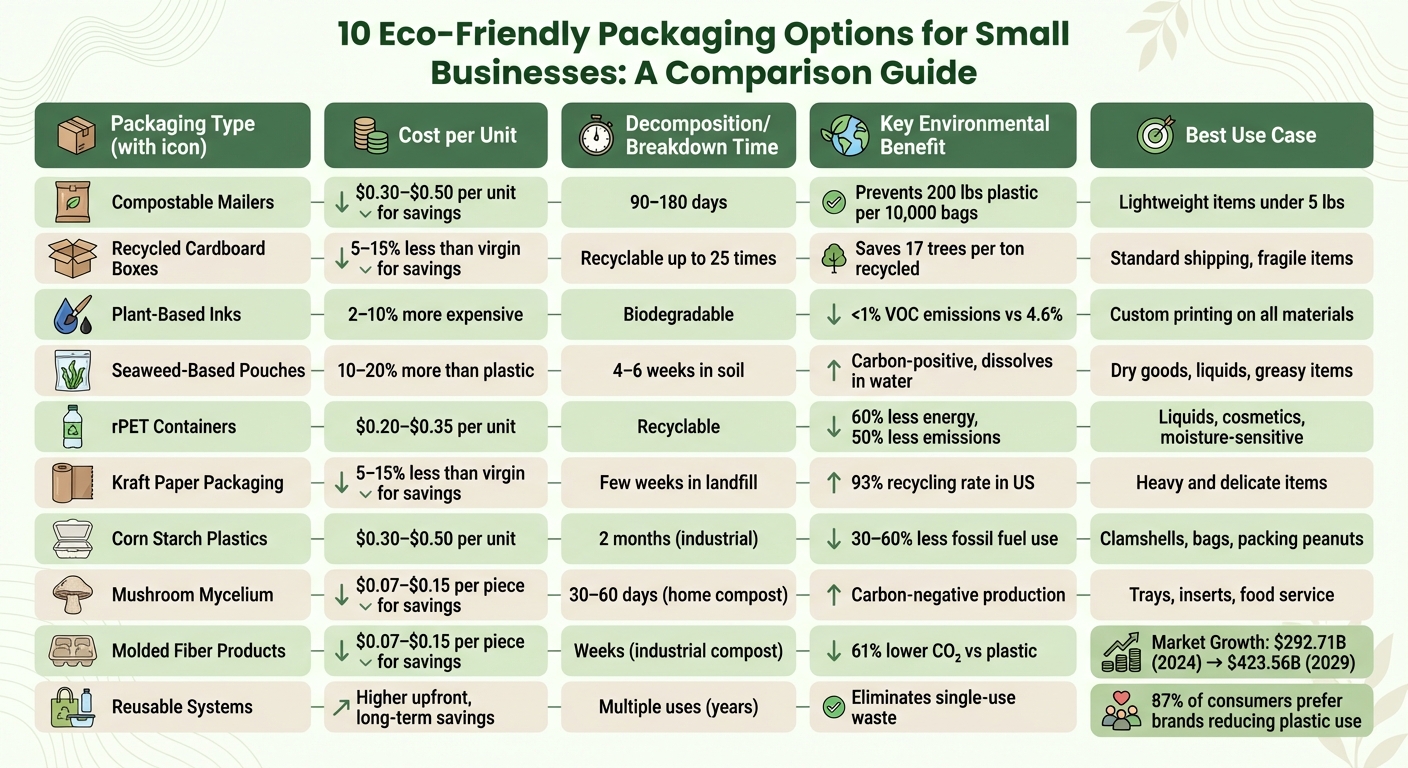
10 Eco-Friendly Packaging Options: Cost, Decomposition Time, and Environmental Impact Comparison
🌿 Eco-Friendly Packaging Ideas for Amazon Sellers | Sustainable Shipping Tips (2025)
sbb-itb-5e0962e
1. Compostable Mailers
Compostable mailers are gaining attention as a packaging choice that balances environmental responsibility, functionality, and affordability. Made from plant-based materials like corn starch, cellulose, PLA, and PBAT, these mailers break down completely within 90–180 days in industrial composting facilities, leaving behind nutrient-rich compost, water, and CO₂ instead of harmful microplastics.
Environmental Impact
The e-commerce boom has led to massive packaging waste – 2,657 million pounds in 2021, with projections of 4,533 million pounds by 2025. Compostable mailers offer a way to reduce this footprint. For example, a single order of 10,000 compostable bags can prevent around 200 pounds of plastic from polluting landfills and oceans. Given that only about 9% of all plastic ever produced has been recycled, the switch to compostable options could make a meaningful difference.
There are two main types of compostable mailers. Home Compostable mailers can decompose in backyard compost bins at lower temperatures, while Industrial Compostable mailers require high-heat commercial facilities. Certifications like TUV Austria (OK Compost), BPI, EN 13432, or ASTM D6400 can help verify that the materials meet compostability standards.
Cost for Small Businesses
For small businesses, compostable mailers come with higher costs – about $0.30 to $0.50 per 10×13" unit compared to $0.15 to $0.25 for traditional plastic mailers. However, suppliers often offer low minimum order quantities, starting at just 250 pieces for custom designs.
"I’ve talked with dozens of small business owners who feel stuck between wanting to be more sustainable and needing packaging that’s affordable and practical. The good news is that the gap between those goals is closing fast." – Amy Lynn Voinier, Plus Packaging
Ordering in bulk can help lower per-unit costs, with discounts available on orders exceeding 10,000 units. Since these mailers have a shelf life of 9–12 months, it’s wise to store them in a cool, dry place and order only what you can use within six to nine months.
Durability and Usability
Compostable mailers are designed to be tear and water-resistant, thanks to the combination of PLA and PBAT, which gives them strength and flexibility similar to traditional plastic. They are ideal for products weighing less than 5 pounds. For heavier items, kraft mailers or corrugated boxes may be a better option.
These mailers provide protection against light rain and humidity, making them suitable for most shipping conditions. For fragile items like jewelry, padded compostable mailers with biodegradable cushioning are available, while inner wraps or pads can be added for sharp or heavy products to prevent punctures.
Branding and Customer Experience
Compostable mailers do more than just protect products – they also enhance a brand’s eco-conscious image. Their matte finish is perfect for custom, non-toxic printing, and many businesses have reported positive feedback. For instance, Plus Packaging’s custom compostable mailers have a 4.78 out of 5 rating based on 11 reviews, with customers highlighting their quality and environmental benefits.
Studies show that 4% to 7% of consumers are willing to pay over 10% more for sustainable packaging, making compostable mailers a smart investment in brand differentiation. Including disposal instructions, such as QR codes or icons, directly on the mailer can help guide customers on proper composting methods. Some mailers even feature double adhesive strips, allowing them to be reused for returns – a small but impactful detail that reinforces your commitment to sustainability.
2. Recycled Cardboard Boxes
Environmental Impact
Recycling one ton of cardboard comes with impressive benefits: it saves 17 trees, 7,000 gallons of water, 380 gallons of oil, and 4,100 kilowatt-hours of electricity while freeing up over 9 cubic yards of landfill space. When compared to virgin cardboard, recycled cardboard production uses 25% to 50% less energy and up to 99% less water, emitting approximately 1 kg of CO₂ per kg produced, compared to 1.2 kg for virgin materials.
The fact that cardboard can be recycled up to 25 times magnifies its eco-friendly benefits. Additionally, practices like right-sizing boxes reduce the need for excess filler materials and cut down on shipping emissions. In 2022, the U.S. achieved a 93% recycling rate for cardboard, making it one of the most successfully recycled materials in the waste stream.
The environmental advantages also come with financial perks.
Cost for Small Businesses
Recycled cardboard boxes aren’t just better for the planet – they’re easier on the wallet too. They typically cost 5% to 15% less than virgin cardboard because they’re made from existing waste rather than new raw materials. Right-sizing packaging can lower dimensional weight charges, and standardizing box sizes can reduce inventory carrying costs by up to 25%.
"Sustainable packaging solutions often cost LESS than traditional alternatives once you account for the total cost of ownership." – Anchor Box
Small businesses can save even more by purchasing unbranded recycled boxes in bulk and customizing them in-house with rubber stamps or biodegradable stickers, avoiding the expense of custom printing. Plus, recyclable materials often come with lower waste management fees compared to plastics or composite packaging. Altogether, businesses can cut costs by 15% to 30% with sustainable packaging solutions.
Durability and Usability
Recycled corrugated cardboard is designed to be just as strong as its virgin counterpart. The key lies in selecting the right flute type – the wavy layer inside the cardboard.
- B Flute (1/8" thick): Resists crushing, ideal for standard shipping boxes.
- C Flute (11/64" thick): Offers better cushioning for fragile items.
- E Flute (1/16" thick): Thin but strong, perfect for retail or subscription boxes.
The Edge Crush Test (ECT) rating helps determine how much weight a box can handle when stacked. For example, a 32 ECT box supports up to 25 lbs, while a 44 ECT box can handle 40 lbs. These boxes are lightweight, which reduces transportation costs, and their stackable design makes them easy to store in tight spaces. Unlike some biodegradable plastics that can confuse consumers, recycled cardboard is simple to recycle through curbside programs – no special instructions needed.
Branding and Customer Experience
Recycled cardboard doesn’t just cut costs and emissions – it also boosts your brand’s appeal. The natural kraft finish delivers a clean, minimalist look that resonates with eco-conscious shoppers. 74% of consumers consider sustainable packaging when shopping, and brands with strong environmental messaging saw 28% sales growth in 2023. The uncoated surface works seamlessly with soy-based or water-based inks, allowing for custom designs while keeping the material fully recyclable.
Custom-sized boxes also protect products better during shipping, reducing damage, returns, and customer frustration. Adding QR codes to the box can share recycling tips and your brand’s sustainability efforts without the need for extra paper inserts, creating a modern and eco-friendly unboxing experience.
3. Plant-Based Inks
Environmental Impact
Eco-friendly printing practices, like using plant-based inks, are an essential step toward creating sustainable packaging. These inks are made from renewable resources such as soybean, algae, flaxseed, corn, and sunflower oils instead of petroleum-based products. For instance, soy-based inks emit less than 1% volatile organic compounds (VOCs) into the air, compared to 4.6% from traditional oil-based inks. Plus, they’re biodegradable, making recycling easier and disposal safer.
A single 45-pound bucket of algae-based ink can absorb about 59 kg of CO₂ – roughly the same as planting four trees. These inks can also replace up to 87% of the petroleum oil typically used in conventional printing. Additionally, their easy removal during the paper de-inking process results in cleaner recycled paper, extending its usability over multiple cycles. These advantages not only reduce environmental impact but also offer a cost-conscious alternative for printing.
Cost for Small Businesses
There’s an upfront cost difference – plant-based inks are 2%–10% more expensive than petroleum-based ones. However, they provide 10% to 15% more print coverage per unit, meaning you’ll need less ink to achieve the same results. Cleanup is also more affordable, with costs dropping 15%–25% since these inks only require water for removal. On average, using premium eco-friendly inks adds about 12 to 18 cents per unit to packaging costs. For smaller businesses or limited runs, using custom stamps with plant-based inks on kraft paper can be a cost-effective alternative to full-scale custom printing.
Durability and Usability
Plant-based inks deliver vibrant, consistent colors with excellent absorption and minimal smudging. They work well across various printing methods – offset, flexographic, digital inkjet, and screen printing – and are compatible with materials like uncoated paper, cardboard, plastic, glass, and aluminum. These inks also maintain their quality during storage, ensuring consistent color output across production batches. While the initial cost may be higher, reduced ink usage and lower compliance costs for environmental standards can make them a smart long-term investment.
Branding and Customer Experience
Using plant-based inks can elevate your brand image. Combined with matte finishes, they project a sense of authenticity, reliability, and premium quality. Consumers increasingly value sustainable design, and packaging printed with these inks encourages them to engage more with your product, increasing dwell time and strengthening their connection to your brand. Highlighting your use of soy or vegetable-based inks on packaging can also enhance trust and reinforce your eco-friendly messaging. In fact, sustainable packaging has been shown to boost customer loyalty by 12% to 18%. These small details make a big difference in how customers perceive your brand.
4. Seaweed-Based Pouches
Environmental Impact
Seaweed-based pouches break down in soil within just 4 to 6 weeks – a stark contrast to traditional plastic, which lingers for hundreds of years. These pouches are carbon-positive, meaning they absorb CO₂ during growth, and they don’t require freshwater, land, fertilizers, or pesticides to produce. If they end up in water, they dissolve within hours, leaving no harm to marine life. Plus, they’re BPA-free and don’t leave behind microplastics or toxic residues. This makes them a smart choice for businesses aiming to shift toward eco-friendly packaging.
In 2022, the London-based startup Notpla demonstrated the potential of seaweed-based packaging by displacing 4.4 tons of plastic and avoiding 19 tons of CO₂ equivalent. The company, which earned the Earthshot Prize that year, has partnered with Just Eat to roll out its grease-resistant packaging across several European markets. With 87% of consumers expressing a preference for brands that reduce plastic use, adopting seaweed pouches could help your business stand out while making a meaningful environmental contribution.
Cost for Small Businesses
Currently, seaweed-based pouches cost 10% to 20% more than traditional plastic options. This price difference is largely due to the limited automation and small-scale production methods still in use. While the upfront cost may seem like a hurdle, prices are gradually dropping as production scales up and demand grows. In fact, the global market for seaweed-based packaging is expected to reach $613.42 million by 2029, which could further lower costs.
To keep costs manageable, small businesses can start by using stock designs, which are available in smaller volumes, instead of diving straight into fully customized production. Some suppliers offer stock seaweed polybags starting at 500 units with custom branding, while fully custom orders often require a minimum of 10,000 units. Additionally, check for local government incentives or tax breaks aimed at reducing single-use plastic, as these can help offset the higher costs. Beyond the price, these pouches bring both functionality and customer appeal.
Durability and Usability
Seaweed pouches are designed to handle a variety of products. They’re moisture-resistant, greaseproof, and heat-resistant, making them suitable for everything from dry goods like coffee and spices to wet or greasy items like sauces and oils. With a shelf life of around 18 months, they meet the needs of most small businesses.
Their translucent cream finish also adds a unique touch, creating a memorable unboxing experience for eco-conscious customers. Lisa Diegel, Director of Global Sustainability at Faherty, highlighted their impact:
"Sway packaging is a gamechanger. Sway Polybags are meeting performance expectations, they enhance our customer’s experience, and have an amazing impact story."
To ensure customers know how to dispose of the pouches properly, include clear, QR-coded disposal instructions on the packaging. This small step can make a big difference in promoting responsible composting.
5. rPET Recycled Plastic Containers
Environmental Impact
rPET, or recycled polyethylene terephthalate, transforms used plastic bottles into practical packaging, reducing waste and extending the lifecycle of materials. This process is energy-efficient, consuming up to 60% less energy and slashing greenhouse gas emissions by nearly 50% compared to producing virgin plastic. In 2023 alone, the global use of rPET saved the equivalent of 7.4 million barrels of oil.
By adopting rPET, industries are supporting a circular economy. This approach shifts from the outdated "take-make-waste" model to a more sustainable "collect-recycle-reuse" system. Companies like Coca-Cola, Evian, and Waiākea have already committed to using 100% rPET bottles. Looking ahead, rPET production is projected to exceed 10 million tons annually by 2030, potentially preventing over 25 million tons of CO₂ emissions every year. However, challenges remain – less than 10% of the 400 million tons of plastic produced globally each year is currently recycled.
Cost for Small Businesses
While rPET offers clear ecological benefits, its cost can be a concern for small businesses. On average, rPET containers are 5% to 15% more expensive than virgin plastic due to the additional processing required to clean and repurpose post-consumer waste. Oil-price fluctuations can also make virgin plastic temporarily cheaper. For example, standard rPET mailers (10×13") cost between $0.20 and $0.35 per unit.
To manage these costs, consider buying in bulk or collaborating with other small businesses to place joint orders. Additionally, optimizing your packaging size can help reduce material waste and shipping costs. Although rPET has a higher upfront cost, its lightweight nature makes it more cost-effective to ship compared to heavier materials like glass. Many customers are also willing to pay extra for sustainable packaging, so labeling your rPET containers to emphasize their recycled content can enhance their appeal.
Durability and Usability
rPET containers are not just eco-friendly – they’re also practical. They offer the same strength, clarity, and tear resistance as virgin plastic. Waterproof and weather-resistant, rPET is ideal for packaging liquids, cosmetics, or other moisture-sensitive products. It’s especially useful for items prone to leaks, where paper-based alternatives might fall short.
If you’re using rPET for food or cosmetic products, ensure your containers meet FDA food-contact standards and secure certifications like the Global Recycled Standard (GRS) or ISO 15270. Keep in mind that recycled flakes can sometimes vary slightly in color, which may affect the appearance of transparent packaging. To further support sustainability, include clear recycling instructions – possibly with QR codes – on your packaging to guide customers on proper disposal. These features not only enhance functionality but also align with the growing demand for sustainable and innovative packaging solutions.
6. Kraft Paper Packaging
Environmental Impact
Kraft paper is one of the most eco-friendly packaging materials out there. It’s completely biodegradable, breaking down in landfills within just a few weeks. Unlike materials that linger as waste, kraft paper is fully recyclable, promoting a circular economy. The kraft production process is also less harmful to the environment – it uses fewer chemicals than traditional papermaking, relying on sodium hydroxide and sodium sulfide, which are recovered and reused in a closed-loop system. Plus, its lightweight nature reduces its carbon footprint compared to plastic and standard paper. Many kraft mailers are made with up to 90% recycled paper, making them a smart choice for sustainability [46,47].
Cost for Small Businesses
For small businesses, kraft paper is a budget-friendly option. It’s usually cheaper than plastic or bleached paper because it skips the costly bleaching process [44,49]. When you factor in shipping, waste disposal, and compliance with regulations, kraft paper can lower overall costs by 15–30%. Its lightweight and durable design also cuts shipping costs by 10–15%, and recycled kraft cardboard is generally 5–15% less expensive than virgin cardboard.
"Kraft paper packaging’s supply chain advantages are garnering more attention… reducing the reliance on petroleum-based materials with high price and supply volatility".
Small businesses can save even more by purchasing kraft boxes in bulk or joining group orders. Budget-friendly customization options, such as rubber stamps, biodegradable stickers, or ribbons with soy- or water-based inks, can add a personal touch without breaking the bank [44,47].
Durability and Usability
Kraft paper is incredibly strong – its name even comes from the German word for "strength". The kraft process removes most of the lignin, giving it high tensile strength and excellent tear resistance [44,48]. It’s also versatile, standing up to heat, moisture, and grease, making it suitable for packaging both heavy and delicate items. For food packaging, eco-friendly resins can be applied to prevent grease from seeping through. However, its water resistance is limited unless treated with special coatings [44,48,49]. For heavy items, B-flute corrugated kraft (0.1–0.12 inches thick) works best, while E-flute (about 0.05 inches thick) is ideal for lighter products.
Branding and Customer Experience
Kraft paper’s natural, rustic look appeals to modern consumers. In the US, 72% of shoppers say packaging design influences their buying decisions, and 63% view paper or cardboard packaging as premium. Additionally, 74% of consumers are willing to pay more for products with eco-friendly packaging. Kraft paper also offers plenty of branding options, supporting techniques like flexography, offset printing, embossing, and foil stamping. Printing white ink on brown kraft creates a striking, modern look, while black kraft or bleached white kraft can offer sleek or clean aesthetics [44,51].
Adding small details, like a "thank you" message inside the box, can elevate the unboxing experience – 52% of online shoppers are more likely to return to a company that uses custom packaging. Combining affordability, strength, and visual appeal, kraft paper is a fantastic choice for businesses looking to adopt sustainable packaging solutions.
7. Biodegradable Plastics from Corn Starch
Biodegradable plastics made from corn starch are an exciting step forward in sustainable packaging, complementing innovations like compostable mailers and recycled materials.
Environmental Impact
Corn starch packaging, crafted from PLA (polylactic acid), provides a renewable alternative to petroleum-based plastics. While conventional plastics can linger for centuries, PLA packaging decomposes in just two months under industrial composting conditions (temperatures above 140°F). This process not only minimizes waste but also reduces fossil fuel consumption by 30%–60%. Even better, it breaks down into water and carbon dioxide without leaving harmful microplastic residue behind. Plus, it’s free of harmful chemicals like BPA, phthalates, and PVC.
"Cornstarch packaging tops the list to help you reduce your brand’s carbon footprint while providing an elegant and durable packaging for products." – Blake Harper, Packaging Engineer, CPP Boxes
However, it’s worth noting that in oxygen-deprived environments like landfills, corn starch packaging may release methane, making proper industrial composting critical.
Cost for Small Businesses
Corn starch mailers come with a price tag of $0.30–$0.50 per unit, compared to $0.20–$0.35 for traditional poly mailers. While this upfront cost is 20%–40% higher, the overall expenses might balance out. Their lightweight design can save on shipping costs, and with 74% of consumers considering sustainable packaging in their buying decisions, the investment could pay off in customer loyalty. Additionally, corn starch packing peanuts are often cheaper than polystyrene foam, costing between $0.10 and $0.20 per unit. Small businesses can manage costs by purchasing in bulk from eco-friendly suppliers or platforms like Alibaba. As demand for sustainable options grows, prices are expected to continue dropping, with the industry projected to grow at a rate of 17.3% annually through 2033.
Durability and Usability
Corn starch-based materials don’t just check the sustainability box – they’re practical too. They can be shaped into clamshells, shopping bags, meat trays, cup lids, and even transparent window boxes. Compression molding creates sturdy containers, while heat-sealing ensures the packaging holds up during shipping. These materials also offer strong barrier properties, protecting contents from moisture, oxygen, and contaminants. For food packaging, additional eco-friendly coatings can enhance resistance to grease and moisture. However, it’s important to remember that corn starch packaging is water-resistant, not waterproof, and has a shelf life of 9–12 months when stored in a cool, dry place.
Branding and Customer Experience
Corn starch packaging is a dream for branding. It works well with plant-based inks, ensuring crisp and eco-friendly designs. You can also add biodegradable stickers or use natural ink stamps for a clean, minimalist look. To avoid confusion or accusations of greenwashing, include clear disposal instructions and ensure your packaging is BPI-certified, meeting recognized compostability standards. Since most PLA products require industrial composting rather than home composting, educating your customers about local composting options is essential. Clear labeling and certifications not only enhance transparency but also reinforce your brand’s commitment to sustainability.
8. Mushroom Mycelium Packaging
Mushroom mycelium packaging is stepping into the spotlight as a cutting-edge alternative to traditional materials. Made from fungal mycelium and agricultural waste like hemp, corn husks, or sawdust, this packaging is already being adopted by major brands like IKEA and Dell. These companies have successfully used it as a replacement for plastic foams in their shipping processes, proving its readiness for mainstream use. Beyond its practicality, this material aligns with growing demands for eco-friendly solutions.
Environmental Impact
One of the standout features of mushroom mycelium packaging is its home-compostable nature. It breaks down in just 30 to 60 days, leaving behind nutrient-rich organic matter instead of toxins or microplastics. The production process is impressively clean, requiring no synthetic chemicals and even achieving a carbon-negative footprint. By using agricultural byproducts that might otherwise end up in landfills, this packaging supports a circular economy. Additionally, it offers natural fire resistance and thermal insulation.
"Unlike traditional materials that linger in landfills or oceans for centuries, mushroom packaging biodegrades naturally and nourishes the earth in the process." – Packoi
Cost for Small Businesses
For small businesses aiming to adopt sustainable practices, mushroom mycelium packaging is an affordable option that doesn’t compromise on quality. Molded fiber pieces cost between $0.07 and $0.15 each, while raw agricultural waste is priced at $50–$150 per ton. Custom molds, however, can be an investment, ranging from $10,000 to $15,000. To sidestep these costs, small businesses can opt for standard-sized protective inserts and add branding through natural ink stamps or biodegradable stickers. Its excellent cushioning properties also help reduce product damage during shipping, cutting down on replacement expenses.
Durability and Usability
Mushroom packaging is both sturdy and slightly spongy, offering shock absorption on par with Styrofoam. It’s strong enough to protect fragile items like electronics, glassware, and cosmetics. The material grows into custom molds within just 4 to 6 days, creating a snug fit around delicate products. Once cured, it’s dry and stable, with the ability to stay intact in storage for months – provided it’s kept in a dry environment, as high moisture can weaken it. Dell Technologies has reported reduced packaging emissions and excellent performance in shock absorption after switching to mycelium packaging for lightweight servers and electronic components.
Branding and Customer Experience
The organic, off-white texture of mushroom packaging lends a premium, minimalist aesthetic that resonates with environmentally conscious shoppers. For example, wellness brand Pym uses it for shipping supplements, aligning with their eco-friendly values. To elevate the unboxing experience, businesses can pair mushroom inserts with recycled kraft paper or custom wooden labels. Adding a QR code to the packaging can further educate customers about its compostable nature and how breaking it into smaller pieces speeds up decomposition.
"Its sleek finish improves distinct branding and a refined retail look. Compostable packaging improves trust and promotes repeat preferences as consumers in this industry prioritize responsible options." – Box Agency Editorial
9. Molded Fiber Products
Molded fiber products are stepping up as a cost-effective and compostable alternative in the realm of sustainable shipping. These packaging solutions are crafted from recycled paperboard, newsprint, and agricultural byproducts like bamboo, bagasse, and wheat straw. The process involves mixing these raw materials with water to create a slurry, which is then vacuum-formed into trays and inserts. After being pressed, dried, and trimmed, the result is packaging that’s fully compostable and capable of breaking down into soil-enriching biomass within weeks under industrial composting conditions.
Environmental Impact
Switching from plastic to molded fiber can slash your CO₂ footprint by nearly 61%. Unlike plastic, which can linger in landfills for centuries, molded fiber is recyclable through standard paper streams. Companies like IKEA and Apple are already making the shift. IKEA, for instance, has committed to replacing all single-use plastic packaging with sustainable alternatives, including molded fiber, as part of its push for a circular economy. Similarly, Apple uses molded fiber trays made entirely from recycled materials for iPhone and iPad packaging to shrink its environmental impact.
Cost for Small Businesses
For small businesses, molded fiber packaging offers an affordable option. Individual pieces are priced between $0.07 and $0.15, making them about 65% cheaper than plastic thermal form trays. Raw materials cost $50 to $150 per ton, significantly less than the $800 to $1,200 per ton typically spent on plastic. While there’s an upfront cost for custom metal molds, the nestable design of molded fiber reduces storage and shipping expenses. Additionally, businesses can sidestep rising plastic taxes and Extended Producer Responsibility (EPR) fees.
"Eco-friendly packaging for your small business can reduce costs by 15-30%, increase customer loyalty by 12-18%, and differentiate your brand in competitive markets." – Anchor Box
Durability and Usability
Molded fiber doesn’t just check the eco-friendly box – it’s also durable. Thanks to engineered ribbing, it provides shock absorption on par with Styrofoam, handling heavy compression loads without collapsing. It can be custom-molded to fit products precisely, reducing the need for extra fillers like bubble wrap or packing peanuts. This can lower product breakage rates by up to 20% compared to traditional cardboard dividers. For food service, molded fiber is microwave-safe and can be treated with bio-based coatings to resist moisture and grease. It’s a versatile option that protects products while supporting sustainable goals.
Branding and Customer Experience
Molded fiber packaging doesn’t just protect – it enhances your brand. Advanced thermoforming techniques create smooth, high-definition surfaces, making it ideal for luxury electronics and cosmetics packaging. Logos and designs can be embossed directly onto the surface without compromising its compostability. Some coatings even provide a soft, velvety texture, elevating the unboxing experience. With 74% of shoppers factoring sustainable packaging into their buying decisions, and 56% more likely to recommend brands using eco-friendly options, molded fiber can help foster customer loyalty.
10. Reusable Circular Packaging Systems
Reusable circular packaging systems are reshaping the way we think about packaging by prioritizing reuse, return, and regeneration instead of disposal. These systems are built around durable materials like glass, aluminum, stainless steel, heavy-duty rPET, and sturdy cotton or canvas, all designed for repeated use. Key models include "refill at home" subscriptions, "return-to-store" deposit-refund programs, and B2B pooling systems where businesses share industrial crates or pallets. This approach builds on other eco-friendly packaging concepts, offering a practical long-term solution.
Environmental Impact
Circular packaging systems address waste at its root. By reusing the same containers multiple times, businesses significantly cut the need for producing new materials. This shift from single-use to reusable packaging not only reduces landfill waste but also ensures that materials reaching the end of their lifecycle are easier to recycle due to their higher-quality construction.
Cost for Small Businesses
Reusability offers long-term cost benefits, even though it requires a larger initial investment compared to single-use packaging. Over time, businesses save on material repurchasing and disposal fees. For instance, standardizing packaging sizes and optimizing inventory can lower carrying costs by up to 25%. However, there are challenges. Reusable containers often need more storage space and can weigh more than single-use plastics, potentially raising shipping costs by 5-15%. Small businesses can manage these expenses by collaborating with local brands to place bulk orders, starting with a single product line to test the system, or using rentable packaging options to avoid high upfront costs.
"While the upfront investment may be higher compared to single-use packaging, the long-term savings quickly add up." – Pioneer Packaging
Branding and Customer Experience
Reusable packaging doesn’t just serve a functional purpose – it becomes a brand ambassador, reinforcing your business identity every time customers use it. A sleek glass jar or a durable cotton bag can act as a constant reminder of your brand in everyday life, keeping you in customers’ minds long after the purchase. This is especially appealing to Gen Z and Millennial buyers, who often prioritize sustainability in their shopping choices. To keep reusable packaging in circulation, clear instructions – like return guidelines printed directly on the item – are essential.
"Reusable packaging is the gold standard of sustainability… brand loyalty meets sustainability." – Arnold Packaging
The repeated interaction with thoughtfully designed reusable containers fosters stronger customer relationships than any disposable option ever could.
Conclusion
Switching to eco-friendly packaging isn’t just a smart move for the planet – it’s a strategic decision for your business. By reducing waste, building customer trust, and staying ahead of market trends, you position your company for growth. With the global sustainable packaging market projected to grow from $292.71 billion in 2024 to $423.56 billion by 2029, small businesses that act now can lead the charge instead of playing catch-up. Whether you opt for compostable mailers, recycled cardboard, or reusable systems, each step tackles the significant role packaging plays in global plastic waste.
As mentioned earlier, real progress comes from thoughtful, efficient design. Right-sizing your packaging cuts down on shipping weight, reduces filler waste, and minimizes damage – all while keeping materials in use. Compostable options, on the other hand, naturally decompose rather than lingering for centuries. These changes don’t just shrink your environmental impact; they can also boost operational efficiency. For instance, standardizing packaging sizes can reduce inventory carrying costs by up to 25%.
Your customers are paying attention. A whopping 87% of consumers are more likely to support companies that reduce plastic use, and 56% are more inclined to recommend brands adopting eco-friendly packaging. These sustainable efforts foster trust and loyalty, turning casual buyers into lifelong customers. As packaging strategist Cassian Thorn explains:
"Sustainability is not about locking into one material forever. It is about avoiding decisions that create unnecessary waste as the business grows".
Start by auditing your current packaging waste. Gradually transition your product lines, and make sure to provide clear disposal instructions. Partnering with local businesses to buy in bulk can lower costs, while standardizing box sizes simplifies inventory management. Focus on recyclable materials that customers already know how to handle. A step-by-step approach ensures the shift is both practical and affordable.
These eco-conscious choices enhance your brand’s image, streamline your processes, and contribute to a more sustainable future. With consumer demand rising, stricter regulations on the horizon, and proven cost benefits, there’s no better time to make the leap. Every small change benefits your business – and the planet – in meaningful ways.
FAQs
Which eco-friendly packaging option is best for my product type?
Picking the right eco-friendly packaging comes down to balancing your product’s specific needs – like protection, design, and minimizing waste. For sturdy shipping solutions, biodegradable mailers or recycled cardboard boxes are great options. Want to make an impression with your packaging? Consider using kraft paper or cardboard printed with eco-friendly inks for a polished yet sustainable look.
For products that can be reused, refillable containers or mono-material packaging (which is easier to recycle) are practical choices. Ultimately, the best choice is one that meets your product’s demands while reflecting your brand’s dedication to reducing waste and promoting sustainability.
How do I confirm packaging is truly compostable or recyclable?
To determine if packaging is compostable or recyclable, look for certifications such as TÜV OK Compost, BPI, or FSC (for recycled materials). These labels from trusted organizations can help confirm the material’s eco-friendly credentials. Additionally, check that the packaging aligns with local recycling or composting rules, as regional standards often differ. For certainty, consult your local waste management program to ensure the materials are accepted and meet the necessary requirements.
What’s the cheapest way to switch to sustainable packaging?
The cheapest way to transition to eco-friendly packaging is by opting for recycled materials like paperboard or corrugated cardboard. Keep designs simple to cut costs and consider purchasing in bulk from suppliers focused on environmentally friendly practices. These approaches can lower expenses while staying committed to sustainability.
